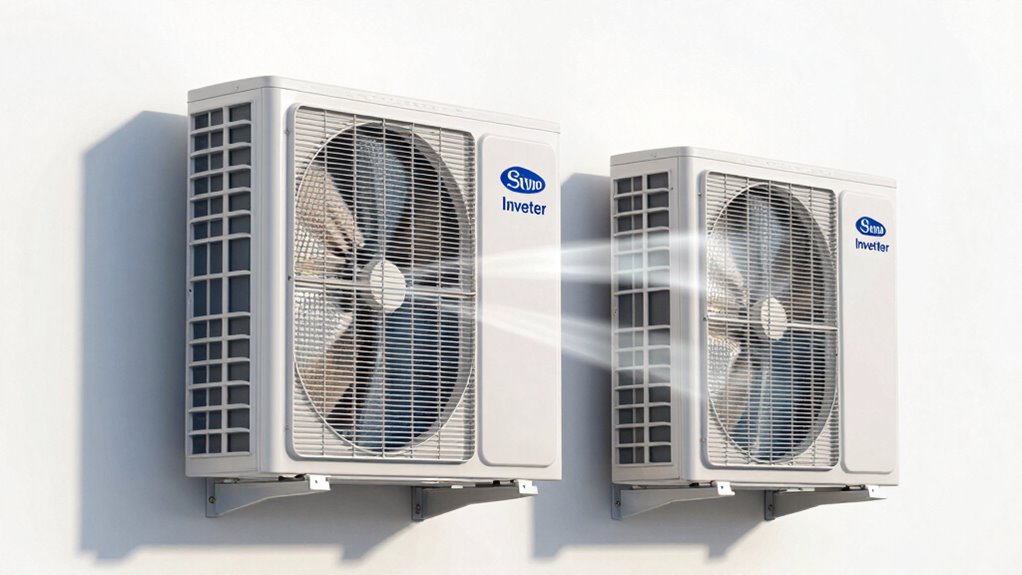

When comparing inverter and non-inverter heat pumps, the key difference is the “variable” speed of the compressor. Inverter models adjust their compressor’s speed to match your home’s heating or cooling needs, providing smoother, quieter operation and consistent temperatures. Non-inverter units run at full capacity only, cycling on and off, which can cause temperature swings and more noise. Understanding what this “variable” capability really changes helps you choose the most efficient and comfortable system—if you explore further, you’ll discover even more nuances.
Key Takeaways
- “Variable” refers to the compressor’s ability to adjust speed, providing more precise temperature control versus fixed-speed operation.
- Inverter heat pumps modulate compressor capacity, leading to energy savings and smoother, quieter operation.
- Non-inverter units run at full capacity when active, causing more fluctuations, noise, and potentially higher energy use.
- The key difference impacts efficiency, with inverter models better suited for fluctuating conditions and long-term savings.
- “Variable” primarily changes how consistently and efficiently the system maintains temperature and comfort levels.

Midea Inverter Window Air Conditioner with Heat – Quiet Window AC Unit and Heat Combo with Dehumidifier – Cools up to 550 Sq. Ft. – Energy Star Rated, Smart Control, Remote, 12,000 BTU
Multi-Season Comfort – This Midea 12000 BTU air conditioner is more versatile than standard AC units, offering powerful…
As an affiliate, we earn on qualifying purchases.
As an affiliate, we earn on qualifying purchases.
What Are Inverter and Non-Inverter Heat Pumps?
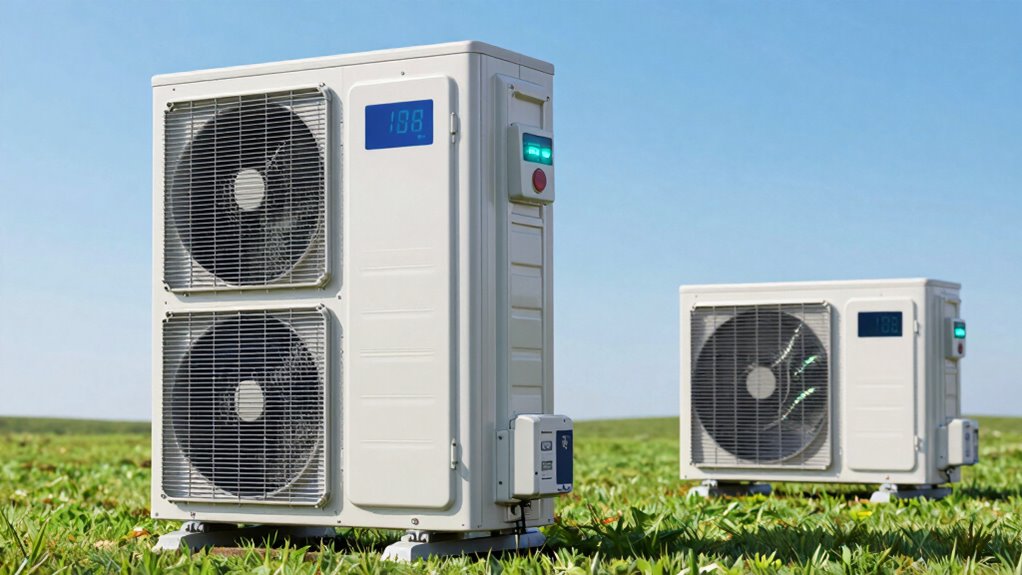
Understanding the difference between inverter and non-inverter heat pumps is key to choosing the right system for your needs. Inverter heat pumps adjust their compressor speed, allowing for more precise temperature control. This precise control also helps prevent excessive energy consumption, leading to significant energy savings because the system doesn’t run at full power constantly; instead, it ramps up or down as needed. Additionally, inverter models often feature higher efficiency due to their ability to modulate output based on demand, further reducing energy use. Inverter systems typically incorporate advanced technology that optimizes performance and longevity. They also tend to have longer lifespan because of reduced wear and tear from less frequent starting and stopping. Moreover, inverter models are generally more adaptable to variable weather conditions, ensuring consistent comfort throughout different seasons. Non-inverter models operate at a fixed capacity, running at full power whenever they’re on, which can consume more energy. Noise levels also differ: inverter systems tend to operate more quietly because they don’t constantly start and stop, reducing noise disruptions. If energy efficiency and quieter operation are priorities, an inverter heat pump is usually the better choice. Understanding these core differences helps you make an informed decision for your comfort and savings.

TURBRO Inverter 13.5K BTU RV Air Conditioner with Cooling and Heat Pump | Non-Ducted Low-Profile Rooftop Unit | Quiet Operation | WiFi & Remote Control | LED Atmosphere Light, White
Energy-Saving Inverter Compressor: Delivers up to 30% greater efficiency than non-inverter systems while automatically adjusting speed to minimize…
As an affiliate, we earn on qualifying purchases.
As an affiliate, we earn on qualifying purchases.
How Do Inverter Heat Pumps Adjust Their Output?
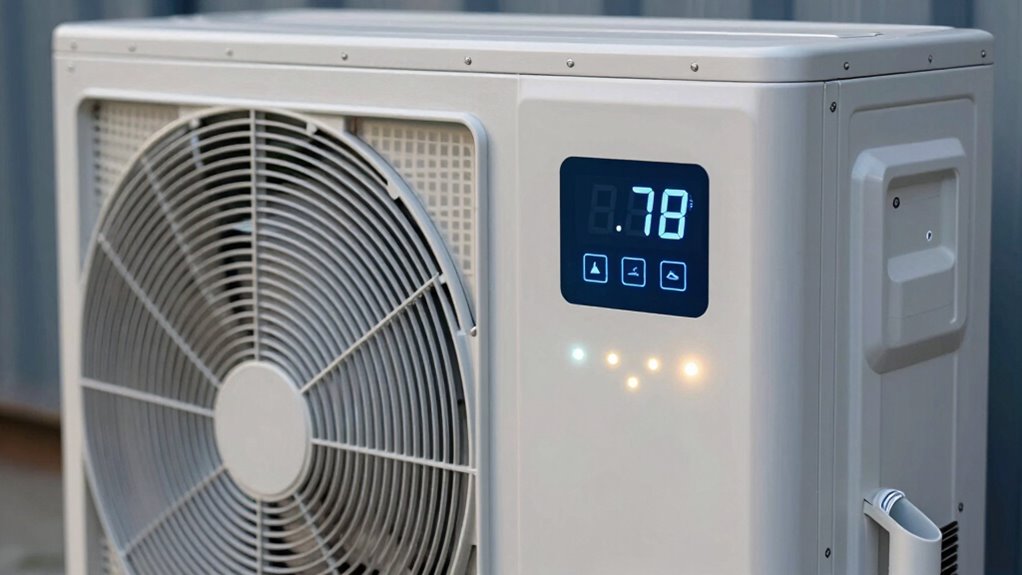
Inverter heat pumps adjust their output by continuously varying the compressor’s speed rather than turning it on and off repeatedly. This allows the system to match heating or cooling demands precisely, which leads to significant energy savings. Instead of cycling on and off, the compressor runs at different speeds to maintain a consistent temperature. As a result, the system uses less energy, reducing your utility bills. Additionally, because the compressor operates smoothly without constant start-stop cycles, noise levels stay lower. You won’t hear loud, abrupt sounds like with traditional systems. This smooth operation not only enhances comfort but also extends the lifespan of the heat pump. Proper filter sizing and flow management are essential to ensure the inverter system operates efficiently and reliably. The ability to adjust compressor speed dynamically is what makes inverter technology a more efficient choice for many homeowners. Moreover, inverter heat pumps often include smart controls that optimize performance based on real-time conditions. Implementing advanced control systems can further enhance efficiency and adaptability. Overall, inverter technology offers a quieter, more efficient way to keep your home comfortable year-round.

VARMINPOOL Pool Heat Pump 16000 BTU, 110V Electric Pool Heater for Above Ground Pools up to 5400 Gallons, Energy Efficient Heat Pump Pool Heater with WiFi Control, Titanium Heat Exchanger- V5
【16000 BTU Pool Heat Pump for Above Ground Pools up to 5,400 Gallons】Designed for 10–14 ft above ground…
As an affiliate, we earn on qualifying purchases.
As an affiliate, we earn on qualifying purchases.
Why Does Variable Speed Matter for Home Comfort?
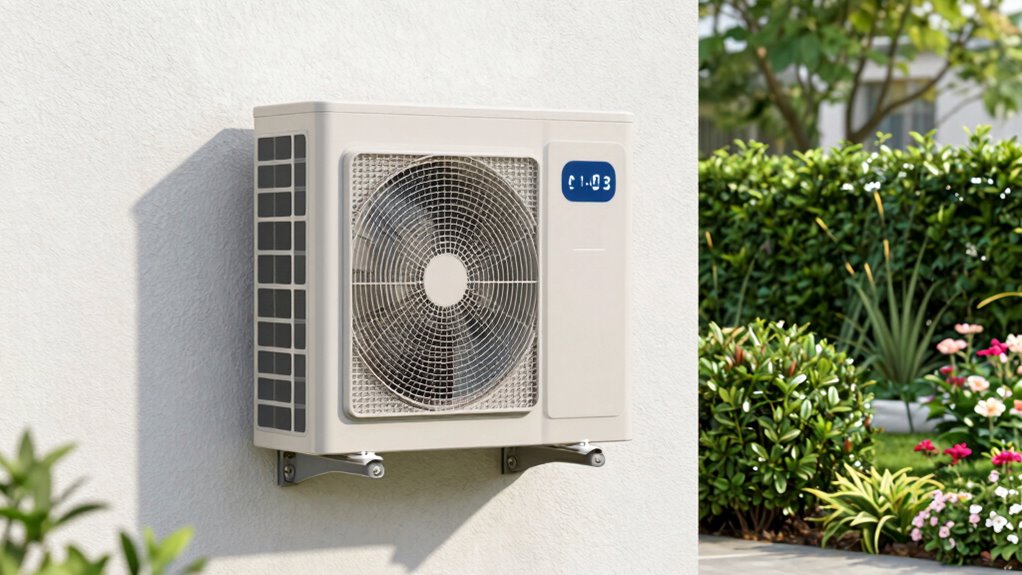
Variable speed operation helps you maintain a consistent, comfortable temperature in your home. It adjusts its output precisely to your needs, avoiding sudden temperature swings. Plus, this efficiency can lower your energy bills over time. Energy-efficient appliances like inverter heat pumps contribute to sustainable living by reducing energy consumption and minimizing environmental impact. Additionally, the advanced technology used in inverter systems ensures smoother temperature regulation and quieter operation. Implementing these systems also supports smart home integration, allowing for even greater control and efficiency. Moreover, the performance benefits of variable speed systems are often enhanced by features like optimized component design and precise control algorithms.
Precise Temperature Control
When it comes to maintaining a comfortable home, controlling temperature precisely makes a big difference. Variable speed heat pumps adjust their output seamlessly, helping you achieve consistent temperatures without fluctuations. This precise control also influences humidity levels, preventing excess moisture that can cause discomfort or mold. Plus, because the system runs more smoothly and steadily, you’ll notice less noise during operation, creating a quieter environment. Non-inverter models often cycle on and off, leading to temperature swings and inconsistent humidity, while inverter systems fine-tune their performance to match your needs. As a result, you enjoy a more stable, comfortable atmosphere with better humidity control and reduced noise. This level of accuracy ensures your home stays cozy and inviting, no matter the weather outside.
Reduced Energy Consumption
Because they adjust their speed to match your home’s heating or cooling needs, inverter heat pumps consume less energy than their non-inverter counterparts. This efficiency reduces your energy bills over time, making them a cost-effective choice. Additionally, variable speed operation means the system runs more smoothly, leading to lower noise levels. You’ll notice quieter operation compared to traditional models. When comparing costs, inverter units might have a higher upfront price but save money long-term through reduced energy use. Here’s a quick comparison:
| Feature | Inverter Heat Pump | Non-Inverter Heat Pump |
|---|---|---|
| Cost Comparison | Higher initial investment | Lower upfront cost |
| Energy Consumption | Less due to variable speed | Higher due to constant operation |
| Noise Levels | Quieter operation | Louder during operation |
| Performance | More consistent comfort | Fluctuates with cycling |
| Longevity | Typically longer-lasting | Shorter lifespan |
Inverter systems deliver savings and quieter operation, making them a smart choice. Variable-speed technology is a key factor in achieving these benefits, as it directly impacts the system’s energy efficiency and overall performance.
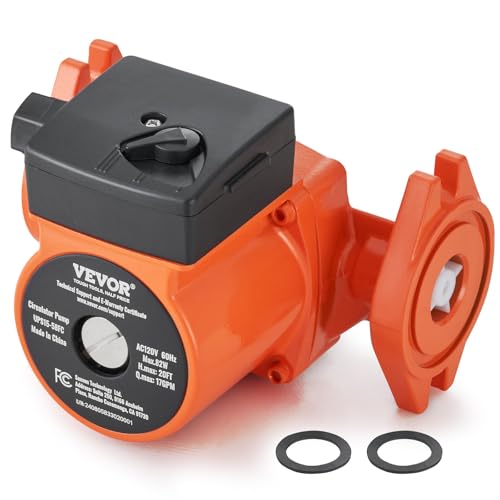
VEVOR UPS15-58FC 17 GPM Cast Iron Circulation Pump, 1" NPT Flange 3-Speed Hot Water Recirculating Pump, Quiet Operation Circulator Pump for Floor Heating/Home Water heater System
High Compatibility Design: Replacement part number: UPS15-58FC. Engineered specifically for underfloor heating systems, this cast iron circulator pump…
As an affiliate, we earn on qualifying purchases.
As an affiliate, we earn on qualifying purchases.
Which Is More Energy Efficient: Inverter or Non-Inverter Heat Pumps?
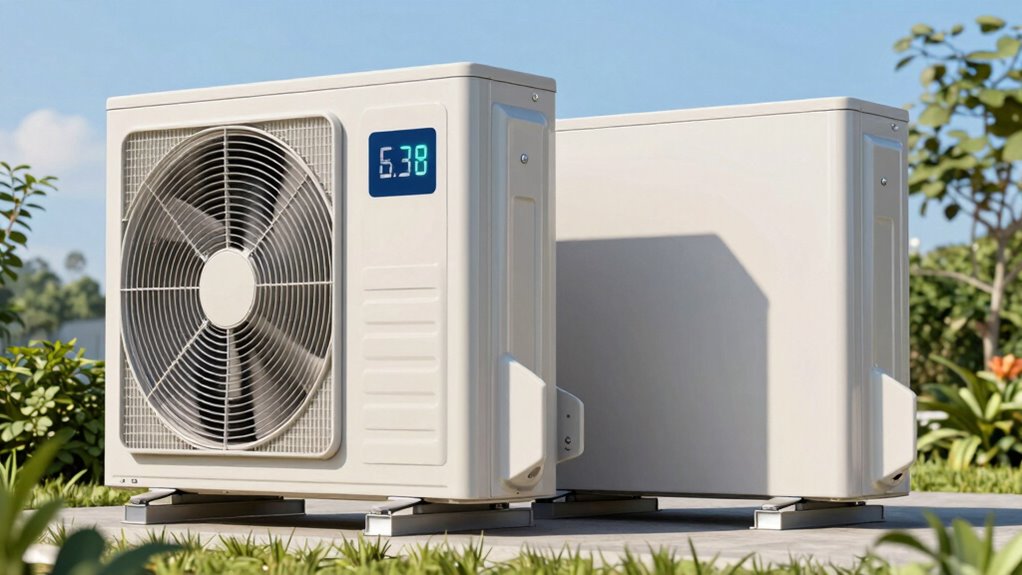
Are inverter heat pumps more energy efficient than their non-inverter counterparts? Generally, yes. Inverter models adjust their compressor speed to match your heating or cooling needs, reducing energy waste. This continuous modulation results in lower energy consumption over time. When considering cost comparison, inverter heat pumps often have a higher upfront price, but their efficiency can lead to significant savings on energy bills. Additionally, lifespan considerations favor inverter units, as their variable-speed compressors experience less wear and tear compared to the constant cycling of non-inverter models. Furthermore, the diverse crochet styles for locs showcase the creative potential of customization, highlighting how adaptable and versatile inverter technology can be in various applications. As the energy efficiency of these systems improves, they are increasingly becoming the preferred choice for environmentally conscious consumers. Moreover, advancements in environmental impact research continue to support the adoption of inverter systems, emphasizing their role in reducing carbon footprints. Overall, inverter heat pumps tend to deliver better energy efficiency, especially during fluctuating weather conditions, making them a smarter choice if long-term savings matter to you.
Are Inverter Heat Pumps Worth the Extra Cost?
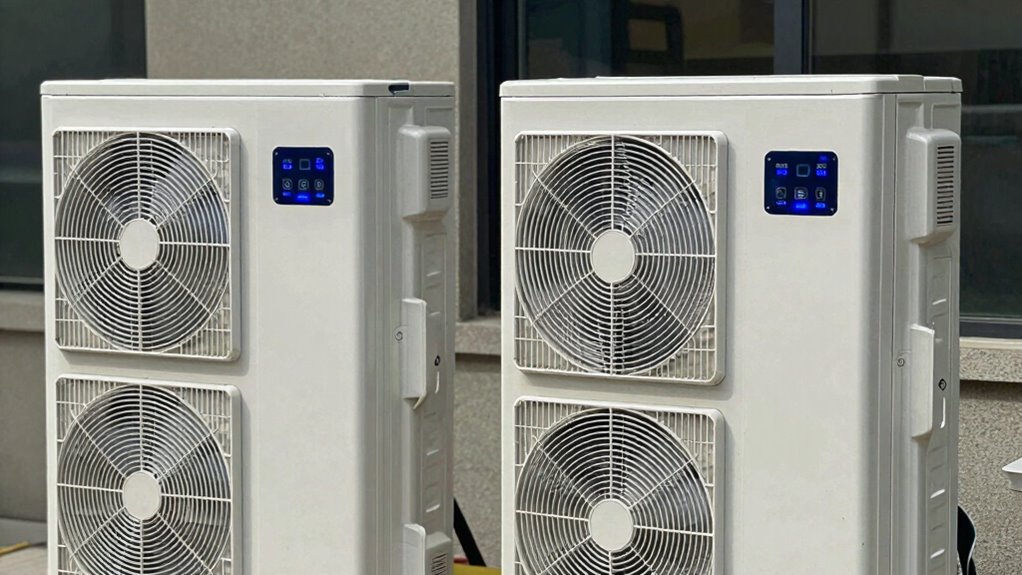
Inverter heat pumps often come with a higher initial price, but their advanced technology can make them worth the investment. When you do a cost comparison, you’ll notice they typically save you more money over time through reduced energy bills. Plus, their ability to adjust capacity means they operate more efficiently and consistently. Another benefit is noise levels—they tend to run more quietly because they don’t constantly switch on and off like non-inverter models. While the upfront cost is higher, the long-term savings on energy and the quieter operation often outweigh this expense. If you value energy efficiency, lower noise, and ongoing savings, investing in an inverter heat pump is likely worth the extra cost.
Installation and Maintenance for Inverter and Non-Inverter Systems
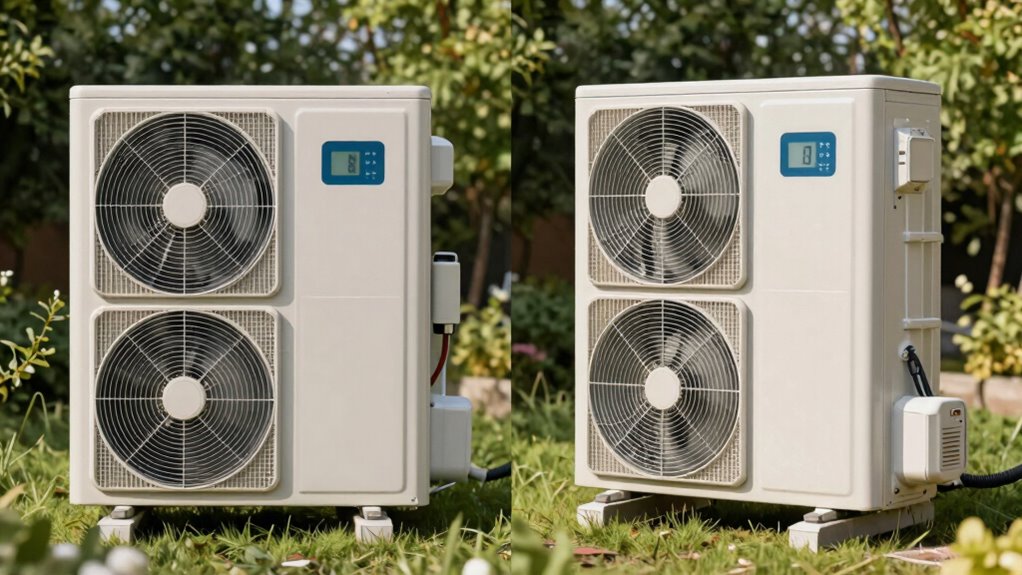
Installing inverter and non-inverter heat pumps requires careful planning and attention to detail, as the process and maintenance needs can differ markedly. Inverter systems often involve more complex components, which can influence installation costs, making them slightly higher initially. However, their advanced technology may reduce ongoing maintenance expenses over time. Non-inverter units typically have simpler designs, potentially lowering upfront costs but possibly requiring more frequent repairs. When comparing warranty coverage, inverter models sometimes include longer or more comprehensive warranties due to their technology and durability; non-inverter warranties may be more limited. Proper installation is vital for both types to ensure efficiency and longevity. Regular maintenance, like cleaning filters and checking refrigerant levels, helps maximize system performance and lifespan, regardless of the system type.
Choosing the Right Heat Pump: Key Factors for Homeowners
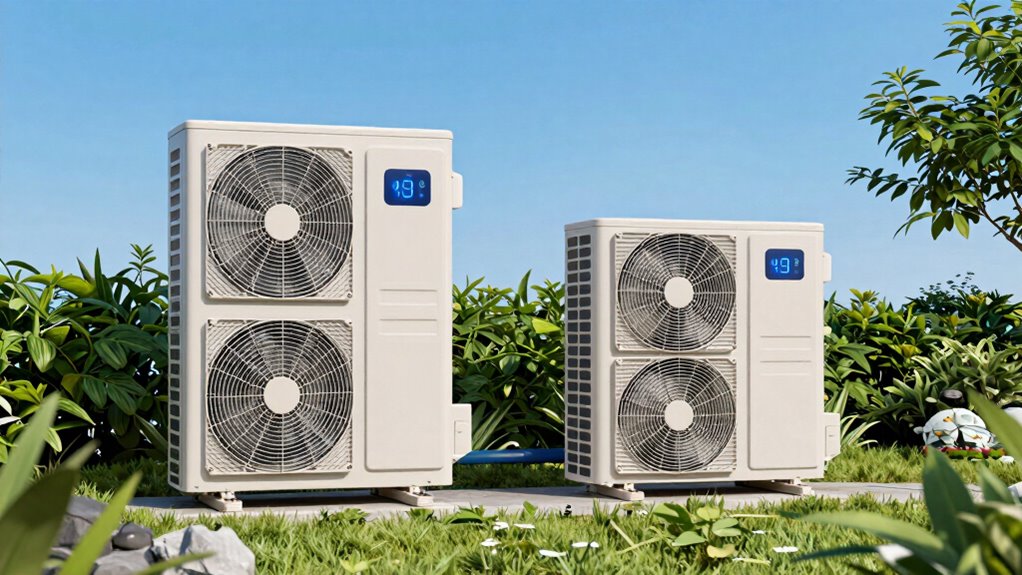
Choosing the right heat pump involves understanding your home’s specific needs and priorities. Start by considering your climate, insulation, and how often you’ll use the system. A clear cost comparison helps you evaluate initial expenses versus long-term savings, especially when factoring in energy efficiency. Look into different brand options, as reputable brands often offer better reliability and warranty support. Some brands specialize in inverter technology, which can provide savings over time, while others focus on affordability. Think about your budget, but don’t compromise on quality. Selecting a model that matches your home’s size and your comfort preferences ensures you get the most value. Doing thorough research now helps you avoid costly upgrades or replacements later.
Debunking Myths About Inverter and Non-Inverter Heat Pumps
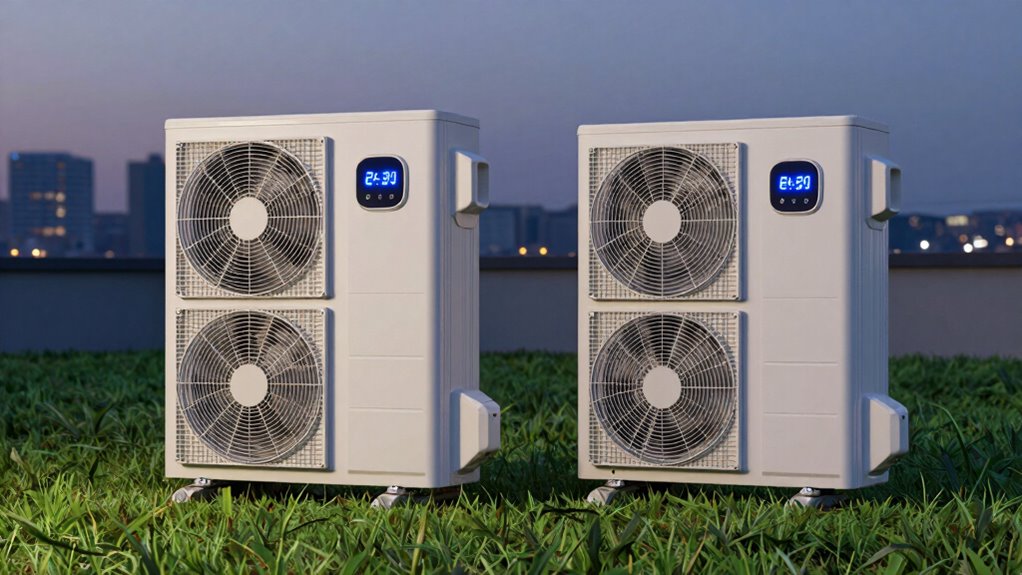
Many people believe inverter heat pumps are always more efficient, but that’s not always true. Similarly, some think non-inverter models can’t perform well in cold weather, which isn’t accurate. Let’s clear up these misconceptions and compare their actual performance and efficiency.
Efficiency Misconceptions Clarified
One common misconception is that inverter heat pumps are always markedly more energy-efficient than non-inverter models. While inverters can adjust their compressor speed for better energy use, the actual cost comparison varies depending on usage patterns. Some non-inverter units may perform efficiently in steady conditions, making their energy savings comparable in specific situations. Additionally, many assume inverter models are quieter, but noise levels depend on design and installation quality. In some cases, non-inverter units operate more quietly at constant speeds. To make an informed choice, consider your climate, usage habits, and installation environment rather than relying solely on general assumptions about efficiency or noise. This approach ensures you select the most appropriate heat pump for your needs.
Performance Differences Explained
While inverter and non-inverter heat pumps may seem similar at a glance, their performance differences often stem from how they operate under various conditions. Inverter models adjust their compressor speed, providing consistent heating or cooling, which results in better comfort and energy efficiency. Non-inverter units run at a fixed speed, cycling on and off, leading to fluctuating temperatures. When it comes to cost comparison, inverter heat pumps typically cost more upfront but save money over time through lower energy bills. Noise levels also differ; inverter models tend to operate more quietly since they avoid sudden starts and stops, whereas non-inverter units produce more noise during compressor cycling. Understanding these performance nuances helps you choose the right system for your needs.
Frequently Asked Questions
Do Inverter Heat Pumps Last Longer Than Non-Inverter Models?
Inverter heat pumps generally last longer than non-inverter models, thanks to their durability comparison and smoother operation. The lifespan factors include less wear and tear on components because they run at variable speeds, reducing stress. You’ll often find inverter systems have a longer operational life, as they adapt to heating and cooling needs more efficiently, minimizing strain and maintenance costs over time.
How Does Inverter Technology Affect Noise Levels?
Inverter technology considerably reduces noise levels by adjusting the compressor speed more smoothly, leading to quieter operation. You’ll notice less noise during startup and throughout use, thanks to enhanced sound levels and noise reduction features. This means your heat pump runs more quietly, creating a more comfortable environment. With inverter models, you get a quieter, more efficient system that minimizes disruptive sounds and improves overall comfort in your space.
Can Inverter Heat Pumps Function Effectively in Extremely Cold Weather?
Yes, inverter heat pumps can function effectively in extremely cold weather. Their cold weather performance is enhanced by variable speed compressors, which adapt output to maintain efficiency in winter. You’ll notice better efficiency when heating in low temperatures, as the inverter adjusts power to optimize performance. This technology guarantees consistent heating, even in harsh conditions, making inverter heat pumps a reliable choice for winter climates.
Are There Specific Brands Known for Better Inverter Heat Pump Performance?
Did you know that some brands have up to a 95% customer satisfaction rate? When choosing an inverter heat pump, you’ll find that brands like Mitsubishi, Daikin, and LG are known for their reliable performance. You should check customer reviews and brand reputation to guarantee you’re investing in a product that performs well in cold weather. These brands often lead in efficiency, durability, and innovative technology.
What Maintenance Differences Exist Between Inverter and Non-Inverter Systems?
You need to perform routine inspections and replace filters regularly to keep your inverter or non-inverter heat pump running efficiently. Inverter systems often require less maintenance because their variable speed compressors operate more smoothly, reducing wear. Non-inverter units might need more frequent filter replacements and inspections due to their fixed-speed operation. Overall, both systems benefit from proper upkeep, but inverter models tend to be more durable with less frequent maintenance.
Conclusion
Choosing between inverter and non-inverter heat pumps is like selecting the right key for your home’s comfort. Inverter technology unlocks smoother, more efficient warmth, much like a gentle breeze that adapts to your needs. While it may cost more upfront, it’s an investment in a future of consistent coziness and savings. Trust your instincts, and pick the key that fits best—your home’s comfort depends on it.