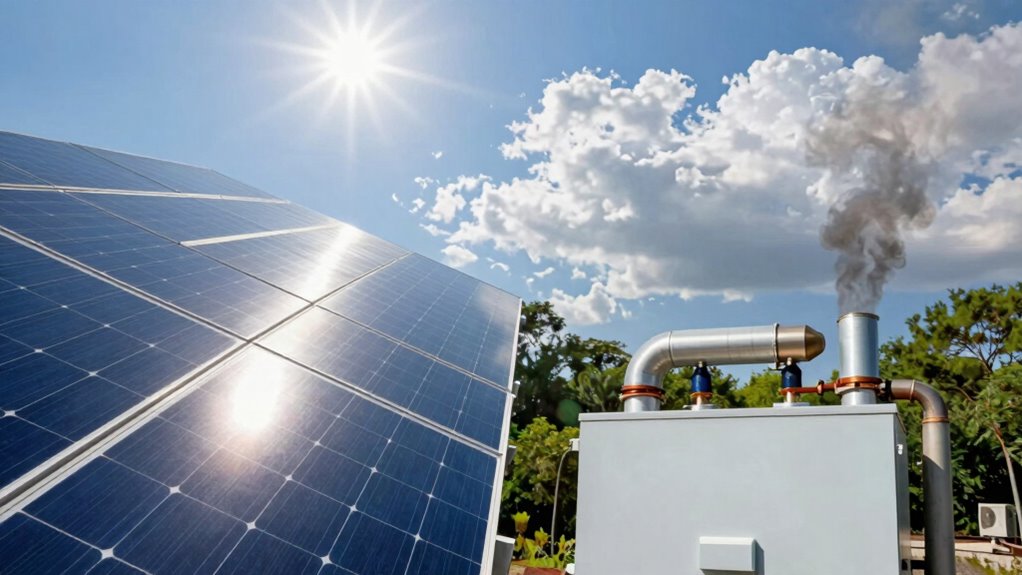

Switching from gas to solar heating reduces your carbon footprint since solar system emissions come mainly from manufacturing, while gas releases CO₂ during burning. To cut emissions from both, maintain your systems well, upgrade to high-efficiency models, and consider hybrid setups that combine solar and gas. Advances like heat pumps and smarter controls help lower environmental impact. Keep exploring to discover practical tips for cleaner, cost-effective heating options.

Get pool and patio gear delivered free with Prime
- Fast, free delivery on millions of items
- Prime Video, Amazon Music and more included
- Member-only deals all year
Key Takeaways
- Solar heating produces minimal emissions during operation, while gas heating releases significant greenhouse gases and pollutants from combustion.
- Lifecycle assessments show solar has lower overall emissions over its lifespan compared to gas systems, factoring in manufacturing and disposal.
- Upgrading to high-efficiency solar panels and integrating renewable energy sources can further reduce emissions for both systems.
- Proper maintenance of heating systems maximizes efficiency, minimizes leaks, and reduces emissions from both solar and gas options.
- Supporting eco-friendly practices like insulation, recycling solar components, and adopting renewable energy reduces emissions from both heating methods.
As an affiliate, we earn on qualifying purchases.
What Are the Environmental Impacts of Solar and Gas Heating?

Solar heating has a substantially lower environmental impact compared to gas heating because it relies on sunlight, a renewable energy source, and produces no emissions during operation. By using solar energy, you support renewable integration, which reduces reliance on fossil fuels and helps shift to cleaner energy systems. This change contributes directly to pollution mitigation, as fewer greenhouse gases and harmful pollutants are released into the atmosphere. Solar systems generate energy without producing air pollutants like carbon monoxide or sulfur dioxide, making them environmentally friendly. Additionally, the use of renewable energy sources ensures a more sustainable and resilient energy future. In contrast, gas heating involves burning fossil fuels, which emits pollutants and contributes to climate change. Embracing solar heating helps you minimize your carbon footprint and promotes sustainable energy practices. Furthermore, advancements in solar panel efficiency continue to improve the environmental benefits of solar technology, making it an increasingly attractive option for eco-conscious consumers. As technology improves, the lifecycle environmental impact of solar panels is also decreasing, further enhancing their sustainability. Additionally, the use of vetted information ensures that decisions are based on accurate and trustworthy data. Incorporating environmentally friendly technologies can further reduce the overall impact of energy use.
As an affiliate, we earn on qualifying purchases.
How Do Solar and Gas Heating Systems Contribute to Emissions?

Both solar and gas heating systems impact the environment differently through their contributions to emissions. Solar heating harnesses renewable energy, generating little to no direct emissions during operation. In contrast, gas heating relies on burning fossil fuels, releasing greenhouse gases that contribute to climate change. Your choice affects emissions reduction efforts considerably. Consider these points:
- Solar systems produce clean energy with negligible emissions once installed.
- Gas heating emits carbon dioxide during combustion, adding to greenhouse gases.
- Manufacturing and installing solar panels involve some emissions, but these are offset over time.
- Gas systems have ongoing emissions, making them less sustainable long-term.
- The efficiency of solar collectors can influence overall emissions savings, especially with advanced technology.
- Proper system maintenance can further enhance efficiency and reduce emissions over the lifespan of your heating system.
- Additionally, advancements in solar panel manufacturing can further decrease the environmental footprint of solar energy systems.
- Implementing innovative energy solutions can help mitigate the emissions associated with both heating options.
- Considering lifecycle assessments of each system provides a comprehensive understanding of their environmental impacts.
As an affiliate, we earn on qualifying purchases.
How Much Do Solar and Gas Heating Systems Emit?

You’ll want to contemplate how much emissions each system produces over its lifetime. Solar panels emit minimal greenhouse gases during operation, but manufacturing adds some impact, while gas furnaces release carbon continuously. Comparing the full lifecycle helps you see which option truly has a lower environmental footprint. Additionally, considering tax incentives can influence the overall cost and environmental benefits of solar energy adoption. Being aware of emissions lifecycle can further help in making an environmentally conscious decision. For example, understanding the electricity generation efficiency of solar versus gas systems can provide deeper insight into their long-term emissions profile.
Emissions From Solar Panels
While solar panels produce clean energy during operation, their manufacturing, transportation, and installation processes generate some emissions. These initial emissions depend heavily on solar panel efficiency and the materials used. Higher efficiency panels often require more energy to produce but generate more clean energy over their lifespan, reducing overall emissions. To lower emissions, emission reduction strategies focus on sourcing sustainable materials and improving manufacturing processes. You can also choose solar panels with a lower carbon footprint or recycle components at the end of their life. Although the upfront emissions are notable, they are offset over time by the clean energy produced. Overall, solar panels have a considerably smaller long-term emissions impact compared to fossil fuels. Manufacturing emissions are an important factor in assessing the total environmental footprint of solar energy systems. Additionally, innovations in solar panel design continue to improve efficiency and reduce production-related emissions, making solar energy an even more sustainable choice over time. Incorporating sustainable manufacturing practices further enhances the environmental benefits of solar technology. Moreover, ongoing research into advanced materials aims to further decrease the environmental impact of solar panel production. For example, developing eco-friendly materials can significantly reduce the carbon footprint associated with manufacturing processes.
Gas Furnace Carbon Output
Gas furnaces release a significant amount of carbon dioxide into the atmosphere during operation, making their emissions a major concern for climate impact. The amount of CO2 they produce depends on efficiency and fuel type, but generally, gas furnaces emit hundreds of pounds of greenhouse gases annually. While gas regulations are tightening to reduce emissions, many homes still rely heavily on these systems. Solar incentives aim to promote cleaner energy, but they don’t directly affect gas furnace emissions. Moving to solar can significantly cut your carbon footprint, yet current regulations may limit immediate change. To reduce emissions from gas furnaces, consider upgrading to high-efficiency models or supplementing with renewable energy sources. This approach helps you lower your environmental impact while navigating the existing regulatory landscape.
Additionally, exploring trusted Gold IRA options can support your financial transition to greener energy solutions by providing secure investment opportunities to fund sustainable upgrades.
Comparing Lifecycle Emissions
When evaluating the environmental impact of heating systems, it’s important to take into account their entire lifecycle emissions—from manufacturing and installation to operation and disposal. A thorough lifecycle assessment reveals that solar systems typically have lower embodied emissions compared to gas systems, which require extensive extraction and processing of fossil fuels. Over time, solar heating’s emissions mainly come from manufacturing, but operational emissions are minimal. Gas systems, however, emit significant greenhouse gases during use, adding to their lifecycle footprint. To understand the full picture, consider:
- Embodied emissions of solar panels versus gas equipment
- Emissions during manufacturing and installation
- Operational emissions over the system’s lifespan
- End-of-life disposal impacts
A comprehensive lifecycle assessment helps you see which system truly minimizes emissions.
As an affiliate, we earn on qualifying purchases.
Which Heating System Is More Cost-Effective Over Time?

Determining which heating system offers better long-term value depends on several factors, including initial costs, energy efficiency, and maintenance expenses. Conducting a thorough cost analysis helps you understand the upfront investment versus ongoing savings. Solar heating typically has higher initial costs but lower operating expenses, leading to significant long-term savings as energy costs rise. Gas heating usually involves lower upfront costs but higher fuel and maintenance expenses over time. If you plan to stay in your home long-term, solar can be more cost-effective overall, especially with incentives. However, if your budget is tight initially, gas may seem more affordable upfront. Carefully weighing these factors will help you choose the system that maximizes your long-term savings, aligning with your financial goals.
How Can You Reduce Emissions From Solar Heating?
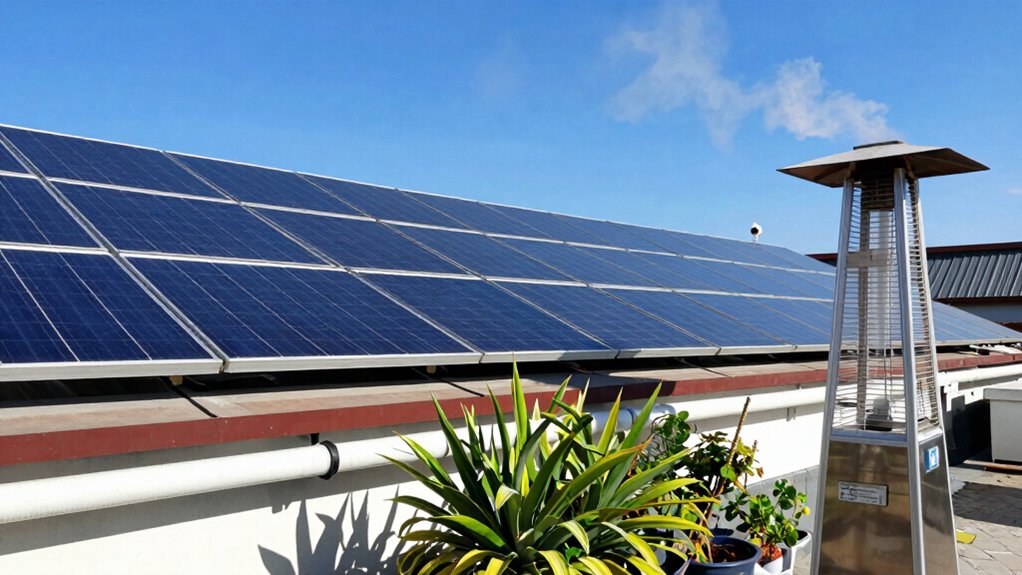
Reducing emissions from solar heating systems can be achieved by optimizing their efficiency and ensuring environmentally friendly practices. You can enhance performance by maintaining clean panels, upgrading to high-efficiency models, and properly installing systems to maximize sunlight capture. Additionally, supporting solar panel recycling reduces waste and minimizes environmental impact, preventing harmful materials from ending up in landfills. Proper disposal encourages the reuse of valuable materials, contributing to sustainable practices. These steps aid greenhouse gas mitigation by lowering the carbon footprint associated with solar energy. To further reduce emissions, consider sourcing components from manufacturers committed to sustainable production. By actively maintaining your system and promoting eco-conscious disposal, you help ensure solar heating remains a clean, green energy solution with minimal environmental impact.
What Are the Best Ways to Minimize Gas Heating Emissions?

To minimize gas heating emissions, start by upgrading to more efficient devices that use less fuel. Improving your home’s insulation can also reduce overall energy demand, cutting emissions further. Additionally, consider adopting renewable energy sources to replace or supplement gas heating and lower your carbon footprint.
Upgrade to Efficient Devices
Upgrading to more efficient gas heating devices is one of the most effective ways to cut emissions. By investing in energy efficient upgrades, you reduce fuel consumption and lower your carbon footprint. Incorporate smart heating controls to optimize usage, ensuring your system runs only when needed. Consider replacing old furnaces with high-efficiency models that use less gas and produce fewer emissions. Additionally, installing thermostats with programmable settings helps tailor heating schedules to your lifestyle. Regular maintenance, like cleaning filters and checking for leaks, keeps your system operating at peak efficiency. These upgrades not only benefit the environment but also save you money over time. Focus on these improvements to markedly reduce your household’s gas heating emissions and contribute to a cleaner, greener future.
Enhance Home Insulation
Improving your home’s insulation is one of the most effective ways to minimize gas heating emissions. Start by upgrading your roof insulation, which helps retain heat during cold months and reduces the need for continuous gas heating. Additionally, apply weatherproofing techniques such as sealing gaps around windows, doors, and vents to prevent heat loss. Consider installing draft stoppers or weatherstripping to keep warm air inside. Insulating walls and floors further enhances energy efficiency. Properly sealed and insulated homes require less gas to stay warm, directly cutting emissions. These measures not only lower your carbon footprint but also decrease energy bills. Focus on thorough weatherproofing and roof insulation to maximize your home’s energy performance and reduce reliance on gas heating.
Adopt Renewable Energy Sources
Switching to renewable energy sources is one of the most effective ways to cut down on gas heating emissions. Embracing solar adoption allows you to generate clean energy right at home, reducing reliance on fossil fuels. To maximize benefits, focus on renewable integration, combining solar with other renewable sources like wind or geothermal. Here are some ways to get started:
- Install solar panels for direct solar adoption
- Connect your home to renewable energy grids
- Use solar thermal systems for water heating
- Invest in small-scale wind or geothermal solutions
Should You Combine Solar and Gas Systems for Greener Heating?

Combining solar and gas heating systems can be a smart choice for those aiming to reduce their environmental impact while maintaining reliable warmth. Solar integration in hybrid systems allows you to harness solar energy during sunny days, decreasing reliance on gas and lowering emissions. This setup offers flexibility, as the gas system can kick in during cloudy weather or high demand, ensuring consistent comfort. Hybrid systems optimize energy use, saving you money and reducing your carbon footprint. By blending renewable and traditional sources, you get the best of both worlds—sustainable energy when available and dependable backup when needed. This approach can be especially beneficial if your home’s energy needs fluctuate or if local solar resources are strong, making it a practical, greener solution.
What New Technologies Help Lower Emissions in Heating Systems?

Advancements in heating technology are actively working to reduce emissions and enhance efficiency. Innovative heat pumps now extract more heat from the air or ground, lowering energy use and emissions. Smart thermostats optimize heating schedules, reducing unnecessary energy consumption. These devices learn your habits and adjust settings for maximum efficiency. Additionally, modern systems integrate solar energy to power heating, further cutting emissions. Some innovative heat pumps operate efficiently even in extreme temperatures, expanding their usability. Smart thermostats also enable remote control, so you can fine-tune your system from anywhere. Other emerging technologies include hybrid systems that switch between renewable and traditional energy sources, ensuring minimal environmental impact. These innovations make it easier to reduce your heating-related emissions while maintaining comfort.
How to Choose the Right Heating System for Low Emissions and Cost Savings?

Choosing the right heating system can considerably reduce your home’s emissions and save you money over time. To do this, consider systems that qualify for renewable incentives, which can offset initial costs and improve affordability. Solar heating systems often come with attractive incentives that lower installation costs, making them a smart choice for long-term savings and reduced environmental impact. Gas systems, while initially cheaper, may incur higher fuel costs and emissions over their lifespan. Evaluate your local incentives and energy prices to determine the most cost-effective option. While upfront costs matter, think about the total cost of ownership, including maintenance and fuel expenses. Selecting a system that balances these factors helps you achieve low emissions and significant savings.
How to Maintain Your Heating System for Better Efficiency and Less Pollution?
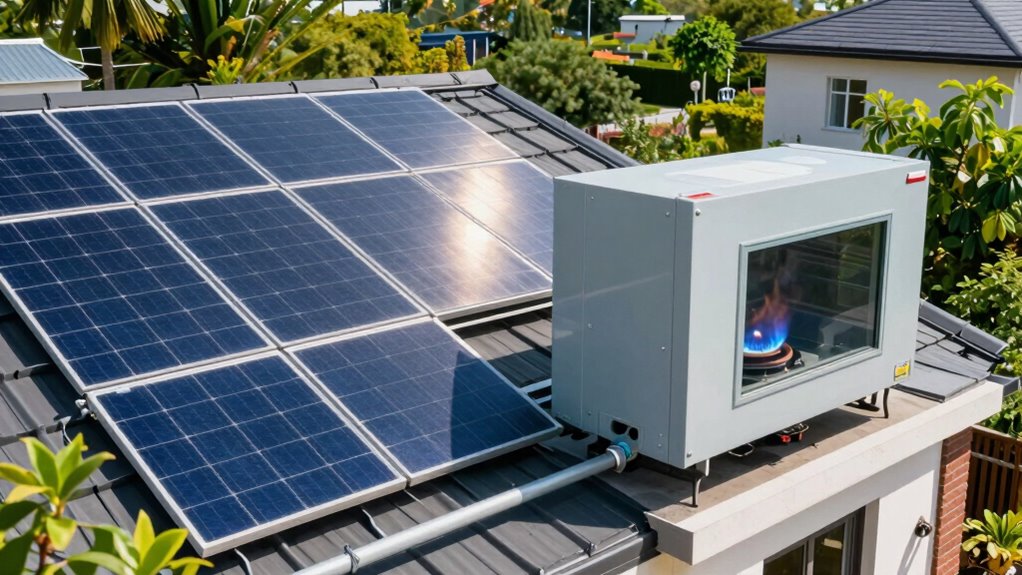
Regularly maintaining your heating system is essential to make sure it runs efficiently and produces fewer pollutants. Proper maintenance routines help identify issues early, improve performance, and reduce emissions. To maximize efficiency improvements, consider these steps:
Routine heating system maintenance ensures efficiency, reduces emissions, and prevents costly repairs.
- Change filters regularly to guarantee peak airflow and cleaner operation
- Schedule annual inspections to catch problems before they worsen
- Clean vents and ducts to prevent blockages and improve energy use
- Check for leaks or corrosion that can decrease efficiency and increase pollution
Frequently Asked Questions
What Are the Initial Installation Costs for Solar Versus Gas Heating?
You’ll find that solar heating has a higher upfront investment compared to gas systems, mainly due to installation costs for solar panels and related equipment. Gas heating typically requires a lower initial investment because of simpler installation processes. While solar may cost more initially, it often pays off over time through energy savings. Consider your budget and long-term goals when weighing these installation costs to make the best choice.
How Long Does It Take for Solar Heating to Offset Its Carbon Footprint?
Think of solar heating’s carbon footprint as a sprinter, crossing the emission timeline in about 3 to 8 years. Once it reaches this point, your system’s carbon payback is complete, and it’s running on clean energy. Factors like location, system size, and energy use influence this timeline, but generally, after this period, solar heating markedly reduces your emissions, making it a smart, eco-friendly choice.
Are There Government Incentives for Switching to Solar or Low-Emission Gas Systems?
Yes, there are government rebates and policy incentives available if you switch to solar or low-emission gas systems. These programs aim to encourage cleaner energy use by offering financial assistance or tax credits. You should check with your local or national government, as incentives vary by location. Taking advantage of these rebates can markedly reduce your upfront costs and make the switch more affordable and environmentally friendly.
How Do Seasonal Changes Affect the Efficiency of Solar and Gas Heating?
Ever wondered how seasonal changes impact your heating choices? In winter, solar efficiency drops due to shorter days and less sunlight, while gas systems maintain consistent climate impact. Conversely, summer boosts solar efficiency, reducing emissions but might require supplemental heating. You can optimize seasonal efficiency by adjusting your system or adding insulation, helping you cut emissions year-round. Isn’t it smart to adapt your heating to seasonal shifts for better climate impact?
Can Hybrid Systems Provide Optimal Emissions Reduction and Cost Savings?
Yes, hybrid systems can deliver ideal emissions reduction and cost savings. By integrating renewable energy sources, like solar, with traditional gas heating, you maximize efficiency across seasons. Conduct a thorough cost-benefit analysis to weigh upfront costs against long-term savings and emissions benefits. This approach allows you to minimize environmental impact while enhancing your energy expenses, making hybrid systems a smart choice for sustainable and economical heating.
Conclusion
Choosing between solar and gas heating is like walking a tightrope—you want to balance cost, efficiency, and environmental impact. Solar offers a greener path, but may need backup systems, while gas heats quickly but leaves a heavier carbon footprint. By mixing technologies and staying mindful of maintenance, you can steer your home toward a cleaner, more sustainable future. Remember, the right choice is the lighthouse guiding you through the fog of emissions toward brighter, greener days.
Halloween Picks
halloween
As an affiliate, we earn on qualifying purchases.