Pool heat exchangers transfer heat by passing hot water from your boiler or tankless system through metal coils or plates, which then warms your pool water on the opposite side. Different types, like plate or shell-and-tube, suit various pool sizes and conditions, with materials chosen to resist corrosion. Proper setup, sizing, and maintenance guarantee the best performance. If you want to understand how to select and install the right system, keep exploring the details ahead.
Key Takeaways
- Pool heat exchangers transfer heat between the boiler or tankless heater and pool water via metal coils or plates.
- Proper plumbing ensures correct flow direction and fitting compatibility for efficient heat transfer.
- Insulating pipes minimizes heat loss during transfer from the heating system to the pool.
- Selecting the right size and type of heat exchanger optimizes heating speed and energy efficiency.
- Regular maintenance prevents leaks, corrosion, and buildup, ensuring reliable operation with boilers and tankless systems.

AB Pool Heat Exchanger, 304 Stainless Steel Heat 200KBtu Opposite Side Ports 1 1/2" FPT for Pool/Steam/District Heating, Industrial Heavy Duty Swimming Pool-Full Titanium Heat Exchanger
【Ensuring Constant Temperature】 The heat exchanger can ensure constant temperature, transferring heat indirectly between any hot water circuit,…
As an affiliate, we earn on qualifying purchases.
As an affiliate, we earn on qualifying purchases.
How Do Pool Heat Exchangers Transfer Heat Between Systems?
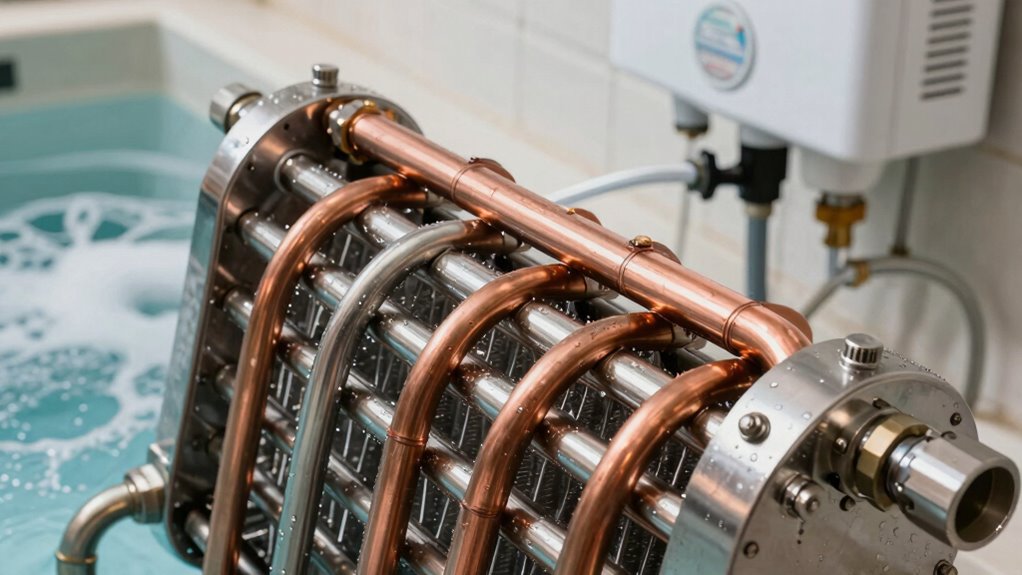
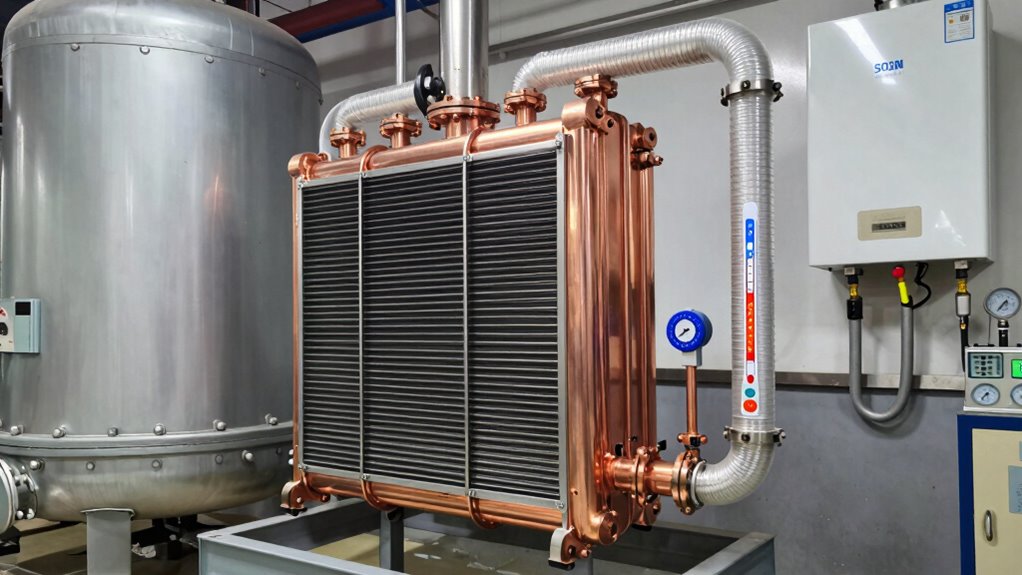
Pool heat exchangers transfer heat by using a system of metal coils or plates that facilitate the flow of hot and cold liquids on separate sides. As the hot fluid, like boiler water or a tankless system, passes through one side, heat is transferred through the metal surfaces to the cooler pool water on the other side. You need to think about chemical compatibility when selecting materials, ensuring that the metals won’t corrode or degrade over time. Understanding material compatibility is essential for ensuring the durability and performance of your heat exchanger over time. Proper placement and material choice optimize efficiency and longevity, making sure your pool stays warm without unnecessary issues. Additionally, considering system flow rates helps achieve better heat transfer efficiency and prevents issues like flow restriction or inadequate heating. Ensuring correct installation procedures is also vital for optimal system operation and safety.

AB Plate Heat Exchanger, 4"x12" 30 Plates Water To Water Heat Exchanger, Copper/SS316L Stainless Steel Brazed Plate Heat Exchanger For Floor Heating, Water Heating, Snow Melting
【Premium Quality】Our plate heat exchanger is made of high quality 316L stainless steel which are brazed together by…
As an affiliate, we earn on qualifying purchases.
As an affiliate, we earn on qualifying purchases.
What Types of Pool Heat Exchangers Are Available and How Do They Compare?
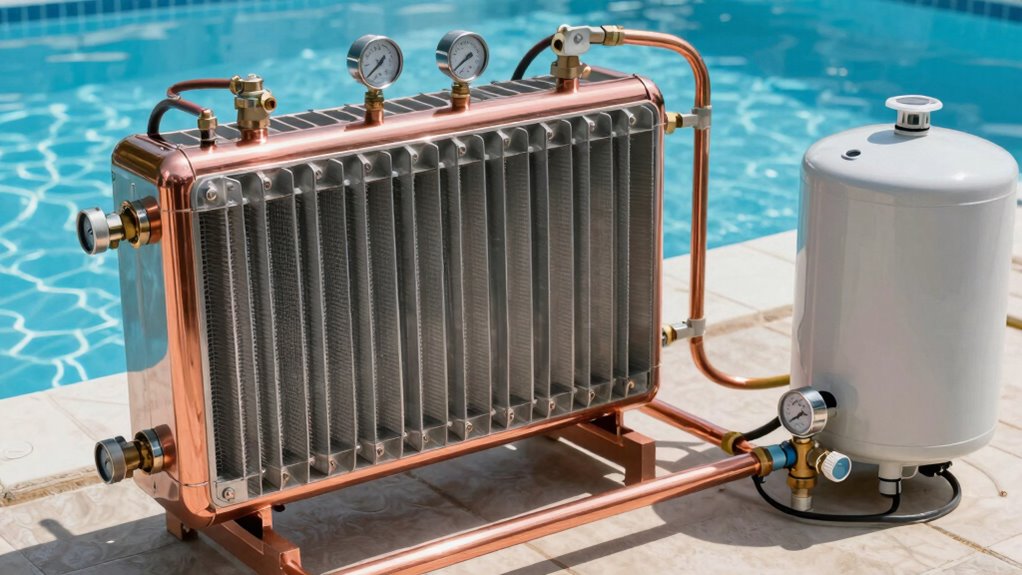
When choosing a heat exchanger for your pool, you’ll find several types designed to suit different needs and setups. Plate heat exchangers are compact, efficient, and easy to maintain, making them popular for smaller pools. Shell and tube models are durable and ideal for larger systems but require more space and maintenance. Titanium heat exchangers excel in saltwater pools due to their corrosion resistance. Each type offers distinct advantages in energy efficiency and installation. To guarantee pool safety, regularly inspect your heat exchanger for leaks or corrosion. Maintenance tips include flushing the system annually and keeping an eye on water chemistry to prevent mineral buildup. Understanding these options helps you select the best fit for your pool, ensuring safe operation and longevity.

AB Pool Heat Exchanger 210 kBtu: 316L Stainless Steel Working for Solar/Spa/Swimming Tube Heat Exchanger, Same Side Ports 1 1/2" & 1 1/2" FPT
Pool heating capacity up to 17,200 gallon 210 kBtu/hr fresh pool based on 60°C (140°F) temperature difference between…
As an affiliate, we earn on qualifying purchases.
As an affiliate, we earn on qualifying purchases.
How to Connect Your Pool Heat Exchanger to a Boiler or Tankless Heater?
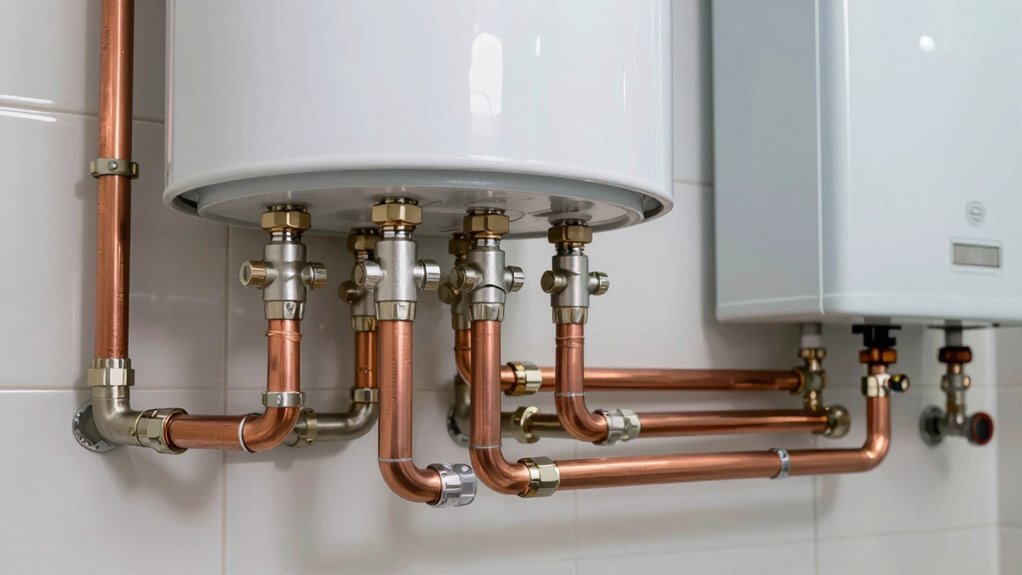
Connecting your pool heat exchanger to a boiler or tankless heater involves guaranteeing proper plumbing and flow direction. To maximize energy efficiency and simplify pool maintenance, follow these steps:
- Determine the correct flow path, ensuring heated water flows through the exchanger before returning to the pool.
- Use appropriate fittings to prevent leaks and maintain system integrity.
- Install a flow control valve to regulate water movement and optimize heat transfer.
- Check for proper insulation around pipes to prevent heat loss.
- Regularly inspect system components to ensure reliable operation and prevent potential issues. Properly connecting your heat exchanger ensures efficient heating and reduces energy costs. It also helps in maintaining a safe, reliable system, making pool maintenance easier. Correct flow direction and system connections are key to a well-functioning setup. Additionally, understanding Free Floating concepts can help in troubleshooting and optimizing your system’s performance. Being aware of system compatibility ensures your components work seamlessly together for optimal efficiency. Paying attention to system pressure can also prevent damage and improve overall operation.

AB Titanium Salt Pool Heat Exchanger 155kBtu Same Side Ports 1 1/2" & 1" FPT for 11,900 Gallon Pool
Pool Heating Capacity: up to 11,900 gallon 155 kBtu/hr salt pool based on 140°F (60°C) temperature difference between…
As an affiliate, we earn on qualifying purchases.
As an affiliate, we earn on qualifying purchases.
How to Choose the Right Pool Heat Exchanger: Size, Type, and Compatibility?
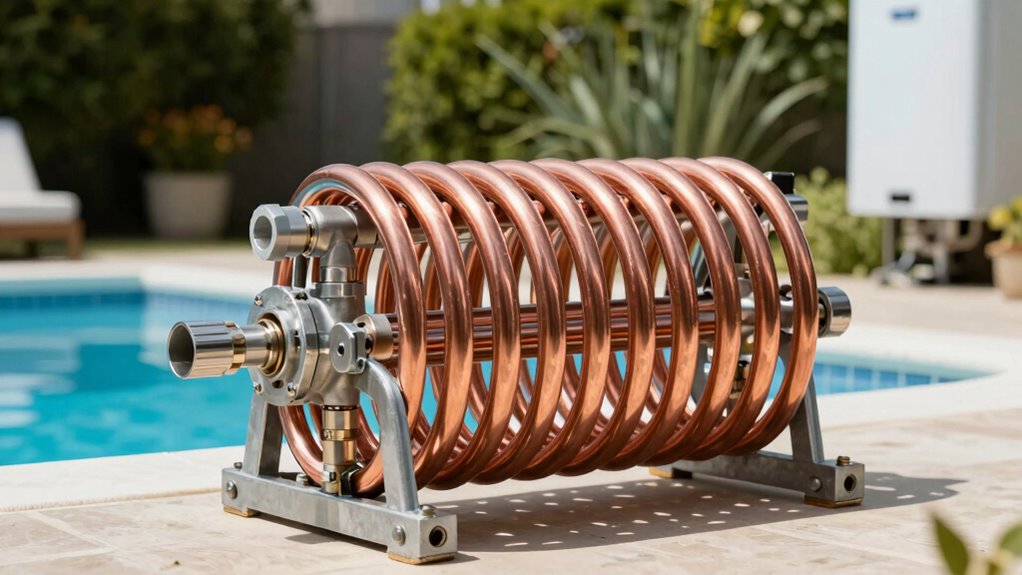
Choosing the right pool heat exchanger involves understanding how its size, type, and compatibility impact your heating efficiency and system performance. A properly sized exchanger ensures your pool heats quickly without wasting energy, which is vital for energy efficiency. Consider the pool size, flow rate, and the heating source when selecting a type—plate or shell-and-tube—each suited for different setups. Compatibility with your existing equipment is essential to prevent leaks or system failures. Proper sizing and matching also simplify pool maintenance by reducing potential issues like corrosion or fouling. Understanding system compatibility can help prevent operational problems and ensure your setup functions smoothly. Investing time in choosing the correct heat exchanger helps optimize energy use, lowers operational costs, and keeps your pool comfortable year-round. Always consult manufacturer guidelines and skilled installers to guarantee compatibility and performance.
Common Pool Heat Exchanger Problems and How to Fix Them
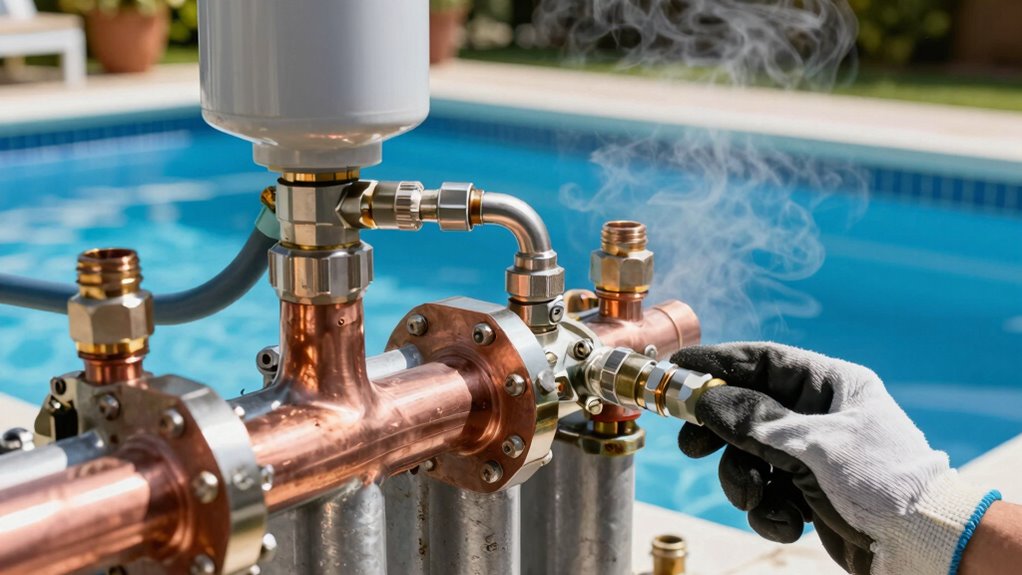
Pool heat exchangers can develop issues over time that affect their efficiency and longevity. Common problems include chemical buildup, leaks, and reduced heat transfer. To address these, start by inspecting for leaks through leak detection methods like pressure testing. Chemical buildup can clog the system, so regularly flush and clean the exchanger. Here are key issues to watch for:
- Leaks caused by corrosion or worn seals
- Reduced efficiency from mineral or chemical deposits
- Blockages due to chemical buildup
- System overheating or inconsistent temperature control
- Proper maintenance can extend the lifespan of your heat exchanger and prevent many common problems. Fix leaks promptly by replacing seals or repairing corrosion. To prevent chemical buildup, maintain proper water chemistry and clean the exchanger periodically. Additionally, understanding corrosion mechanisms is essential for effective prevention, and regular inspections help catch issues early, ensuring your heat exchanger runs smoothly. Regular monitoring of system performance can also aid in early detection of potential problems before they become serious. Incorporating preventive measures such as water treatment can significantly reduce the risk of damage and improve efficiency. Being aware of corrosion processes can help you implement more targeted prevention strategies, ultimately prolonging the lifespan of your equipment.
Frequently Asked Questions
What Maintenance Is Required to Ensure Pool Heat Exchanger Efficiency?
To keep your pool heat exchanger efficient, regularly inspect and clean it to prevent buildup. Use corrosion prevention measures like applying anti-corrosion coatings or using proper metal alloys. Confirm insulation methods are intact to minimize heat loss. Check for leaks, and flush the system periodically to remove debris. Proper maintenance extends lifespan, maintains efficiency, and prevents costly repairs, so stay proactive with these steps.
Can Pool Heat Exchangers Be Used With Solar Heating Systems?
Think of your pool’s heat exchanger as a versatile bridge, connecting different heating worlds. Yes, it can be used with solar heating systems, especially if designed for solar integration. Ensuring system compatibility is essential; check that your heat exchanger supports solar input and matches your system’s specifications. Proper integration maximizes efficiency, harnessing solar power to keep your pool warm while reducing energy costs and reliance on traditional heating methods.
How Long Does a Typical Pool Heat Exchanger Last?
A typical pool heat exchanger lasts about 10 to 15 years, depending on your corrosion prevention measures and material selection. You can prolong its lifespan by choosing materials like copper or titanium, which resist corrosion better. Regular maintenance, such as cleaning and checking for leaks, also helps. Properly maintaining your heat exchanger ensures it functions efficiently for many years, providing reliable heating for your pool.
Are There Environmental Considerations When Choosing a Heat Exchanger?
You might think all heat exchangers are equal, but choosing eco-friendly options matters. Their environmental impact and energy efficiency can profoundly affect your carbon footprint. Opt for models made from sustainable materials and with high efficiency ratings to reduce energy consumption. This not only helps the planet but also saves you money long-term. Always consider these factors to guarantee your pool heating system aligns with your environmental values and promotes a greener future.
What Safety Precautions Should Be Taken During Installation?
During installation safety, you should always wear protective gear like gloves and goggles to prevent injuries. Make sure to turn off power and water supplies before starting. Follow proper procedures and local codes, and avoid shortcuts. It’s best to seek expert consultation to guarantee correct setup and safety compliance. Carefully handle hot components and pressurized parts to prevent accidents, and double-check all connections before turning the system back on.
Conclusion
Now that you know how pool heat exchangers work with boilers and tankless systems, you’re better equipped to make informed decisions. Choosing the right type and size ensures efficient heating and longevity. Keep an eye out for common issues and address them promptly. Remember, a stitch in time saves nine—taking care of your heat exchanger now keeps your swim season smooth sailing. Plunge in confidently, and enjoy warm, inviting waters all season long.