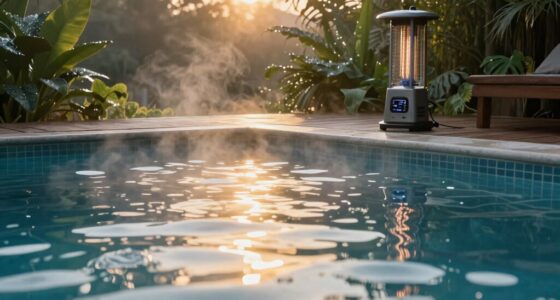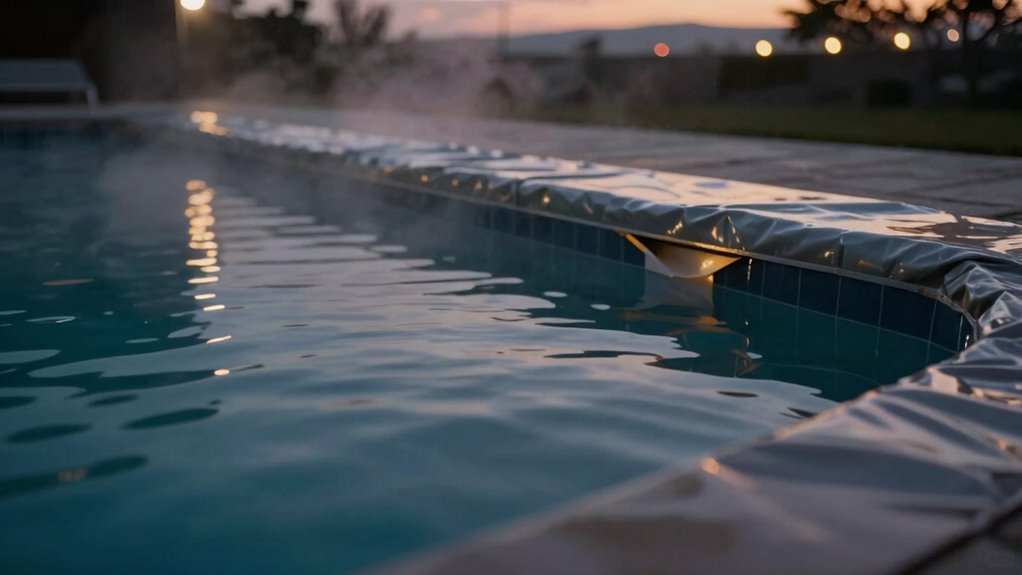

Most pool owners overlook the biggest hidden heat loss: small gaps and poorly insulated areas around the pool, plumbing, and covers. These overlooked spots allow heat to escape quietly, costing you hundreds annually in energy. You might focus on your heater or cover but miss how heat is sneaking out through unnoticed cracks or uninsulated surfaces. If you want to keep your pool warmer with less energy, understanding and sealing this blind spot is key. Keep exploring to discover how.

Get pool and patio gear delivered free — and shop member deals
- Fast, free delivery on millions of items
- Access to Prime Big Deal Days deals on October 6–7
- Prime Video, Amazon Music and more included
Key Takeaways
- Many pool owners overlook heat loss through uninsulated or poorly sealed areas around the pool structure.
- Evaporation, often neglected, accounts for significant heat loss without owners measuring it.
- Wind exposure and environmental factors accelerate unseen heat dissipation that owners rarely monitor.
- Hidden heat escape routes, such as plumbing or gaps, are frequently unmeasured blind spots.
- Without active measurement, owners miss critical areas where heat is escaping, reducing energy efficiency.
Have you ever wondered why your pool loses heat more quickly than expected, even when the heater is on? It’s frustrating to see your energy bills climb while your pool temperature drops faster than you’d like. The answer often lies in what’s called the heat loss blind spot—those areas where heat escapes without your realizing it. Many pool owners overlook this critical aspect, which directly impacts your pool’s energy efficiency. If you want to keep your pool warmer for longer, understanding and addressing this blind spot is essential.
Identify and seal the heat loss blind spot to keep your pool warmer longer and save on energy costs.
The biggest contributor to heat loss is not just the ambient air or wind but the pool’s surface area and how well it’s insulated. Even with a good heater, if heat escapes through poorly insulated surfaces or unprotected parts of your pool, you’ll struggle to maintain the desired temperature. That’s where insulation strategies come into play. Proper insulation around the pool’s sides, bottom, and any exposed plumbing can drastically reduce heat loss, making your heating efforts more effective and energy-efficient. Foam panels, insulating blankets, and even bubble wraps can serve as cost-effective solutions that trap heat close to the water, preventing it from dissipating into the environment. Additionally, understanding the thermal properties of different insulation materials can help you select the most effective options for your setup.
Another often overlooked aspect is the evaporation process. Water evaporation is a major heat loss pathway, especially if the pool surface isn’t covered when not in use. An insulating cover or solar blanket can significantly cut down on this loss, conserving energy and maintaining temperature. But many owners forget to measure or monitor evaporation and instead rely solely on the heater to compensate. This blind spot can cause you to overwork your heating system, wasting energy and money. Measuring heat loss is crucial to understanding how much energy is truly being used to maintain your pool temperature. To further optimize heat retention, some owners also consider environmental factors, such as wind speed and sun exposure, which play a significant role in heat dissipation.
Furthermore, the design and placement of your pool influence heat retention. For example, an exposed pool in a windy area loses heat faster than one sheltered by trees or structures. Without measuring these factors, you might not realize how much heat escapes due to environmental exposure. Combining strategic windbreaks with insulation strategies can create a more energy-efficient setup that minimizes heat loss. Regular assessments of environmental conditions can help you optimize these protective measures and reduce unnecessary heat loss.
In the end, the key is to recognize this heat loss blind spot and actively measure where your heat is escaping. By implementing smart insulation strategies and covering your pool when not in use, you’ll boost energy efficiency. It’s about working smarter, not harder, to keep your pool warmer longer and reduce your energy costs. When you address these hidden escape routes, you’ll notice a real difference in your pool’s temperature stability and your overall energy consumption.
As an affiliate, we earn on qualifying purchases.
Frequently Asked Questions
How Can I Detect Unseen Heat Loss in My Pool?
To detect unseen heat loss in your pool, check insulation effectiveness around the pool area and consider using a pool cover consistently. A noticeable drop in water temperature despite good insulation might indicate heat is escaping through unprotected spots. Using a pool cover minimizes heat loss overnight or during off-hours, and inspecting for gaps or damage can reveal hidden heat leaks that affect temperature retention.
Does Pool Material Affect Heat Retention?
Think of your pool as a treasure chest; its material is the lock that keeps heat from escaping. The right pool material, like durable concrete or vinyl, acts as a sturdy shield, helping retain warmth. Pool insulation enhances this effect, trapping heat like a cozy blanket. So, yes, your pool’s material considerably impacts heat retention, making it essential to choose durable options that minimize heat loss and keep your swim warm and inviting.
What Equipment Best Measures Hidden Heat Loss?
You should use thermal imaging cameras to detect hidden heat loss around your pool. These devices visually reveal temperature differences and help identify insulation gaps or leaks. Insulation testing is also essential, as it confirms whether your pool’s insulation is effective or needs upgrading. Combining thermal imaging with insulation testing offers a thorough way to measure and address heat loss, saving energy and maintaining water temperature efficiently.
How Often Should I Check for Heat Loss Blind Spots?
You should check for heat loss blind spots at least once a season, ideally before and after winter or summer. Regular inspection helps you evaluate your pool’s insulation and cover efficiency, ensuring minimal heat escape. Keep an eye on areas where heat might escape unnoticed, like edges or poorly insulated spots. Consistent checks allow you to optimize your heating system and save energy, keeping your pool warmer longer and more cost-effective.
Can Weather Conditions Influence Unnoticed Heat Loss?
Yes, weather conditions like solar radiation and wind chill can influence unnoticed heat loss. Solar radiation can warm the pool during the day, but at night, lack of sunlight means more heat escapes. Wind chill increases evaporation and air cooling around the pool, accelerating heat loss. You should monitor these factors regularly, especially during fluctuating weather, to identify and address potential heat loss blind spots effectively.
solar pool cover insulating blanket
As an affiliate, we earn on qualifying purchases.
As an affiliate, we earn on qualifying purchases.
Conclusion
Understanding the heat loss blind spot can save you up to 50% on energy costs, according to recent studies. Many pool owners overlook this hidden factor, leading to unnecessary heat loss and higher bills. By measuring and addressing this blind spot, you can keep your pool warmer and more energy-efficient. Don’t let overlooked heat escape unnoticed—taking action now makes a noticeable difference in both comfort and savings.
pool heat loss measurement device
As an affiliate, we earn on qualifying purchases.
As an affiliate, we earn on qualifying purchases.
As an affiliate, we earn on qualifying purchases.
Fall Picks
fall essentials
As an affiliate, we earn on qualifying purchases.