
Using rainwater for your pool can be eco-friendly and cost-effective, but it’s not without challenges. Rainwater may carry pollutants, dust, pollen, and bacteria, so you’ll need robust filtration and proper chemical balancing to keep it safe and clear. Since rainwater is naturally acidic, adjusting pH and maintaining good water chemistry is essential to prevent damage. With diligent treatment and monitoring, you can make rainwater a safe, sustainable pool source — learn more about managing these processes effectively.

Get pool and patio gear delivered free — and shop member deals
- Fast, free delivery on millions of items
- Access to Prime Big Deal Days deals on October 6–7
- Prime Video, Amazon Music and more included
Key Takeaways
- Rainwater can be safely used for pools with proper filtration, treatment, and regular water chemistry monitoring.
- It is eco-friendly and cost-effective but may introduce contaminants requiring additional filtration and chemical adjustments.
- Rainwater’s natural acidity necessitates pH balancing to prevent corrosion and maintain water clarity.
- Effective multi-stage filtration and disinfection systems are essential to remove pollutants and pathogens.
- Regular testing and maintenance are crucial to ensure safe, clean, and balanced pool water using rainwater.
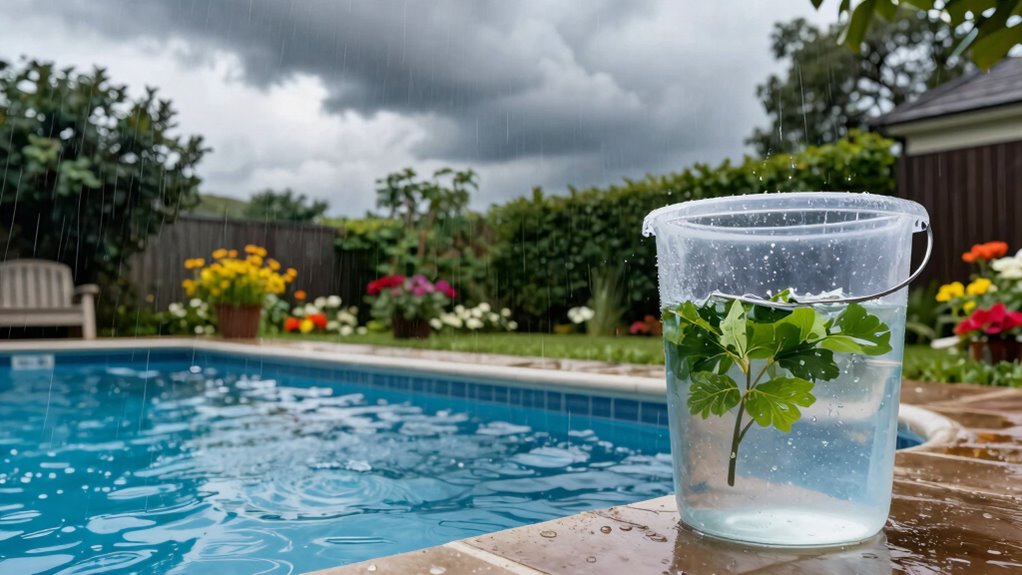
Have you ever considered using rainwater to fill your pool? It might seem like an eco-friendly and cost-effective idea, but before making the switch, it’s essential to understand the implications for pool maintenance and water filtration. Rainwater can be a natural supply, but it’s not always as pure as you might hope. When rain hits the ground, it picks up dust, pollen, bacteria, and other contaminants, which can introduce impurities into your pool. This means that relying solely on rainwater could lead to increased water treatment needs, especially if you want to keep your pool clean and safe for swimmers.
Using rainwater for your pool can save money but requires careful filtration and chemical management to ensure safety.
One of the main concerns with using rainwater for your pool is its chemical composition. Rainwater is naturally slightly acidic, with a pH level typically around 5.0 to 6.0, which is lower than the ideal range for pool water of 7.2 to 7.8. If you plan to use rainwater, you’ll need to carefully monitor and adjust the water’s pH and alkalinity levels to prevent corrosion of the pool’s surface and equipment, and to guarantee comfortable swimming conditions. Regular water testing becomes crucial, as imbalances can cause algae growth, cloudy water, or damage to the pool’s lining and filtration system.
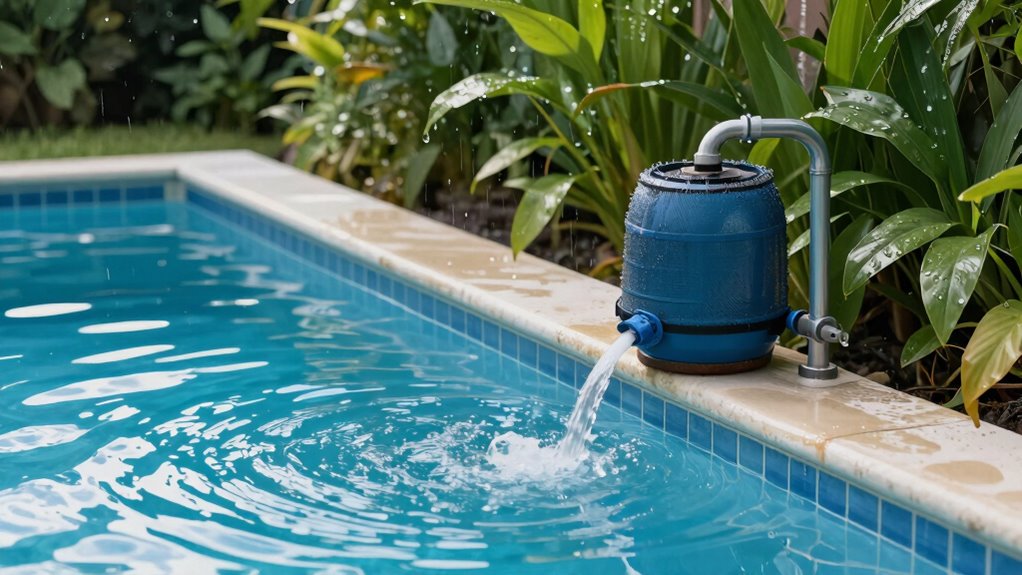
Water filtration plays a key role when using rainwater. You should incorporate a robust filtration system before the water enters your pool. A good filtration system will remove debris, bacteria, and other impurities, making the rainwater safer for swimming. Many pool owners add pre-filters or UV sterilizers to their systems to further improve water quality. Keep in mind that rainwater tends to contain organic matter and pollutants that can quickly overwhelm basic filters, so a multi-stage filtration process is often necessary. Proper filtration not only maintains water clarity but also reduces the burden on chemical treatments, making pool maintenance more manageable. Additionally, understanding the contaminant levels in rainwater can help you choose the most effective filtration and treatment methods. Implementing a proper water testing routine is essential for maintaining optimal water chemistry and ensuring safety.
Despite the challenges, using rainwater can be advantageous if you’re prepared to manage its chemistry and filtration. It reduces reliance on municipal water sources and lowers your water bills. Furthermore, rainwater harvesting systems can be integrated into your property to optimize collection efficiency. However, it’s imperative to treat rainwater properly before it enters the pool to prevent contamination and maintain a healthy swimming environment. Regular testing, filtration, and chemical balancing are fundamental to incorporating rainwater safely into your pool routine. Proper water chemistry management is essential for preventing issues like corrosion or algae growth, which can compromise your pool’s integrity. If you’re diligent about these aspects, rainwater can become a sustainable and cost-effective option for pool filling, but it requires ongoing attention to detail to keep your pool safe, clean, and inviting.
As an affiliate, we earn on qualifying purchases.
Frequently Asked Questions
How Does Rainwater Affect Pool pH Levels Over Time?
Rainwater can lower your pool’s pH over time because it’s slightly acidic, especially if not properly filtered. As rainwater enters, it introduces fresh water that dilutes pool alkalinity, causing pH levels to drop. Rainwater filtration helps remove contaminants, but you’ll still need to monitor and adjust pH regularly. Consistent testing guarantees your pool stays balanced, preventing issues like corrosion or cloudy water caused by fluctuating pH levels.
Can Rainwater Introduce Harmful Bacteria Into Swimming Pools?
Like Pandora’s box, rainwater can harbor harmful bacteria that pose contamination risks to your pool. While rainwater itself isn’t inherently dangerous, it can pick up pollutants and microorganisms from the air or surfaces. To prevent health issues, you must perform thorough water treatment—like filtration and chlorination—before adding rainwater to your pool. Properly treated rainwater minimizes risks, but neglecting this step could introduce unwanted bacteria into your swimming experience.
What Are the Costs of Filtering Rainwater for Pool Use?
Filtering rainwater for pool use costs vary depending on the system you choose. A basic rainwater filtration setup might cost a few hundred dollars, while more advanced systems with UV sterilization or multi-stage filters can reach over a thousand. Conducting a thorough cost analysis helps you weigh initial expenses against long-term savings, ensuring you select an efficient, cost-effective solution that provides safe, clean water for your pool.
How Often Should Rainwater Be Tested Before Adding to a Pool?
Think of testing rainwater like checking the foundation before building—crucial for durability. You should test rainwater before adding it to your pool at least once a month, especially after heavy storms. Focus on rainwater purity, including pH, chlorine, and contaminants. Also, consider collection efficiency, as debris or pollutants can affect its quality. Regular testing guarantees safe, clean water, preventing surprises in your pool’s chemistry.
Are There Specific Rainwater Collection Systems Recommended for Pools?
You should choose rainwater harvesting systems designed for pool use, focusing on durable storage tank materials like food-grade plastics or stainless steel to prevent contamination. Look for collection systems with proper filtration and first-flush diverters to improve water quality. These features guarantee the rainwater remains safe for your pool, reducing chemical needs and promoting eco-friendly practices. Always verify that your system complies with local health and safety regulations.
As an affiliate, we earn on qualifying purchases.
Conclusion
Using rainwater for your pool can be an eco-friendly choice, but it requires careful handling to guarantee safety. Imagine your neighbor, Sarah, who started collecting rainwater but didn’t treat it properly—her pool ended up with algae and bacteria. By understanding the chemistry and taking proper precautions, you can enjoy a clean, safe pool while saving water. Always test and treat rainwater before use, and you’ll be swimming happily without worries.
As an affiliate, we earn on qualifying purchases.
As an affiliate, we earn on qualifying purchases.
Evergreen bestsellers Picks
bestsellers
As an affiliate, we earn on qualifying purchases.