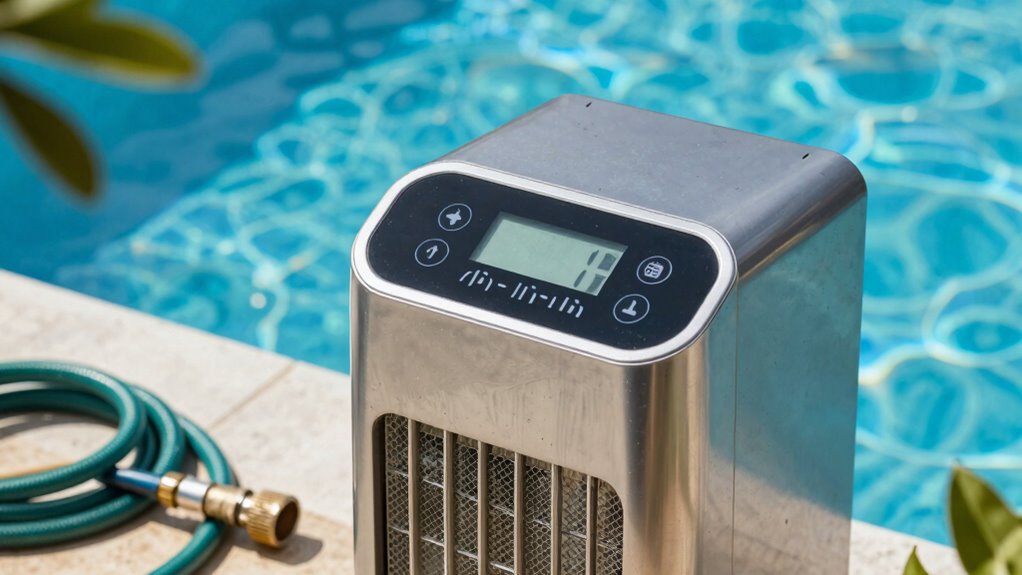

Even if your pool heater’s specs seem fine, issues like mineral buildup, dirt, or corrosion can block heat transfer, making it feel underpowered. Improper installation, poor insulation, or incorrect water flow can also reduce efficiency. Environmental factors like wind or cold air speed up heat loss, and an undersized heater won’t warm large or cold pools effectively. Keep an eye on these common problems, as you’ll discover more ways to boost your heater’s performance soon.
Key Takeaways
- Mineral buildup, dirt, or corrosion impair heat transfer, reducing heater effectiveness despite proper specifications.
- Incorrect installation or inadequate insulation cause heat loss, making the heater seem underpowered.
- Environmental factors like wind, cold air, or direct sunlight increase heat dissipation, affecting performance.
- Water flow issues, such as improper pump or filter operation, hinder efficient heating.
- Pool size or cold weather conditions may exceed the heater’s capacity, requiring a larger or supplementary system.
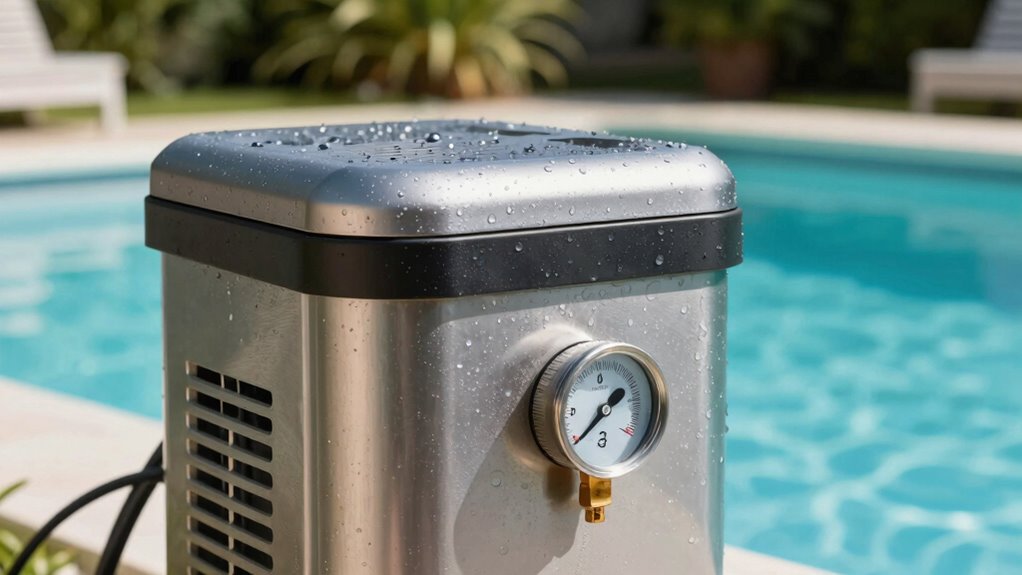
If your pool heater isn’t warming the water as quickly as it used to, you might be facing an underpowered issue. Even if the heater’s specifications seem adequate, several factors could be preventing it from performing at full capacity. One common reason is that the heater isn’t operating as efficiently as it should, which directly impacts energy efficiency. Over time, mineral buildup, dirt, or corrosion can reduce the heater’s ability to transfer heat effectively, making it seem underpowered despite having the right size or capacity. Regular maintenance and cleaning are key to ensuring your heater runs smoothly and maintains ideal energy efficiency.
Regular maintenance and cleaning keep your pool heater running efficiently and effectively.
Another overlooked factor is installation challenges. If the heater wasn’t installed correctly, it might not be able to meet its intended performance level. For instance, improper placement or inadequate insulation can cause heat loss, forcing the unit to work harder to maintain a comfortable temperature. Incorrect plumbing connections or undersized filters can also restrict water flow, reducing the heater’s ability to warm the pool effectively. Sometimes, the system’s design doesn’t account for the specific size and shape of your pool, which can lead to underperformance even with a seemingly suitable heater. Addressing these installation challenges often requires consulting a professional to evaluate and improve the setup.
You should also consider the environmental conditions around your pool. If your heater is exposed to wind, direct sunlight, or cold air, it may struggle to maintain temperature, making it seem underpowered. Similarly, if the pool’s water flow rate is too high or too low, the heater won’t work as efficiently. A flow rate that’s too high may prevent proper heat transfer, while a flow that’s too low could cause uneven heating or stress on the system. Ensuring your pump and filter system are correctly balanced and functioning properly can improve overall energy efficiency and help your heater perform as expected. Additionally, mineral buildup and corrosion can significantly impair thermal transfer and should be regularly checked and addressed to keep the heater operating optimally. Proper insulation around the pool and equipment can also prevent unnecessary heat loss. It’s also helpful to understand how heat transfer efficiency impacts the overall performance of your heater and how environmental factors can disrupt this process.
Finally, it’s worth evaluating whether your expectations align with your heater’s capabilities. Sometimes, a heater that’s properly sized for your pool might still seem underpowered if you’re trying to heat a large pool in a short time or during very cold weather. In such cases, investing in a higher-capacity unit or supplementary heating options may be necessary. Being aware of the performance limitations of your heater can help you set realistic goals and avoid unnecessary frustration. By paying attention to maintenance, installation, environmental factors, and realistic expectations, you can determine whether your heater’s underperformance stems from underlying issues or simply mismatched needs.
pool heater mineral buildup cleaner
As an affiliate, we earn on qualifying purchases.
As an affiliate, we earn on qualifying purchases.
Frequently Asked Questions
Can Weather Conditions Affect My Pool Heater’s Performance?
Yes, weather conditions can affect your pool heater’s performance. Temperature fluctuations make it harder for the heater to maintain your desired water temperature, especially during cold spells. Wind exposure also impacts efficiency by increasing heat loss from the pool surface. When it’s windy, your heater works harder to compensate, which can make it seem underpowered even if the specs are fine. Consider wind barriers or insulating covers to improve performance.
How Often Should I Service My Pool Heater?
You should service your pool heater at least once a year to maintain peak performance. Follow a regular maintenance schedule that includes cleaning the filter, inspecting the burners, and checking for leaks. Proper maintenance boosts energy efficiency, saving you money and ensuring your heater runs smoothly. If you notice reduced heating or strange noises, consider more frequent servicing. Staying consistent with upkeep keeps your pool warm and operational throughout the season.
Does Pool Size Impact Heater Effectiveness?
Imagine your pool as a cozy oasis; its size directly influences how well your heater performs. Larger pools demand more warmth, making pool insulation and heater placement vital. If the heater’s tucked away in a shaded corner or the pool’s too expansive, it struggles to evenly distribute warmth. To boost efficiency, guarantee proper heater placement and consider insulation, so your heater can truly shine, regardless of pool size.
Are There Specific Fuel Types That Work Better?
Certain fuel types, like natural gas and propane, often work better because they provide consistent, reliable heat and have good fuel efficiency. If you’re exploring alternative fuels, consider options like solar or electric systems, which might be more eco-friendly and efficient depending on your setup. Using the right fuel type guarantees your pool heater runs effectively, maintains desired temperatures, and saves you money on energy costs over time.
Can Algae Growth Reduce Heater Efficiency?
Algae buildup is like a thick blanket over your pool’s surfaces, and it can definitely reduce heater efficiency. When algae grows, it clogs filters and insulates pipes, forcing your heater to work harder. Plus, algae can accelerate heater corrosion by introducing moisture and contaminants. Regular cleaning prevents algae growth, keeps your system running smoothly, and protects your heater from costly damage. Staying on top of maintenance guarantees peak performance.
As an affiliate, we earn on qualifying purchases.
Conclusion
If your pool heater still feels underpowered despite the specs looking fine, don’t give up hope. Sometimes, the tiniest oversight or hidden issue can turn your warm oasis into a chilly disappointment. Think of your heater as the heart of your pool—if it’s not pumping the right warmth, everything feels off. Keep troubleshooting, stay patient, and remember, a well-functioning heater can be the difference between a revitalizing swim and a frosty surprise!
pool pump and filter maintenance kit
As an affiliate, we earn on qualifying purchases.
As an affiliate, we earn on qualifying purchases.
outdoor wind-resistant pool heater cover
As an affiliate, we earn on qualifying purchases.
As an affiliate, we earn on qualifying purchases.