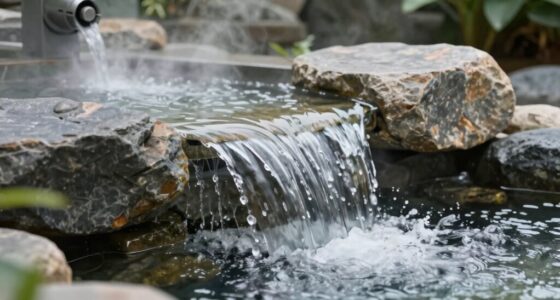

Understanding laminar and turbulent flow is key to designing a safe and efficient pool. Laminar flow is smooth and steady, helping to circulate water evenly and promote clarity, while turbulent flow is chaotic, aiding in aeration and chemical distribution. Too much turbulence, however, raises energy costs and discomfort. Balancing these flows improves water quality, safety, and comfort. If you keep exploring, you’ll discover how flow patterns can make your pool more effective and enjoyable.

Get pool and patio gear delivered free with Prime
- Fast, free delivery on millions of items
- Prime Video, Amazon Music and more included
- Member-only deals all year
Key Takeaways
- Proper flow types ensure efficient water circulation, preventing stagnation and improving water quality.
- Laminar flow reduces energy consumption and noise, enhancing pool comfort and operational efficiency.
- Turbulent flow aids in aeration and chemical dispersion but must be controlled to avoid excess energy costs.
- Balancing flow patterns optimizes equipment placement and minimizes maintenance needs.
- Recognizing flow regimes enhances safety, clarity, and the overall swimming experience.

Have you ever wondered how the flow of water affects the overall experience of a swimming pool? Understanding flow in pool design isn’t just about aesthetics or water movement; it’s about creating a safe, efficient, and enjoyable environment. One key aspect is flow visualization, which helps you see how water moves through the pool. By observing flow patterns, you can identify areas where water might stagnate or circulate poorly. This insight allows you to enhance the placement of jets, returns, and skimmers so that water moves smoothly throughout the entire pool. Effective flow visualization also helps pinpoint turbulence, ensuring you maintain a calm, inviting surface, especially in leisure pools where comfort matters.
Flow visualization reveals water movement, helping optimize pool circulation for safety, efficiency, and comfort.
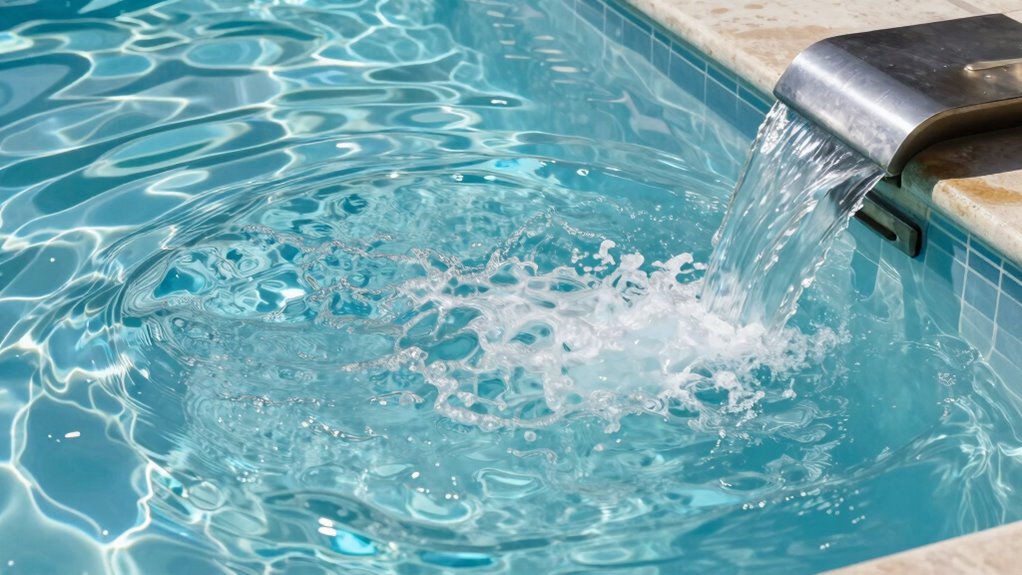
Pump efficiency plays an essential role in maintaining ideal flow conditions. When the pump operates efficiently, it delivers the right amount of water circulation without wasting energy. Proper pump selection and placement influence whether the water flow remains laminar or turns turbulent. Laminar flow, characterized by smooth and steady water movement, promotes uniform circulation, reduces noise, and minimizes energy consumption. This type of flow is especially desirable in areas where swimmers enjoy a tranquil environment or in features like infinity edges, where visual appeal is critical. Conversely, turbulent flow involves chaotic, mixed water movement. While turbulence can enhance aeration and help disperse chemicals more evenly, excessive turbulence can cause discomfort, increase energy costs, and complicate flow control.
In pool design, balancing these flow types is crucial. Too much turbulence can lead to higher pump loads and decreased pump efficiency, raising operational costs. On the other hand, insufficient circulation can lead to dead zones where water stagnates, fostering algae growth and poor water quality. By carefully designing flow paths, incorporating flow visualization techniques, and selecting pumps that match the pool’s size and use, you can maintain a healthy balance. This balance is vital for preventing water stagnation and ensuring consistent water quality throughout the pool. This ensures the water remains clear, safe, and inviting, while also keeping energy costs in check. Additionally, understanding the different flow regimes helps pool designers optimize performance and safety. Recognizing the flow regime can guide the placement of equipment to achieve desired water movement, making your pool more effective and energy-efficient. Maintaining awareness of these flow patterns is essential for troubleshooting circulation issues and ensuring consistent water quality.
Achieving the right flow pattern means your pool functions at its best, providing an enjoyable experience for swimmers and reducing maintenance efforts. Ultimately, understanding why laminar and turbulent flow matter in pool design helps you create a space that’s both efficient and pleasurable. It’s about harnessing flow visualization to see how water moves and adjusting pump efficiency to maintain the desired flow type. When you get these elements right, your pool becomes a harmonious environment where water quality is preserved, energy use is minimized, and every swim feels just right. Recognizing the impact of flow patterns can help prevent issues such as water stagnation and uneven chemical distribution, further enhancing pool safety and maintenance.
As an affiliate, we earn on qualifying purchases.
Frequently Asked Questions
How Does Flow Type Affect Pool Cleaning Efficiency?
Flow type directly impacts your pool cleaning efficiency. Turbulent flow enhances flow visualization, breaking up debris and making it easier for your skimmers and filters to capture particles. This type of flow also improves pump efficiency by reducing resistance and ensuring steady circulation. In contrast, laminar flow can cause debris to settle, making cleaning less effective and overworking your pump. Choosing the right flow helps keep your pool cleaner with less effort.
Can Flow Patterns Influence Swimmer Safety?
Flow patterns can considerably influence swimmer safety by affecting flow stability and swimmer comfort. Stable, well-designed flow prevents unexpected currents that could cause swimmers to lose balance or become disoriented, especially in deep or busy pools. Turbulent flows might create discomfort or hazards, while smooth, laminar flows promote a safer environment. Ensuring proper flow patterns helps maintain a secure, comfortable swimming experience for everyone.
What Is the Impact of Flow on Pool Chemical Distribution?
Flow impacts pool chemical distribution considerably. When flow is uniform, chemical dispersion happens evenly, preventing areas with high or low chemical concentrations. Turbulent flow enhances mixing, ensuring chemicals spread quickly, but can cause uneven distribution if not controlled. Laminar flow promotes steady, predictable movement, leading to consistent chemical dispersion. You need to balance flow types to maintain ideal chemical distribution, ensuring the entire pool remains safe, clean, and properly sanitized.
How Do Flow Types Affect Energy Consumption in Pools?
Flow type considerably affects your pool’s energy consumption. Laminar flow, with its smooth, steady movement, requires less energy because it minimizes resistance. Turbulent flow, on the other hand, involves chaotic motion, increasing energy use to maintain circulation. Your circulation design and flow rate choices directly impact efficiency. Optimizing these factors guarantees you use energy wisely, reducing costs while keeping your pool properly circulated and clean.
Are Certain Flow Patterns Better for Specific Pool Shapes?
Yes, certain flow patterns suit specific pool shapes better. You should focus on flow pattern customization to optimize circulation and energy efficiency. For irregular or freeform pools, turbulent flows might enhance mixing, while simpler shapes benefit from laminar flows. By tailoring flow patterns to your pool’s shape, you improve water quality, reduce energy costs, and guarantee even distribution of chemicals, making your pool more comfortable and efficient.
As an affiliate, we earn on qualifying purchases.
Conclusion
Understanding laminar and turbulent flow isn’t just about science; it’s about creating a perfect swimming environment. Imagine a smooth, calming pool versus one with choppy, unpredictable water—each impacts comfort and safety. By mastering these flow types, you guarantee your pool is both inviting and efficient. So, when designing your pool, think of flow as the silent conductor—guiding serenity or chaos—making all the difference between a good swim and an unforgettable experience.
As an affiliate, we earn on qualifying purchases.
automatic pool chemical dispenser
As an affiliate, we earn on qualifying purchases.
As an affiliate, we earn on qualifying purchases.
Fall Picks
fall essentials
As an affiliate, we earn on qualifying purchases.