To understand pump curves without feeling like an engineer, focus on the basics: the flow rate (horizontal axis) shows how much water moves, while the head (vertical axis) indicates the pressure or height. Watch where the pump’s curve intersects the system head curve; that’s your operating point. Look for the efficiency peak to find the most energy-effective spot. Keep exploring, and you’ll gain confidence in choosing and managing pumps effectively.
Key Takeaways
- Focus on the flow rate (horizontal axis) and head (vertical axis) to understand pump performance.
- Look for the efficiency peak to find the most energy-efficient operating point.
- Identify where the pump curve intersects with the system head curve to see real operating conditions.
- Remember that a higher system head means the pump works harder and may be less efficient.
- Use simple comparisons of flow and head to make informed decisions without technical jargon.
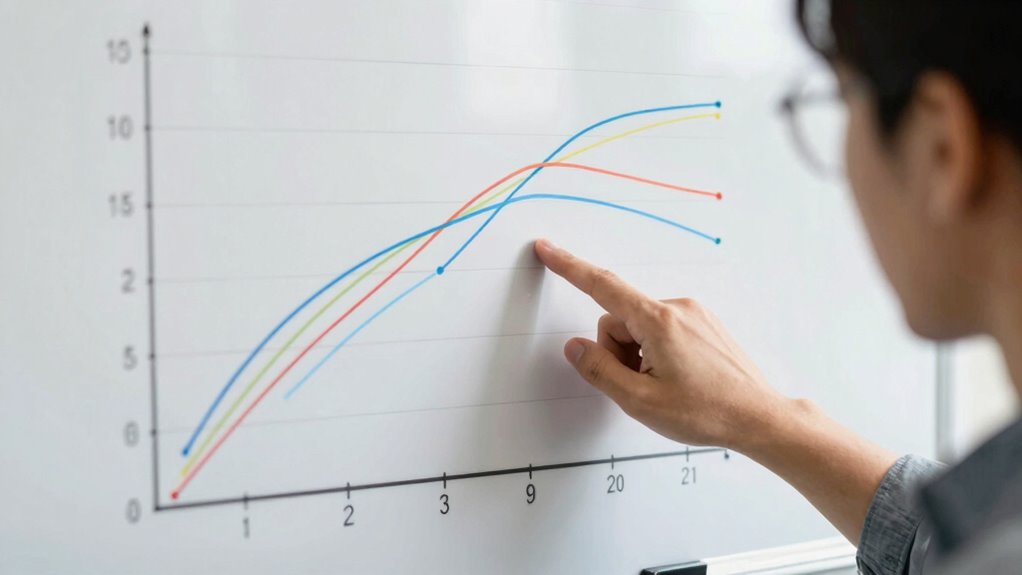
Ever wondered how to interpret the complex data presented in pump curves? Don’t worry—you’re not alone. Pump curves can seem intimidating at first glance, but once you understand the key elements, they become much easier to read. One of the most important aspects to grasp is how pump efficiency and system head interact. Pump efficiency tells you how well the pump converts electrical energy into hydraulic energy, while system head represents the total resistance the pump needs to overcome to move fluid through your system. Recognizing these factors helps you choose the right pump for your needs without feeling overwhelmed by technical jargon.
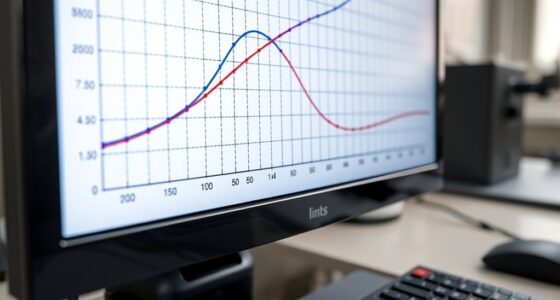
When you look at a pump curve, you’ll see a graph with flow rate, typically in gallons per minute (GPM) or liters per second, on the horizontal axis, and head, in feet or meters, on the vertical. The curve itself shows how the pump performs at different flow rates. The efficiency curve overlay often highlights the highest efficiency point, which indicates the most energy-efficient operating condition. At a glance, you can tell where the pump produces the highest efficiency—usually marked by a peak on the efficiency curve overlay. This peak indicates the ideal balance point between flow and head, meaning the pump operates most efficiently there. If you aim for energy savings and lower operational costs, selecting a point near this peak makes sense.
Understanding system head is equally essential. Your system head curve shows how much resistance your piping, valves, and fittings add to the flow. It’s typically plotted alongside the pump curve. The intersection point between these two curves indicates the actual operating point of your pump—where it will run when installed in your system. By matching the pump’s best efficiency point with your system’s head requirements, you guarantee ideal performance and energy efficiency. If the system head is too high, the pump will need to work harder, decreasing efficiency and increasing energy consumption. Conversely, if the system head is too low relative to the pump’s capacity, the pump might operate at a higher flow rate than necessary, which can cause undue wear and tear. Additionally, understanding pump performance helps prevent issues such as cavitation or excessive vibration, ensuring a longer service life. Recognizing the importance of system curve analysis can further optimize your pump selection and overall system reliability. Moreover, understanding how the pump’s performance curve relates to real-world conditions allows for more precise system design and maintenance planning. Being familiar with the system curve can also aid in troubleshooting operational issues and optimizing system adjustments.
In short, reading pump curves doesn’t have to be a formidable task. Focus on understanding the relationship between flow rate, head, pump efficiency, and the system head curve. When you match these elements correctly, you’ll select a pump that not only meets your needs but does so efficiently, saving you money and trouble in the long run. Once you get familiar with these basics, interpreting pump curves becomes a straightforward process—no engineering degree required.

VIVOSUN 800GPH Submersible Fountain Water Pump for Pond, Aquarium, Statuary
- Dimensions: 4.33 x 3.5 x 4.1 inches
- Flow Rate: Up to 800 GPH (3000L/H)
- Lift Height: Up to 10 feet
As an affiliate, we earn on qualifying purchases.
As an affiliate, we earn on qualifying purchases.
Frequently Asked Questions
What Are the Common Mistakes When Interpreting Pump Curves?
A common mistake when interpreting pump curves is ignoring system requirements, leading to incorrect pump selection. You might focus solely on the pump’s maximum flow or head without considering how it fits your system’s needs. Also, overlooking efficiency zones can hinder system optimization. Always match the pump curve with your system’s parameters to guarantee the best performance, energy savings, and reliable operation.
How Do Fluid Properties Affect Pump Curve Readings?
Fluid properties like viscosity and density variations notably impact pump curve readings. Higher viscosity fluids create more resistance, reducing flow rates and head pressure on the curve. Changes in density affect the pump’s ability to move fluid efficiently, often shifting the curve downward. You should consider these factors because they influence how the pump performs in real-world conditions, ensuring you select and operate pumps accurately for your specific fluid characteristics.
Can Pump Curves Predict Long-Term Pump Performance?
Think of pump curves as your crystal ball for performance prediction; they hint at future behavior but aren’t foolproof. While they offer valuable insights into efficiency and capacity, their curve accuracy can drift over time due to wear, corrosion, or debris. So, you can’t rely solely on them for long-term performance forecasts. Regular monitoring and maintenance complement the curves, ensuring your pump runs smoothly through its lifespan.
How Often Should Pump Curves Be Reviewed or Updated?
You should review and update pump curves regularly to guarantee accurate performance predictions. Incorporate this into your maintenance scheduling, ideally updating curves during routine maintenance or calibration frequency checks. Keep an eye on operational changes, wear, or system modifications, as these can impact pump performance. Regular reviews help catch issues early, optimize efficiency, and extend pump lifespan, making your maintenance proactive rather than reactive.
What Safety Considerations Are Involved in Pump Curve Analysis?
Think of pump curve analysis as steering a river with hidden rocks. You must follow safety protocols and stay alert to hazard awareness to prevent accidents. Always wear protective gear, guarantee proper training, and double-check equipment before evaluating curves. Recognizing potential risks helps you avoid unexpected dangers, just like spotting rocks in the water. Staying vigilant and adhering to safety measures keeps your analysis safe and effective.
domestic pump curve reading guide
As an affiliate, we earn on qualifying purchases.
As an affiliate, we earn on qualifying purchases.
Conclusion
Now that you know how to read pump curves, you’re like a navigator charting a course through a complex sea. Imagine standing at the bow, confidently steering your ship, knowing exactly when to adjust to avoid rough waters. Just as a skilled sailor reads the stars, understanding pump curves helps you make smarter decisions and keep your systems running smoothly. With this new skill, you’re ready to navigate any pump challenge that comes your way.

Oswerpon 2HP Above/In Ground Pool Pump, 115V/230V 6900GPH Self Priming
- Powerful and Durable Construction: Commercial-grade thermoplastic with copper motor
- Quiet and Efficient Operation: Optimized impeller design reduces noise and maximizes flow
- UL Certified for Safety: Includes grounding, overheating, and overload protection
As an affiliate, we earn on qualifying purchases.
As an affiliate, we earn on qualifying purchases.

Performance Tool W87030 Hand Vacuum Pump Brake Bleeder Kit
- All-in-One Kit: Includes everything for brake bleeding and testing
- Versatile Application: Tests and diagnoses various vehicle systems
- Dual Functionality: Supports brake bleeding and automotive diagnosis
As an affiliate, we earn on qualifying purchases.
As an affiliate, we earn on qualifying purchases.