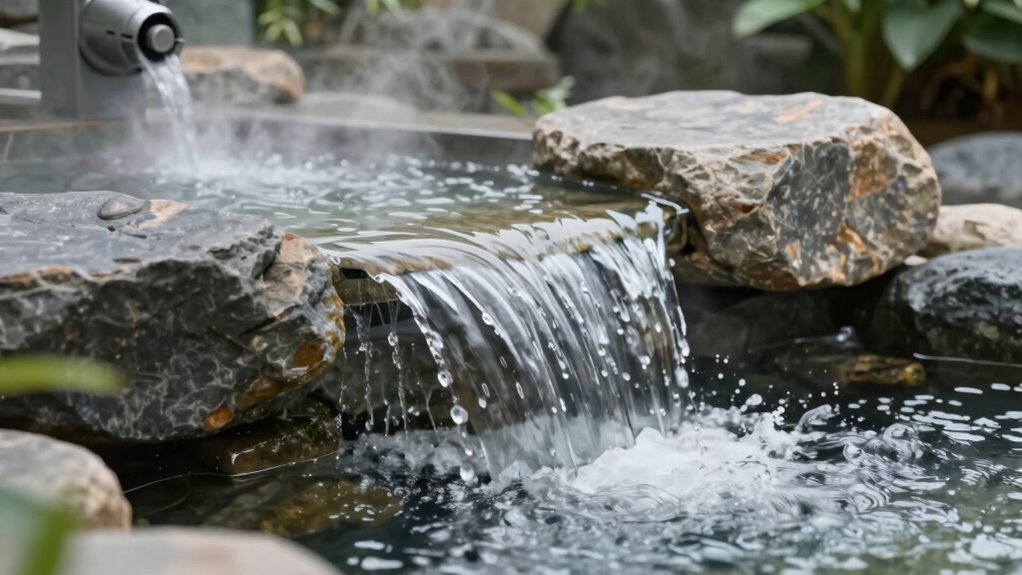

To get a waterfall look without the noise, you need to size your pump properly by matching the flow rate and head height to your water feature’s needs. Use a pump with adjustable flow controls and choose one with noise reduction features for a quieter experience. make certain your pipe size and outlet placement promote smooth water flow. If you want to learn how to fine-tune your pump for the best results, keep exploring the next steps.
Key Takeaways
- Select a pump with noise reduction features, such as insulated casings or dampeners, for quieter operation.
- Properly size the pump by calculating the necessary flow rate and head height to prevent turbulence and splashing.
- Use larger diameter pipes and position outlets at the waterfall’s apex for gentle, natural water flow with minimal noise.
- Opt for variable-speed pumps to adjust flow smoothly and reduce noise during operation.
- Regularly clean and maintain the pump and components to prevent clogs, vibrations, and unnecessary noise.

Roamoris Automatic Fountain Pump With Level Sensor,110V Small Submersible Water Pump For Pond,Aquariums,Fish Tank, Hydroponics,PM06
【Automatic Water Level Control】The integrated water level sensor ensures automatic operation, preventing water overflow and dry running, providing…
As an affiliate, we earn on qualifying purchases.
As an affiliate, we earn on qualifying purchases.
Why Proper Pump Sizing Is Key for Waterfalls and Water Features
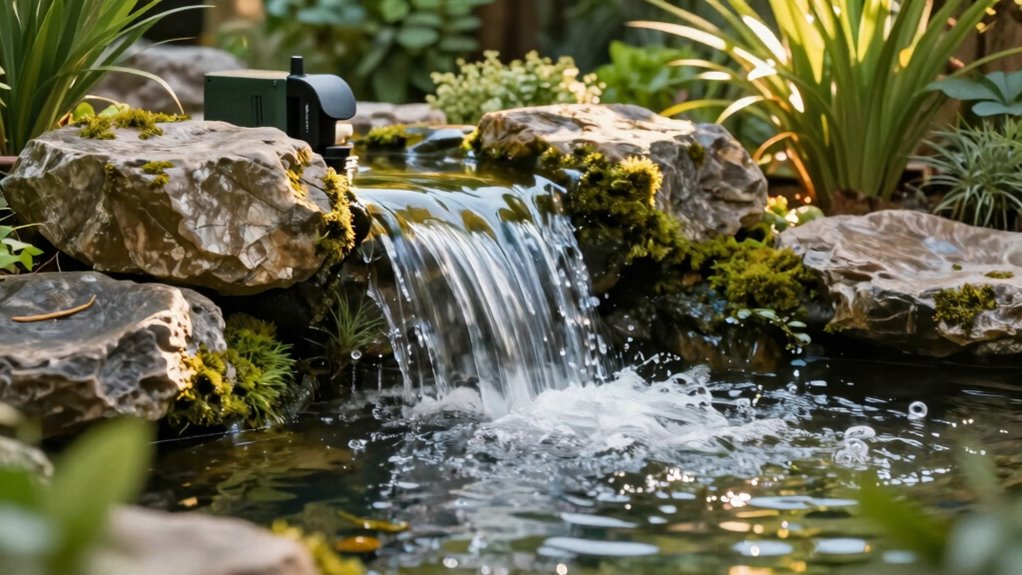
Proper pump sizing is essential because it directly impacts the performance and longevity of your water feature. Whether you have a garden pond or a decorative fountain, choosing the right pump ensures your water moves smoothly without unnecessary strain. An undersized pump won’t circulate water effectively, leading to stagnation and potential algae growth. Conversely, an oversized pump can cause excessive splashing, noise, and even damage to your equipment. Correct sizing guarantees your water feature operates quietly and efficiently, maintaining the aesthetic appeal you desire. It also reduces wear and tear on components, extending the life of your pump and other parts. Proper pump sizing is also important for maintaining the appropriate water flow rate to achieve the desired waterfall look without the waterfall noise. Additionally, understanding pump head height helps ensure your pump can overcome system resistance and deliver optimal performance. Knowing how to accurately calculate flow rate ensures your water feature functions as intended, avoiding costly mistakes. Properly matching your pump to your system’s head loss can prevent issues such as cavitation or insufficient water movement. Being aware of system resistance can help you select a pump that balances power and efficiency, ultimately enhancing the overall visual and acoustic effect. Ultimately, proper pump sizing helps you enjoy a beautiful, functioning water feature without the hassle of frequent repairs or replacements.
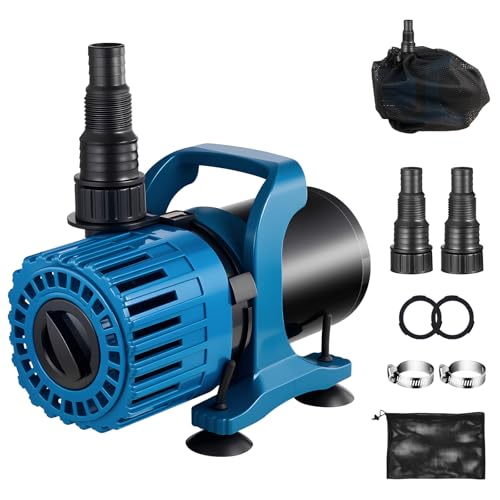
TONGCHANT 100W 600GPH-1800GPH Adjustable Flow Pond Pump UL Listed, 13 ft Lift, Submersible Water Pump for Fountain, Fish Pond &Water Garden, Quiet Fountain Pump, Waterfall Pump, Filter Bag &20ft Cord
TONGCHANT ADJUSTABLE FLOW POND PUMP – HIGH FLOW: adjustable pond pump delivering up to 1800 GPH with a…
As an affiliate, we earn on qualifying purchases.
As an affiliate, we earn on qualifying purchases.
Understanding Flow Rate and Head Height for Water Pumps
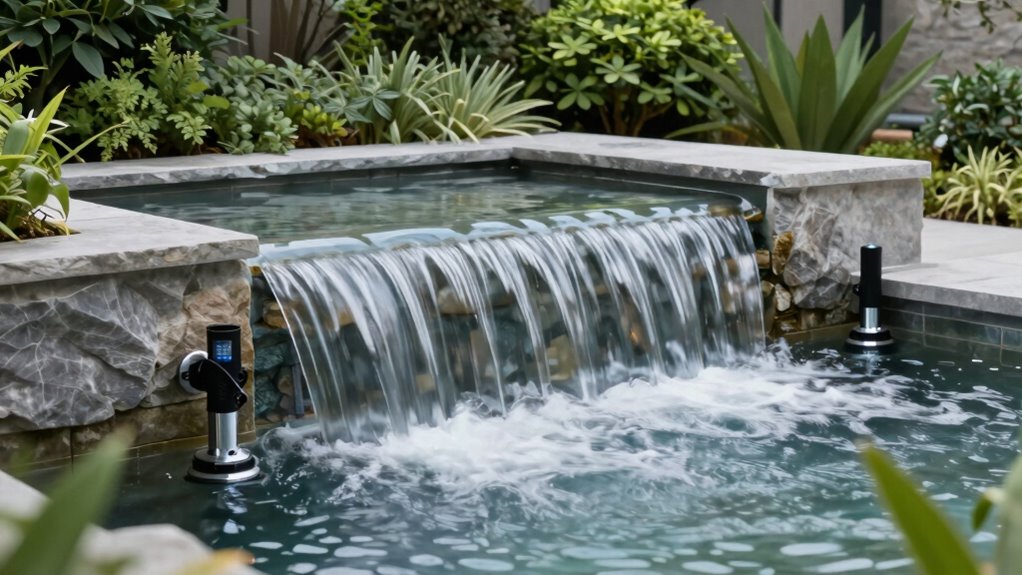
To choose the right pump, you need to understand two key concepts: flow rate and head height. These factors determine how much water moves and how high it needs to travel. Balancing these guarantees your water feature functions smoothly without overworking the pump. Considering trusted resources can also help ensure you select a reliable and efficient pump suited to your needs. Additionally, understanding microfluidic principles can aid in optimizing flow and minimizing noise for a more natural waterfall effect. An awareness of system compatibility is essential to match the pump with existing components and prevent potential issues. Fostering an understanding of power requirements can further enhance your ability to select a pump that operates efficiently within your system’s capacity.
Defining Flow Rate
Have you ever wondered how to determine the right flow rate for your water feature pump? The flow rate defines how much water moves through your system, directly impacting the water flow and overall appearance. To find the ideal pump capacity, you need to take into account the volume of water your feature requires and the desired circulation speed. Additionally, understanding water-cooled systems can help you choose pumps that operate efficiently and quietly. Proper pump placement can also reduce noise and improve circulation, making your water feature more enjoyable. When selecting a pump, consider the specific dog breed and their activity levels to ensure the pump’s operation aligns with your maintenance routine. Here are key points to keep in mind:
- Match the water flow rate to your feature’s size
- Too high a flow can cause noise and splashing
- Too low a flow may create weak waterfalls
- Consider the type of water feature you want
- Balance flow rate to minimize noise without sacrificing visual appeal
Getting this right ensures a beautiful, quiet water feature with suitable pump capacity.
Understanding Head Height
Understanding head height is key to guaranteeing your water pump can deliver the right flow rate for your feature. Head height refers to the vertical distance the pump needs to push water, impacting overall water circulation in your garden pond. If your pump isn’t rated for the total head height, it’ll struggle to maintain consistent flow, resulting in poor waterfall appearance or insufficient water movement. Measure the height from the pump’s water level to the highest point in your feature, including the pipe and fittings. Keep in mind that higher head heights mean the pump must work harder, often reducing flow rate. Choosing a pump with the correct head height ensures smooth water circulation, creating the waterfall look you want without excess noise or strain on your equipment. Proper pump selection is essential for maintaining healthy water features and preventing equipment damage.
Balancing Pump Power
Balancing pump power involves guaranteeing the flow rate matches the head height of your water feature. If the pump is too powerful, it can create excessive pump noise and waste energy, while too weak a pump won’t achieve the desired waterfall look. To optimize performance, consider these key points:
- Match pump flow rate with your water feature’s size for smooth circulation
- Choose a pump with adjustable flow settings to fine-tune noise levels
- Ensure the head height aligns with the pump’s specifications for efficiency
- Prioritize energy-efficient pumps to reduce operating costs
- Avoid oversizing, which can lead to unnecessary noise and energy consumption
Getting these elements right ensures your water feature runs quietly and efficiently, giving you the beautiful waterfall effect without the unwanted noise or wasted power.
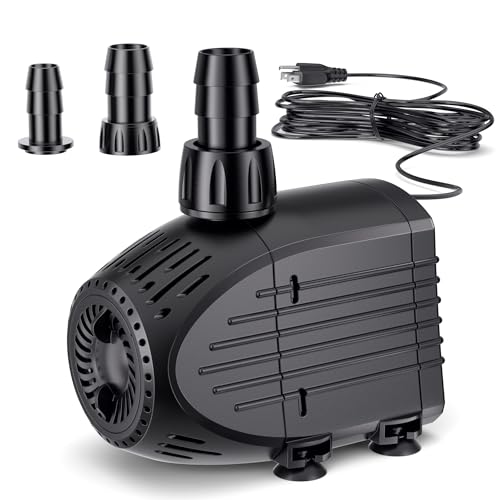
NFESOLAR Submersible Water Pump 880GPH, 60W Ultra Quiet Fountain Pump with Dry Burning Protection 9ft High Lift for Fish Pond, Fountains, Waterfall, Hydroponics, Aquariums KF206
Ultra-Quiet Submersible Fountain Pump: The installation method of the motor shaft and the material of the paddles have…
As an affiliate, we earn on qualifying purchases.
As an affiliate, we earn on qualifying purchases.
How to Calculate the Right Pump Size for Your Water Feature
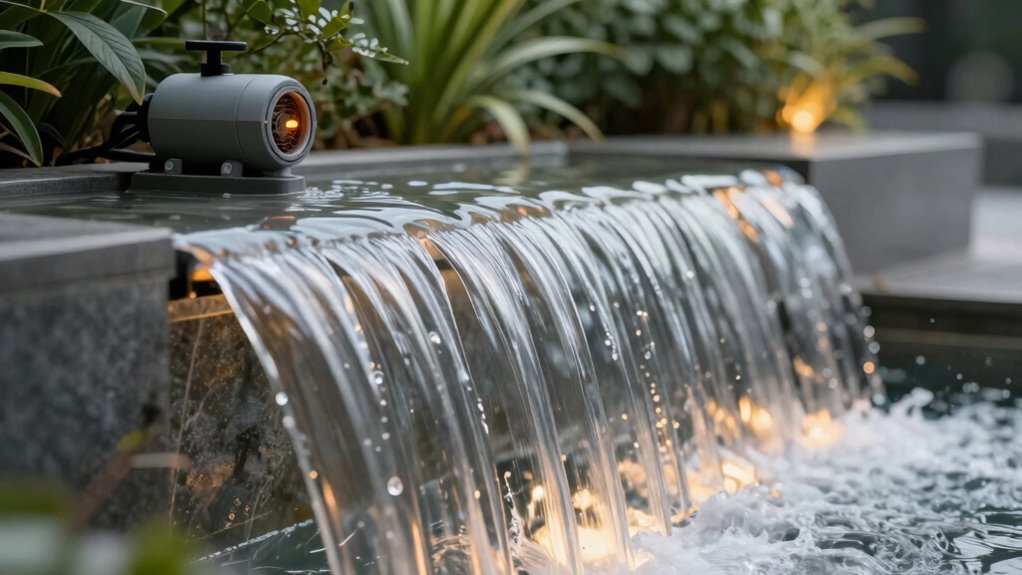
Choosing the right pump size is vital to guarantee your water feature runs smoothly without wasting energy or causing damage. To determine the correct size, start by calculating the total flow rate needed for your feature’s height and design. Consider factors like head height and pipe diameter. Once you have the flow rate, factor in your water chemistry to prevent issues like algae build-up or mineral deposits that could clog the pump. Remember, a pump that’s too powerful may cause splashing and noise, while one that’s too weak won’t achieve the desired waterfall effect. Proper pump maintenance extends its lifespan and keeps water chemistry balanced, ensuring your water feature stays beautiful and functional over time. Always choose a pump with slightly more capacity than your calculations suggest, for safety margin.

Water-Rebirth Variable Speed Controller for Asynchronous Garden Pond Waterfall Fountain Pump
WaterRebirth variable speed controller allows to slow your koi pond pumps down to the flow you desire with…
As an affiliate, we earn on qualifying purchases.
As an affiliate, we earn on qualifying purchases.
How to Tell If Your Pump Is Too Weak or Too Strong
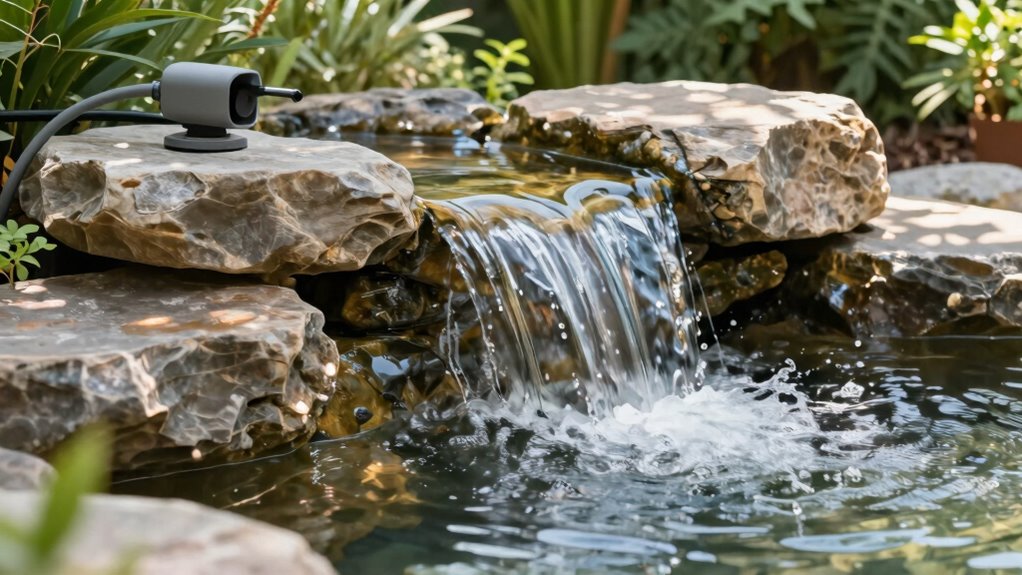
Once you’ve selected a pump size based on your calculations, it’s important to verify that it performs correctly once installed. Signs your pump is too weak include low water flow, poor water clarity, and excessive noise as it struggles. Conversely, a pump that’s too strong can cause loud pump noise, splashing, and turbulent water flow that disrupts the waterfall aesthetic. Keep an eye out for these indicators:
Ensure your pump performs well by watching for weak flow, noise, or turbulence indicating it’s either too small or too large.
- Water flow feels inadequate or uneven
- Water clarity diminishes quickly or becomes cloudy
- Excessive pump noise or vibrations
- Water splashing outside the feature
- The waterfall looks overly forceful or unbalanced
- Understanding pump capacity helps you select the right size for a natural, tranquil water feature.
- Proper pump sizing ensures the water flow remains consistent and harmonious with your landscape design.
Adjusting your pump to the right strength ensures a tranquil, clear water feature without unnecessary noise or turbulence. Proper sizing helps you achieve the desired waterfall look effortlessly.
Tips for Choosing a Quiet, Energy-Efficient Water Pump
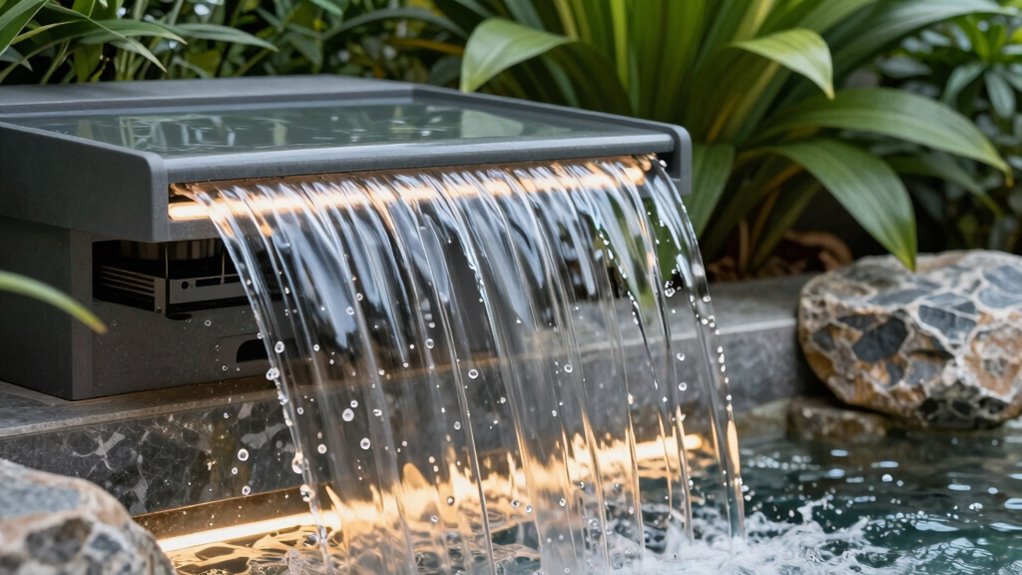
Selecting a quiet, energy-efficient water pump starts with understanding the features that minimize noise and reduce power consumption. Look for pumps designed with noise reduction features, like insulated casings or vibration dampeners, which help keep sound levels low. Energy savings come from choosing models with variable-speed motors, allowing you to adjust flow rates and avoid unnecessary power use. Additionally, select a pump with the right size for your water feature to prevent overworking the motor, which can increase noise and energy consumption. High-efficiency pumps often come with Energy Star ratings, indicating they meet strict efficiency standards. Considering inclusive casting and diverse design options can also enhance the aesthetic appeal of your water feature, reflecting a broader appreciation for beauty and harmony. When selecting a pump, it’s also helpful to evaluate noise reduction features that are specifically designed to create a peaceful environment. Incorporating advanced technology in pump design can further optimize performance and minimize operational disturbances. By prioritizing noise reduction and energy-efficient features, you’ll enjoy a peaceful waterfall look without sacrificing performance or racking up high energy bills. Additionally, understanding the importance of efficient motor design can lead to even quieter operation and lower energy costs over time.
Adjusting Your Pump to Create the Perfect Waterfall Without Noise
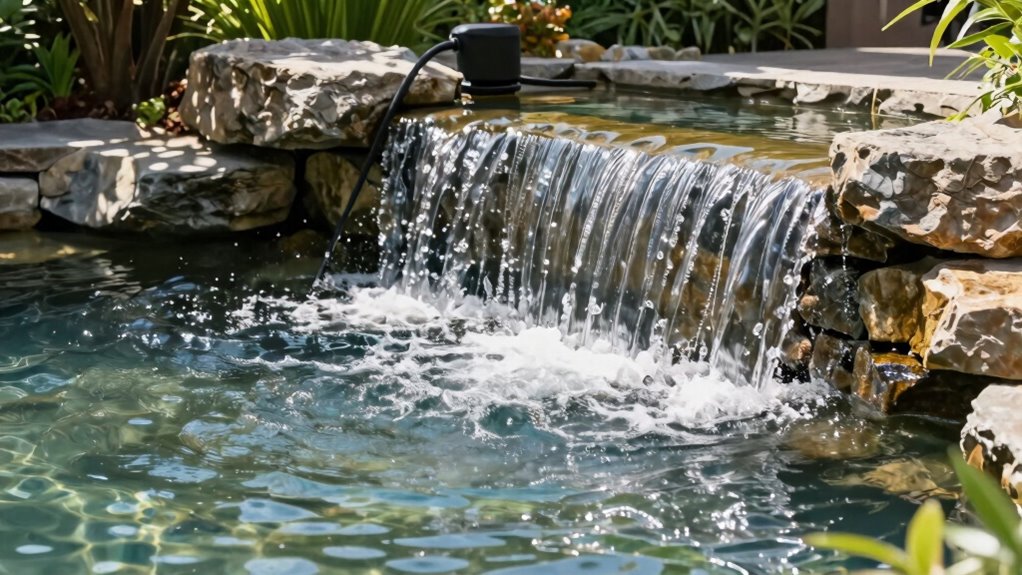
To create a peaceful waterfall, start by optimizing your flow rate to prevent splashing and excessive noise. Next, guarantee your pipe and outlet design promote smooth water flow, reducing turbulence. Fine-tuning these elements helps you achieve a beautiful waterfall without unwanted sound.
Flow Rate Optimization
Achieving the right flow rate is essential for creating a beautiful, peaceful waterfall without unwanted noise. You want a flow that’s strong enough to showcase the waterfall’s beauty but gentle enough to avoid loud splashing. Adjusting your pump guarantees the water flows smoothly, especially if you’re using solar power, which can fluctuate with sunlight. Keep aquatic plants healthy by maintaining a flow that prevents erosion and debris buildup. To optimize your flow rate:
- Start with manufacturer recommendations and adjust gradually
- Monitor the noise level and reduce flow if it’s too loud
- Check for obstructions in pipes and outlets
- Use adjustable valves for fine-tuning
- Observe the water’s movement during different sunlight conditions
Fine-tuning your pump creates a tranquil water feature that’s both visually stunning and quiet.
Pipe and Outlet Design
Proper pipe and outlet design play a crucial role in reducing noise and ensuring smooth water flow in your waterfall. Choosing the right pipe diameter minimizes turbulence and prevents water hammer, while proper outlet placement controls splash and noise levels. Larger pipe diameters reduce pressure loss, creating quieter, more consistent flow. Positioning outlets correctly—preferably at the waterfall’s apex—ensures a natural, gentle cascade without excessive splashing. Use the following table to guide your design:
| Pipe Diameter | Outlet Placement | Effect |
|---|---|---|
| Larger | High at waterfall top | Smoother flow, less noise |
| Smaller | Near the base | Increased turbulence, more noise |
| Optimal | Top, centered | Quiet, natural waterfall effect |
| Excessively large | Random placement | Water loss, inefficient system |
Features to Look for in a Serene Water Feature Pump
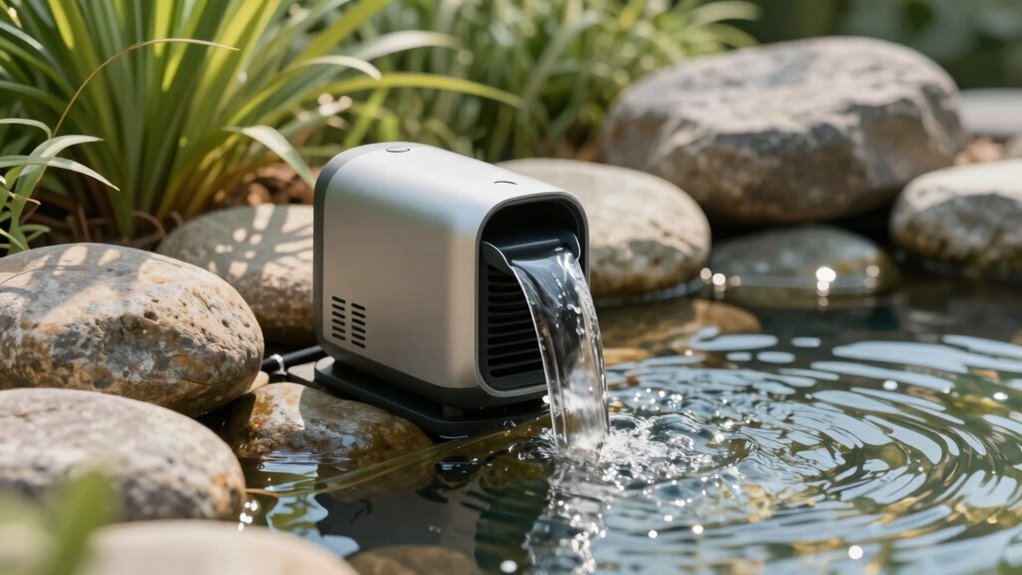
When choosing a pump for your serene water feature, paying attention to key features guarantees smooth operation and lasting enjoyment. Look for a pump that promotes excellent water quality and enhances the aesthetic appeal of your setup. A quiet, energy-efficient model minimizes noise and saves power, creating a peaceful atmosphere. Ensure it has adjustable flow rates to control water movement without disturbing the tranquility. Durability is essential, so select a pump with corrosion-resistant parts for long-lasting performance. Additionally, check for features like easy maintenance access and compatibility with eco-friendly options. These features help maintain clarity and beauty while preventing unnecessary noise, helping you achieve that calming waterfall look without the disruptive sounds.
Troubleshooting Pump Size Issues for Long-Lasting Performance
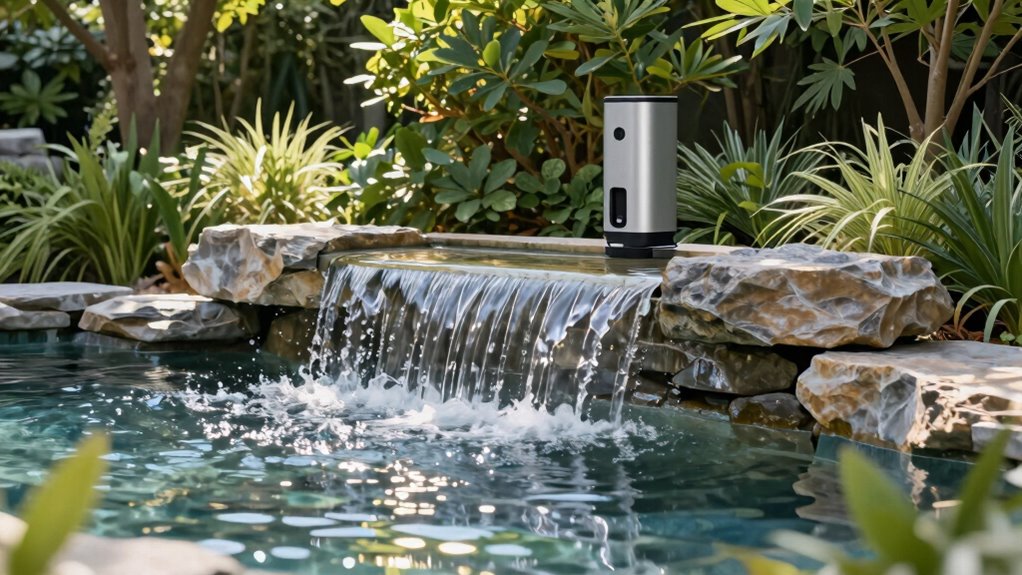
Choosing the right pump size is essential to keep your water feature running smoothly and looking beautiful over time. If you experience issues like noise, inconsistent flow, or algae buildup, troubleshooting is key. Start by checking pump maintenance—clean impellers and filters regularly to prevent clogs. Also, monitor water chemistry; imbalances can cause corrosion or algae growth that hampers performance.
| Issue | Solution |
|---|---|
| Excess noise | Ensure proper pump placement and clean components |
| Low flow or sputtering | Clear debris, check water levels, and verify pump size |
| Short pump lifespan | Maintain water chemistry and inspect for wear |
| Algae buildup | Balance water chemistry and clean the pump regularly |
| Frequent breakdowns | Upgrade to a suitable size pump and perform routine upkeep |
Frequently Asked Questions
Can I Upgrade My Pump Later if I Want a Bigger Waterfall?
Yes, you can upgrade your pump later for future expansion. When planning your water feature, choose a pump with a higher capacity or modular design to make a pump upgrade easier down the road. This way, you’ll be prepared to achieve a bigger waterfall without starting from scratch. Just make certain your current setup allows for the increased flow and that your plumbing can handle the larger pump for seamless growth.
How Does Pipe Diameter Affect Water Flow and Noise Levels?
Larger pipe diameters reduce water velocity, resulting in smoother flow and less noise. When you choose a pipe with a bigger diameter, water moves more slowly, which minimizes the chattering or splashing sounds. Conversely, smaller pipes increase water velocity, causing louder noise and potential splashing. So, for a quieter waterfall look without sacrificing flow, opt for a pipe diameter that balances your desired water volume and noise level.
Are There Eco-Friendly Pump Options Available for Water Features?
Yes, eco-friendly pump options are available for your water feature. Solar pumps are a popular choice since they harness renewable energy, reducing electricity use and emissions. Additionally, choose pumps that use biodegradable lubricants to minimize environmental impact. These options help you maintain a beautiful water feature while supporting sustainability, lowering your carbon footprint, and protecting local ecosystems.
What Maintenance Is Needed to Keep the Pump Quiet and Efficient?
Keep your pump running smoothly by performing regular maintenance—think of it as giving your equipment a daily tune-up. Lubricate the pump as recommended to prevent squeaks, and check for vibration issues that can cause noise and wear. Tighten loose parts and clean out debris to minimize vibration. These simple steps help keep your pump quiet and efficient, ensuring your water feature stays peaceful and eye-catching for years to come.
How Do Weather Conditions Impact Pump Performance and Noise?
Weather effects can considerably impact your pump’s performance and noise levels. Cold temperatures may cause your pump to work harder, reducing durability and increasing noise. Excessive heat can lead to overheating, also affecting efficiency. Rain and humidity can cause corrosion or electrical issues if your pump isn’t weatherproof. To maintain peak performance and longevity, choose a durable pump designed for your climate, and protect it from extreme weather conditions with proper shelter.
Conclusion
By choosing the right pump size, you’ll turn your water feature into a tranquil oasis that soothes your soul. Think of your pump as the heartbeat of your waterfall—when it’s just right, it hums softly like a lullaby, not a roar. Take your time to calculate and select wisely, and you’ll enjoy a peaceful, beautiful water feature that’s a true reflection of your vision—calm as a mirror and gentle as a whisper.