
Innovations in pool construction now incorporate 3D printed forms made from eco-friendly materials like recycled plastics and biodegradable composites. These forms allow you to create seamless, complex designs with improved durability and resistance to cracks, all while reducing waste and construction time. The precise digital process minimizes material excess, saving costs and speeding up project completion. As advancements continue, you’ll discover even more sustainable options that support eco-conscious pool projects. Keep exploring to learn how these innovations can transform your pool construction experience.

Get pool and patio gear delivered free — and shop member deals
- Fast, free delivery on millions of items
- Access to Prime Big Deal Days deals on October 6–7
- Prime Video, Amazon Music and more included
Key Takeaways
- 3D printed forms enable the use of eco-friendly, recycled, and biodegradable materials in pool construction.
- They allow for complex, custom geometries and seamless structures, enhancing aesthetic appeal and durability.
- Precise digital design minimizes material waste and speeds up construction processes.
- Eco-friendly 3D printed forms contribute to reduced environmental impact and lower long-term maintenance costs.
- Advances in sustainable materials expand options for innovative, environmentally conscious pool construction.
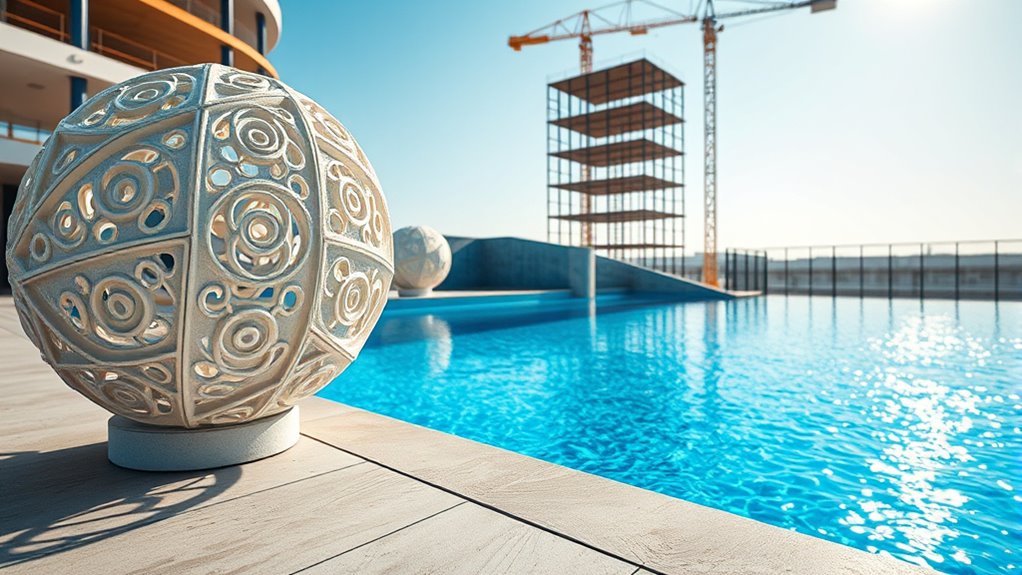
When building a pool, choosing the right construction materials is essential for durability, safety, and aesthetic appeal. In recent years, innovations like 3D printed forms are transforming how pools are constructed, offering new possibilities for customization and efficiency. One of the key advantages of these advancements is the ability to incorporate sustainable alternatives into pool design and construction. Traditional materials often involve considerable resource consumption and environmental impact, but 3D printing allows for the use of eco-friendly options such as recycled plastics, biodegradable composites, and other sustainable materials. These alternatives help reduce the carbon footprint of your project while maintaining structural integrity.
3D printing enables eco-friendly pool construction with recycled plastics and biodegradable composites, reducing environmental impact without sacrificing durability.
Using 3D printed forms also greatly enhances durability. Custom molds created with precision ensure that the pool’s structure is seamless and resistant to cracks and leaks, which are common issues with conventional forms. The precision of 3D printing means you can design forms that optimize strength and longevity, providing durability enhancements that stand the test of time. This technology allows you to create complex geometries and intricate designs that would be difficult or impossible with traditional methods, giving your pool a unique aesthetic appeal without compromising on resilience.
Moreover, 3D printing reduces waste during construction. Instead of excess material left over from traditional formwork, precise digital designs mean you only use what’s necessary. This not only minimizes waste but also speeds up the construction process, leading to quicker project completion and less environmental impact. The flexibility of 3D printed forms means you can easily adapt designs to fit specific landscapes or stylistic preferences, offering more personalized and innovative pool features.
Another benefit is the potential for cost savings over time. Sustainable alternatives incorporated into 3D printed forms often require less maintenance due to their enhanced durability, saving you money on repairs and replacements. Additionally, the efficiency of 3D printing reduces labor costs and construction time, making it a practical choice for modern pool projects. As technology advances, the range of eco-friendly materials suitable for 3D printing continues to expand, making it easier to align your pool project with environmentally conscious goals. Incorporating advanced construction materials like these can further improve overall project outcomes and longevity.
eco-friendly pool construction materials
As an affiliate, we earn on qualifying purchases.
As an affiliate, we earn on qualifying purchases.
Frequently Asked Questions
What Are the Environmental Impacts of 3D Printed Pool Forms?
You might find that 3D printed pool forms have positive environmental impacts due to their use of sustainable materials. These forms often incorporate recyclable or biodegradable components, reducing waste. The recyclability benefits mean you can reuse or repurpose the forms, lowering your ecological footprint. Overall, they offer a greener alternative to traditional construction methods, helping you build your pool more sustainably while minimizing environmental harm.
How Cost-Effective Is 3D Printing for Custom Pool Designs?
Think of 3D printing as a magic wand for your pool dreams—cost savings and design customization come together effortlessly. It cuts down labor and material waste, making the process more affordable. Plus, you can craft unique, intricate designs without breaking the bank. So, if you want a personalized pool that doesn’t drain your wallet, 3D printing proves to be a smart, cost-effective choice.
What Is the Lifespan of 3D Printed Pool Materials?
You’ll find that the lifespan of 3D printed pool materials depends on material durability and printing longevity. Typically, high-quality 3D printed composites can last 10-25 years with proper maintenance. However, some materials may degrade faster if exposed to harsh environmental conditions or UV rays. Regular inspections and choosing durable, weather-resistant filaments can extend your pool’s longevity, ensuring your investment remains in great shape over time.
Are There Safety Concerns With 3D Printed Pool Components?
You might think it’s a leap of faith, but 3D printed pool components are generally safe if the material durability and printing safety are up to standard. Manufacturers use high-quality, non-toxic materials tested for water exposure, ensuring safety. However, always verify certifications and installation guidelines. When properly managed, these innovative components can be just as safe as traditional ones, giving you peace of mind while enjoying your pool.
How Does 3D Printing Influence Construction Speed and Flexibility?
3D printing speeds up pool construction and boosts flexibility, letting you customize designs easily. You can achieve complex shapes and unique features without extensive manual work. This technology also guarantees material durability, so your pool lasts longer. With faster turnaround times, you’ll move from design to finished pool quicker, giving you more control over the project timeline and allowing for innovative, personalized features that traditional methods might struggle to deliver efficiently.
As an affiliate, we earn on qualifying purchases.
Conclusion
Think of 3D printed forms as the blueprint to a brighter future for pool construction. They’re like the magic wand that transforms your vision into reality with precision and speed. Embracing these innovations means you’re riding the wave of progress, making your dream pool not just possible but also more sustainable and cost-effective. So, step into this new era—where your perfect pool is just a 3D print away, ready to make a splash.
As an affiliate, we earn on qualifying purchases.
biodegradable composite pool forms
As an affiliate, we earn on qualifying purchases.
As an affiliate, we earn on qualifying purchases.
Fall Picks
fall essentials
As an affiliate, we earn on qualifying purchases.