
When your pool gets damaged, start by reviewing your homeowners’ insurance policy to understand coverage and exclusions. Contact your insurer promptly to report the damage, providing details and supporting photos or videos. An adjuster will inspect the damage and review your documentation. Once approved, you’ll receive settlement funds or repair authorization, so hire reputable contractors and keep all receipts. To learn more about steering through each step smoothly, keep exploring the insurance claims process for pool damage.
Key Takeaways
- Review your homeowners’ policy to confirm coverage for pool damage and note deductibles and exclusions.
- Document the damage thoroughly with photos and videos before reporting the claim.
- Contact your insurance provider promptly to initiate the claim and provide detailed damage information.
- Arrange for an insurance adjuster to inspect the damage and review your documentation.
- Hire licensed contractors for repairs, keep receipts, and ensure the claim settlement covers necessary restoration costs.
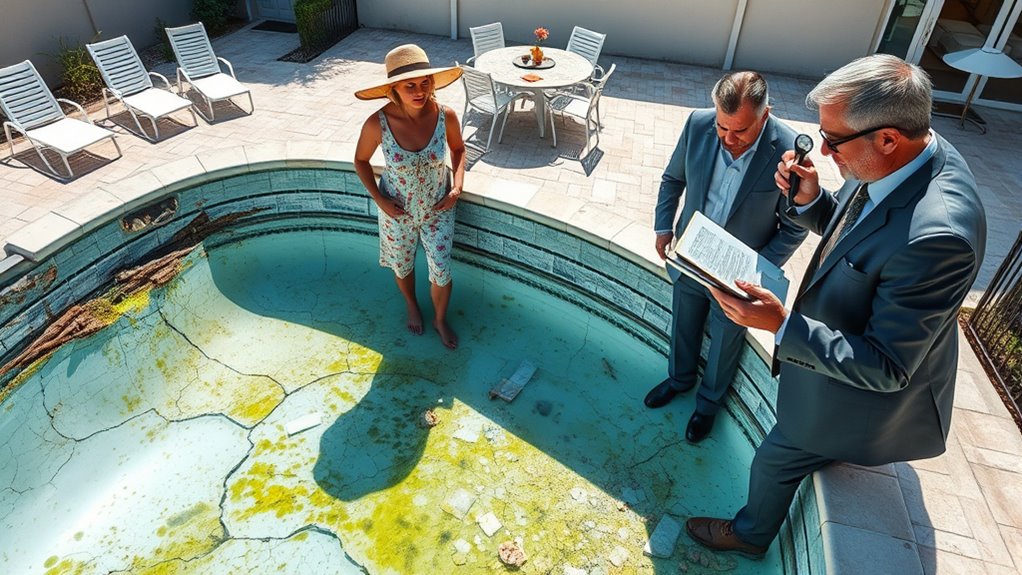
Dealing with pool damage can be stressful, but understanding the insurance claims process can make it much easier. When your pool sustains damage, your first step is to assess the situation and determine whether the damage is covered by your insurance policy. Many homeowners’ insurance policies include some level of coverage for pool repair caused by covered perils, such as storms, falling objects, or vandalism. It’s important to review your policy details so you know what damages are eligible for claims and what exclusions might apply. Knowing your insurance coverage helps you prepare the necessary documentation and avoid surprises later in the process.
Once you confirm that your pool damage is covered, you should contact your insurance provider promptly. Most insurers have specific procedures for filing claims, so reaching out early can speed things up. When you call, be prepared to provide detailed information about the damage, including when it occurred, what caused it, and the extent of the damage. Insurers often require supporting evidence, so taking photos or videos of the damage is highly recommended. These visual records help substantiate your claim and can prevent disputes over the damage assessment.
Contact your insurer promptly with detailed damage info and visual evidence to streamline your claim process.
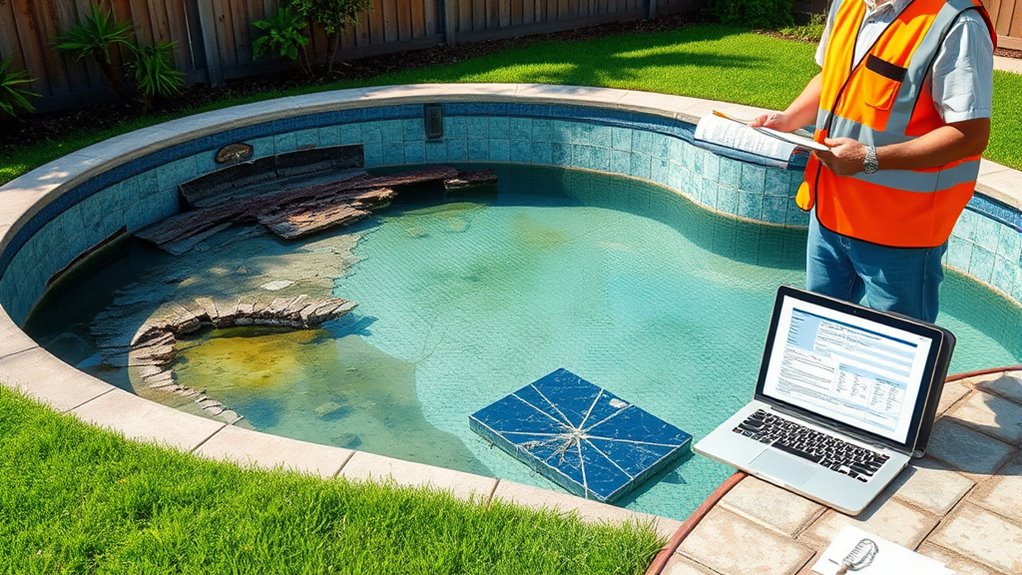
After reporting the damage, your insurance company will likely assign an adjuster to evaluate the situation. The adjuster will visit your property to inspect the damage firsthand, review your documentation, and determine the scope of coverage. During this visit, be sure to point out all affected areas and provide any additional information the adjuster requests. This inspection is vital because it influences the insurance coverage amount and the scope of repairs they approve. Be honest and transparent; the more cooperative you are, the smoother the process will go.
Once the adjuster completes their evaluation, the insurance company will review their report and decide on the claim. If approved, they’ll either provide an estimate for the pool repair costs or authorize repairs directly. Keep in mind, the settlement may not cover the full cost of repairs, depending on your policy limits and deductibles. After receiving the payout or approval, you can proceed with hiring a licensed contractor to perform the necessary pool repair. Always choose reputable professionals to guarantee quality work, and keep all receipts and documentation related to the repairs for future reference or potential disputes.
Understanding the insurance claims process for pool damage helps you navigate it confidently. By knowing what to expect, preparing your documentation, and communicating effectively with your insurer, you can minimize stress and get your pool repaired efficiently. Being aware of payment solutions can also assist in managing the costs associated with repairs and streamline the financial aspect of the process. Remember, thoroughness in documenting damage and staying organized throughout the process can considerably impact how quickly your claim is settled and how smoothly your pool repair is completed.

In The Swim Pool Deluxe Opening Chemical Start Up Kit – Above Ground and In-Ground Swimming Pools – Up to 15,000 White
Save time and take the guesswork out of measuring chemicals when opening your pool with our pre-measured pool…
As an affiliate, we earn on qualifying purchases.
As an affiliate, we earn on qualifying purchases.
Frequently Asked Questions
How Long Does It Typically Take to Process a Pool Damage Claim?
You can usually expect your pool damage claim to take about 2 to 4 weeks to process. The claim timeline depends on how quickly your insurer receives repair estimates and necessary documentation. To accelerate things, provide detailed information upfront and get repair estimates promptly. Be patient, as some claims may take longer if additional assessments or investigations are needed. Staying in touch with your insurer helps ensure a smoother process.
Are There Specific Damages That Insurance Policies Do Not Cover?
You should know that insurance policies often have exclusions that don’t cover certain damages. Typically, exclusions include damages caused by neglect, wear and tear, or environmental factors like storms or flooding. If you experience damage from these causes, your policy likely won’t cover repairs. Always review your policy’s exclusions carefully to understand what’s not covered, so you can take preventive measures or consider additional coverage if needed.
What Documentation Is Required to File a Pool Damage Claim?
Imagine your pool’s health as a story waiting to be told. To file a claim, you need a recent pool inspection report and damage assessment documentation. Take photos of the damage from multiple angles, gather repair estimates, and keep receipts for any related expenses. These documents help your insurer understand the extent of damage and speed up your claim process, turning a stressful situation into a manageable one.
Can I Choose My Own Contractor for Repairs?
Yes, you can choose your own contractor for pool repairs, but you should verify your insurance policy first. Your insurer may require that the contractor meets certain standards or approve their selection. When selecting a contractor, ensure they have experience with pool maintenance and damage repairs. Doing so helps streamline the claims process and guarantees your repairs are handled by qualified professionals. Always communicate with your insurer about your choice beforehand.
How Does Weather Impact My Insurance Claim Eligibility?
You might find it ironic that weather impacts your claim eligibility, as unpredictable storms often seem like mere coincidence. Weather impact can complicate your insurance claim, especially if damage results from natural events like heavy rain or hail. Insurance companies typically consider weather a covered peril, but they also scrutinize if damage was caused by neglect or pre-existing issues. Stay aware of weather patterns, document damages promptly, and understand how weather impact influences your claim eligibility.
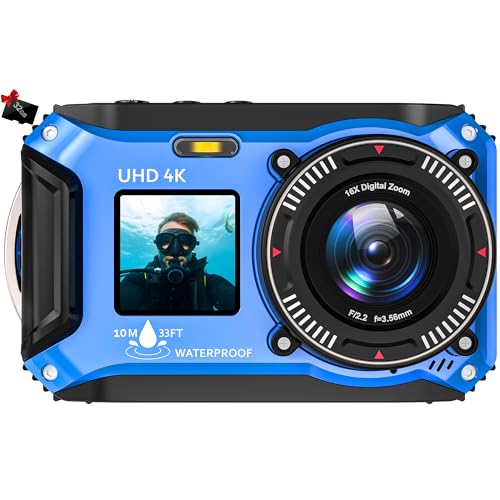
4K Underwater Camera 33FT Waterproof Camera for Snorkeling with 32GB Card Dual-Screen Compact Dustproof Floatable Autofocus UHD 64MP Point and Shoot Digital Camera 1500mAh Battery
33FT Waterproof & Dustproof Design: With a waterproof capability of 33FT, this underwater camera allows you to dive…
As an affiliate, we earn on qualifying purchases.
As an affiliate, we earn on qualifying purchases.
Conclusion
Managing the insurance claims process for pool damage might seem overwhelming, but staying organized and prompt can make it manageable. Remember to document everything thoroughly and communicate clearly with your insurer. If you follow these steps, you’ll be back to enjoying your pool faster than you might imagine—truly, it’s a process that can feel as swift as a lightning strike. Stay proactive, and you’ll turn a stressful situation into a solvable one in no time.

Pool Tool 146 Anchor Repair Kit
Anchor repair kit guarantees proper electric bonding
As an affiliate, we earn on qualifying purchases.
As an affiliate, we earn on qualifying purchases.

Health Insurance Claim Forms, New CMS-1500, HCFA (04/14 Medicare Approved 02/12 Version), 1-Part, 8.5" x 11" 24-lb Paper – 1 Package of 100 Sheets/Forms
New Medicare Approved (04/14) HCFA Insurance Claim Form Version (02/12), OMB-0938-1197
As an affiliate, we earn on qualifying purchases.
As an affiliate, we earn on qualifying purchases.