
TL;DR

Get pool and patio gear delivered free with Prime
- Fast, free delivery on millions of items
- Prime Video, Amazon Music and more included
- Member-only deals all year
A Gardening Know How report says a neighbor’s security camera may legally capture part of a backyard, but the answer depends on local law, what the camera records and how it is used. The report advises raising concerns directly, checking local rules and seeking legal advice if needed; it does not describe a specific court ruling or new law.
Gardening Know How has published a legal explainer on what homeowners can do if a neighbor’s security camera appears to film their backyard, emphasizing that legality depends on state and local rules, camera placement, the area captured and whether audio is recorded. The article does not report a new law or a particular legal case; it outlines factors that may matter in a privacy dispute.
The report says a neighbor’s right to use a camera to protect their home does not automatically make it unlawful if the device also captures part of a nearby yard. But that right is not unlimited. A central question is whether the person being recorded had a reasonable expectation of privacy in the specific area. A space readily visible from neighboring properties or public areas may support a weaker privacy claim than a secluded patio screened by fencing or dense plants, the report explains.
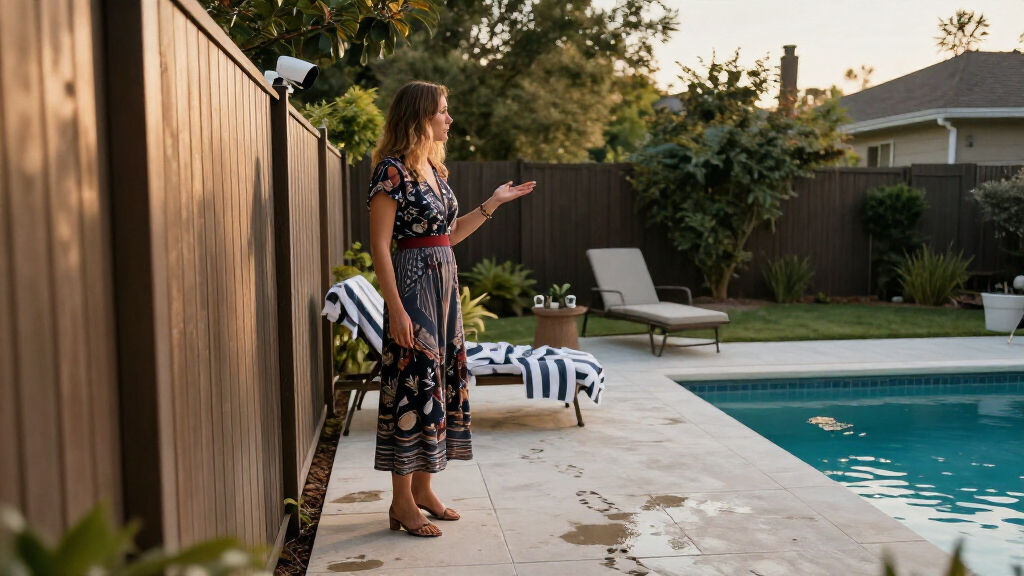
Where the camera points and how it operates can also matter. Incidental capture of the edge of a yard may be treated differently from a device deliberately aimed or zoomed at a private area, such as a pool. The report cautions that a fence may support an expectation of privacy but does not, by itself, settle whether filming is unlawful. Laws vary by jurisdiction, and camera direction is only one factor.
Audio recording can raise a separate legal issue. The report says federal wiretapping rules may apply to recording private conversations, and some states impose stricter consent requirements. It recommends starting with a calm conversation: a neighbor might adjust the camera or use a privacy masking zone to block views of the property. If that does not resolve the concern, homeowners can check municipal and state rules, review any homeowners association restrictions, and consult an attorney.
Camera Angles Can Shape Privacy Rights
The issue matters because home security equipment can capture areas beyond the owner’s property, leaving neighbors unsure whether the recording is routine or an intrusion. The report’s central point is that ownership of the camera does not answer the legal question: the precise view, the circumstances of recording and applicable local rules all matter.
For residents, that means the same setup may raise different questions depending on where it is installed and what it records. Video and audio may be governed by different rules, so a camera that can see a yard may pose a separate concern if it also records private conversations. The article does not establish a universal rule that makes backyard filming legal or illegal.
Products Worth Considering

Ring Alarm Pro 14-Piece Home Security Kit with Built-In eero Wi-Fi 6 Router

Bose SoundLink Plus Portable Bluetooth Speaker, Wireless Outdoor Speaker, Up to 20 Hours Battery Life, Waterproof and Dustproof, Black

Ring Alarm 14-Piece Kit
As an affiliate, we earn on qualifying purchases.
A Local, Fact-Specific Legal Question
The Gardening Know How report frames the issue as a balance between a homeowner’s interest in protecting their property and a neighbor’s privacy. It says surveillance disputes are assessed under state and local laws, which can differ, and by considering the circumstances rather than relying on a single test.
The article also distinguishes ordinary outdoor visibility from places where people generally have stronger privacy expectations, such as bedrooms, bathrooms and locker rooms. It notes that purpose and proportionality may be considered: surveillance that lacks a legitimate purpose or goes beyond what is needed for security could weigh against the person recording. These are factors described by the report, not a finding about any individual camera or dispute.
“The legality of this kind of neighborhood surveillance depends on state and local laws, what the camera captures, and how it’s being used.”
— Gardening Know How report
The Camera and Local Rules Matter
The source describes general legal considerations, not a ruling on a particular neighbor or camera. It does not identify the reader’s jurisdiction, the camera’s field of view, whether it records audio, or whether the footage is being stored or shared. Those details could affect how local law applies.
The report also does not establish that a camera aimed toward a yard amounts to harassment or an invasion of privacy. That determination may depend on evidence about the recording, its purpose and the privacy expected in the area. Readers should not treat the explainer as a substitute for local legal advice.
Document Concerns and Check Local Rules
The report’s suggested first step is to speak calmly with the neighbor and explain what part of the camera’s view is causing concern. A request to change the angle or set a privacy mask may resolve the problem without a formal complaint.
If the neighbor declines, homeowners can check applicable city and state laws and, where relevant, their homeowners association’s covenants, conditions and restrictions. The article advises consulting an attorney if needed. Any next step will depend on the facts and the rules where the property is located.
Key Questions
Is it automatically illegal for a neighbor’s camera to capture my backyard?
No. The report says incidental capture of part of a yard does not automatically make the camera unlawful. Local law, the area recorded and the camera’s use may affect the answer.
Does a fence mean I have a legal right to privacy?
A fence may support an expectation of privacy, but it does not settle the issue on its own. The camera’s direction, what it captures and how easily the area is visible from elsewhere may also matter.
Can audio recording create a separate legal problem?
It can. The report says rules on recording conversations may differ from rules on filming, and consent requirements vary. Check the law in your state before drawing conclusions about a specific device.
What should I do if I think my neighbor’s camera is pointed at my yard?
The report recommends starting with a calm conversation and asking whether the neighbor can adjust the camera or use a privacy mask. If that does not resolve the issue, check local rules and consider speaking with an attorney.
Source: gardeningknowhow.com