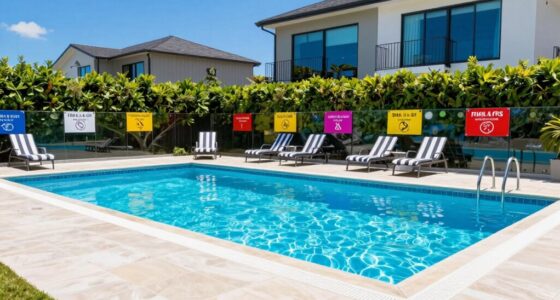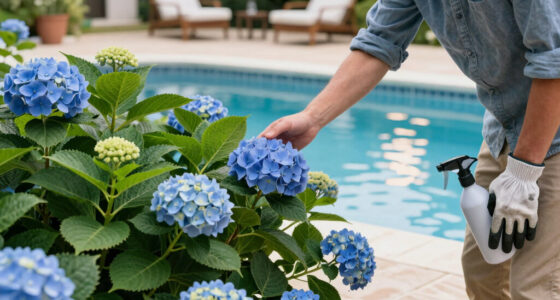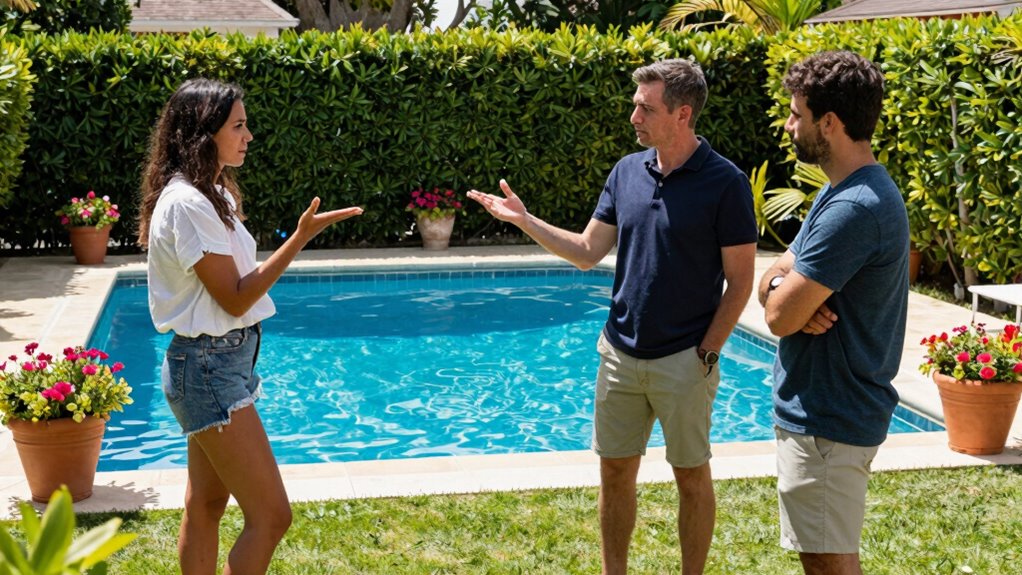

When a neighbor dispute begins over your pool, stay calm and address the issue thoughtfully. Talk privately with your neighbor to listen and clarify expectations around maintenance and privacy. Explore options like fencing or landscaping to guarantee both parties feel comfortable. Consider involving a neutral mediator or reviewing local regulations to avoid misunderstandings. Taking proactive steps helps prevent escalation—if you want more tips on resolving such conflicts effectively, continue exploring this topic.

Get pool and patio gear delivered free with Prime
- Fast, free delivery on millions of items
- Prime Video, Amazon Music and more included
- Member-only deals all year
Key Takeaways
- Address concerns calmly and privately, listening to your neighbor’s perspective to understand their issues.
- Clarify shared responsibilities and establish a maintenance schedule to prevent misunderstandings.
- Explore privacy solutions like fences or landscaping to respect boundaries and reduce hostility.
- Involve neutral mediators or homeowners’ associations for constructive discussions and conflict resolution.
- Review local regulations and guidelines to ensure compliance and prevent legal issues.
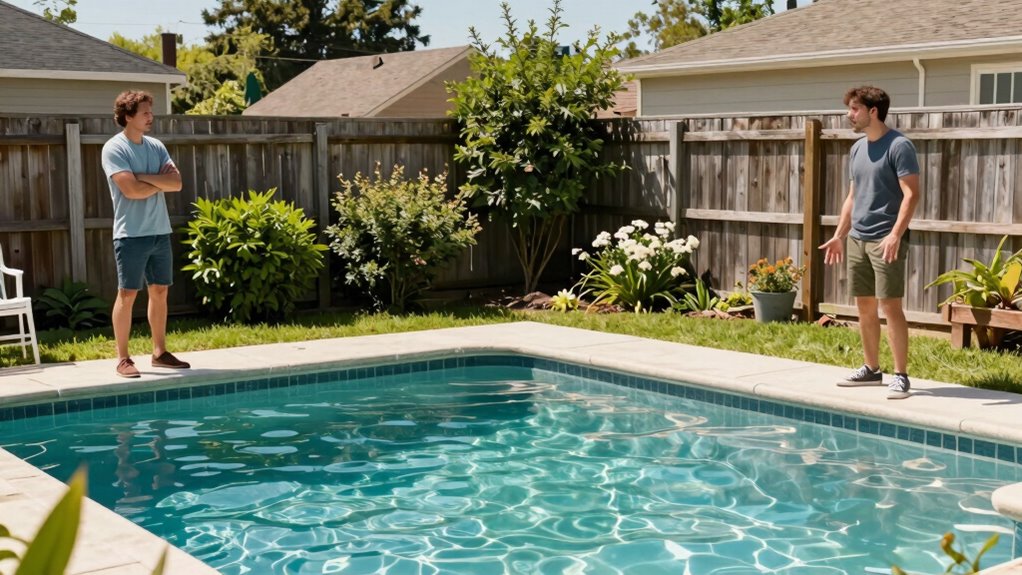
When neighbors clash over a shared backyard pool, tensions can quickly escalate, turning what should be a relaxing retreat into a source of ongoing conflict. If you find yourself in this situation, it’s essential to approach the issue calmly and thoughtfully. Often, disputes stem from concerns about pool maintenance or privacy, so understanding and addressing these core issues can help resolve the conflict more effectively.
First, consider the importance of clear communication. Reach out to your neighbor and set up a time to discuss the situation privately. Express your concerns without assigning blame, and listen carefully to their perspective. If the dispute centers around pool maintenance, clarify responsibilities and establish a schedule for cleaning, chemical balancing, and overall upkeep. Sometimes, disagreements occur because one side feels overwhelmed or neglected in maintaining the pool. A shared plan can ease tensions and foster cooperation.
Communicate openly, clarify responsibilities, and create a shared maintenance schedule to ease tensions and promote cooperation.
Privacy concerns are another common source of conflict. Perhaps your neighbor feels exposed or uncomfortable with the pool’s location or usage. To address this, you might explore options like installing privacy screens, fences, or landscaping that creates a visual barrier. Offering solutions demonstrates that you’re willing to compromise and respect their comfort, which can go a long way toward diffusing hostility.
If direct communication doesn’t resolve the issues, consider involving a neutral third party, such as a community mediator or homeowners’ association, to facilitate a constructive discussion. Sometimes, an outside perspective can help identify practical solutions and establish boundaries that satisfy both parties. Keep in mind that maintaining a friendly relationship often requires flexibility and a willingness to find middle ground. Additionally, being aware of local regulations can help prevent unintentional violations that might complicate the dispute further. Knowing the rules and guidelines related to shared pools can also help clarify expectations and responsibilities, reducing misunderstandings. Being informed about common legal issues related to shared pools can further support a peaceful resolution and avoid future conflicts.
In addition to resolving immediate disputes, it’s wise to revisit your shared pool arrangements periodically. This proactive approach ensures that any concerns are addressed before they escalate. If you’re unsure about local regulations or homeowners’ association rules regarding shared pools, consult these guidelines to avoid unintentional violations that could deepen the conflict. Understanding the regulations and rules surrounding shared pools can help prevent misunderstandings and legal issues that might arise.
Ultimately, the key to handling neighbor disputes over your pool is to prioritize respectful communication, mutual understanding, and practical solutions. By focusing on common interests—such as enjoying the pool responsibly and respecting each other’s privacy—you can turn a potentially contentious situation into an opportunity for cooperation. Remember, the goal isn’t just to resolve the current conflict but to foster a positive relationship moving forward.
As an affiliate, we earn on qualifying purchases.
Frequently Asked Questions
Can I Legally Block My Neighbor’s View of My Pool?
You can’t legally block your neighbor’s view of your pool if it’s within your property rights, but privacy concerns matter. Installing privacy screens, fences, or landscaping can help protect your privacy without infringing on their property rights. Check local laws and HOA rules first, as some areas have height or placement restrictions. Communicate openly with your neighbor to avoid disputes and find a mutually respectful solution.
What Are My Rights if My Neighbor Drains My Pool?
If your neighbor drains your pool without permission, your property rights are being violated. You have legal remedies available, such as filing a complaint with local authorities or pursuing a civil lawsuit for damages. It’s important to document the situation and seek legal advice to understand your rights fully. Taking swift action helps protect your property and guarantees your neighbor respects your ownership and property boundaries.
How Can I Prevent Future Disputes Over Pool Boundaries?
Think of your property boundaries as a well-placed fence in a garden. To prevent future disputes, make sure your fencing complies with local fencing regulations and consider commissioning boundary surveys to clearly mark your property lines. Regularly check these markers, and communicate openly with neighbors about any concerns. These steps create a sturdy boundary, just like a strong fence, helping maintain harmony and avoiding conflicts over pool space.
Is Hiring a Mediator Effective for Neighbor Pool Disputes?
Yes, hiring a mediator is effective for neighbor pool disputes. Mediation benefits include a neutral party helping both sides communicate, often leading to quicker, amicable dispute resolution. You get to voice your concerns and hear your neighbor’s perspective without escalation. This collaborative approach fosters understanding, preserves neighborly relationships, and avoids costly legal battles. Overall, mediation offers a practical, less stressful way to resolve conflicts about pool boundaries and related issues.
What Are the Costs Associated With Resolving Pool-Related Conflicts Legally?
Resolving pool-related conflicts legally can involve costs like attorney fees, court expenses, and potential damages. You might also face costs for pool maintenance if disputes lead to damage or neglect. These costs often tie back to property rights, as legal action aims to protect your ownership and use of the pool. Be prepared for possible expenses, and consider mediation first to avoid hefty legal fees.
As an affiliate, we earn on qualifying purchases.
Conclusion
Remember, resolving neighbor disputes over your pool is like steering the Trojan War—patience and diplomacy often lead to peace. By communicating openly and seeking fair solutions, you can avoid a Greek tragedy and restore harmony in your community. Just as Odysseus found his way home after many trials, you’ll find your path to resolution, turning a heated conflict into a story of neighborly respect and understanding.
poolside landscaping privacy screens
As an affiliate, we earn on qualifying purchases.
As an affiliate, we earn on qualifying purchases.
neighborhood dispute mediation services
As an affiliate, we earn on qualifying purchases.
As an affiliate, we earn on qualifying purchases.
Halloween Picks
halloween
As an affiliate, we earn on qualifying purchases.