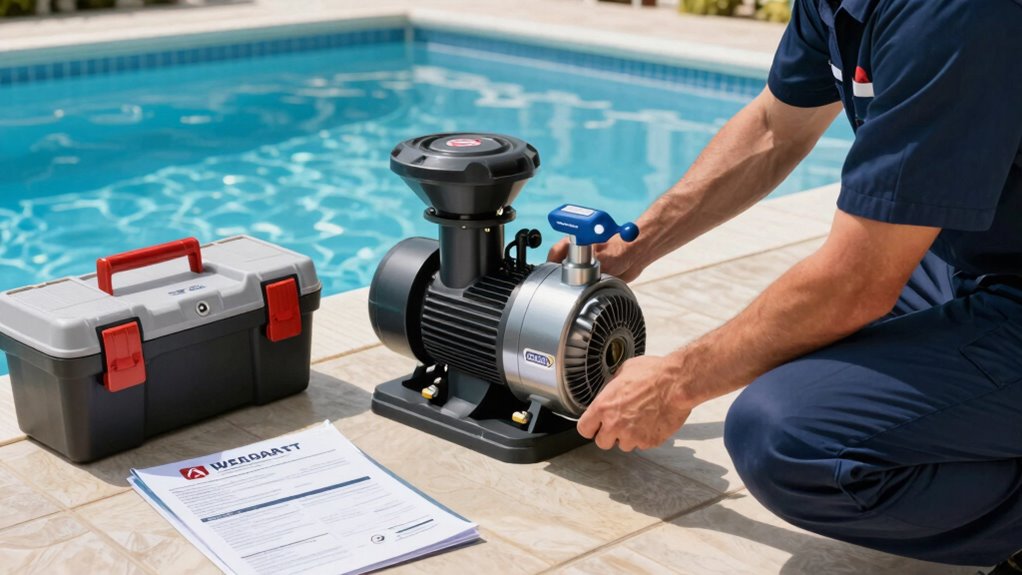

When you buy pool equipment, warranties protect you from unexpected repair costs by covering defects in materials or workmanship during the coverage period, which typically lasts 1 to 5 years. To guarantee your warranty stays valid, you need to follow installation guidelines, register the equipment promptly, and perform proper maintenance. Be aware that warranties usually don’t cover damage from misuse or improper installation. Keep learning to understand how to make the most of your warranty coverage.
Key Takeaways
- Warranties cover defects in materials and workmanship but typically exclude damage from improper installation or misuse.
- Activation usually requires registration and proof of purchase within a specified timeframe after installation.
- The warranty duration varies, commonly between 1 to 5 years, and coverage ends after this period.
- Manufacturer responsibilities include repairing or replacing faulty parts, often requiring on-site assessment.
- Proper installation and regular maintenance are essential to keep the warranty valid and prevent voiding coverage.
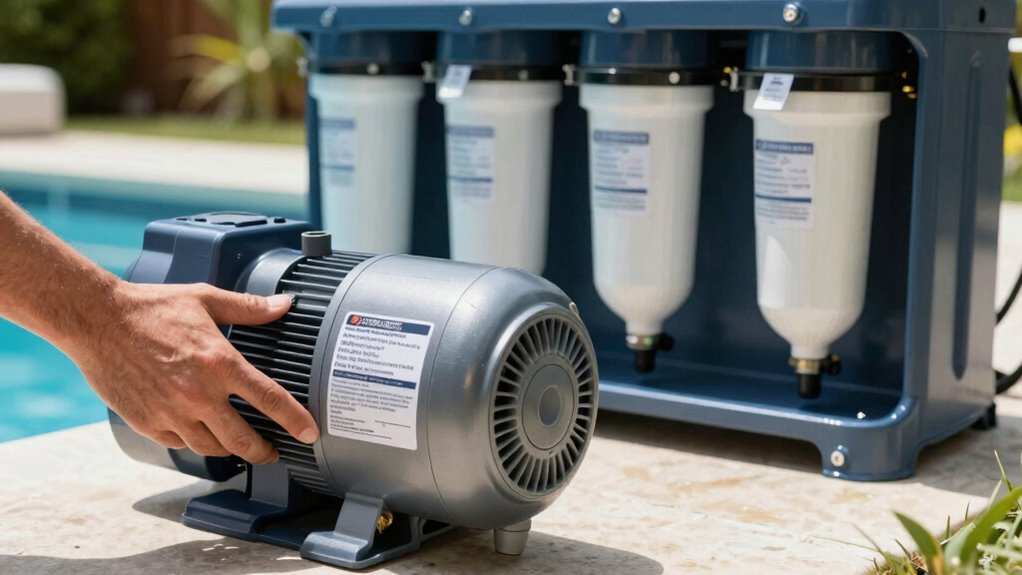
When investing in a pool, understanding the warranties on equipment and installations is vital to protecting your investment. Warranties serve as a safety net, ensuring that if something goes wrong within the coverage period, you won’t have to pay out of pocket for repairs or replacements. But to make the most of these protections, you need to understand how warranty coverage actually works and what manufacturer responsibilities entail.
Typically, warranty coverage varies depending on the type of equipment and the manufacturer. For example, pumps, filters, heaters, and other major components usually come with warranties that last between one and five years. Some high-end equipment might even offer extended warranty options. It’s crucial to read the fine print because warranty coverage often covers defects in materials or workmanship, but it may exclude damage caused by improper installation, misuse, or neglect. Knowing what’s included helps you set realistic expectations and avoid surprises later on.
Warranty durations vary by equipment and manufacturer, typically covering defects but excluding misuse or improper installation.
Manufacturers have specific responsibilities outlined in their warranty policies. These responsibilities generally include repairing or replacing faulty parts that are covered under the warranty period. However, they also typically require that you provide proof of purchase and adhere to recommended maintenance practices. If you neglect basic upkeep or attempt DIY repairs that void the warranty, you could lose your coverage. The manufacturer’s responsibilities don’t usually extend to labor costs unless explicitly stated, so it’s wise to check whether the warranty covers on-site repairs or if you’ll need to handle that separately. Additionally, understanding the warranty activation process can prevent delays when you need assistance. Proper installation practices are also crucial, as improper setup can sometimes void the warranty altogether, emphasizing the importance of following manufacturer guidelines. Being aware of coverage limitations helps you better understand what to expect and avoid disputes when claiming warranty service.
Understanding how warranties are activated is equally important. Usually, you need to register your equipment within a certain timeframe after purchase. Failure to do so might limit your warranty rights. When a problem arises, you’ll need to contact the manufacturer or authorized service provider for assessment. They will determine whether the issue falls under warranty coverage based on the product’s condition, maintenance history, and adherence to installation guidelines. If it does, they’ll handle the repair or replacement process, often at no cost to you. Additionally, some warranties may require regular maintenance practices to remain valid and ensure coverage remains active.
Keep in mind that warranties are not indefinite. Once the coverage period expires, you’re responsible for any repairs or replacements. That’s why regular maintenance and proper installation are key—these practices help ensure your equipment remains in good working order and that your warranty remains valid. By understanding manufacturer responsibilities and the scope of warranty coverage, you can better safeguard your investment and enjoy your pool without unexpected expenses catching you off guard.
As an affiliate, we earn on qualifying purchases.
Frequently Asked Questions
How Long Does a Typical Pool Equipment Warranty Last?
A typical pool equipment warranty lasts around 1 to 3 years. During this period, you’re protected for repairs or replacements if the equipment fails due to manufacturing defects. Keep in mind that warranties often don’t cover regular wear and tear or damage from neglect. When doing pool maintenance or considering equipment upgrades, review warranty details carefully to maximize your coverage and guarantee your pool stays in top condition.
Are Warranty Repairs Covered at Any Authorized Service Provider?
Warranty repairs are covered at any authorized service provider, much like a trusted guide leading you through a maze. You can rely on warranty coverage at these designated locations, ensuring repairs meet manufacturer standards. Always verify that the service provider is authorized, because unauthorized repairs might void your warranty. So, if your pool equipment needs fixing, contact an authorized service to keep your warranty intact and enjoy peace of mind.
What Documentation Is Needed to Claim a Warranty?
To claim a warranty, you need to provide proof of warranty registration, which confirms your coverage. Additionally, make sure you meet the maintenance requirements specified by the manufacturer, like regular cleaning or inspections. Keep your purchase receipt or invoice handy, as it’s often required to verify the purchase date. Having all these documents ready speeds up the process and helps authorized service providers process your claim smoothly.
Can Warranties Be Transferred to New Homeowners?
Think of a pool warranty like a gift you pass on. Yes, warranties can often be transferred to new homeowners, but it depends on the manufacturer’s policy. You’re responsible for informing the company about the transfer and providing necessary documentation. As a homeowner, you need to make certain the transfer is official and keep records, so the new owner can enjoy the coverage without surprises.
Are There Common Exclusions That Void a Pool Equipment Warranty?
Yes, there are common exclusions that can void your pool equipment warranty. Warranty limitations often include damage caused by improper installation, chemical misuse, or neglect. Exclusion policies typically exclude coverage for wear and tear, natural disasters, or unauthorized repairs. To keep your warranty valid, you must follow manufacturer guidelines, schedule regular maintenance, and avoid DIY fixes that could void coverage. Always read the fine print for specific exclusions.
As an affiliate, we earn on qualifying purchases.
Conclusion
Think of your pool warranty as a trusted guide on a journey. It’s there to steer you through the twists and turns, offering reassurance when storms arise. While it may not cover every bump in the road, knowing its limits helps you navigate confidently. Keep it close, read the fine print, and treat it like a loyal companion that keeps your pool shining and smooth sailing just ahead. Together, you’ll enjoy endless days of clear, carefree waters.
As an affiliate, we earn on qualifying purchases.
As an affiliate, we earn on qualifying purchases.