TL;DR
Automatic pool vacuum cleaners collect debris from pool floors and, on some models, walls and the waterline. Suction-side cleaners use the pool’s pump and filter, pressure-side models move with pressurized water and often collect debris in a bag, and robotic cleaners use their own motor and filter. Compare coverage, debris capacity, setup, and ongoing costs with your specific pool before buying.
A cleaner can glide across your pool for an hour and still leave a gritty stripe of sand along the steps. That’s because automatic pool vacuum cleaners vary in how they move, what they collect, and which parts of your pool they reach.

Get pool and patio gear delivered free with Prime
- Fast, free delivery on millions of items
- Prime Video, Amazon Music and more included
- Member-only deals all year
This guide explains the three main types: suction-side, pressure-side, and robotic. You’ll see how they differ, what to check for your pool’s shape and debris, and which costs show up after the purchase. The goal is simple: find a cleaner that gives you less manual effort without making you fight a clogged filter, tangled hose, or missed corner every weekend.
One thing stays true whichever type you choose: a cleaner handles debris, while you still need to test and balance the water, maintain the pool’s filtration system, and skim as needed. Think of it as a helpful poolside assistant, not a replacement for all pool care.
Suction-side cleaners send debris through the pool’s filtration system; many pressure-side cleaners collect it in an onboard bag, while robotic cleaners have t…
Match the filter and debris capacity to what actually lands in your pool, from fine dust to large leaves.
Verify pool size, surface, shape, steps, and floor, wall, or waterline coverage against the exact model.
Compare maintenance and operating costs as well as the purchase price, including filters, bags, pump runtime, electricity, and replacement parts.
Use a cleaner alongside water testing, chemical balance, skimming, and regular filter care.
Know what each automatic pool vacuum cleaner actually does
Automatic pool vacuum cleaners fall into three main groups, and each gets its movement and cleaning power differently. Suction-side models connect to a skimmer or dedicated suction line and draw debris into the pool’s filter. Pressure-side models use pressurized water and often collect leaves in an onboard bag. Robotic models use their own motor and filter basket or cartridge.
Those differences affect both what the cleaner costs to operate and what else your pool equipment must handle. A suction-side cleaner shares the pump and filter with circulation, so vacuuming can add debris to the filter and may require more frequent cleaning. That can be a practical tradeoff if your plumbing is compatible and your pool collects modest amounts of debris. A pressure-side bag can catch larger material before it reaches the main filter, but the extra pump needs of some models can add equipment and operating costs. A robot filters independently, which can reduce the extra load on the pool filter; in return, you must empty and rinse its basket or cartridge and provide power as its manufacturer specifies.
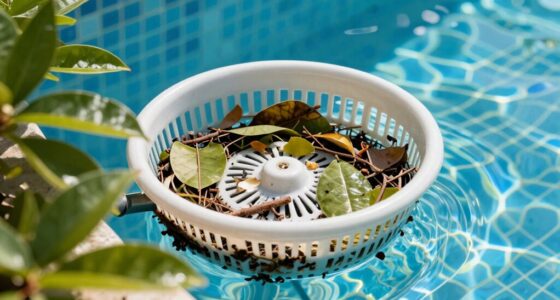
Consider a pool under a maple tree. In autumn, broad, wet leaves can fill a small filter quickly, making collection capacity and ease of emptying more important than a long list of programmed features. A pressure cleaner with a suitably sized bag may fit that job. If fine dust is the main nuisance, an independent robotic filter may help keep that material out of the pool’s main filter, but only if the filter is fine enough to capture it without clogging too quickly. A tighter filter can improve particle capture while demanding more frequent rinsing.
No type wins for every pool because each shifts work to a different part of the system: the pool filter, a debris bag, or the robot’s own filter. Compare pump and plumbing needs, debris, maintenance, and the areas you want cleaned before comparing features or prices.
Products Worth Considering

Arlo Pro Wireless Security Camera, 2K HDR, 6th Gen, 4-Camera Kit

Bose TV Speaker Compact Soundbar with Bluetooth and HDMI-ARC, Black

TCL F8D Series 75-Inch 4K QLED Smart Fire TV, 144Hz, HDR (75F8D, 2026)
As an affiliate, we earn on qualifying purchases.
Compare three cleaner types before you spend
The best cleaner type depends on your equipment, the debris in your pool, and how much setup you want to handle. Suction-side models use the pool pump and filtration system; pressure-side models travel using pressurized water; robotic models clean with their own motor and filter. The practical question is where you want the work to go: into your pool’s circulation system, into a separate bag, or into a filter you remove and clean yourself.
| Type | How it works | What to weigh |
|---|---|---|
| Suction-side | Connects to the skimmer or suction line; sends debris through the pool filter. | Often simple and affordable, but adds work to the pump and filter. |
| Pressure-side | Moves with pressurized water; many models collect debris in a bag. | Can suit larger leaves, but some models need a booster pump. |
| Robotic | Uses its own motor and filter basket or cartridge. | Usually costs more upfront; relies less on the pool pump while cleaning. |
Imagine two neighbors after a windy night. One has pine needles and a few big leaves; the other has fine dust washing in from a dry garden. The first may value bag capacity because bulky debris fills a small container fast, even when the cleaner picks it up efficiently. The second should check the filter’s particle rating and how easily it can be rinsed: fine filtration may capture dust, but it can also clog sooner and need attention midweek. Debris size matters because pickup and filtration are separate jobs; a cleaner that gathers leaves well may let tiny particles pass through or may need a finer, more maintenance-intensive filter.
Also check what “automatic” includes. Some cleaners focus on the floor; some models can climb walls or scrub the waterline. A wall-climbing claim describes an ability, not guaranteed coverage: pool shape, surface, steps, and the cleaner’s path can all leave particular areas untouched. If waterline cleaning matters to you, confirm that the exact model is designed to reach it and look for reports from pools with a similar layout.
Match cleaning coverage to your pool’s shape and surface
A cleaner only saves work when it reaches the areas where your pool collects dirt. Before buying, check whether the model is designed for your pool’s size, shape, surface, steps, and corners, and whether it covers the floor, walls, or waterline. Coverage claims matter because a cleaner can complete its cycle as designed while leaving your personal trouble spots for manual brushing or vacuuming.
Take a small pool with a sharp ledge and built-in steps. A machine built for broad, open floor space might leave grit on the steps, even if it finishes its programmed cycle. In a deeper pool with curved walls, a model’s ability to climb can matter more—but climbing alone doesn’t tell you whether it reaches the waterline. A cleaner’s route and traction determine where it can go, while its brushes and intake determine what it can remove once there.
Write down the trouble spots you actually see after a normal week. Perhaps dust settles in one corner, or leaves collect beneath a ladder. Then look for product specifications and owner reports that describe similar pool shapes and surfaces. This helps distinguish a feature that sounds useful from one that solves your problem. Pool-specific evidence beats an impressive feature list that never mentions your kind of layout.
Compatibility matters for above-ground pools, too. Some models are made for above-ground pools, while others target in-ground pools. If your pool has a vinyl liner or an unusual finish, confirm that the cleaner suits that surface. A poor fit can reduce traction or risk wear; even a compatible cleaner may need correct setup to avoid repeatedly missing a ledge or corner.
Check filters, power, and upkeep before choosing convenience
A cleaner’s ongoing routine comes from its filter, hoses or cable, and power requirements. Suction-side and pressure-side cleaners depend on the pool plumbing and circulation equipment; some pressure-side models also need a booster pump. Robotic models have their own motor and filtration, with power arrangements that vary by manufacturer. These requirements shape the real cost: a low purchase price may be less attractive if the cleaner adds pump runtime, while a robot’s separate filter avoids some work on the pool filter but adds a basket or cartridge to maintain.
Filter capacity makes a noticeable difference on a busy week. A larger basket may need less frequent emptying, while a fine filter can catch small particles but clog sooner. For example, if wind blows pale dust into the water each afternoon, check how easily you can rinse the filter and how often the manual says to inspect it. A filter that is difficult to reach can turn a short cleaning cycle into a chore, and a clogged filter can restrict flow or reduce pickup. Clogged filters reduce cleaning effectiveness, so convenient access and realistic capacity matter as much as filtration claims.
Before buying, walk through this short checklist:
- Confirm the cleaner suits your pool type, dimensions, shape, and surface.
- Check whether it covers the floor, walls, steps, or waterline you care about.
- Match its debris collection and filtration to your mix of leaves, sand, or dust.
- Check power, plumbing, basket or bag access, and how you’ll store hoses or cables.
- Compare electricity, pump runtime, replacement filters or bags, wear parts, and service.
A timer or app can add convenience, but it does not guarantee complete coverage or remove filter maintenance. Ease of lifting and carrying matters too: if you need to pull a heavy cleaner from the water after every cycle, that task can shape whether you use it regularly. Consider the whole routine—from setup to emptying and storage—because a cleaner that fits your habits is more likely to be run often enough to help.
Use your cleaner as part of a simple pool routine
An automatic cleaner takes on debris collection, but it does not replace water testing, chemical balance, skimming, or filter care. Pool water can look sparkling while its chemistry still needs attention. A cleaner removes visible material from surfaces or water; it doesn’t perform those other jobs.
For a pool beside a hedge, you might run a cycle after a windy day, then empty the basket before the next use. A pool with little nearby vegetation may need a different schedule. Your weather, swim frequency, and debris load are better guides than a fixed rule that every pool needs the same number of cycles.
Hoses and cables can tangle, and cleaners can struggle with tight corners or steps. If the unit stops moving or leaves dirt behind, common causes include a clogged filter, blocked intake, tangled hose or cable, incorrect suction or pressure, or worn parts. Check the manual and system setup before assuming the cleaner has failed.
A cleaner handles surface debris; you still handle water quality and pool-system care. Keep the manual close, clean filters and bags as directed, and remove the cleaner before backwashing or other tasks when the manufacturer instructs you to.
Follow the manual about running the cleaner while people swim. Many owners schedule cycles when nobody is using the pool, particularly when the model has a cord or hose. When children are around, keep active, close adult supervision and follow the pool’s drowning-prevention measures; a running cleaner never replaces those safeguards.
Judge new features by the job they solve
Newer robotic cleaners may offer onboard filtration, programmed cycles, app controls, sensors, and wall or waterline cleaning. Some models use cordless or battery-powered designs. These features can make setup or monitoring easier, but features do not guarantee full coverage; pool shape, water conditions, runtime, and the model’s design still matter.
Think about a homeowner who likes checking a cycle from a phone while preparing dinner. App control may suit that routine, but it won’t help much if the filter is awkward to empty or the robot misses a ledge. Someone with a small pool and a basic floor-cleaning need may get more value from simple setup and accessible replacement parts. The useful feature is the one that removes a recurring inconvenience, not simply the one that adds another setting.
Compare the whole cost of ownership, not just the sticker price. Include pump runtime or electricity, replacement bags and filters, wear parts, service availability, and the time it takes to clean and store the machine. A higher upfront cost can be worthwhile if it fits your pool and reduces work you actually do; it may not pay off if you rarely need its extra functions. Likewise, a less expensive cleaner can cost more in effort if its capacity is too small for your debris load.
Product lines change frequently, so check current specifications, runtime or charging claims, compatibility, and warranty terms before you buy. Model details vary, even when two products share the same feature label.
Frequently Asked Questions
Which type of automatic pool cleaner is best?
There’s no single best type for every pool. Compare your plumbing and pump setup, debris, desired coverage, budget, and willingness to clean filters or bags. A pool with heavy leaves may call for different collection capacity than one with fine dust.
Can an automatic pool cleaner clean walls and the waterline?
Some models clean walls, and some also reach the waterline, but coverage depends on the model, pool surface, water conditions, and shape. Check the exact specifications for your pool type; wall climbing does not always mean full wall or waterline cleaning.
Will a pool vacuum pick up fine sand or dust?
It depends on the cleaner’s filter and the size of the particles. Check the filtration details and clean the filter regularly, since fine material can clog it and reduce performance. If dust is your main problem, look for evidence that the model handles similarly fine debris.
Can I run the cleaner while people are swimming?
Follow the manufacturer’s instructions for your model. Many owners run cleaners when the pool is empty, especially when a hose or electrical cable is involved. Keep close adult supervision of children and follow your pool’s drowning-prevention measures at all times.
How often should I run an automatic pool cleaner?
Choose a schedule based on pool use, weather, nearby trees, and the amount of debris. A pool under trees may need more frequent cycles than one in a sheltered yard. Regular cleaning can be easier than waiting until leaves and grit pile up.
Does a robotic pool cleaner lower energy costs?
It may reduce the need to run the main pump solely for vacuuming because it has its own motor and filter. Actual savings depend on your equipment, operating schedule, and electricity rates, so compare the full energy use rather than assuming every robotic cleaner costs less to run.
Conclusion
Choose a cleaner around the mess your pool actually collects and the parts you want it to reach. Check compatibility, filtration, upkeep, and ongoing costs before you buy; those details determine whether an automatic cleaner becomes a useful part of your routine.
When the leaves are gone and the floor feels smooth beneath your feet, the best cleaner is the one that quietly earned that moment.