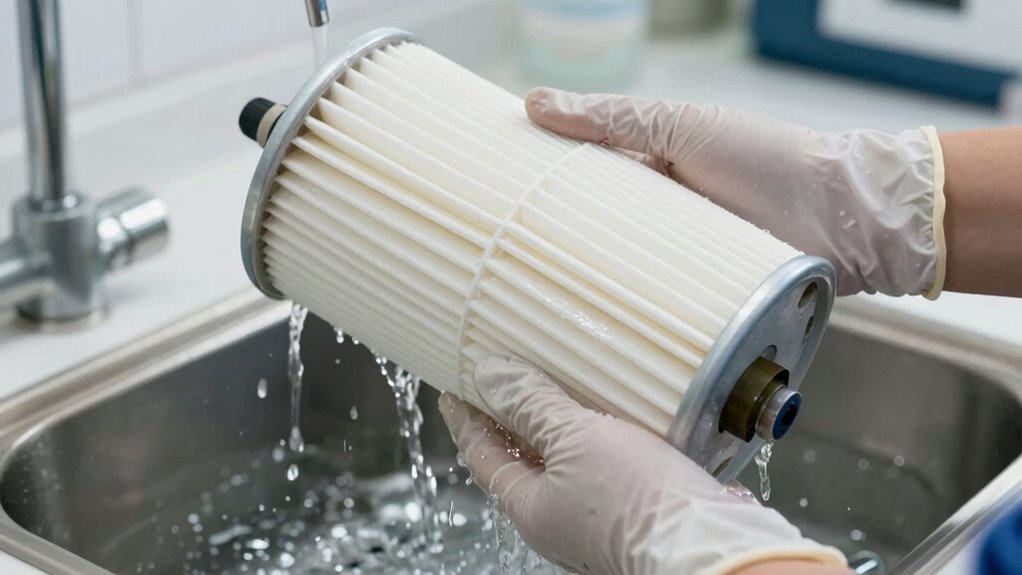

To clean your cartridge filter safely, first identify if oil or grease has built up by inspecting the pleats for shiny, greasy patches. Use eco-friendly degreasing agents compatible with your filter material, such as mild detergents for polypropylene or isopropyl alcohol for cellulose. Gently soak and rinse to loosen deposits without scrubbing. Avoid harsh chemicals or aggressive cleaning, which can damage the pleats. Keep your filter in top shape by following these tips—more details await if you continue.
Key Takeaways
- Use eco-friendly, filter-compatible degreasing agents and gently soak the filter to loosen grease without damaging pleats.
- Visually inspect for oil buildup using light and magnification, identifying glossy patches or sticky areas.
- Avoid harsh chemicals and excessive scrubbing to prevent pleat deformation and filter media deterioration.
- Follow manufacturer guidelines for cleaning procedures tailored to your filter type to ensure safety and effectiveness.
- Regularly monitor and replace filters if grease persists after cleaning or airflow is restricted, maintaining optimal performance.
As an affiliate, we earn on qualifying purchases.
Why Proper Degreasing Extends Your Cartridge Filter’s Lifespan
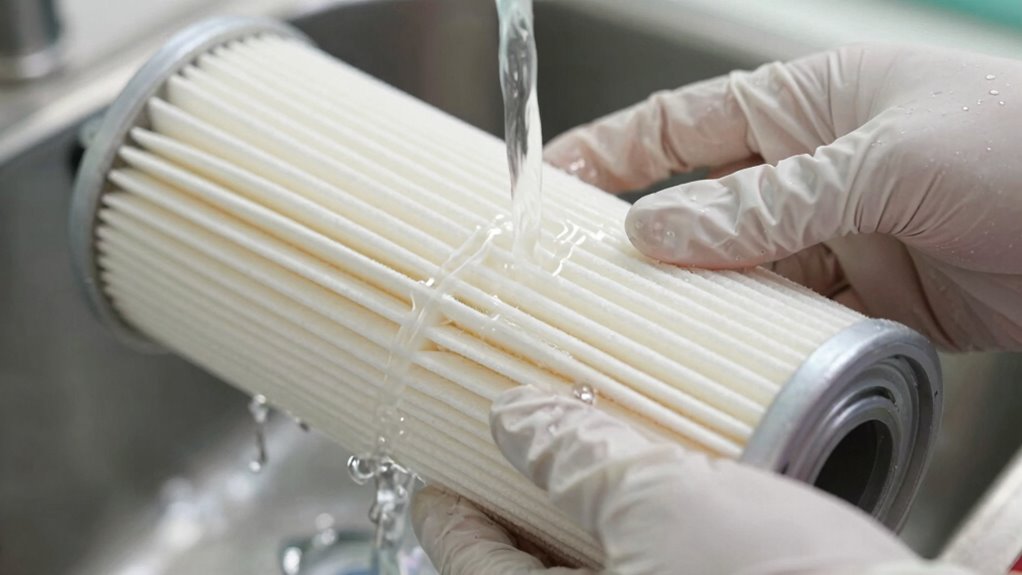
Proper degreasing is essential because grease and oil buildup can clog your cartridge filter, reducing its efficiency and lifespan. When you clean your filter correctly, you facilitate beneficial chemical reactions that break down stubborn oils and greases. These chemical reactions help loosen deposits without damaging the delicate pleats, ensuring your filter stays in good shape. Additionally, thorough degreasing supports filter recycling efforts by preparing the cartridge for safe disposal or reuse. Skipping proper degreasing leads to residue accumulation, which accelerates wear and causes early filter failure. Using the right cleaning agents designed for filtration systems helps ensure effective and safe degreasing. Employing the correct techniques and cleaning solutions optimized for filtration can significantly improve cleaning outcomes. Properly maintaining your filter also involves understanding biofilm buildup, which can further hinder filtration performance if not properly addressed. Regularly inspecting and cleaning your filters prevents dust and debris accumulation, ensuring consistent filtration quality. By investing time in effective degreasing, you extend your filter’s durability, save money, and reduce waste. This process keeps your system running smoothly and maintains ideal filtration performance over time.
eco-friendly filter degreasing agents
As an affiliate, we earn on qualifying purchases.
As an affiliate, we earn on qualifying purchases.
How to Spot Oil and Grease Buildup Safely
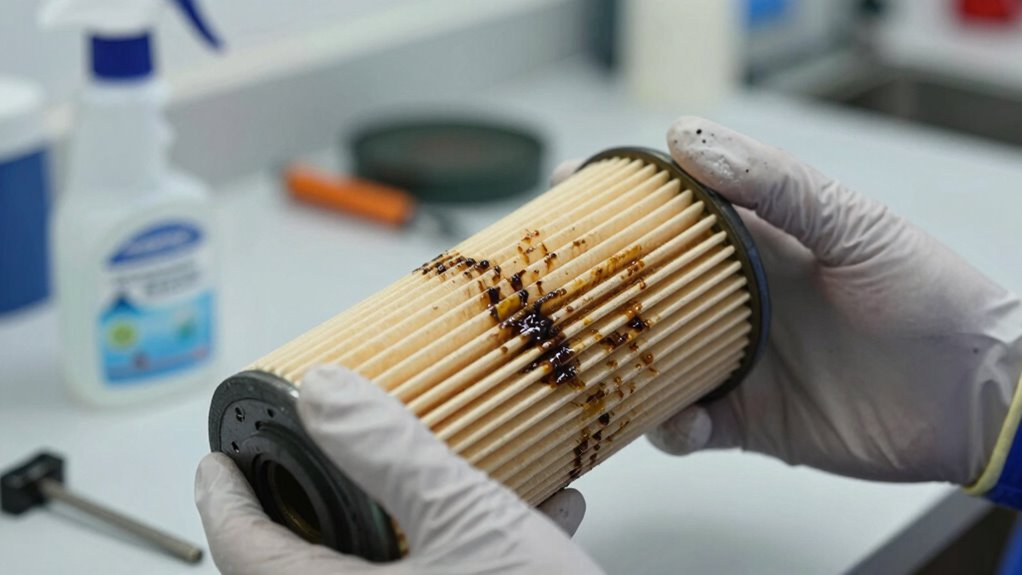
To keep your filter in top shape, you need to recognize oil and grease buildup safely. Start with visual inspection techniques to spot oil stains and greasy patches early. Once identified, use proper cleaning methods to remove these deposits without damaging your filter. Additionally, understanding the filter media is essential for choosing the correct cleaning approach and maintaining efficiency. Regular maintenance ensures that the sound vibrations used in cleaning do not harm delicate pleats or compromise the filter’s structure. Being aware of the different cleaning products suitable for various filter types helps prevent unintended damage during the degreasing process. Proper knowledge of filter design can also aid in selecting the most effective cleaning techniques for specific filter configurations. Incorporating proper handling techniques can further extend the lifespan of your filter and improve overall indoor air quality.
Visual Inspection Techniques
When inspecting your cartridge filter for oil and grease buildup, visual cues are your most reliable indicators. Look closely at the pleats for any dark or oily spots that stand out from the clean, white fabric. Use inspection tools like a flashlight or magnifying glass to enhance visibility in hard-to-see areas. Pay attention to areas where the pleats appear shiny or slick, which often signal oil or grease accumulation. Consistent lighting helps reveal subtle stains or discolorations that might otherwise go unnoticed. Take your time to examine both the surface and the edges of the filter. Proper lighting and the right inspection tools make it easier to identify buildup without risking damage to the delicate pleats. Accurate detection ensures effective cleaning and prolongs filter life. Additionally, understanding the horsepower of electric dirt bikes can help gauge the power of equipment used for cleaning or maintenance tasks. Recognizing typical contaminant buildup patterns can also assist in determining the appropriate cleaning method for your filter. Being familiar with common filter wear signs can help you schedule maintenance before issues worsen. Proper maintenance procedures are essential to prevent damage to the filter and ensure optimal performance. Regularly inspecting your filter can also prevent premature filter failure and costly replacements, saving you time and money in the long run.
Recognizing Oil Stains
After visually inspecting your filter for dark or shiny spots, it’s important to know how to recognize oil and grease stains accurately and safely. Oil stains often appear as slick, glossy patches that reflect light, making them stand out from dirt or debris. Grease buildup looks similar but may feel greasy or sticky to the touch. These stains can be darker or more translucent than surrounding areas. Be cautious when identifying oil and grease, as their presence indicates contamination that could compromise filter performance. Use a clean cloth or gentle solvent to confirm if a spot is oily—if it smears or feels greasy, it’s likely an oil stain or grease buildup. Proper identification techniques help ensure you choose the appropriate cleaning approach without damaging the pleats. Additionally, understanding how oil and grease accumulate can help in implementing effective preventive maintenance strategies. Recognizing the specific contaminant type can assist in selecting the most suitable cleaning method to preserve filter integrity, and being aware of common contamination signs can prevent further damage and ensure optimal filter operation.
Safe Cleaning Methods
Since oil and grease stains can be tricky to identify visually, using safe methods to verify their presence is essential before cleaning. One effective approach is to apply a small amount of solvent or cleaning solution designed for cartridge filters and observe chemical reactions. If the stain darkens or bubbles, it indicates oil or grease buildup. This method minimizes unnecessary cleaning, reducing the environmental impact by avoiding harsh chemicals. Always choose eco-friendly cleaning agents that break down oils without harming the environment or damaging the pleats. Confirming buildup safely ensures you don’t over-clean or damage the filter, preserving its lifespan. Understanding the chemical reactions involved in detection can help you choose the most effective cleaning method. By understanding chemical reactions involved in detection, you can clean more effectively while maintaining eco-conscious practices.
As an affiliate, we earn on qualifying purchases.
Choosing the Right Degreasing Agents for Your Filter Material
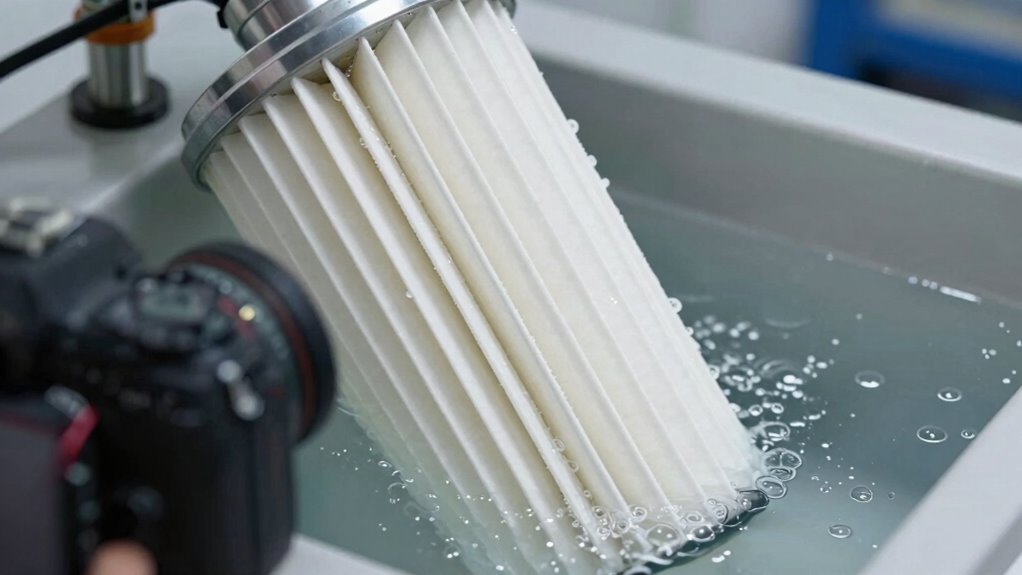
Choosing the right degreasing agents depends on your filter material’s compatibility, ensuring it doesn’t get damaged during cleaning. You need to contemplate how different chemicals can affect the filter’s integrity over time. Making the right choice helps maintain your filter’s performance and longevity.
Compatibility of Cleaning Agents
Selecting the right degreasing agents is essential to guarantee they won’t damage your filter material. Compatibility hinges on understanding how cleaning agents interact with your filter’s fibers and coatings. You should consider:
- The chemical reactions between the agent and filter material to prevent degradation.
- The potential environmental impact of the cleaning agents, choosing eco-friendly options whenever possible.
- Whether the degreaser is suitable for your specific filter type, such as cellulose or synthetic fibers.
- The manufacturer’s recommendations and testing on small sections before full application.
Effects on Filter Integrity
Using the right degreasing agents is essential to maintain your filter’s structural integrity during cleaning. Incorrect choices can weaken the filter material or cause pleat distortion. Chemical compatibility is key—select agents that won’t react adversely with your filter’s construction. For example, some materials resist solvents better than others, preserving pleat structure and pore size.
| Filter Material | Compatible Degreasing Agents |
|---|---|
| Polypropylene | Alkaline solutions, mild detergents |
| Pleated cellulose | Isopropyl alcohol, specific solvents |
| Filter Material | Recommended Cleaning Approach |
| Polyester | Use gentle, compatible chemicals |
| Metal (stainless) | Chemical-resistant cleaners |
Choosing suitable agents guarantees your filter maintains integrity without damage.
As an affiliate, we earn on qualifying purchases.
A Step-by-Step Guide to Safely Degreasing Cartridge Filters
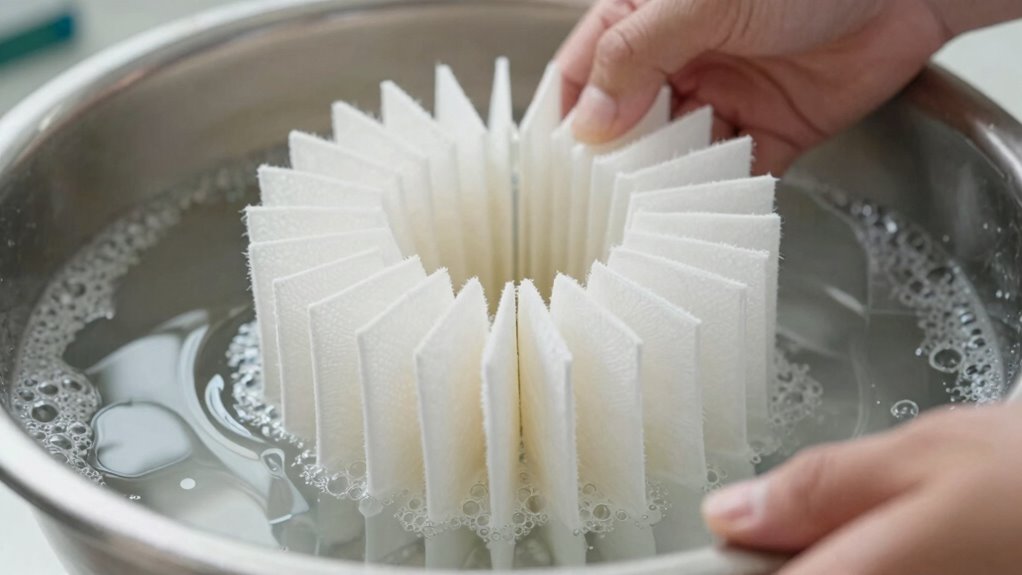
Degreasing cartridge filters is a crucial step to maintain their efficiency and prolong their lifespan. To do this safely, follow these steps:
- Turn off the system and remove the filter, ensuring you handle it carefully to avoid damaging the pleats.
- Select a suitable degreasing solution with known chemical resistance, avoiding harsh chemicals that could compromise the filter’s material.
- Soak the filter gently in the solution, allowing it to loosen grease without scrubbing or applying excessive force.
- Rinse thoroughly with clean water, ensuring all residues are removed before reinstalling or considering filter replacement. Proper handling prevents damage and maintains filter integrity.
Common Mistakes to Avoid When Cleaning Your Filter
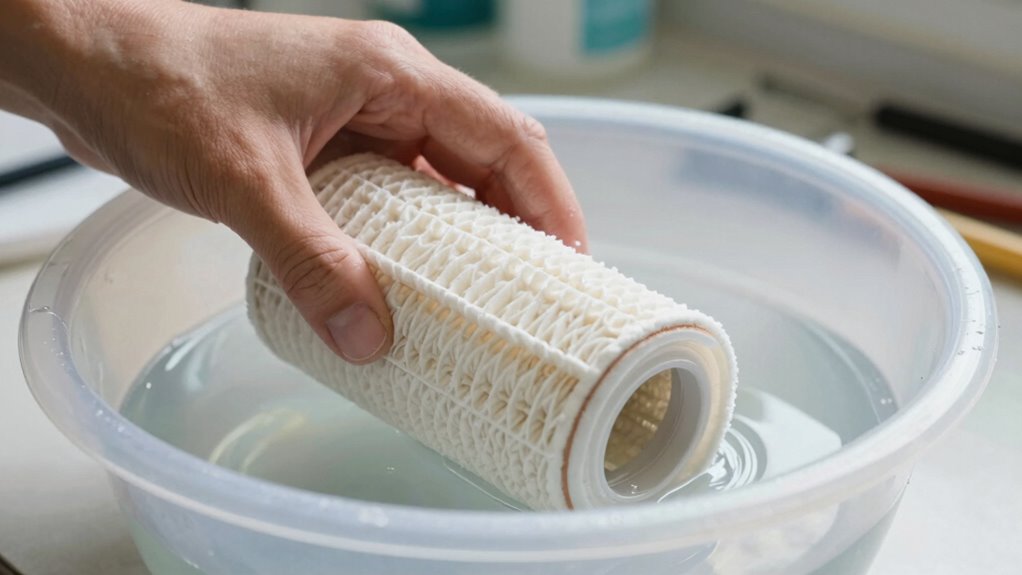
Even with the best intentions, many people make common mistakes when cleaning their filters that can reduce their effectiveness or cause damage. Overcleaning hazards, such as excessive scrubbing or using harsh chemicals, can damage the delicate pleats and compromise filter integrity. Additionally, improper disposal of cleaning materials or used filters can harm the environment and violate regulations.
| Mistake | Consequence |
|---|---|
| Overcleaning | Damage to pleats, reduced lifespan |
| Using harsh chemicals | Material deterioration |
| Ignoring manufacturer guidelines | Voiding warranty |
| Improper disposal | Environmental harm |
Avoid these errors to maintain ideal filter performance and ensure safe, eco-friendly waste handling.
Tips to Keep Pleats Clean and Maximize Filter Life
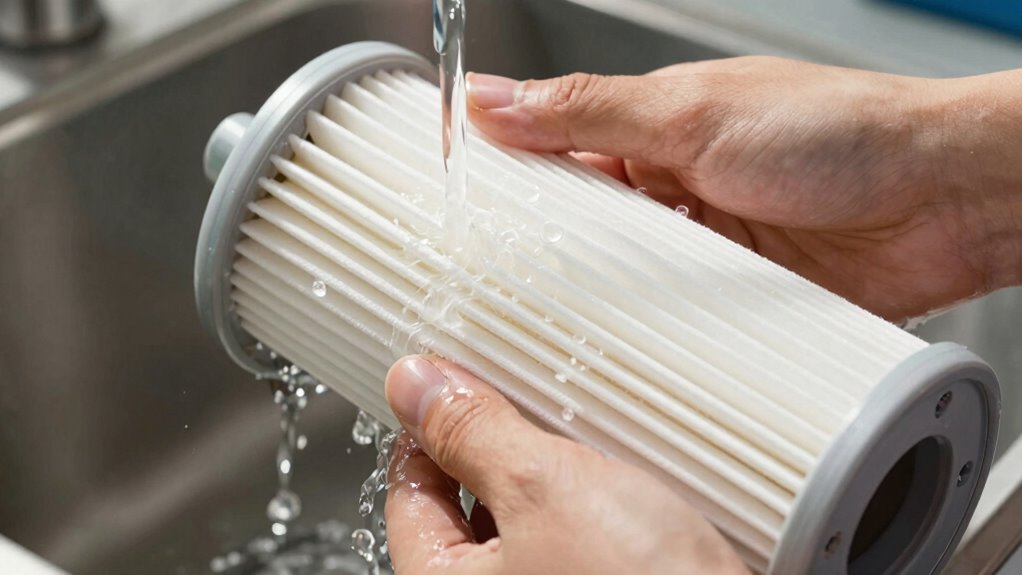
Keeping your pleats clean is key to extending the life of your filter and maintaining ideal performance. Proper care ensures the filter media functions efficiently and lasts longer. To achieve this:
- Regularly inspect the filter media for dust and grease buildup, and clean it based on the recommended cleaning frequency.
- Use gentle cleaning methods, avoiding harsh chemicals that can damage the pleats.
- Handle the filter carefully during cleaning to prevent deforming or tearing the pleats.
- Store spare filters in a clean, dry place to prevent dirt accumulation before installation.
What to Do If Grease Buildup Persists or You Need to Replace Your Filter
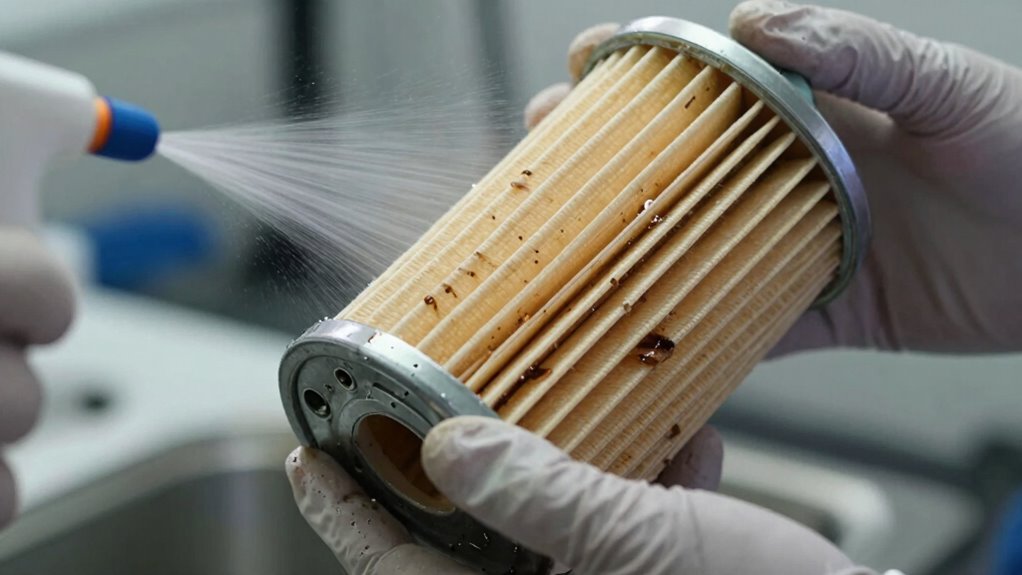
If grease buildup continues despite regular cleaning, it’s a sign that your filter may need more thorough treatment or replacement. Persistent grease can clog pleats and hinder proper airflow. In such cases, consider a filter replacement to guarantee peak performance. Before replacing, evaluate if thorough grease removal is possible with a stronger cleaning method. If not, replacing the filter is the best option to prevent damage and maintain efficiency.
| Dirty Filter | Clean Filter | Replacement Needed | New Filter in Place |
|---|---|---|---|
| Heavy grease buildup | Grease partially removed | Not effective anymore | Proper airflow restored |
Ignoring these signs can cause system failure. Prioritize grease removal or replace your filter promptly.
Frequently Asked Questions
Can Aggressive Cleaning Damage the Filter Pleats?
Yes, aggressive cleaning can damage the filter pleats. When you scrub too hard or use harsh chemicals, you risk tearing or deforming the delicate pleats, leading to cleaning damage. To protect your filter, you should use gentle agitation and appropriate cleaning agents. Proper care guarantees the pleats stay intact and maintain ideal filtration performance, preventing costly replacements and ensuring your system runs efficiently.
How Often Should Cartridge Filters Be Degreased?
You should degrease your cartridge filters every 4 to 6 weeks, depending on usage and water conditions. Regular cleaning extends your filter’s lifespan and maintains peak performance. If you notice excessive dirt or oil buildup sooner, increase cleaning frequency. Avoid over-cleaning, which can damage the pleats, but don’t neglect maintenance, as infrequent cleaning can shorten your filter’s life and reduce its effectiveness.
Are There Eco-Friendly Degreasing Options Available?
Yes, eco-friendly solutions exist for degreasing your filters. You can choose biodegradable cleaners that effectively break down grease without harming the environment. These options are safe for your equipment, gentle on the pleats, and reduce chemical waste. Using eco-friendly degreasers not only helps protect the planet but also guarantees your filters stay clean and functional, promoting sustainability while maintaining ideal filtration performance.
What Are Signs of a Failing or Damaged Filter?
You’ll notice a failing filter if it shows reduced flow, increased pressure, or frequent clogs. Discolored or foul-smelling water also signals damage. Keep track of your filter’s lifespan and follow proper maintenance tips to prevent issues. Regular inspections help catch damage early, ensuring peak performance. If you observe these signs, replace or clean your filter promptly to avoid system failure and maintain efficiency.
Is It Necessary to Replace Filters After Deep Cleaning?
You don’t always need to replace filters after deep cleaning, but it depends on their condition. Proper cleaning can extend the filter’s lifespan, reducing the need for frequent replacements. However, if the filter shows signs of wear or damage, it’s best to replace it. Adjust your cleaning frequency based on usage and environment, ensuring the filter stays effective without unnecessary replacements, saving you time and money in the long run.
Conclusion
Properly degreasing your cartridge filter can extend its lifespan by up to 50%. Regular maintenance not only saves you money but also guarantees ideal performance. Remember to choose the right cleaning agents and avoid common mistakes to protect the delicate pleats. By staying proactive, you can prevent costly replacements. Keep in mind, filters with proper care last twice as long, ultimately saving you time and resources in the long run.