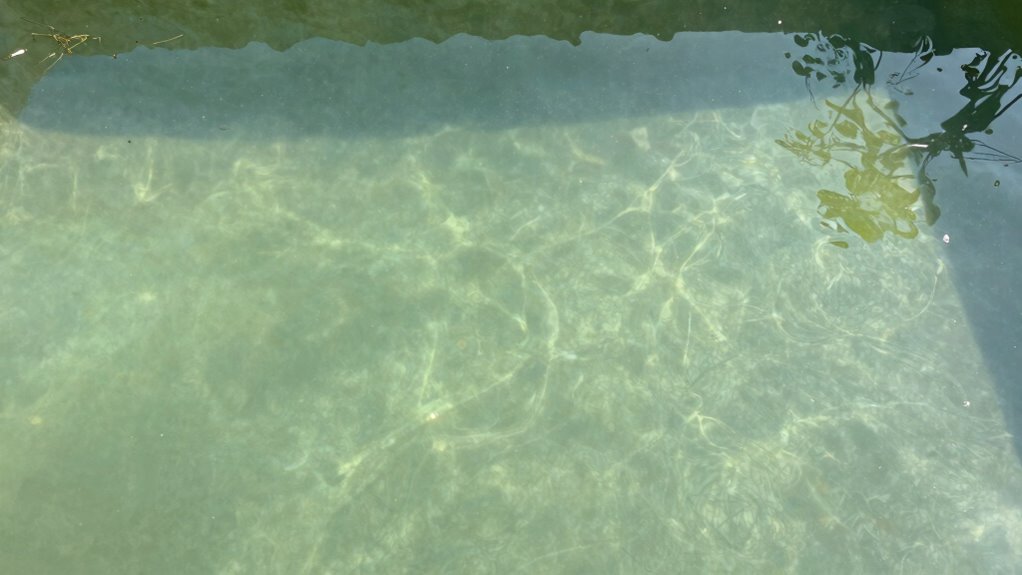

Cloudy pool water often has multiple causes working together. Poor filtration can trap dirt, oils, and debris, making the water hazy. Chemical imbalances, like high pH or low sanitizer levels, encourage algae growth and cloudiness. Algae blooms can develop quickly in warm, sunny environments, especially if regular cleaning is neglected. Combining issues like filtration problems with chemical imbalances worsens the cloudiness. To get clear water, you need to address all these factors simultaneously—there’s more to uncover here.
Key Takeaways
- Multiple factors like chemical imbalances, algae growth, and debris often occur simultaneously, causing cloudiness.
- Poor filtration can trap particles and debris, compounding water haziness alongside chemical issues.
- Chemical imbalances weaken sanitizer effectiveness, promoting algae and bacteria that contribute to cloudiness.
- Lack of routine cleaning and maintenance allows buildup of organic matter, exacerbating murkiness.
- Addressing only one cause without considering others often fails to restore clear, sparkling water.
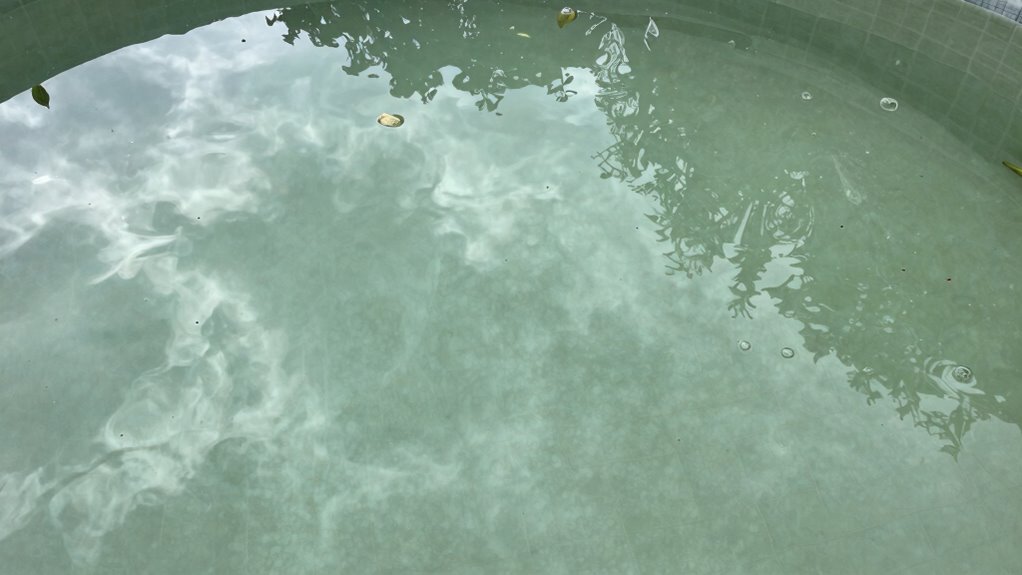
Pool water causes can stem from a variety of factors, often leading to cloudy, discolored, or unbalanced water that affects both safety and enjoyment. One of the most common causes is algae growth, which thrives when conditions are right. When algae take hold, they turn your pool water green or murky, making it look uninviting and potentially hazardous. Algae flourish in warm, sunny environments and when you neglect regular cleaning or chlorination. If you notice even a slight hint of green in your water, it’s a clear sign algae are developing, and you need to act quickly to prevent it from spreading further.
Chemical imbalance is another key factor behind cloudy pool water. When the pH, alkalinity, or sanitizer levels are off, your water becomes less stable and more prone to issues. For example, if the pH is too high, it reduces the effectiveness of chlorine, allowing bacteria, algae, and other contaminants to grow unchecked. Conversely, if the pH is too low, it can cause corrosion and cloudy water. Maintaining proper chemical balance is essential because it keeps your sanitizer working efficiently and prevents mineral deposits that can cloud the water. Regular testing and adjusting chemicals ensure that your pool remains clear and safe to swim in.
Sometimes, these issues work together. A chemical imbalance can create an environment where algae grow rapidly, compounding the cloudiness problem. If you neglect proper chemical levels, algae can bloom quickly, and the water can become murky despite your efforts to clean. Conversely, even if you’re diligent with chemicals, poor filtration or debris can trap particles, leading to cloudy water. Dirt, oils, sweat, and other contaminants can accumulate if your filtration system isn’t working effectively or if you don’t clean your pool regularly. These particles suspend in the water, making it appear hazy or murky. Proper circulation and filtration are essential in preventing these issues, especially when combined with regular chemical testing to maintain a healthy balance. Additionally, understanding the effects of mineral deposits can help you prevent mineral buildup that clouds the water and causes scaling. Furthermore, keeping the filter clean regularly can significantly improve water clarity by removing trapped particles and debris more effectively. Implementing proper maintenance routines can also help prevent many of these common issues before they escalate.
In many cases, addressing cloudy water requires a combination of strategies. You need to balance chemicals correctly, shock the pool if algae or bacteria are present, and ensure your filtration system is functioning efficiently. Regular maintenance, including brushing the walls and vacuuming debris, complements chemical treatments and helps keep your water crystal clear. Recognizing that multiple causes often contribute to cloudiness helps you take a thorough approach, so your pool stays inviting, safe, and enjoyable every time you swim. Proper circulation and filtration are crucial in preventing and resolving these issues, especially when combined with regular chemical testing.
As an affiliate, we earn on qualifying purchases.
Frequently Asked Questions
Can Algae Growth Cause Cloudy Pool Water?
Yes, algae growth can cause cloudy pool water. An algae bloom occurs when nutrients and sunlight promote algae proliferation, making the water appear murky. Water stagnation often contributes to this issue, as stagnant water provides ideal conditions for algae to thrive. To clear your pool, you need to address algae growth by shocking the pool, maintaining proper filtration, and ensuring proper circulation to prevent water stagnation.
How Does Temperature Affect Pool Water Clarity?
Your pool’s clarity can vanish faster than a snowflake in July as temperature rises. Warmer water promotes thermal stratification, causing layers that trap debris and algae, making the water cloudy. Evaporation effects also concentrate impurities, worsening clarity. Conversely, cooler temperatures help keep the water clear by reducing stratification and evaporation. So, maintaining ideal temperature helps prevent cloudiness, keeping your pool sparkling and inviting, not murky and mysterious.
Do Pool Chemicals Impact Water Cloudiness?
Yes, pool chemicals impact water cloudiness. When chemical imbalances occur, they can reduce the effectiveness of sanitizers, leading to algae growth and cloudiness. Water agitation from swimming or filtration can stir up particles, making the water appear murky. Properly balanced chemicals and consistent filtration help maintain clear water, preventing cloudiness caused by imbalanced chemicals and excessive water movement. Regular testing guarantees your pool stays clean and inviting.
Can Filter Issues Lead to Cloudy Water?
A filter issue is like a broken bridge blocking smooth traffic; it definitely causes cloudy water. When your filtration system isn’t working properly, water circulation slows or stops, allowing dirt, algae, and debris to build up. This lack of proper filtration prevents particles from settling or being removed, making your pool water appear cloudy. Regularly checking and maintaining your filter guarantees good water flow and clearer, healthier pool water.
Is High Swimmer Load a Common Cause of Cloudiness?
Yes, high swimmer load is a common cause of cloudy pool water. When many swimmers are in the pool, it increases water agitation, stirring up dirt, oils, and debris. This overloads your filtration system, making it harder to keep the water clear. Additionally, more swimmers introduce body oils and lotions, which can contribute to cloudiness. Regularly skimming, cleaning filters, and balancing water chemistry help manage this issue.
automatic pool chemical tester kit
As an affiliate, we earn on qualifying purchases.
As an affiliate, we earn on qualifying purchases.
Conclusion
When your pool water turns cloudy, it’s like a detective’s puzzle with multiple clues. Often, it’s caused by a mix of dirt, chemicals, or algae teaming up to cloud your view. By understanding these common culprits, you can clear the mystery and restore your pool’s sparkle. Think of it as untangling a knot—each cause is a strand, and addressing them one by one will leave your water crystal clear again.
As an affiliate, we earn on qualifying purchases.
As an affiliate, we earn on qualifying purchases.