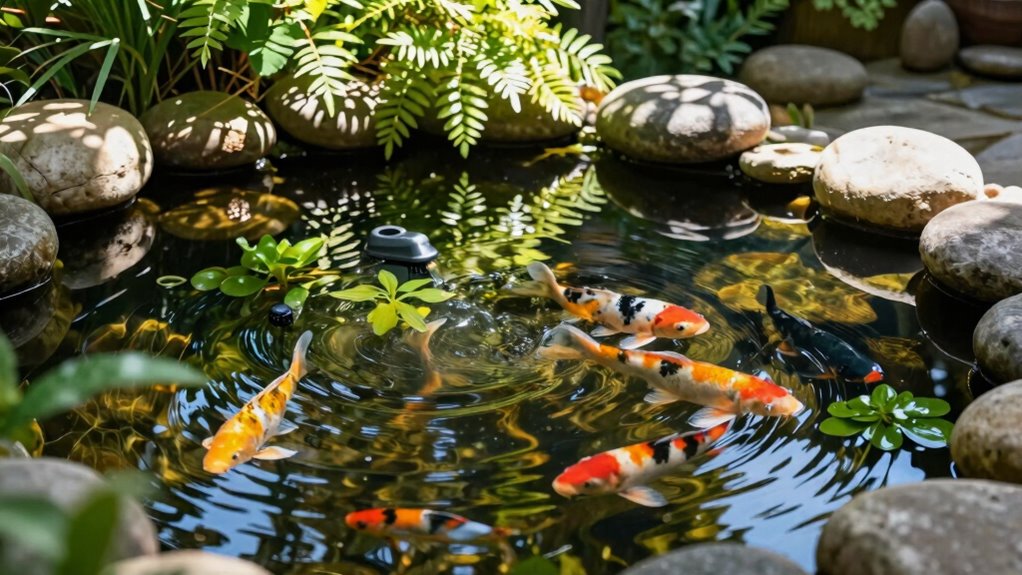
To keep your water features trouble-free, regularly monitor for algae growth, debris, and water quality issues. Maintain proper water circulation and oxygenation by inspecting and cleaning pumps and filters often. Use natural solutions like barley straw or algae control treatments to prevent algae buildup. Keep water moving to deter mosquito breeding and improve clarity. Consistent maintenance, including testing water chemistry and managing nutrients, helps maintain a healthy, attractive water feature—if you want to discover more tips, keep exploring.

Get pool and patio gear delivered free — and shop member deals
- Fast, free delivery on millions of items
- Access to Prime Big Deal Days deals on October 6–7
- Prime Video, Amazon Music and more included
Key Takeaways
- Regularly remove debris and organic material to prevent nutrient buildup that promotes algae growth.
- Maintain consistent pump and filter maintenance to ensure proper water circulation and oxygenation.
- Monitor and adjust water chemistry, including pH, nitrates, and phosphates, to prevent imbalances.
- Use natural solutions like barley straw and promote aquatic plants to naturally control algae.
- Keep water moving with appropriate pump flow to disrupt algae settlement and deter mosquito breeding.
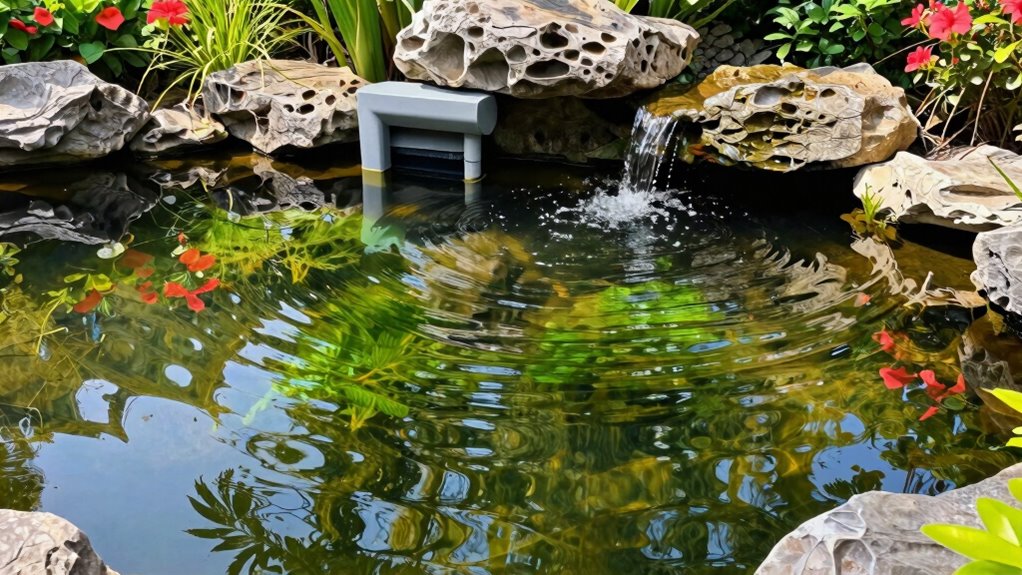
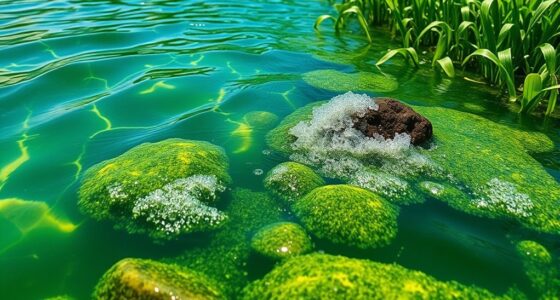
Maintaining water features is vital to keep them looking beautiful and functioning properly. When you pay attention to algae control, you prevent unsightly green scum from taking over, which can quickly turn a serene pond or fountain into a murky mess. Regularly monitoring the water helps you spot early signs of algae growth so you can take swift action. Using algae control treatments or natural solutions like barley straw can be effective, but the key is consistency. Removing debris, leaves, and excess organic material also limits nutrients that algae thrive on, keeping your water clearer and healthier.
Regular algae control and debris removal keep your water feature clear and healthy.
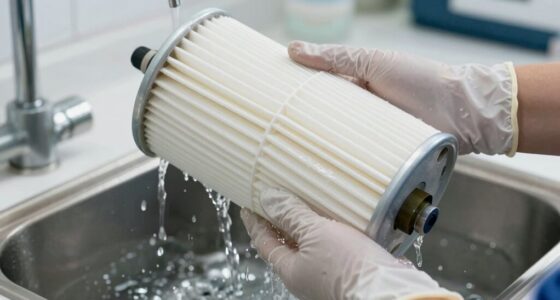
Pump maintenance is equally important. A well-functioning pump ensures proper water circulation, oxygenation, and filtration. If you neglect your pump, it can clog or fail, leading to stagnant water and increased algae growth. Make it a habit to inspect your pump regularly—look for debris caught in the intake, clean the filter, and verify that the motor runs smoothly. This prevents breakdowns and prolongs the lifespan of your equipment. Remember, a clean pump runs more efficiently, saving you energy and reducing the risk of costly repairs.
Keeping the water moving is one of the simplest ways to deter algae and other trouble spots. Stagnant water provides a perfect environment for algae and mosquito breeding, so ensure your pump is operating at its best capacity. Adjust the flow if necessary to create gentle waves or circulation patterns that disrupt algae settling. When you do maintenance, empty and clean the pump and filter components to remove buildup. Doing this every few weeks can make a significant difference in water clarity and health.
Additionally, maintaining a balanced ecosystem with proper filtration, aeration, and water chemistry prevents algae from taking over. Test the water regularly for pH, nitrate, and phosphate levels—imbalances contribute to algae blooms. Using appropriate aquatic plants can also absorb excess nutrients, naturally controlling algae growth. Incorporating water quality monitoring into your routine helps you detect issues early and maintain a healthy environment. Regularly checking your equipment and water parameters is an essential part of water feature management, ensuring long-term clarity and health. It’s also beneficial to understand how biodiversity plays a role in supporting a balanced aquatic ecosystem, which naturally curbs algae overgrowth. Proper maintenance practices are crucial for preventing algae buildup and maintaining overall water quality.
In short, staying on top of algae control and pump maintenance isn’t just about aesthetics; it’s about creating a healthy environment for your water feature to thrive. By dedicating a little time and effort, you prevent problems before they start, ensuring your water feature remains a beautiful, calming centerpiece rather than a trouble spot.
Frequently Asked Questions
What Are Common Signs of Water Feature Malfunctions?
You’ll notice signs of water feature malfunctions when water flow slows or stops completely, indicating pump issues or blockages. Algae growth becomes prominent, turning the water green and murky, often due to excess nutrients or sunlight. Keep an eye out for foul odors, debris buildup, or unusual noises. Regular inspections and cleaning help prevent these problems, ensuring your water feature runs smoothly and stays visually appealing.
How Often Should Water Features Be Inspected?
You should inspect your water feature at least once a month to make certain of proper water circulation and effective filtration systems. Regular checks help you spot issues early, like clogged filters or stagnant water, which can lead to problems. During inspections, look for debris, algae buildup, or unusual odors. Staying proactive keeps your water feature healthy, clear, and trouble-free, preventing costly repairs and making sure it remains a beautiful focal point.
What Plants Are Best for Water Feature Edges?
Think of your water feature edges as a delicate border that needs the right plants to stay beautiful. Opt for water-loving plants like sedges, rushes, and marginal plants such as hostas or water irises. These are perfect for edge planting because they thrive in moist soil, prevent erosion, and add natural charm. Your goal is to choose plant selection that blends seamlessly, creating a lush, maintenance-friendly border that highlights your water feature’s beauty.
Can Natural Solutions Replace Chemical Treatments?
Yes, natural solutions can replace chemical treatments in your water features. Eco-friendly alternatives like beneficial bacteria and enzymes help control algae and maintain water clarity without harsh chemicals. Organic water treatments promote a healthy ecosystem, reducing harmful buildup. By regularly using these organic options, you minimize environmental impact, support aquatic life, and keep your water feature clean and healthy, all while avoiding the trouble spots that chemical treatments can cause.
How to Prevent Mosquito Breeding in Water Features?
You can prevent mosquito breeding by regularly disturbing water stagnation, which stops mosquito larva from thriving. Even if you think your water feature looks clean, stagnant areas can still harbor mosquito larvae. Use a fountain or aerator to keep the water moving, and add natural predators like fish to control larva. These simple steps eliminate ideal breeding spots and reduce mosquito issues without harsh chemicals.
Conclusion
In the end, keeping your water features pristine isn’t just about routine checks—it’s about staying one step ahead. A small oversight today could turn your tranquil pond into a trouble spot tomorrow. Will you catch the signs early enough? The secret lies in your vigilance and quick action. Don’t let neglect turn your peaceful oasis into a maintenance nightmare. Stay attentive, and you’ll preserve its beauty—and your peace of mind—for years to come.
Fall Picks
fall essentials
As an affiliate, we earn on qualifying purchases.