During extreme heat, you should stay proactive with your pool care routine by frequently checking and cleaning filters, pump baskets, and skimmer baskets to prevent clogging. Test and adjust your water’s pH, alkalinity, and sanitizer levels at least twice daily using reliable test kits. Always keep your pool covered when not in use, brush and vacuum regularly, and top up water levels to maintain proper circulation. Keep your water clear, balanced, and inviting—more tips lie ahead to help you succeed.

Get pool and patio gear delivered free — and shop member deals
- Fast, free delivery on millions of items
- Access to Prime Big Deal Days deals on October 6–7
- Prime Video, Amazon Music and more included
Key Takeaways
- Increase water testing frequency to twice daily and adjust chemicals promptly to maintain proper pH and sanitizer levels.
- Use a pool cover when not in use to reduce evaporation and debris entry.
- Regularly clean filters, skimmer baskets, and vacuum to prevent algae and debris buildup.
- Maintain proper water circulation and top up water levels to support chemical effectiveness.
- Monitor water clarity and odor daily, adjusting chemicals immediately to prevent health hazards.
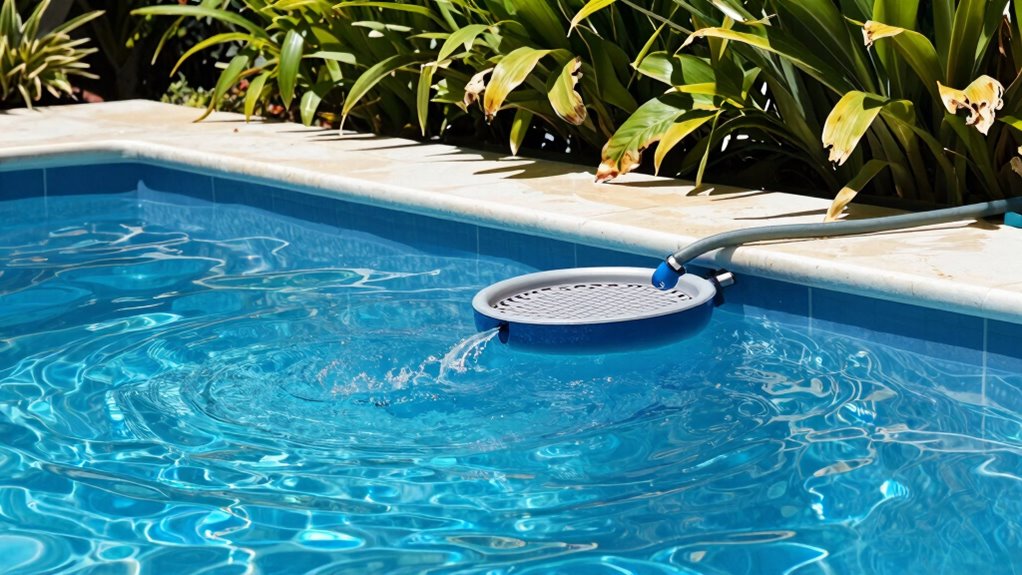
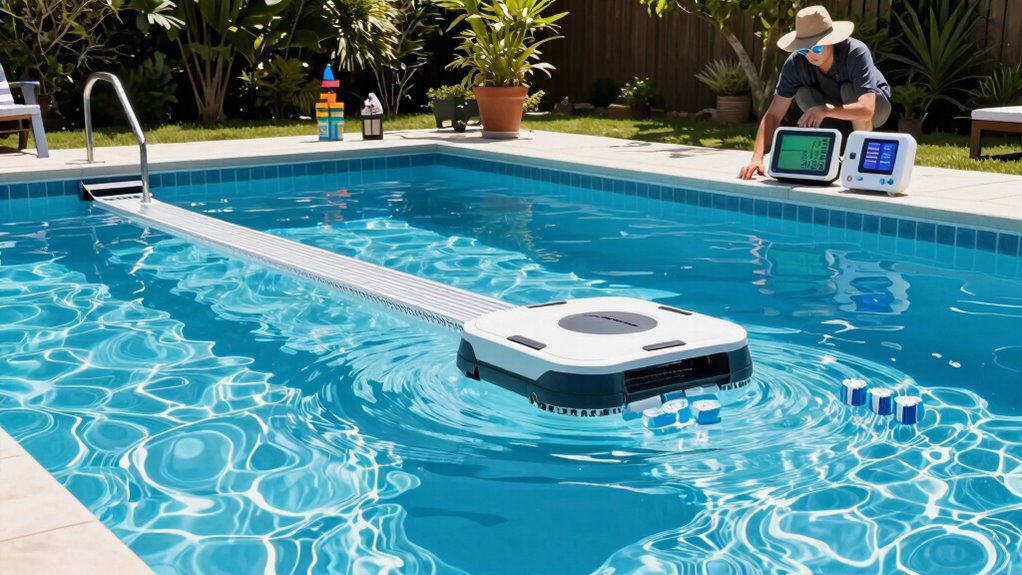
As temperatures soar, maintaining a clean and healthy pool becomes even more essential. The heat accelerates evaporation and can lead to imbalanced water chemistry, so staying on top of your pool care routine is crucial. Start by prioritizing pool equipment maintenance. Check your filter system regularly, ensuring it runs efficiently to keep debris and dirt out of the water. Clean your filter as needed—clogged filters reduce circulation, which can cause water quality issues. Inspect your pump and skimmer baskets, emptying them frequently to prevent blockages. Properly functioning equipment ensures that your pool stays clear and balanced despite the intense heat.
Regularly check and clean pool equipment to keep your water clear and balanced during hot summer days
Next, focus on chemical balance adjustment. High temperatures cause rapid chemical dissipation, so test your water at least twice a day during peak heat. Use a reliable test kit to monitor pH, alkalinity, and sanitizer levels. Maintaining the proper pH—around 7.4 to 7.6—is essential for comfort, sanitizer effectiveness, and preventing algae growth. If your pH is too high, add a pH reducer; if it’s too low, incorporate a pH increaser. Chlorine or other sanitizers tend to break down faster in hot weather, so you’ll need to add more frequently to keep germs at bay. Consider using stabilizers like cyanuric acid to protect your sanitizer from rapid sunlight degradation, which is especially important during extended sunny days. Additionally, biodiversity in your pool environment can help naturally control algae and bacteria, reducing chemical dependence and promoting a healthier water ecosystem.
In addition to chemical adjustments, consider using a pool cover when the pool isn’t in use. A cover reduces evaporation, keeps debris out, and helps maintain a stable chemical balance. Regular brushing of the pool walls and vacuuming the bottom helps prevent algae buildup, which thrives in warm water. Also, keep an eye on water levels; evaporation can lower water levels quickly, so top up your pool with fresh water to maintain proper circulation and chemical effectiveness. Proper circulation practices can also reduce bacterial growth, which can become more problematic during hot weather. Incorporating proper circulation practices can further enhance water quality and reduce algae growth, especially during prolonged hot periods.
Lastly, stay vigilant about water clarity and odor. Cloudy water or a strong chlorine smell indicates your chemical levels are off. Immediate adjustment prevents potential health hazards and keeps your swimming experience enjoyable. By sticking to a routine of diligent pool equipment maintenance and regular chemical balance adjustment, you’ll guarantee your pool remains inviting, clean, and safe, even during the hottest days of summer. Consistency is key—by proactively managing these aspects, you’ll extend the lifespan of your pool and enjoy revitalizing swims all season long.
Frequently Asked Questions
How Often Should I Replace My Pool’s Filter During Extreme Heat?
You should replace your pool’s filter every 6 to 12 months during extreme heat, but always stick to your filter maintenance schedule. Hot weather can cause debris buildup and affect pool chemical stability, making regular filter changes essential. Check your filter’s condition regularly, especially in high temperatures, and clean or replace it promptly. This routine helps maintain clear water and keeps your pool chemistry balanced during intense heat.
Can High Temperatures Cause Algae to Grow Faster?
High temperatures can turn your pool into a breeding ground for algae, like a garden gone wild. To keep it at bay, focus on algae prevention by regularly shocking your pool and maintaining proper chemical balancing. Hot weather accelerates algae growth, so test and adjust your chemicals often. Keeping the water properly balanced and clean is your best defense against algae taking over during scorching days.
What’s the Best Time of Day to Check Chemical Levels?
You should check your pool’s chemical levels in the late afternoon or early evening, when the sun isn’t directly shining on the water. This helps maintain a stable chemical balance and guarantees accurate test results. Stick to a consistent testing schedule, ideally daily during extreme heat, to prevent algae growth and bacteria. Regular checks allow you to adjust chemicals promptly, keeping your pool safe and clear for swimming.
Does Increased Evaporation Affect My Pool’s Water Chemistry?
Yes, increased evaporation can affect your pool’s water chemistry by causing water loss, which concentrates chemicals and leads to imbalance. As water evaporates, minerals and chemicals become more concentrated, potentially disrupting pH levels and chlorine effectiveness. To maintain proper chemistry, regularly check and adjust chemical levels, and top off your pool with fresh water to replace lost volume. This helps prevent issues caused by evaporation during extreme heat.
Are There Specific Pool Covers Recommended for Extreme Heat?
Think of a good pool cover as your pool’s sunhat—protecting it from the relentless heat. For extreme heat, opt for covers made of heat-resistant materials like aluminized or reflective covers, which deflect sunlight effectively. Popular pool cover types include solar covers, safety covers, and winter covers, but select one designed specifically for high temperatures. Proper coverage keeps your water cooler, reduces evaporation, and preserves your pool’s chemistry.
Conclusion
So, amidst the blazing heat, you’ve mastered the art of keeping your pool pristine—who would’ve thought that fighting algae and evaporation could become your summer obsession? Ironically, your diligent routine might make you forget the simple pleasure of just cooling off. But hey, with all that effort, at least you can confidently say you’ve outsmarted the sun—until next season when your pool’s glow becomes the real summer highlight. Cheers to your clever, sweat-filled victory!
Fall Picks
fall essentials
As an affiliate, we earn on qualifying purchases.