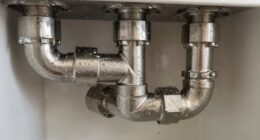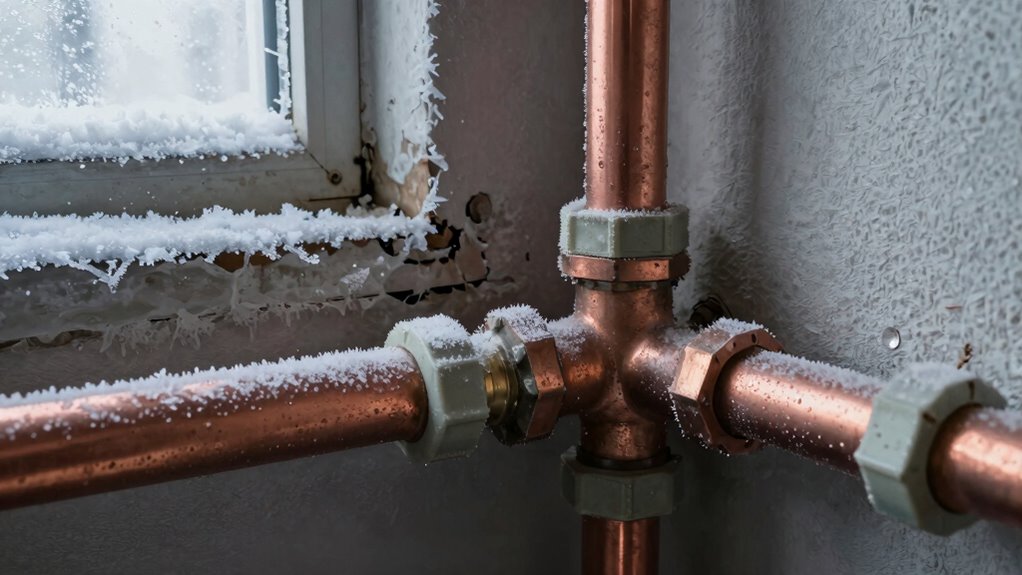
During winter, outdoor pipes, those along exterior walls, and uninsulated attic or basement lines are most likely to crack first as they’re exposed to freezing temperatures. Older pipes with weakened joints or corrosion also face higher risks. If you have unprotected or poorly insulated plumbing in these areas, you’ll see cracks, leaks, or bursts sooner. Keep these vulnerable sections in mind, and you’ll discover how to protect them better.
Key Takeaways
- Pipes located along exterior walls or in uninsulated areas are most vulnerable to cracking during freezing conditions.
- Low-lying sections such as basements, crawl spaces, and garage pipes are at higher risk of freezing and subsequent damage.
- Outdoor pipes and faucets without proper insulation or drainage are prone to cracking from ice expansion.
- Pipes behind cabinets, under sinks, or near windows are more susceptible due to limited insulation and exposure to cold air.
- Older pipes with weakened joints or corrosion are more likely to crack first when subjected to freezing temperatures.
Why Are Some Pipes More Likely to Freeze in Winter?
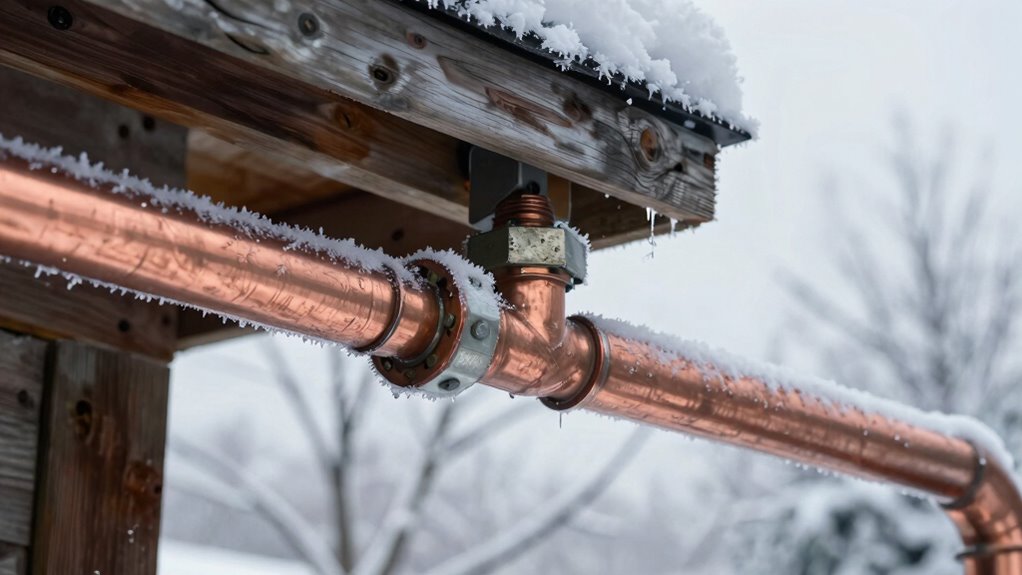
Some pipes are more prone to freezing during winter because of their location and exposure. The pipe material plays a big role—metal pipes, like copper or steel, conduct cold more quickly, making them more vulnerable. Plastic pipes, such as PVC, tend to be slightly more resistant but can still freeze if exposed to extreme cold. Pipe color also matters; dark-colored pipes absorb heat from sunlight, helping them stay warmer, while light or white pipes reflect heat and stay colder. If a pipe is situated in uninsulated or exposed areas, it’s at higher risk of freezing. Properly insulating pipes or choosing materials suited for cold climates can markedly reduce this risk. Understanding thermal conductivity helps you choose the right pipe materials and insulation to better protect your plumbing during harsh winter conditions. Additionally, insulation techniques can be employed to further safeguard vulnerable pipes and prevent costly repairs. Using preemptive measures, such as allowing a slow drip of water during extremely cold nights, can also help prevent pipes from freezing. Being aware of exposure factors allows homeowners to identify the most at-risk sections of their plumbing systems and take targeted action. Recognizing the impact of insulation on pipe protection is essential for maintaining a functional plumbing system in winter.
What Are the Risks of Outdoor and Exposed Pipes Freezing?
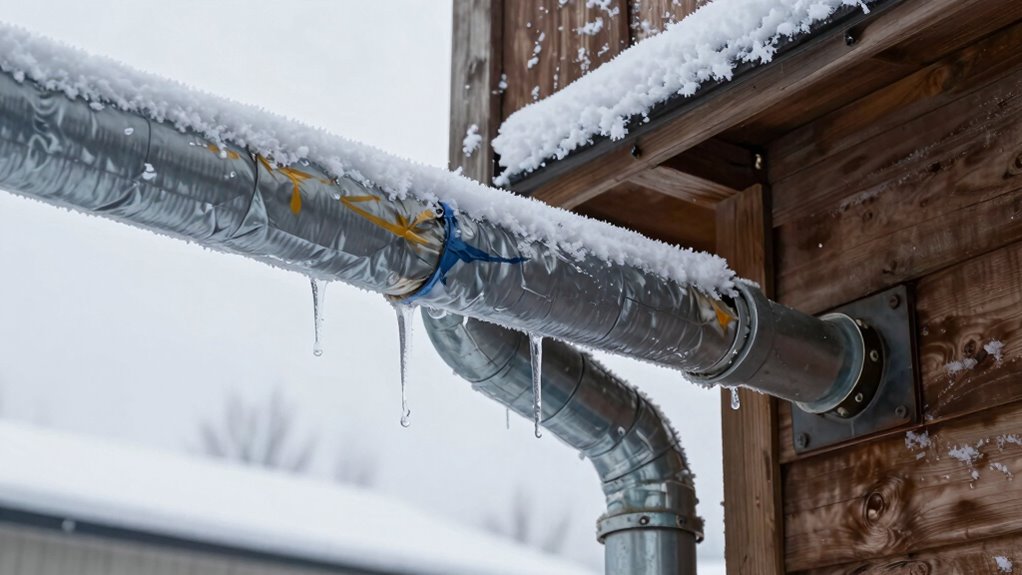
Outdoor and exposed pipes face a higher risk of freezing because they lack the protection offered by walls, insulation, or indoor heating. Without proper pipe insulation, cold air easily penetrates, increasing the chance of freezing and bursting. Outdoor faucets are especially vulnerable since they’re often left unprotected, and water remaining inside can freeze and cause damage. To minimize risks, insulate outdoor pipes and shut off outdoor faucets before cold weather hits. Consider installing insulated covers or wrapping exposed plumbing. A table below highlights common risks:
| Risk | Consequence |
|---|---|
| Lack of pipe insulation | Increased freeze potential |
| Unprotected outdoor faucets | Water inside freezes and damages |
| No drainage of outdoor pipes | Water remains and freezes |
| Poor sealing at openings | Cold air accelerates freezing |
Additionally, proper drainage of outdoor pipes helps prevent water from remaining inside and freezing, reducing the risk of damage. Ensuring proper ventilation around exposed plumbing can also help prevent moisture buildup that could contribute to freezing issues. Implementing winterization measures can further safeguard against unexpected cold snaps.
Which Kitchen and Bathroom Fixtures Are Most at Risk During Cold Spells?
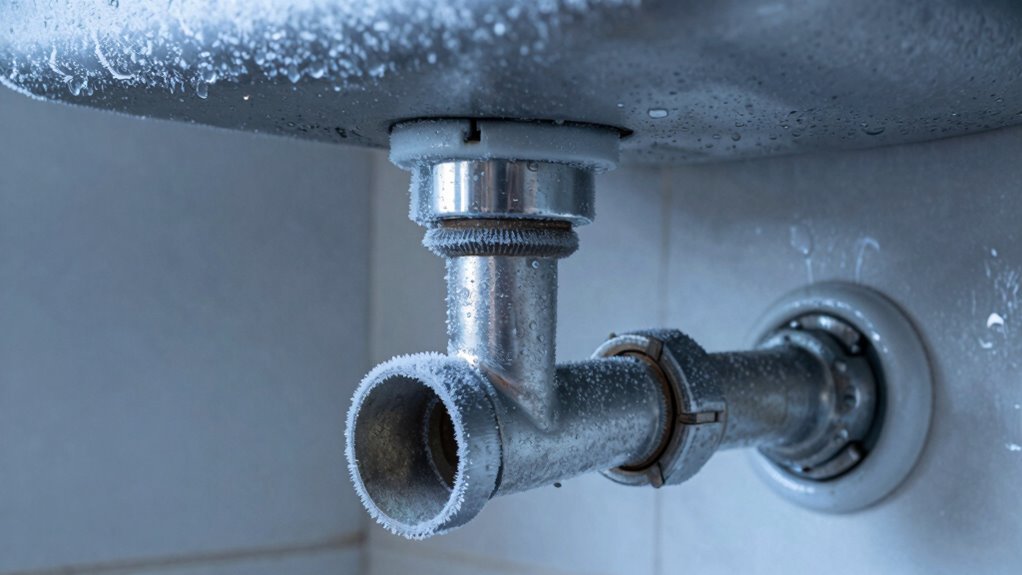
During cold spells, kitchen and bathroom fixtures that are exposed to low temperatures are at significant risk of freezing and cracking. Pipes behind cabinets, under sinks, or near exterior walls are especially vulnerable. To protect these fixtures, ensure proper pipe insulation to reduce heat loss and prevent freezing. Faucet maintenance is also critical; dripping faucets slightly open can keep water flowing and reduce pressure buildup. Pay close attention to fixtures with uninsulated pipes or those in unheated areas, as they’re most likely to crack first. If you notice any signs of freezing, such as reduced water flow or strange noises, act quickly before damage occurs. Proper winterizing procedures can help prevent damage during cold snaps. Additionally, using pipe insulation effectively can provide an extra layer of protection against freezing temperatures. Regularly checking exposed plumbing during cold weather can help identify potential issues early and prevent costly repairs. Recognizing vulnerable fixtures and taking proactive measures can significantly reduce the risk of plumbing damage caused by freezing. Implementing preventative measures is essential for safeguarding your plumbing system during harsh winter weather. Taking these precautions can save you from costly repairs and water damage during harsh winter weather.
Why Are Attic and Uninsulated Pipes More Prone to Cracking?
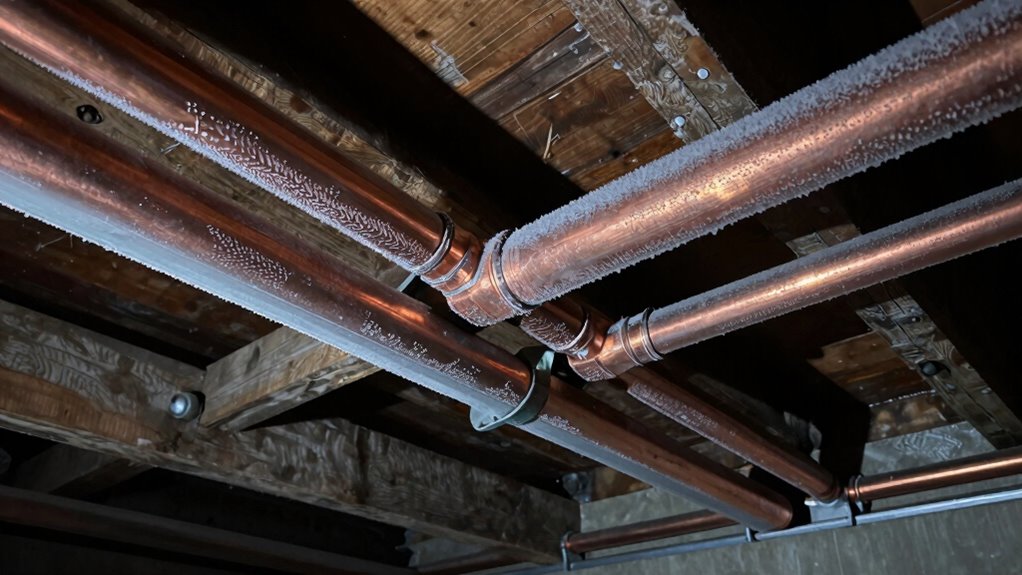
Attic and uninsulated pipes are more prone to cracking because they’re exposed to extreme temperature fluctuations that quickly freeze and thaw the water inside. Without proper attic insulation, these pipes face direct pipe exposure to cold air, making them vulnerable. When temperatures drop, the water inside expands as it freezes, exerting pressure on the pipe walls. Rapid temperature changes cause repeated expansion and contraction, weakening the pipe material over time. Since attics often lack insulation, they don’t retain heat like other areas of your home, increasing the risk of freezing. Proper attic insulation acts as a barrier, maintaining more stable temperatures and protecting pipes from the damaging effects of freezing and thawing cycles. Additionally, insulation installation can significantly reduce the likelihood of pipe cracking during winter. Enhancing thermal regulation in your attic can further protect your plumbing system from winter damage, especially by reducing heat loss and maintaining consistent temperatures.
How Do Basement and Crawl Space Pipes Get Affected in Winter?
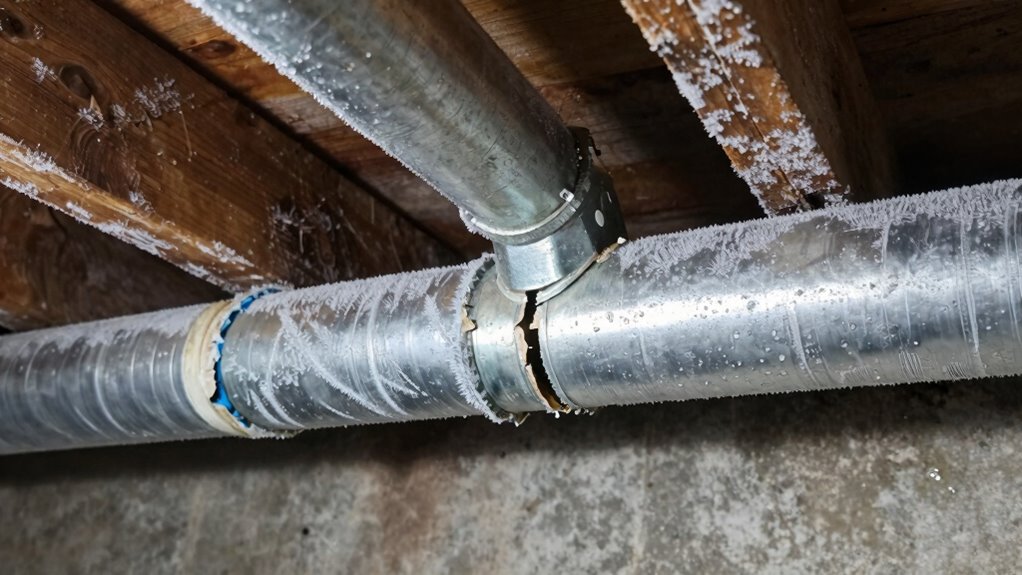
Basement and crawl space pipes face similar risks as attic pipes but are often more vulnerable due to limited insulation and exposure to fluctuating temperatures. When exposed to cold weather, water inside these pipes can freeze, expand, and cause cracks or bursts. Poorly sealed crawl space vents let cold air circulate, worsening the risk of freezing and leading to potential basement flooding when pipes burst. Additionally, uninsulated pipes in these areas are more susceptible to temperature drops. To prevent issues, insulate pipes and seal crawl space vents. Proper insulation techniques can significantly reduce the risk of pipe damage during winter. Here’s a quick overview:
| Area | Risk Factors | Prevention Tips |
|---|---|---|
| Basement pipes | Exposure to cold, flooding risk | Insulate pipes, keep basement warm |
| Crawl space vents | Cold air circulation | Seal vents, add insulation |
| Uninsulated pipes | Freezing, cracking | Wrap with insulation |
| Water damage | Burst pipes, flooding | Maintain proper drainage |
To further protect these vulnerable sections, consider installing temperature monitoring systems that alert you to freezing conditions before damage occurs.
How Can You Identify Your Most Vulnerable Pipes Before Cold Weather?
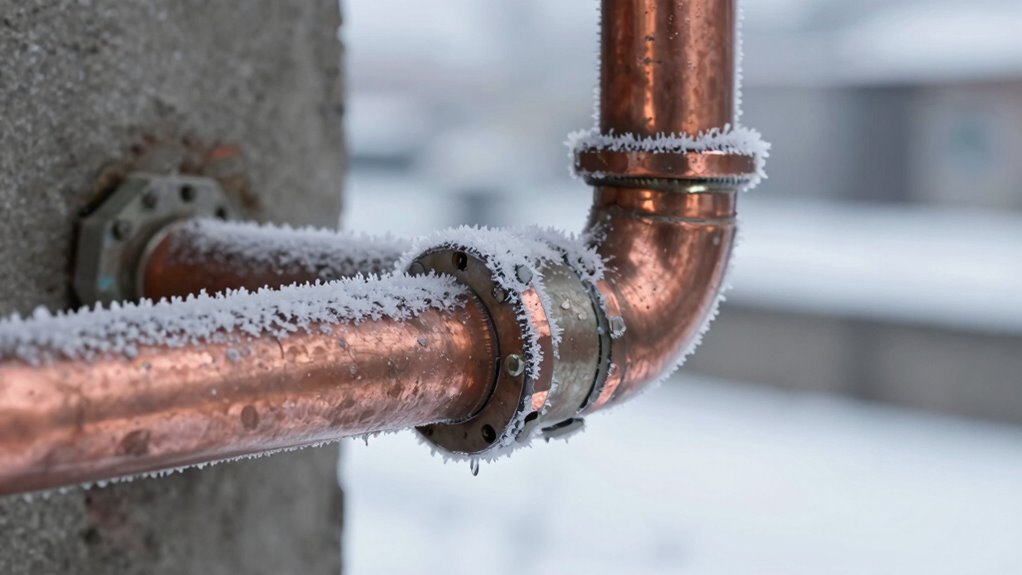
To identify your most vulnerable pipes before cold weather hits, start by inspecting areas prone to freezing, such as uninsulated pipes in the basement, crawl space, and exterior walls. Check the pipe material, as some materials like copper and plastic are more susceptible to cracking under freezing conditions. Older pipes, especially those over 20 years, often have weakened joints or corrosion, increasing their risk of damage. Look for signs of wear, such as discoloration or brittleness, which indicate vulnerability. Pay close attention to pipes in unheated spaces and those exposed to drafts or outside walls. By evaluating both pipe material and age, you can pinpoint which sections need extra insulation or attention before the cold sets in. Additionally, understanding the vulnerable pipe sections can help prioritize your preventative measures.
What Are the Signs That Your Pipes Might Be Freezing or Damaged?
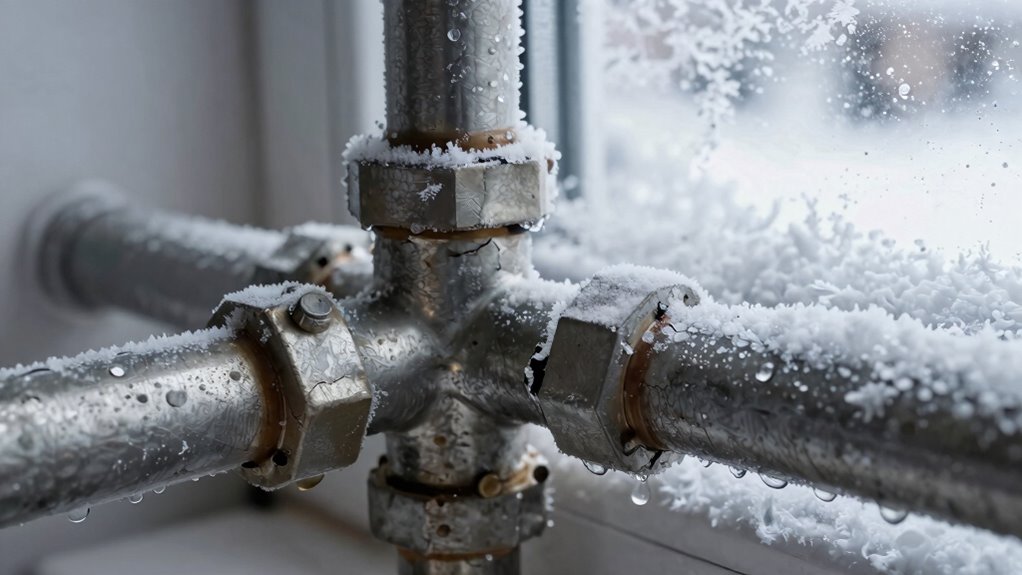
When pipes start to freeze or sustain damage, certain warning signs become noticeable. You might notice reduced water flow or no water at all, especially in the affected area. Strange noises like banging or clunking can also indicate freezing or damage. Additionally, if you notice frost or ice formation on exposed pipes, it’s a clear sign they’re freezing despite your pipe insulation efforts. Pay attention to areas with limited valve access—these spots are often overlooked but vital for quick shutoff if trouble arises. You may also see damp spots or leaks if pipes have burst. Early recognition of these signs allows you to take immediate action, preventing costly repairs and water damage during the cold months.
How Can You Protect Your Plumbing System From Freezing This Winter?
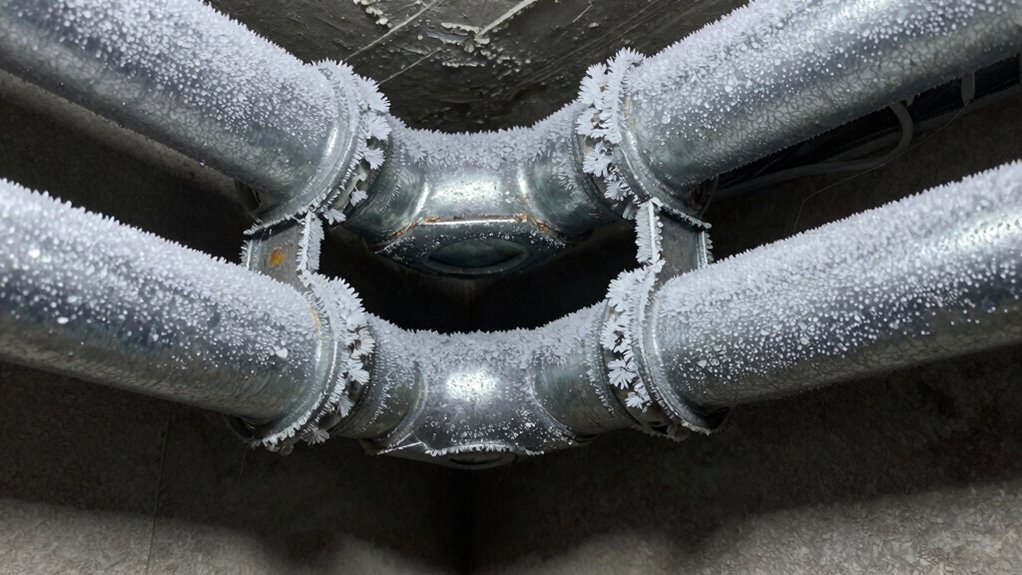
To protect your plumbing system this winter, start by insulating vulnerable pipes to prevent freezing. Keep garage doors closed and maintain a steady flow of water by dripping faucets regularly. These simple steps can make a big difference in avoiding costly damage when temperatures drop.
Insulate Vulnerable Pipes
Insulating vulnerable pipes is one of the most effective ways to prevent freezing during cold weather. Proper pipe insulation creates a thermal barrier, keeping your water flowing smoothly. To maximize protection, consider:
- Wrapping exposed pipes with high-quality pipe insulation
- Using foam sleeves or insulating tape for added coverage
- Installing heat cables or heat tape on especially vulnerable pipes
- Setting up temperature monitoring devices to alert you of extreme drops
These steps help maintain warmer pipe temperatures, reducing the risk of cracks. Regularly check insulation for damage and replace as needed. Keep an eye on temperature monitoring devices to catch potential issues early. Protecting your pipes with insulation is a simple, cost-effective way to avoid costly repairs caused by burst pipes during winter.
Keep Garage Doors Closed
Keeping your garage doors closed during cold weather is a simple but effective way to protect your plumbing system from freezing. When you keep the garage sealed, it helps maintain a warmer environment, preventing pipes from freezing and cracking. If you use your garage for vehicle storage or as part of your garage maintenance routine, keeping the doors shut reduces drafts and heat loss. This is especially important for exposed pipes along exterior walls. To maximize protection, insulate your garage walls and seal gaps around doors.
| Garage Maintenance Tips | Benefits |
|---|---|
| Keep doors closed | Prevents drafts and heat loss |
| Insulate walls | Maintains warmer temperatures |
| Seal gaps around doors | Stops cold air infiltration |
| Keep garage organized | Easy access for inspections |
| Use a space heater | Adds extra warmth when needed |
Drip Faucets Regularly
Regularly dripping your faucets creates a continuous flow of water through your pipes, which helps prevent freezing during cold weather. When water moves, it’s less likely to freeze and cause pipe damage. To maximize protection, consider these tips:
- Drip faucets connected to exposed or uninsulated pipes.
- Keep the flow steady, not just a trickle.
- Focus on outdoor faucets and those in unheated spaces.
- Be consistent, especially during the coldest nights.
This simple step can save you from costly repairs and extensive water damage. Drip faucets regularly to maintain water movement, reducing the risk of frozen pipes and avoiding potential cracks or bursts. It’s a quick, effective way to protect your plumbing system from winter’s harsh freeze.
How Do Insulation and Heating Prevent Pipes From Freezing and Cracking?
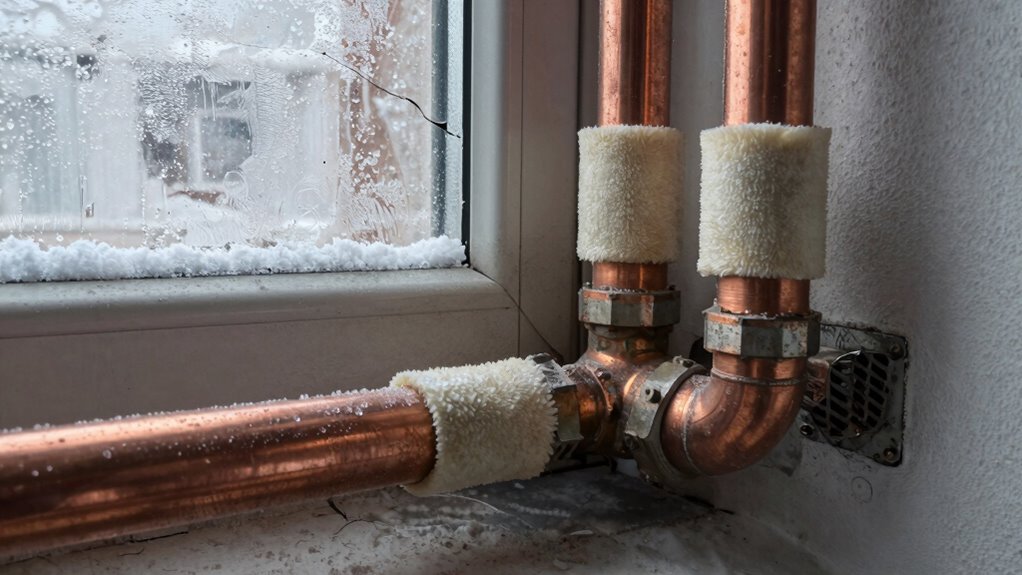
Proper insulation techniques help keep the cold out and prevent pipes from freezing. Effective heating strategies guarantee warm temperatures around vulnerable areas, reducing the risk of cracks. Knowing common problem areas allows you to target insulation and heating efforts where they’re needed most.
Proper Insulation Techniques
Insulating your pipes effectively creates a barrier that helps retain heat and prevents cold air from reaching them. Proper insulation techniques involve applying pipe insulation, which acts as a thermal barrier against freezing temperatures. To maximize protection, focus on these key methods:
- Use foam or rubber pipe insulation sleeves for easy coverage
- Cover exposed pipes in unheated areas, like basements and attics
- Seal gaps and cracks around pipes to prevent drafts
- Insulate both hot and cold water pipes to maintain temperature
These thermal barriers keep the water inside your pipes warmer, reducing the risk of freezing and cracking. Proper pipe insulation is a simple, cost-effective way to safeguard your plumbing during cold weather, ensuring longevity and preventing costly repairs.
Effective Heating Strategies
When you combine effective heating methods with proper insulation, you create a powerful defense against pipe freezing. Heating methods like space heaters, heat tape, or thermostatically controlled heaters can raise the temperature around vulnerable pipes, preventing it from dropping too low. Confirm the heat source is safe and consistent, especially in unheated areas. Pair these with pipe insulation to retain heat and reduce heat loss. Insulation acts as a barrier, helping the warmth stay inside the pipes longer. Regularly inspecting and maintaining your heating equipment ensures it functions properly during cold spells. By integrating these strategies, you minimize the risk of pipes freezing and cracking, safeguarding your plumbing system and avoiding costly repairs. Proper heating combined with insulation is your best defense during winter freezes.
Common Problem Areas
Certain areas in your home are more prone to freezing because they lack sufficient heat or insulation. These spots are usually where pipes are exposed or poorly protected. Common problem areas include:
- Unheated basements and attics
- Exterior walls with little insulation
- Outdoor faucets and hose bibs
- Unprotected pipe sections near foundations
Using pipe insulation helps keep these vulnerable areas warm, reducing the risk of freezing. For outdoor faucets, installing insulated covers or shutting off water supply prevents freezing and bursting. Insulation traps heat around pipes, while heating cables can provide extra warmth in especially cold spots. Paying attention to these problem areas ensures your plumbing stays intact during winter’s worst. Properly insulating outdoor faucets and critical pipe sections is a simple, effective way to prevent costly damage.
What Emergency Steps Should You Take If Your Pipes Freeze or Burst?
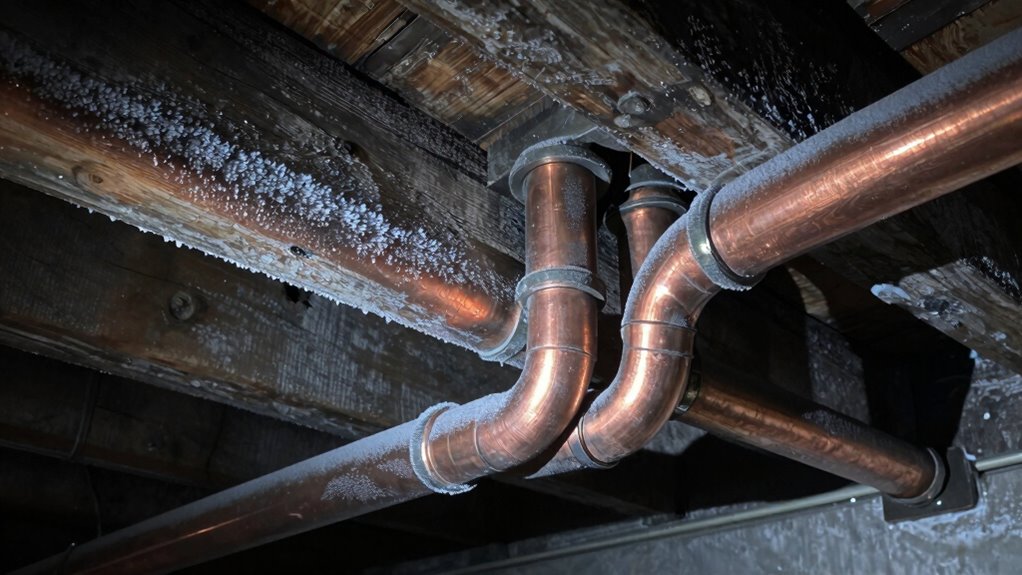
If your pipes freeze or burst, quick action can prevent major water damage and costly repairs. First, shut off the main water supply immediately to stop more water from flooding your home. Next, turn on faucets connected to the affected pipes to relieve pressure and help drain remaining water. Use a hairdryer or heating pad to gently thaw frozen pipes, starting from the faucet end, and avoid open flames. Check your emergency contacts so you can call a plumber promptly if needed. Prevent future issues by adding pipe insulation around vulnerable areas. Keep a list of emergency contacts handy, including plumbers and repair services. Acting swiftly minimizes damage, saving you time and money.
Frequently Asked Questions
How Can I Tell if a Pipe Has Already Started to Crack?
You can tell if a pipe has started to crack by checking for small leaks or damp spots around pipe insulation. Listen for hissing sounds or dripping water, which indicate a crack. Also, monitor water pressure; a sudden drop suggests a leak. Regularly inspecting exposed pipes and maintaining proper insulation helps catch early signs before cracks worsen, preventing costly repairs and water damage.
What Materials Are Most Resistant to Freezing Damage?
Think of your pipes like delicate glassware—some materials are sturdier against cold. Copper and PEX pipes resist freezing damage best when wrapped in pipe insulation, which acts like a cozy sweater. Additionally, using antifreeze solutions in vulnerable sections adds extra protection. These materials and methods help prevent cracks and bursts during freezing temperatures, ensuring your plumbing stays intact through the coldest winter nights.
Are There Specific Plumbing Designs That Reduce Freeze Risk?
You can reduce freeze risk by adopting specific plumbing designs that incorporate insulation techniques and strategic pipe routing. Insulating pipes in unheated areas prevents freezing, while routing pipes through interior walls or around heated spaces minimizes exposure to cold. Additionally, avoiding exterior walls or unprotected zones helps prevent cracks. Combining proper insulation with thoughtful pipe placement guarantees your plumbing stays safe during freezing temperatures.
How Often Should I Inspect Vulnerable Pipes During Winter?
Imagine your outdoor faucets and exposed pipes like fragile glass, waiting for a sudden frost. You should check them at least once a week during winter, especially after cold snaps. Look for signs of ice buildup, leaks, or cracks. Make sure pipe insulation stays intact and outdoor faucet covers are secure. Regular inspections help catch problems early, preventing costly repairs when temperatures drop below freezing.
Can Water Heater Pipes Be Affected by Freezing Temperatures?
Yes, water heater pipes can be affected by freezing temperatures. To prevent damage, you should insulate these pipes with pipe insulation and consider using heat tape, especially if they run through unheated areas. Proper insulation helps retain heat, reducing the risk of freezing and cracking. Regularly check these protections during cold snaps to guarantee they remain effective and keep your water heater functioning smoothly.
Conclusion
Remember, an ounce of prevention is worth a pound of cure. By insulating exposed pipes, keeping your home warm, and acting quickly if you notice signs of freezing, you can protect your plumbing this winter. Don’t wait until it’s too late—taking proactive steps now can save you from costly repairs and water damage. Stay vigilant, and you’ll weather the cold season with confidence and peace of mind.