
Pool robots are great for routine surface cleaning, but they can’t detect subtle signs of damage or assess the overall health of your pool’s infrastructure. You need manual inspections to catch issues like cracks, leaks, or equipment failures that robots might miss. Relying solely on automation can give you a false sense of security and overlook hidden problems. Keep exploring to discover how blending automation with expert checks keeps your pool safe and well-maintained.
Get ready for Prime Big Deal Days — try Prime free
Exclusive member deals on October 6–7, plus fast free delivery. Cancel anytime.
As an affiliate, we earn on qualifying purchases.
Key Takeaways
- Pool robots only handle surface cleaning and cannot detect underlying infrastructure issues or subtle damages.
- Manual inspections are essential for identifying leaks, cracks, and equipment deterioration that robots cannot assess.
- Automated systems lack sensory capabilities to recognize signs of chemical imbalance or early equipment failure.
- Relying solely on robots risks overlooking hidden problems that could lead to costly repairs or safety hazards.
- Combining manual checks with robotic cleaning ensures comprehensive maintenance and early problem detection.
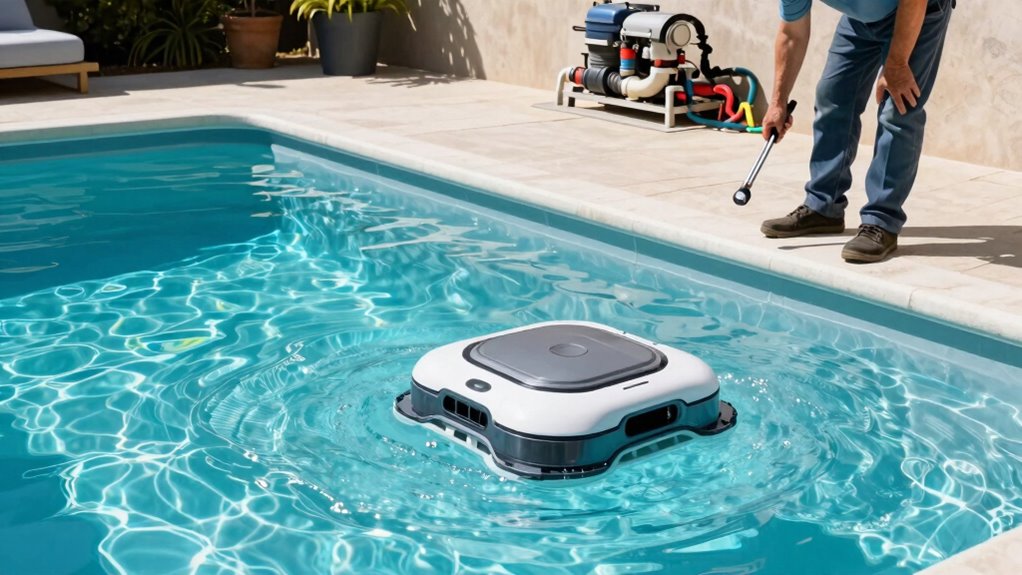
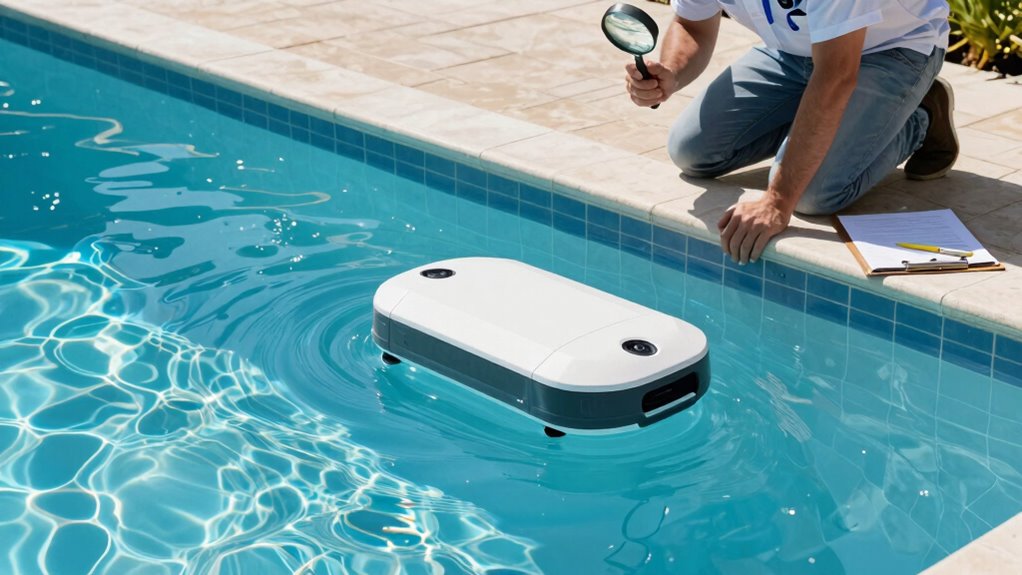
Maintaining a clean and safe pool requires more than just occasional skimming; it involves regular inspections to catch potential issues early. While pool robots can handle routine cleaning tasks efficiently, they aren’t a substitute for thorough manual inspections. Automated efficiency allows these devices to keep your pool clean with minimal effort, but they lack the ability to assess complex problems or detect subtle signs of damage. Human expertise is essential here, as trained eyes can identify issues that a robot simply can’t spot, such as cracks in the pool lining, corrosion, or equipment malfunctions.
Manual inspections are essential for detecting subtle damages and equipment issues that robots can’t identify.
Pool robots excel at removing debris, scrubbing surfaces, and maintaining clarity, saving you time and effort. They operate on programmed routines, often covering large areas quickly, which keeps the water sparkling and reduces overall maintenance. However, their automated efficiency is limited to surface-level cleaning. They don’t have the sensory capabilities or decision-making skills needed to evaluate the health of the pool’s infrastructure. For example, if a robot detects a buildup of algae or a clog in the pump, it can’t diagnose the root cause or suggest a fix. That’s where manual inspections come into play, allowing you to dig deeper into potential problems that could lead to costly repairs if left unaddressed.
Regular manual inspections give you the opportunity to evaluate the pool’s physical condition beyond what a robot can see. You can check the structure for cracks, leaks, or deterioration, and assess the condition of essential equipment like filters, heaters, and pumps. Human expertise enables you to interpret subtle signs of trouble, such as unusual noises, sluggish equipment performance, or changes in water chemistry, which might indicate underlying issues. These inspections also help you verify that the automated systems are functioning properly and that no maintenance tasks are overlooked. Additionally, understanding the importance of biodiversity in aquatic environments can help promote healthier pool ecosystems and reduce chemical use. Incorporating environmental considerations into your routine can also enhance overall pool sustainability. Regular manual checks are crucial because they allow you to assess the overall system integrity, which automated systems cannot fully evaluate. Moreover, routine manual checks can help prevent equipment failure by catching problems early.
Relying solely on pool robots can create a false sense of security, as they don’t provide all-encompassing assessments. Manual inspections complement automated cleaning by ensuring you maintain a safe, healthy pool environment. They allow you to catch problems early before they escalate into major repairs. In the end, combining the efficiency of automated tools with the insight of human expertise provides a balanced approach—keeping your pool clean, safe, and well-maintained in the long run.
As an affiliate, we earn on qualifying purchases.
Frequently Asked Questions
Can Pool Robots Detect Chemical Imbalances in the Water?
Pool robots can’t detect chemical imbalances in the water directly. They typically use chemical sensors, but their ability to analyze water chemistry is limited and not as accurate as manual testing. For precise readings of pH, chlorine, or other chemicals, you need manual inspections with test kits or professional water analysis. Relying solely on pool robots won’t guarantee your water remains safe and properly balanced.
How Often Should Manual Inspections Be Performed Alongside Robot Use?
Think of manual inspections as your pool’s health check-up, happening regularly to make certain everything’s in top shape. You should perform manual inspections weekly, even if your robot follows a strict inspection schedule. This way, you catch issues the robot might miss, like hidden leaks or chemical imbalances. Combining a consistent manual inspection frequency with your robot’s routine keeps your pool safe, sparkling, and perfectly balanced.
Are Pool Robots Effective in Hard-To-Reach Pool Areas?
Pool robots can struggle with hard-to-reach areas due to their limitations, like maneuvering tight corners or uneven surfaces. While they do a good job cleaning accessible spots, manual inspections remain essential for thorough assessment. You should still perform manual checks regularly because robots can miss debris or grime in tricky spots. Relying solely on pool robots isn’t enough—you need the detailed touch of manual inspections for a truly clean and well-maintained pool.
Do Pool Robots Require Regular Maintenance or Calibration?
You’ll find that pool robots do require regular maintenance and calibration to keep them running smoothly. About 80% of users report needing to check and adjust their robots’ systems periodically. Automated cleaning depends on proper calibration to guarantee thorough coverage. Additionally, maintaining the battery lifespan through timely charging and care prevents unexpected failures. Regular upkeep helps maximize efficiency and extends your robot’s lifespan, making your pool cleaning more reliable and hassle-free.
Can Pool Robots Identify Algae or Biological Contaminants?
Pool robots can’t reliably identify algae or biological contaminants. While they excel at cleaning surfaces, algae detection and identifying biological contaminants require manual inspections and water testing. You need trained eyes and proper testing kits to spot issues that aren’t visible on surfaces. Relying solely on a pool robot might miss signs of algae buildup or harmful contaminants, so regular manual inspections are essential for maintaining a safe, healthy swimming environment.
As an affiliate, we earn on qualifying purchases.
Conclusion
While pool robots are handy tools, they’re not the knights in shining armor replacing good manual inspections. Think of them as your reliable sidekick, taking care of the easy stuff, but you’re still the captain steering the ship through tricky waters. Without your eagle eye, small issues can slip by unnoticed, turning minor repairs into major headaches. So, keep your inspection routine sharp—after all, even the smartest robot can’t replace your human touch.
As an affiliate, we earn on qualifying purchases.
pool equipment maintenance checklist
As an affiliate, we earn on qualifying purchases.
As an affiliate, we earn on qualifying purchases.
Fall yard work Picks
leaf blowers
As an affiliate, we earn on qualifying purchases.