
Many pool owners overlook important steps before shocking, like checking the pH, alkalinity, and chlorine levels. Using too little or too much shock can make your water cloudy or cause skin irritation. Shocking during the day or without cleaning the filter can reduce effectiveness. Proper storage of chemicals also matters for maintaining potency. If you want to avoid these common mistakes and keep your pool crystal clear, there’s more you should know.

Get pool and patio gear delivered free — and shop member deals
- Fast, free delivery on millions of items
- Access to Prime Big Deal Days deals on October 6–7
- Prime Video, Amazon Music and more included
Key Takeaways
- Failing to test and balance pH, alkalinity, and chlorine before shocking reduces chemical effectiveness.
- Over- or under-dosing shock chemicals can either waste product or cause skin and eye irritation.
- Shocking during daylight hours leads to rapid chlorine degradation, decreasing treatment efficiency.
- Neglecting pre-cleaning and filter maintenance prevents proper chemical contact with contaminants.
- Improper storage of shock chemicals diminishes their potency and safety.
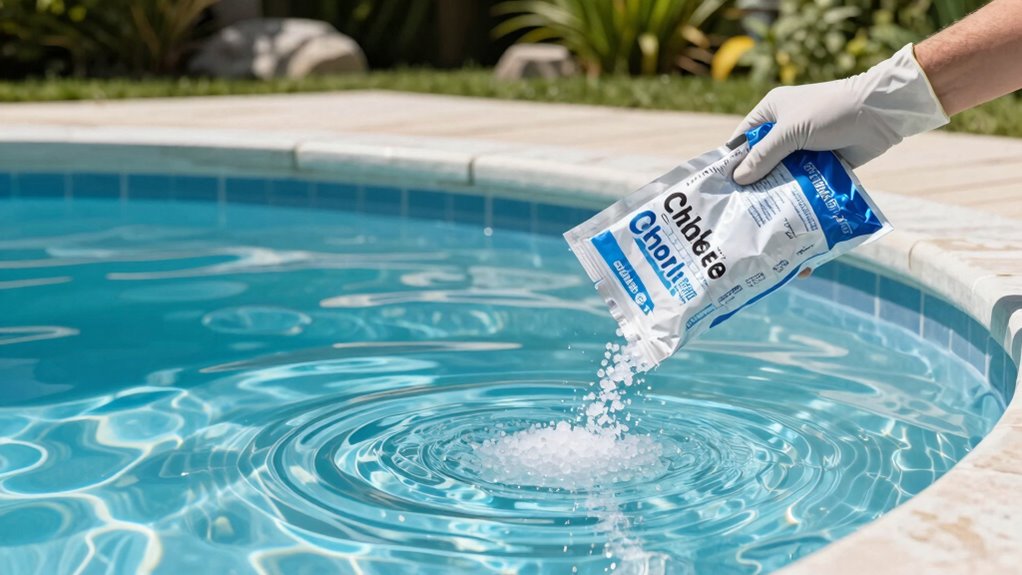
Shocking your pool water is essential for maintaining clear, healthy water, but many pool owners make common mistakes that can compromise its effectiveness. One of the biggest errors is neglecting to check the chemical balance before shocking. If your pool’s pH, alkalinity, or chlorine levels are off, the shock treatment won’t work as efficiently. A chemical imbalance can prevent the disinfecting agents from properly breaking down organic contaminants, leaving your water cloudy or dull. Before shocking, always test your water and correct any imbalances. This guarantees the shocking process targets the right issues and maximizes results.
Another mistake is not applying the proper dosage of shock. Using too little won’t eliminate algae, bacteria, or other pollutants effectively, while over-shocking can lead to excessive chlorine levels, which might cause skin irritation, eye discomfort, or damage to pool equipment. Always follow the manufacturer’s instructions carefully and measure precisely. Proper dosage depends on your pool’s size, water volume, and current water quality. When in doubt, it’s better to slightly underdose and reapply if necessary than to overdo it initially. Proper dosing helps you avoid chemical waste and reduces the risk of negative side effects. Additionally, understanding the importance of correct chemical balance can help you achieve more effective shocking results. Maintaining proper chemical levels is crucial for ensuring the shock treatment works as intended and keeps your water safe.
Use the correct shock dosage to effectively eliminate contaminants and prevent skin irritation or equipment damage.
Many pool owners also overlook the timing of shocking. Shocking during the day, especially when the sun is strong, can cause rapid chlorine degradation, rendering your efforts less effective. It’s best to shock your pool at night or during low sunlight hours, giving the chemicals time to work without being broken down prematurely. Additionally, you should avoid swimming immediately after shocking. Chlorine levels are often high post-shock, and swimming can expose you to irritants or cause imbalance in your skin and eyes. Wait at least 8-12 hours or until chlorine levels drop to safe ranges before jumping back in.
Some owners forget to pre-clean the pool surface and filter before shocking. Dirt, leaves, and algae can shield contaminants from the shock treatment, making your efforts less effective. Brushing the sides and bottom, along with cleaning or backwashing the filter, ensures the shock chemicals can reach all contaminants and do their job thoroughly. Proper cleaning also promotes proper chemical circulation, ensuring the shock is evenly distributed throughout the water. Regular maintenance and effective pool cleaning techniques can further enhance the overall water quality and the efficacy of shocking. Proper cleaning and maintenance of the pool surface and filter can significantly enhance the effectiveness of your shocking process. Finally, many underestimate the importance of proper storage of shock chemicals. Keep them in a cool, dry place, away from sunlight and incompatible substances, to maintain their potency and safety. Additionally, understanding the storage conditions can extend the shelf life of your chemicals and ensure their effectiveness when needed.
As an affiliate, we earn on qualifying purchases.
Frequently Asked Questions
How Often Should I Shock My Pool During Peak Season?
During peak season, you should shock your pool about once every 1-2 weeks, depending on usage and weather. Regular shock application helps maintain proper pool chemistry by breaking down contaminants and preventing algae growth. Keep an eye on your water’s clarity and chemical levels; if you notice cloudiness or odors, it’s time to shock again. Consistent shocking guarantees safe, clean, and inviting water all season long.
Can Shocking Water Damage My Pool Equipment?
Shocking water, if done correctly, won’t damage your pool equipment. It’s a coincidence, really—when you maintain proper chemical balance, your equipment stays safe. Over-shocking or using harsh chemicals can cause corrosion or wear down parts, but with proper dosing and timing, your equipment remains protected. Always follow manufacturer guidelines, and you’ll find shocking water enhances your pool’s clarity without risking damage to your equipment.
Is There a Safe Way to Shock a Saltwater Pool?
Yes, there’s a safe way to shock your saltwater pool. First, test your pool chemistry to guarantee proper pH and alkalinity levels, which helps prevent damage. Use a shock specifically formulated for saltwater pools, and follow the manufacturer’s instructions carefully. Spread the shock evenly across the pool, and run your pump to circulate the chemicals. This approach maintains saltwater safety while effectively shocking your pool without harming equipment.
What’s the Best Time of Day to Shock My Pool?
Think of shocking your pool like tuning a musical instrument—you want perfect harmony. The best time is in the evening after sunset, when sunlight won’t degrade the shock chemicals. This allows the shock treatment to work safely and effectively, maintaining proper pool chemical balance. Always follow shock treatment safety guidelines, and avoid shocking your pool during peak sunlight hours to prevent chemical loss or imbalance.
How Long Should I Wait After Shocking Before Swimming?
You should wait at least 24 hours after shocking your pool before swimming. This allows the pool chemical balance to stabilize and guarantees the shock application timing is effective. During this time, run your pool pump and test the water to confirm chlorine levels have dropped to safe levels, ideally below 3 ppm. Always follow the shock product’s instructions for best results and safety.
As an affiliate, we earn on qualifying purchases.
Conclusion
Now that you know common pool shocking mistakes, you can avoid costly errors and keep your water crystal clear. Remember, rushing to shock your pool without proper testing or overdoing it can do more harm than good. Think of it as walking a tightrope—you want to find that perfect balance. Stay informed, follow best practices, and your pool will stay inviting all season long. Don’t let small mistakes turn into big problems—stay vigilant and enjoy your sparkling oasis.
As an affiliate, we earn on qualifying purchases.
As an affiliate, we earn on qualifying purchases.
Fall Picks
fall essentials
As an affiliate, we earn on qualifying purchases.