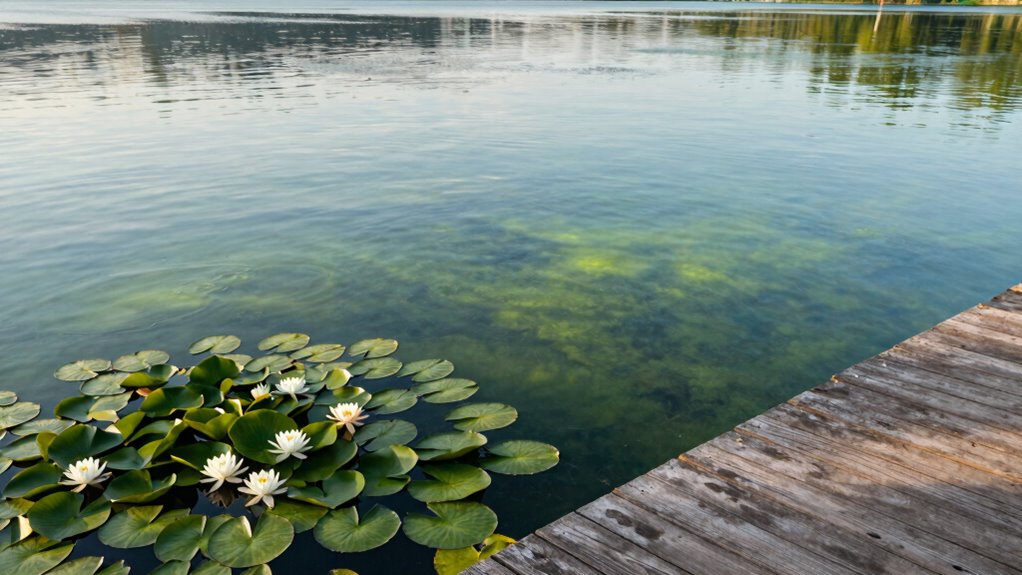

To stop fighting the same algae problem repeatedly, focus on addressing the root causes. Use natural remedies like aquatic plants, barley straw, and algae-eating bacteria to promote a balanced ecosystem. Improve water circulation with pumps or fountains to discourage stagnation. Regularly monitor and manage nutrient levels, removing debris and reducing runoff. Consistent maintenance, combined with these strategies, creates a healthier pond environment. Keep exploring these methods to discover how to keep algae at bay long-term.
Listen free for 30 days with Audible
Thousands of audiobooks and originals — cancel anytime.
As an affiliate, we earn on qualifying purchases.
Key Takeaways
- Address root causes by controlling nutrients, organic debris, and promoting a balanced ecosystem with aquatic plants and beneficial bacteria.
- Improve water circulation and oxygenation with pumps or fountains to prevent stagnant conditions that favor algae growth.
- Regularly monitor and manage water chemistry, reducing excess nitrogen and phosphorus to limit algae food sources.
- Remove debris, dead plant material, and limit fertilizer runoff to prevent nutrient buildup fueling algae blooms.
- Maintain consistent routine maintenance, including skimming, water testing, and natural treatments, to sustain long-term algae control.
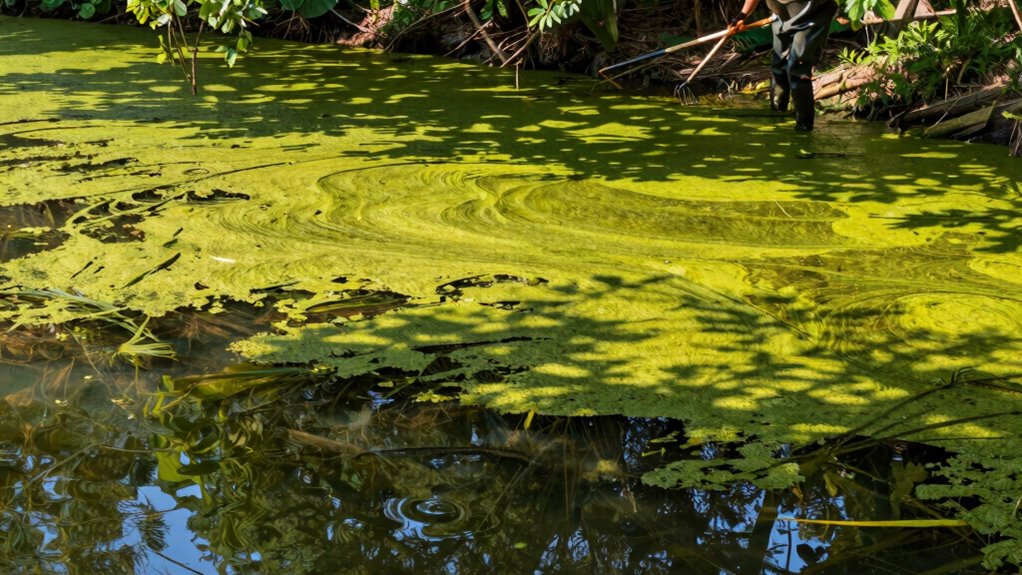
If you’re tired of battling the same persistent algae issues, it’s time to change your approach. Instead of applying quick fixes that only offer temporary relief, focus on strategies that target the root causes. Natural remedies can be highly effective in controlling algae growth without relying on harsh chemicals that often harm your pond, lake, or pool’s ecosystem. For instance, introducing certain aquatic plants like water lilies or duckweed can naturally absorb excess nutrients that algae thrive on. Additionally, barley straw or algae-eating bacteria can help break down organic matter and reduce algae blooms over time. These solutions work gradually, but they’re sustainable and safer for the environment.
Natural remedies like aquatic plants, barley straw, and bacteria promote algae control sustainably and safely over time.
One of the most essential steps you can take is improving water circulation. Stagnant water encourages algae to settle and multiply, so ensuring consistent movement disrupts their environment. Installing a good-quality pump or fountain can do wonders in this regard. It not only keeps the water moving but also increases oxygen levels, which benefits fish and other aquatic life while making it less inviting for algae. Proper circulation also helps distribute natural remedies evenly, maximizing their effectiveness. If your water body has dead zones—areas where water remains still—try to address these by adding additional aerators or adjusting the flow to create more uniform movement. Enhancing water circulation is crucial for maintaining a healthy aquatic ecosystem. Incorporating water quality testing into your routine can help you better understand and manage the specific needs of your water body. Regularly monitoring nutrient levels can also assist in early detection of potential algae problems before they become severe. Understanding the underlying water chemistry can guide you in making more informed decisions about nutrient management and treatment options. Furthermore, understanding how different nutrients interact in your water can help you develop more targeted and effective management strategies.
Another key aspect is managing nutrients, especially nitrogen and phosphorus, which algae need to flourish. Regularly testing your water allows you to identify nutrient levels and take action accordingly. Reducing run-off from fertilizers or organic waste nearby can drastically decrease nutrient loads. You might also consider adding beneficial bacteria that compete with algae for nutrients, effectively starving the algae of their food source. Clearing out debris and dead plant material from the water’s surface prevents nutrient buildup that fuels algae blooms. Ensuring the presence of beneficial bacteria can create a more balanced ecosystem and reduce the frequency of algae outbreaks.
Finally, maintaining a consistent routine is essential. Algae problems tend to return if you neglect ongoing maintenance. Keep your water clean by skimming debris, removing excess algae, and monitoring water quality. Combining natural remedies with improved water circulation and nutrient management creates a balanced environment where algae struggle to take hold. With patience and persistence, you can break the cycle of recurring algae issues and enjoy clearer, healthier water without constantly fighting the same battle.
As an affiliate, we earn on qualifying purchases.
Frequently Asked Questions
Can Algae Problems Be Caused by Nearby Environmental Factors?
Yes, algae problems can be caused by nearby environmental factors. Water runoff from fertilized lawns or urban areas often carries nutrients like nitrogen and phosphorus into your water bodies, fueling algae growth. Additionally, nearby vegetation can contribute organic matter and shade, creating ideal conditions for algae to thrive. Understanding these factors helps you manage and reduce algae blooms effectively by controlling runoff and managing surrounding plant life.
Are Certain Pond Materials More Resistant to Algae Growth?
When it comes to algae resistance, some pond materials like EPDM or PVC pond liners are better bets because they resist algae buildup more than porous options. You also need good water circulation to keep nutrients moving and prevent algae from settling. Don’t put all your eggs in one basket—combine resistant materials with proper water flow, and you’ll find your pond stays clearer longer, saving you headaches down the line.
How Long Does It Take for Algae to Recur After Treatment?
Algae can recur within a few weeks after treatment if underlying issues like nutrient levels aren’t addressed. The treatment duration varies, but you typically see results within a week. To prevent algae recurrence, maintain proper pond management, control nutrient input, and use consistent treatments. Regular monitoring helps catch early signs of algae growth, ensuring your pond stays clear longer. Patience and ongoing maintenance are key to lasting algae control.
Is It Safe to Use Chemical Treatments Around Pets and Wildlife?
Using chemical treatments around pets and wildlife can feel like walking a tightrope, but safety isn’t impossible. Always choose products labeled as pet-safe and follow the instructions carefully to protect your animals. Be mindful of wildlife concerns—avoid treated areas during and immediately after application. Keep pets away during treatment, and consider natural alternatives if you’re worried. Your vigilance helps keep everyone safe while battling algae effectively.
What Natural Methods Effectively Prevent Algae Without Chemicals?
To prevent algae naturally, focus on biological control methods like introducing algae-eating fish or beneficial bacteria that outcompete algae. Practice nutrient management by reducing fertilizer runoff and removing organic debris from water. These strategies limit algae growth without chemicals, making your pond healthier and clearer. Consistently maintaining proper circulation and shading also helps prevent algae blooms, creating a balanced ecosystem that minimizes algae problems over time.
As an affiliate, we earn on qualifying purchases.
Conclusion
To break free from the cycle of algae trouble, you need to address the root causes rather than just the symptoms. Consistent maintenance, proper filtration, and controlling nutrients will help keep algae at bay. Think of it as a long-term investment—you’re planting seeds for a healthier pond. Don’t let algae be the thorn in your side; with patience and the right approach, you’ll finally turn the tide and enjoy clear waters without endless battles.
As an affiliate, we earn on qualifying purchases.
As an affiliate, we earn on qualifying purchases.
NFL season / tailgating Picks
team gear
As an affiliate, we earn on qualifying purchases.