
Taking care of a saltwater pool involves small but essential differences, like regularly testing and adjusting salt levels to guarantee maximum chlorine production and prevent equipment corrosion. You’ll need to clean and maintain the salt generator often and pay attention to water chemistry, especially pH and alkalinity. Using equipment rated for saltwater extends lifespan, and monitoring salt levels helps avoid damage. Staying on top of these details keeps your pool clean and safe—there’s more to uncover for smooth operation.

Get pool and patio gear delivered free — and shop member deals
- Fast, free delivery on millions of items
- Access to Prime Big Deal Days deals on October 6–7
- Prime Video, Amazon Music and more included
Key Takeaways
- Saltwater pools require regular salt level testing and adjustment to ensure proper chlorine generation and prevent equipment corrosion.
- Maintenance of the salt generator’s cell, including cleaning, is essential for consistent chlorine production and water clarity.
- Equipment used in saltwater pools must be rated for salt exposure to prevent accelerated wear and damage.
- Salt levels influence overall water chemistry, so balancing pH, alkalinity, and stabilizer remains crucial in saltwater systems.
- Small differences in salt concentration can significantly impact chlorine output, water quality, and equipment longevity.

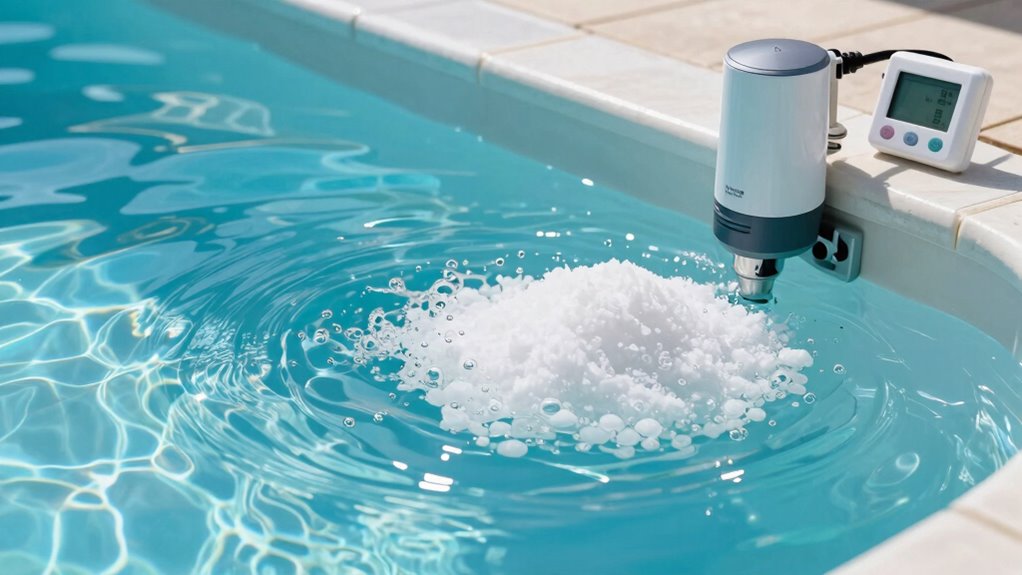
Saltwater pools differ from traditional chlorine pools in several key ways, and understanding these differences is essential for proper maintenance. One of the most noticeable distinctions is how you manage your pool’s water chemistry. While both types require balancing pH, alkalinity, and stabilizer levels, saltwater pools depend heavily on maintaining the right salt concentration, which influences the entire water chemistry. If the salt level is too low, your salt generator won’t produce enough chlorine, leading to poor sanitation. Conversely, too much salt can cause corrosion of pool equipment and surfaces. Regular testing and adjusting salt levels are vital parts of your pool maintenance routine, guaranteeing the water stays balanced and safe.
Maintaining proper salt levels is essential for balanced, safe, and efficient saltwater pool operation.
Another important difference lies in how chlorine is produced and maintained. In a traditional pool, you add chlorine manually or with tablets, which can lead to fluctuating chlorine levels. In a saltwater pool, the salt generator converts salt into chlorine continuously, providing a steady supply. This reduces the need for frequent chemical additions, but it also means you need to monitor the generator’s output and clean its cell regularly. If you neglect this, your pool may develop cloudy water or algae issues. Proper maintenance of the generator and understanding how it interacts with your water chemistry are crucial for effective pool care. Additionally, understanding the chlorine generation process can help you troubleshoot issues more effectively.
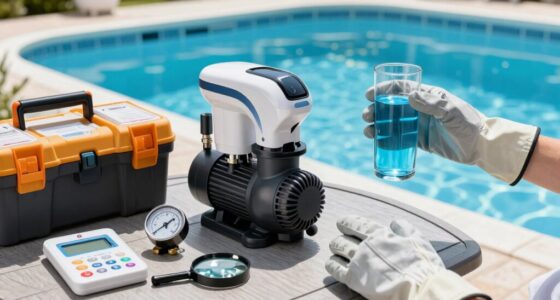
The equipment involved also differs. Saltwater pools require a salt chlorine generator, which isn’t necessary in traditional pools. This piece of equipment needs periodic inspection and cleaning to prevent buildup and corrosion, especially since salt can be aggressive on certain materials. Furthermore, the presence of salt can accelerate the wear of pool fixtures, ladders, and even the heater. You should choose equipment rated for saltwater use and stay vigilant about inspecting and maintaining it. This added step is a small but important part of your overall pool maintenance routine. Regular equipment inspection can help prevent costly repairs down the line. Being aware of the material compatibility of your pool fixtures can also extend their lifespan. Additionally, using proper cleaning methods for salt cell maintenance can help prolong its efficiency and lifespan.
Lastly, the overall approach to maintenance shifts slightly. Saltwater pools tend to require fewer chemical additions, but you still need to regularly check water chemistry and test salt levels. Because salt can impact other aspects of your pool’s chemistry, you need to be attentive and proactive. Proper water chemistry management ensures the water remains clear, balanced, and safe for swimming. Regular salt level testing and maintenance are crucial for preventing issues and ensuring the longevity of your pool equipment. With consistent monitoring and maintenance, your saltwater pool can remain a low-maintenance, enjoyable feature in your backyard for years to come.
As an affiliate, we earn on qualifying purchases.
Frequently Asked Questions
How Often Should Salt Levels Be Tested in Small Pools?
You should test the salt level in your small pool at least once a week, especially during peak swimming season. The impact of temperature can cause salt levels to fluctuate more quickly, so more frequent testing might be necessary if it’s hot or if weather changes considerably. Regular salt level testing helps maintain proper sanitation, prevents equipment damage, and guarantees your pool stays comfortable and safe.
Are There Specific Salt Types Recommended for Small Saltwater Pools?
For small saltwater pools, you should choose a high-purity, fine-grain salt like solar salt or evaporated salt, as they dissolve easily and reduce residue buildup. Salt type selection is essential to prevent damage to your pool equipment, so always check compatibility with your salt chlorine generator. Avoid coarse or rock salt, which can clog filters and harm the system. Using the right salt type guarantees smooth operation and longer equipment lifespan.
What Are Signs of Saltwater Corrosion in Small Pools?
Imagine tiny rust spots blooming like weeds on your pool’s surface—that’s corrosion revealing itself. You’ll notice discoloration, rough patches, or crumbling areas, especially around metal fixtures. To prevent this, focus on corrosion prevention by choosing pool materials resistant to saltwater. Regularly inspect your pool, monitor salt levels, and clean metal parts promptly. Recognizing these signs early helps protect your pool from lasting damage and keeps your water sparkling.
Can Saltwater Pools Be Used With Existing Pool Equipment?
Yes, you can use saltwater pools with existing pool equipment, but you might need to make some adjustments. Saltwater chlorination systems often integrate with pool automation systems, making maintenance easier. Check if your current pump, filter, and heater are compatible with saltwater, as prolonged exposure can cause corrosion. Upgrading components or using corrosion-resistant materials guarantees your equipment stays in good shape and your pool remains clean and balanced.
How Does Climate Affect Saltwater Pool Maintenance?
Did you know that climate impact can increase your saltwater pool’s chemical adjustments by up to 30%? Climate affects saltwater chemistry considerably—hot, sunny weather speeds evaporation and increases the need for sanitizer, while cold weather reduces chemical activity. You’ll need to monitor pH and chlorine levels more closely, especially during extreme seasons, to keep your pool balanced and safe year-round.
As an affiliate, we earn on qualifying purchases.
Conclusion
As you navigate the unique nuances of saltwater pool care, remember that small adjustments can make a big difference. Imagine the shimmering surface, the gentle ripple, and the soft, inviting water—each detail influenced by your careful maintenance. But beware: overlooking even one essential step could suddenly turn that tranquil oasis into a cloudy mess. Stay vigilant, stay informed, and your saltwater pool will remain a pristine haven, ready to relax in whenever you desire.
As an affiliate, we earn on qualifying purchases.
saltwater pool equipment rated for salt
As an affiliate, we earn on qualifying purchases.
As an affiliate, we earn on qualifying purchases.
Fall Picks
fall essentials
As an affiliate, we earn on qualifying purchases.