
With a traditional pool, you’ll need to test and adjust chemicals like chlorine, pH, and alkalinity daily or several times a week to keep water balanced. Saltwater pools, on the other hand, require less frequent chemical adjustments since the system produces chlorine automatically. You’ll spend more time checking equipment like the salt cell and ensuring proper salt levels. Curious about more tips? Keep going, and you’ll discover ways to simplify your pool maintenance even further.

Get pool and patio gear delivered free — and shop member deals
- Fast, free delivery on millions of items
- Access to Prime Big Deal Days deals on October 6–7
- Prime Video, Amazon Music and more included
Key Takeaways
- Traditional pools require daily or frequent chemical testing and adjustments, while saltwater pools need less regular monitoring.
- Saltwater systems generate chlorine automatically, reducing manual chlorine addition compared to traditional pools.
- Regular cleaning of filters and inspection of equipment is essential for both, but saltwater pools also need salt cell maintenance.
- Maintaining proper pH, alkalinity, and stabilizer levels is crucial for both, with saltwater pools benefiting from more stable chlorine levels.
- Routine inspections prevent equipment failures, prolonging the lifespan of components in both pool types.
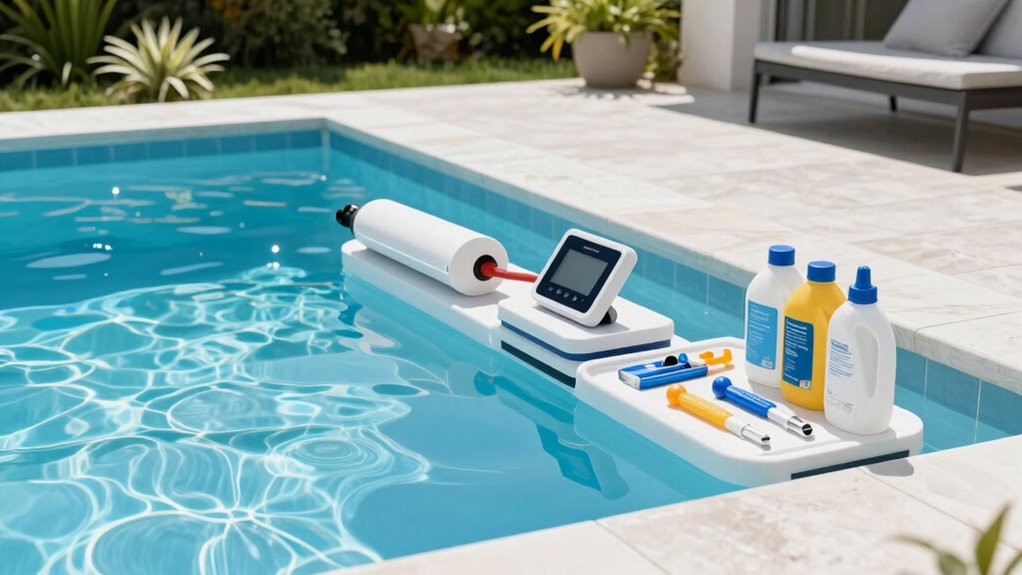
Understanding the differences in pool maintenance schedules is essential for keeping your pool clean, safe, and inviting. When it comes to saltwater versus traditional pools, the key differences often come down to how you approach pool chemical balancing and equipment upkeep. Knowing what each type requires helps you develop an effective maintenance routine and avoid costly repairs or health issues.
With a traditional chlorine pool, you need to regularly test and adjust the chemical levels, primarily chlorine, pH, alkalinity, and stabilizers. These tests are usually done daily or several times a week, especially during peak swimming seasons. You’ll need to add chlorine or shock treatments frequently to maintain proper sanitation, which means staying on top of chemical balancing to prevent algae growth and bacteria buildup. Equipment upkeep involves cleaning the filter, inspecting the pump, and ensuring the chlorinator is functioning correctly. Since chlorine levels tend to fluctuate more in traditional pools, you must be vigilant in maintaining a consistent chemical balance to keep the water clear and safe. Regular chemical testing is crucial for early detection of imbalances that could lead to more significant issues. Additionally, understanding the impact of water chemistry on pool health can help you optimize your maintenance routine.
Regularly test and adjust chemicals, especially chlorine, pH, and alkalinity, for a safe, clear traditional pool.
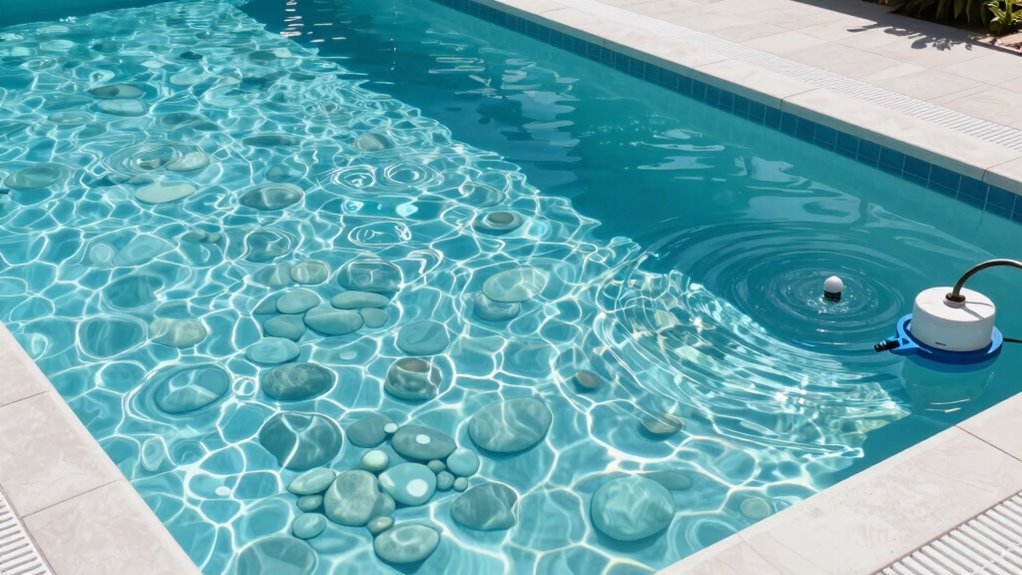
Saltwater pools, on the other hand, operate differently. They use a salt chlorinator that converts salt into chlorine through electrolysis. This means you don’t have to manually add chlorine as often, but you still need to monitor the salt levels and adjust them periodically. Saltwater pools typically require less frequent chemical balancing, but consistent testing remains important to guarantee the salt system functions efficiently. Equipment upkeep involves regular cleaning of the salt cell and inspecting the chlorinator for scale buildup or corrosion, which can affect its efficiency. Since the salt system produces chlorine continuously, the chemical levels tend to stay more stable, but you still need to keep an eye on pH and alkalinity, as these can influence water clarity and comfort. Additionally, understanding the biodiversity within your pool environment can help you better manage microbial growth and maintain a healthy swimming space.
In both pool types, routine maintenance schedules should include cleaning filters, inspecting pumps, and replacing worn-out parts. However, saltwater pools generally demand less frequent chemical addition, leading to a simpler maintenance routine. Still, neglecting equipment upkeep can cause issues like salt cell failure or uneven chlorine production, which could compromise water safety and clarity. Thus, whether you have a saltwater or traditional pool, staying consistent with your maintenance tasks—especially pool chemical balancing and equipment upkeep—ensures your pool remains a safe, inviting oasis. Knowing these differences allows you to plan your maintenance schedule more effectively, saving you time and money while extending the lifespan of your pool and equipment.
As an affiliate, we earn on qualifying purchases.
Frequently Asked Questions
How Often Should Salt Levels Be Tested in Saltwater Pools?
You should test the salt levels in your saltwater pool weekly to guarantee proper chemical balancing. Regular water testing helps maintain the right salt concentration, usually between 2700 and 3400 ppm. If you notice any issues with water clarity or feel, check the salt levels and adjust as needed. Consistent testing keeps your pool safe, clean, and enjoyable, reducing the risk of equipment damage or chemical imbalance.
Are There Specific Cleaning Tools Recommended for Saltwater Pools?
For saltwater pools, you’ll want to use specific cleaning tools like a nylon brush and a skimmer net to maintain chemical balance and protect equipment longevity. Regularly brushing the walls and vacuuming the pool help prevent buildup that can disrupt chemical levels. Use a gentle, pool-specific cleaner to avoid damaging the salt cell or other equipment. Consistent cleaning guarantees your pool stays inviting, balanced, and functioning smoothly over time.
How Does Climate Affect Maintenance Schedules for Both Pool Types?
Climate variation considerably impacts your pool’s maintenance schedule. For instance, in warmer regions, you might need to check chemical levels twice a week, while cooler areas require less frequent attention. Seasonal adjustments are essential; in winter, both saltwater and traditional pools need less chemical balancing, but saltwater pools may require more frequent salt level checks due to evaporation. Adapting your routine ensures clear, healthy water year-round.
Can Saltwater Pools Be Maintained With Automatic Systems?
Yes, you can maintain saltwater pools with automatic systems. These systems help regulate pool chemistry by monitoring and adjusting salt levels, pH, and chlorine output, ensuring consistent water quality. They also enhance equipment durability by reducing manual handling and errors. Automatic systems save time and effort, making it easier to keep your saltwater pool balanced and clean, ultimately prolonging the lifespan of your pool’s equipment.
What Are Common Signs of Equipment Wear in Saltwater Pools?
Did you know that saltwater pools can experience equipment wear up to 30% faster without proper maintenance? Common signs include corrosion on metal parts, reduced pump performance, and sensor malfunctions. To protect your equipment’s lifespan, focus on corrosion prevention by regularly cleaning and inspecting components. Staying vigilant helps catch early signs of wear, ultimately extending your equipment’s durability and ensuring your pool runs smoothly and safely.
As an affiliate, we earn on qualifying purchases.
Conclusion
Just like caring for a delicate plant versus a hardy cactus, maintaining a saltwater pool requires a gentler touch and a different routine. I once oversaw a saltwater pool that thrived with minimal chemicals, proving that understanding these differences simplifies your upkeep. Think of your pool as a living partner—you’ll get better results by adapting your schedule to its unique needs. Embrace these differences, and your pool will reward you with crystal-clear waters and effortless enjoyment.
As an affiliate, we earn on qualifying purchases.
As an affiliate, we earn on qualifying purchases.
Fall Picks
fall essentials
As an affiliate, we earn on qualifying purchases.