To prevent big pool problems, test your water twice weekly, keeping pH between 7.2 and 7.6, and check sanitizer levels like chlorine regularly. Clean skimmer baskets and inspect equipment weekly to catch issues early. Backwash filters and guarantee proper water circulation to avoid algae and cloudy water. Staying proactive with routine maintenance keeps your pool safe and smooth-running. Keep going for more tips on maintaining a healthy, trouble-free pool.
Get ready for Prime Big Deal Days — try Prime free
Exclusive member deals on October 6–7, plus fast free delivery. Cancel anytime.
As an affiliate, we earn on qualifying purchases.
Key Takeaways
- Test and adjust water chemistry, including pH and sanitizer levels, at least twice weekly to prevent cloudiness and microbial growth.
- Clean skimmer baskets and inspect equipment weekly to avoid clogging and detect early signs of wear.
- Backwash filters regularly to maintain optimal water flow and filtration efficiency.
- Ensure proper water circulation by checking valves, jets, and pump operation weekly.
- Conduct routine inspections of system components to identify and address issues before they escalate.
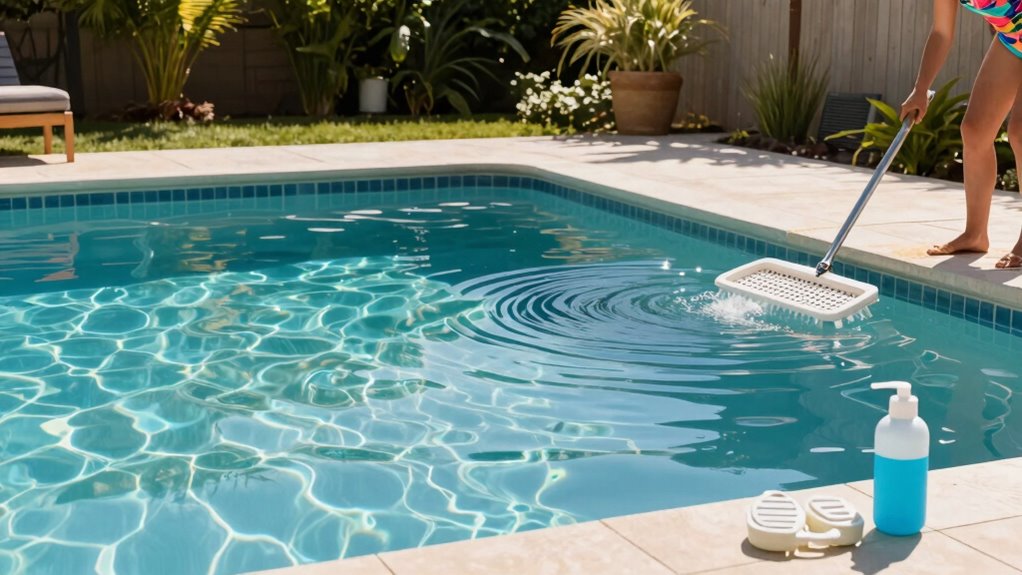
Have you ever wondered how to make the most of your time at the pool? The secret lies in establishing a solid weekly routine that keeps your pool safe, clean, and inviting. One of the most important aspects is maintaining proper pool chemical balance. If your pH levels are off, the water can become cloudy, irritating your skin and eyes, and creating an environment where algae and bacteria thrive. To prevent this, you should test your water regularly—at least twice a week—and adjust chemicals accordingly. Keeping the pH between 7.2 and 7.6 ensures the sanitizer works effectively and minimizes corrosion or scaling. Don’t forget to check sanitizer levels, such as chlorine or bromine, to keep harmful microbes at bay. Proper chemical balance not only protects your health but also extends the lifespan of your pool equipment. Regular testing and balancing of chemicals are essential for maintaining a healthy aquatic ecosystem, which directly impacts the overall health of the environment.
Alongside chemical management, equipment maintenance plays a critical role in preventing major problems. Your pool’s pump, filter, and skimmer baskets require regular attention. Weekly, you should clean out skimmer baskets to prevent clogging, which can strain your pump and reduce circulation. Inspect your pump and filter for signs of wear or leaks, and ensure they’re operating smoothly. Backwashing the filter, if you have a sand or DE filter, is essential to remove debris and keep water flow at its best. Neglecting this can cause pressure buildup, leading to equipment failure or costly repairs down the line. Additionally, check your pool’s circulation system, including valves and jets, to make sure everything functions properly. Good circulation helps distribute chemicals evenly and prevents algae growth. Regularly inspecting your equipment for wear and tear can help catch issues early before they lead to more serious problems. Understanding the importance of water chemistry can help you make more informed decisions about your pool care routine. Furthermore, staying informed about pool maintenance best practices ensures you’re always prepared to address potential issues proactively.
As an affiliate, we earn on qualifying purchases.
Frequently Asked Questions
How Often Should I Change My Pool Water?
You should change your pool water approximately every 3 to 5 years, depending on usage and water quality. Regular pool maintenance, including proper water circulation, helps keep your water clean and balanced. Keep an eye on water clarity and chemical levels; if the water becomes cloudy or odorous despite maintenance, it’s time for a full change. Proper water circulation minimizes the need for frequent draining, but periodic replacement keeps your pool fresh and safe.
What Are Signs of a Failing Pool Pump?
You’ll notice your pool pump is failing when the water flow decreases or becomes inconsistent, and the pool filter shows signs of clogging or debris buildup. You might also hear unusual noises or notice leaks around the pump. Regular pump maintenance helps catch these issues early, preventing bigger problems. Keep an eye on the pressure gauge and listen for strange sounds to make sure your pool’s circulation system stays in good shape.
How Can I Prevent Algae Growth?
Imagine your pool as a sparkling oasis—keeping algae at bay preserves that beauty. To prevent algae growth, prioritize regular algae prevention practices like consistent chemical balancing and proper filtration. Test your water weekly, and maintain the correct pH and sanitizer levels. By staying vigilant with chemical balancing and routine cleaning, you create an environment where algae struggles to thrive, ensuring your pool remains inviting and crystal clear all season long.
What Chemical Levels Are Safest for Kids?
You should keep pool sanitizer levels between 1-3 ppm to guarantee safety for kids. Regular water testing helps you monitor these levels and keep them consistent. Using appropriate pool sanitizers like chlorine or bromine helps prevent bacteria without risking harm. Always test the water weekly and adjust chemicals accordingly. This routine ensures the pool remains safe, clean, and enjoyable for children, reducing health risks.
How Do I Detect Hidden Pool Leaks?
To detect hidden pool leaks, start with a simple leak detection method by observing if your water level drops more than usual. Use dye testing near fittings, skimmers, or plumbing lines; adding dye can reveal escaping water if it moves toward leaks. Also, listen for sounds of water movement and check for wet spots or cracks around your pool area to identify potential issues early.
As an affiliate, we earn on qualifying purchases.
Conclusion
By sticking to this weekly pool routine, you’ll keep your pool crystal clear and avoid big headaches down the line. Think of it like tending a garden—consistent care keeps everything healthy and thriving. Skipping your routine is like ignoring a small leak until it floods your home. So, stay proactive, enjoy your pristine pool, and let this simple habit be your shield against trouble. It’s a small effort for a splash-worthy, worry-free swim every time.
sand and DE pool filter backwash valve
As an affiliate, we earn on qualifying purchases.
As an affiliate, we earn on qualifying purchases.
As an affiliate, we earn on qualifying purchases.
NFL season / tailgating Picks
team gear
As an affiliate, we earn on qualifying purchases.