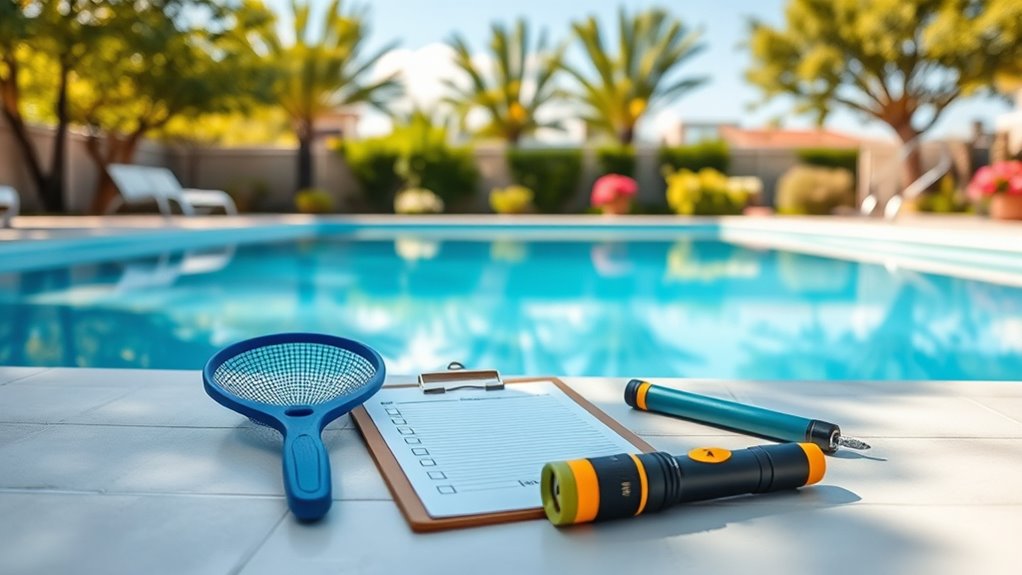
To guarantee a smooth start and finish, you’ll want to follow detailed pool opening and closing checklists. During opening, test and adjust water chemistry, inspect equipment, and verify safety features are working. When closing, clean the pool, balance chemicals, lower the water level if needed, and secure the cover. Proper procedures protect your pool and make next season easier. Keep going to learn all the essential steps for a safe, hassle-free pool season.
Key Takeaways
- Conduct water chemical tests and adjust pH, alkalinity, and sanitizer levels during opening.
- Inspect and service pool equipment, safety features, and electrical components before opening.
- Clean the pool thoroughly and balance water chemistry before closing for the season.
- Lower water levels and securely cover the pool to protect against winter damage.
- Regularly monitor water chemistry and safety features throughout the season for optimal pool health.
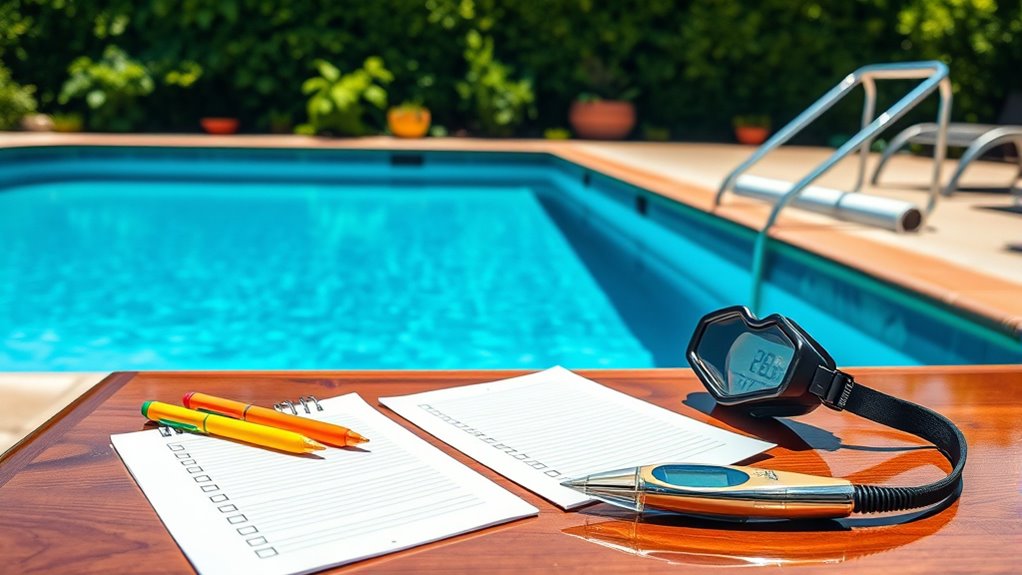
Are you prepared to open or close your pool for the season? If so, you’re about to take on responsibilities that ensure safety, cleanliness, and proper operation. When opening your pool, one of the most critical steps is chemical balancing. You want to make sure the water’s pH, alkalinity, and sanitizer levels are just right. Proper chemical balancing not only keeps the water safe for swimmers but also helps prevent algae growth and corrosion of pool equipment. Start by testing the water with a reliable kit, then adjust chemicals accordingly. Adding chlorine or other sanitizers should bring your chlorine levels to the recommended range, typically between 1-3 ppm. Simultaneously, adjust pH levels to stay between 7.2 and 7.6, promoting comfort and effective sanitation. Don’t forget to check alkalinity, which acts as a buffer against pH swings, aiming for a range of 80-120 ppm. Balancing these chemicals correctly ensures your pool remains inviting and safe throughout the season. Maintaining proper water chemistry is essential for a healthy and enjoyable swimming environment.
Safety inspections are another crucial part of opening your pool. Before you fill it with water, thoroughly inspect all equipment, including pumps, filters, and skimmers. Look for signs of wear, leaks, or damage that could compromise safety or performance. Verify that all safety features—such as pool covers, fences, and alarms—are in place and functioning correctly. Check that ladders and handrails are secure, and ensure that any electrical components meet safety standards. These inspections help prevent accidents and costly repairs down the line. If you spot issues, address them immediately or call in a professional to handle repairs. Once your water is balanced and equipment is inspected, your pool is ready for the season, providing a safe and enjoyable experience for everyone.
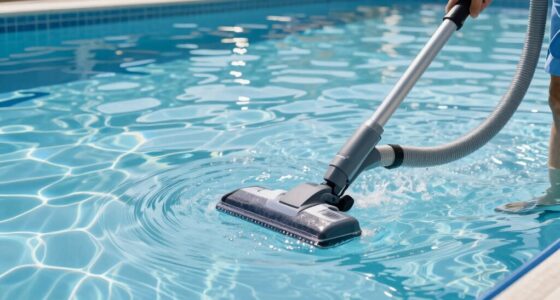
When closing the pool, safety inspections still play a role—this time, to ensure everything stays protected during the off-season. Clean the pool thoroughly, removing debris and vacuuming the bottom. Balance the water chemistry to prevent algae growth and corrosion during storage. Lower the water level if needed, especially if freezing temperatures are expected, to prevent damage. Cover the pool securely, making sure the cover fits tightly and is free of tears or holes. Inspect all safety devices like pool covers and alarms to confirm they’re in good shape. Proper chemical maintenance during closure helps preserve the water quality, making opening easier next season. By performing detailed safety inspections and precise chemical balancing during closing, you safeguard your investment and guarantee a smooth start when reopening. Taking these steps now means less hassle later and a safer, cleaner pool ready for future fun.

Poolmaster 22260 5-Way Swimming Pool or Spa Water Chemistry Test Kit with Case, Essential Collection
- Water Chemistry Testing: Tests Chlorine, Bromine, pH, Alkalinity, Acid Demand
- Clear-View Test Block: Includes transparent round test block with color chips
- Solution Set Included: Contains 1oz solutions for tests #1-#3, 0.5oz for #4-#5
As an affiliate, we earn on qualifying purchases.
As an affiliate, we earn on qualifying purchases.
Frequently Asked Questions
How Early Should I Start Preparing My Pool for Opening?
You should start preparing your pool about 2 to 4 weeks before your seasonal schedule begins. Timing considerations are key, so keep an eye on the weather and water temperature. Early preparation helps you address any issues, like cleaning or equipment checks, before the busy season. By starting early, you make certain your pool is safe, clean, and ready for enjoyable swimming once the season officially kicks off.
What Are Common Signs of Winter Damage to Pool Equipment?
You might notice winter damage when your pool cover shows tears or sagging, hinting at compromised cover integrity. Coincidentally, signs like rust or leaks around the pump and pipes suggest corrosion. If your equipment feels unusually cold or shows surface discoloration, it’s likely affected by winter elements. Keep an eye on these indicators to catch damage early, ensuring your pool stays in good shape for the season ahead.
Can I Use Regular Household Chemicals for Pool Maintenance?
You shouldn’t use regular household chemicals for pool maintenance because they can compromise pool safety and damage your equipment. Household cleaners often contain ingredients that aren’t suitable for pools, potentially causing imbalances or harmful reactions. Instead, use chemicals specifically designed for pools to guarantee safe, effective maintenance. Always follow manufacturer instructions and keep pool chemicals out of reach of children to maintain a safe environment.
How Often Should I Check for Algae During the Season?
Think of algae prevention like catching a small spark before it ignites a wildfire. You should check your pool for algae at least twice a week during the season. Regular checks help maintain water clarity and prevent algae from taking hold. Keep an eye out for cloudy water or green patches, and act quickly to treat any signs. Consistent monitoring guarantees your pool stays inviting and crystal clear all season long.
What Are the Best Methods to Winterize a Saltwater Pool?
To winterize your saltwater pool, you should first balance the water chemistry and clean the pool thoroughly. Then, lower the water level and drain the pump and filter. Add winterizing chemicals and use a corrosion prevention agent compatible with saltwater chlorination. Cover the pool securely, ensuring proper ventilation to prevent corrosion. This process helps protect your system and maintain water quality until spring.

Hayward CL200EF in-Line Automatic Chlorine Feeder, Offline Pool Chlorinator and Chlorine Dispenser, Up to 9 lb Capacity, for In-Ground Swimming Pools
- Automatic Off-Line Chlorination: Consistent chlorine distribution for pools
- High-Capacity Chlorine Feeder: Holds up to 9 lbs of chlorine
- Corrosion-Resistant Construction: Durable, chemical-resistant housing
As an affiliate, we earn on qualifying purchases.
As an affiliate, we earn on qualifying purchases.
Conclusion
By following these checklists, you’ll keep your pool pristine and inviting all season long. Don’t forget to check your supplies, balance the chemicals, and inspect equipment — just like a seasoned lifeguard on duty. Think of it as preparing for a summer of endless fun, even if you’re just channeling your inner “Mad Men” with a vintage swimsuit. With a little effort, your pool will be the belle of the neighborhood, ready for splash-tastic days ahead.

24 Ft Round Premium Heavy-Duty Winter Pool Cover – Royal Blue, Extra Thick and Durable, Tear-Proof, UV-Resistant, Reinforced Edges, Easy Install, All-Season Protection for Above Ground Pools
- Heavy-Duty Construction: 14 x 14 scrim, 185 gsm material
- All-Season Protection: Prevents snow, ice, debris, UV damage
- UV Resistant Material: LDPE coating blocks harmful UV rays
As an affiliate, we earn on qualifying purchases.
As an affiliate, we earn on qualifying purchases.
As an affiliate, we earn on qualifying purchases.