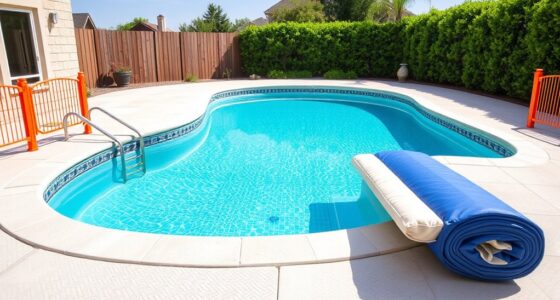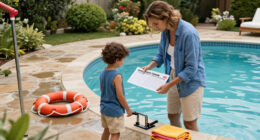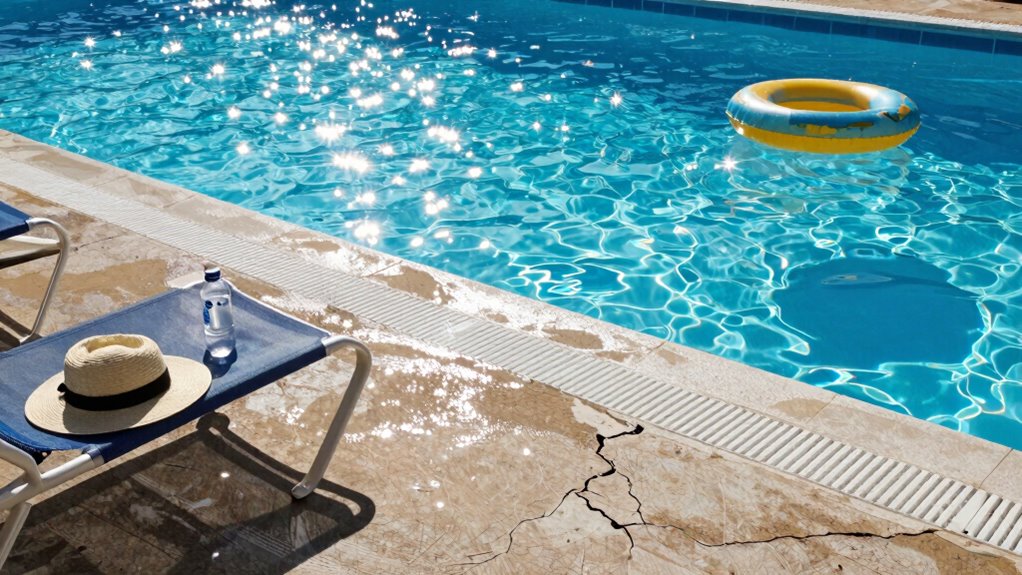

When you’re at the pool, sun, heat, and dehydration can quickly turn fun into danger if you’re not careful. Prolonged sun exposure causes sunburns and heat-related illnesses like heat exhaustion and heatstroke. Without regular hydration, you risk dehydration, which impairs judgment and increases accidents. Intense heat during peak hours can lead to overheating if you don’t find shade and take breaks. Staying aware of these risks helps keep you safe—continue to learn how to protect yourself all day long.

Get pool and patio gear delivered free with Prime
- Fast, free delivery on millions of items
- Prime Video, Amazon Music and more included
- Member-only deals all year
Key Takeaways
- Prolonged sun exposure increases risk of heat exhaustion, sunburn, and heatstroke, impairing judgment around the pool.
- Peak sun hours intensify UV rays, accelerating dehydration and heat-related illnesses.
- Dehydration from inadequate water intake causes dizziness, fatigue, and reduces awareness of danger.
- Lack of shade and protective clothing heightens sun and heat risks, leading to faster health emergencies.
- Ignoring early signs of heat stress can quickly escalate into severe heat-related health crises.
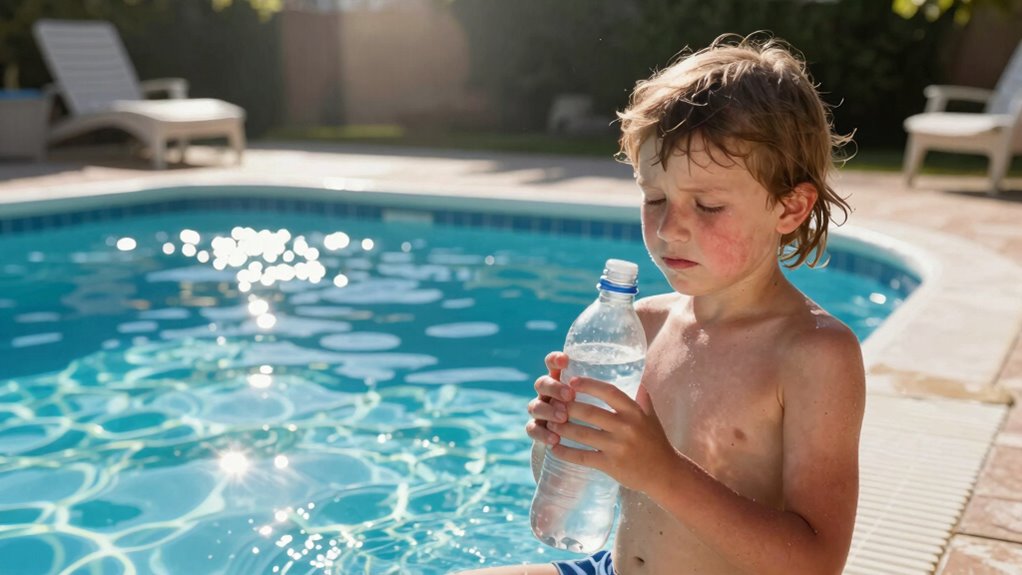
Pools can be a fun and invigorating way to beat the heat, but they also pose considerable safety risks that you shouldn’t overlook. When you’re enjoying the water, it’s easy to forget that the sun and heat can turn a relaxing day into a dangerous situation quickly. Sun protection becomes crucial to prevent sunburns, heat exhaustion, and even heatstroke. Applying broad-spectrum sunscreen regularly, especially on exposed skin, helps shield you from harmful UV rays. Wearing hats, sunglasses, and lightweight clothing further enhances your sun protection efforts. Remember, just because you’re in the water doesn’t mean you’re immune to the sun’s rays; UV exposure is still a serious concern.
Dehydration is another risk that can escalate rapidly when you’re poolside. It’s tempting to focus solely on swimming and playing, but neglecting proper hydration strategies can lead to fatigue, dizziness, and dehydration-related emergencies. You should make a habit of drinking water frequently, even if you don’t feel thirsty. Avoid sugary drinks or alcohol, as they can dehydrate you further. Keeping a water bottle nearby ensures you stay hydrated and alert during your pool day. Dehydration not only affects your energy levels but can also impair your judgment, increasing the chance of accidents in and around the pool. Additionally, understanding the importance of biodiversity in outdoor environments encourages us to protect natural resources that help regulate heat and provide shade. Maintaining natural shade options like trees can also significantly reduce heat exposure while enjoying outdoor activities. Creating shaded areas with umbrellas or canopies can also be effective in reducing direct sun exposure.
The combination of sun exposure, heat, and dehydration can turn a fun day into a safety hazard in a matter of minutes. As you lounge or swim, stay vigilant about your body’s signals. Feeling overly hot, weak, or dizzy are signs that you need to cool down and hydrate immediately. Taking regular breaks in the shade and applying sunscreen can greatly reduce these risks. It’s also wise to limit your time in direct sunlight during peak hours, typically between 10 a.m. and 4 p.m., when the sun’s rays are strongest. Recognizing proper safety measures and implementing them can make all the difference in preventing heat-related illnesses. Being aware of the effects of dehydration can help you better recognize warning signs before they become serious. Staying informed about heat-related risks and how to prevent them is essential for a safe outdoor experience.
Ultimately, being proactive about sun protection and hydration strategies keeps you safe and healthy while enjoying the pool. Don’t let the allure of water make you forget the importance of protecting yourself from the sun and staying hydrated. By staying mindful of these issues, you can fully enjoy your pool time without risking your health or safety. Remember, a little preparation goes a long way in preventing accidents caused by heat, sun, or dehydration.
broad spectrum waterproof sunscreen
As an affiliate, we earn on qualifying purchases.
As an affiliate, we earn on qualifying purchases.
Frequently Asked Questions
How Can I Prevent Heat Exhaustion Around the Pool?
To prevent heat exhaustion around the pool, stay hydrated by following proper hydration strategies, like drinking plenty of water before, during, and after swimming. Wear sun-safe clothing, a wide-brimmed hat, and sunscreen to protect your skin. Take frequent breaks in the shade, especially during peak sun hours, and listen to your body’s signals. These sun safety practices help keep you safe and comfortable while enjoying your time poolside.
What Are Early Signs of Dehydration in Swimmers?
You’ll notice early signs of dehydration in swimmers through increased thirst sensation and dry mouth. They may also feel dizzy, tired, or have a headache. An electrolyte imbalance can cause muscle cramps or weakness. Keep an eye out for these symptoms, encourage regular hydration, and remind swimmers to drink water often. Recognizing these signs early helps prevent more serious issues like heat exhaustion or heat stroke.
How Does Sun Exposure Affect Pool Safety?
Sun exposure turns a day at the pool into a double-edged sword, increasing sunburn risks and making safety more challenging. You might not notice fatigue or dehydration creeping in until it’s too late. To protect yourself, seek shade solutions like umbrellas or shaded lounge chairs. By doing so, you reduce sunburn risks and stay alert, ensuring a safer, more enjoyable swim without the hidden dangers of excessive sun exposure.
Are There Specific Safety Tips for Hot Weather Swimming?
Yes, during hot weather swimming, you should prioritize sun protection by applying waterproof sunscreen and wearing protective clothing. Make certain pool barriers are secure and in good condition to prevent accidental falls, especially if kids are around. Stay hydrated by drinking plenty of water, and take breaks in the shade. Always supervise swimmers closely, and encourage everyone to stay alert to avoid heat-related issues and guarantee a safe, enjoyable experience.
How Long Should I Wait Before Rehydrating After Swimming?
You should rehydrate within 15 to 30 minutes after swimming. Research shows that even mild dehydration can impair your judgment and coordination. Use effective hydration techniques like water or electrolyte drinks to replenish lost fluids. Watch for dehydration symptoms such as dry mouth, dizziness, or fatigue. Waiting too long can increase risks, so drink promptly after swimming to stay safe and maintain ideal hydration levels.
As an affiliate, we earn on qualifying purchases.
Conclusion
Remember, staying safe around pools means being aware of how sun, heat, and dehydration can quickly turn fun into danger. Did you know that dehydration can impair your judgment as much as alcohol? That’s why drinking plenty of water and taking breaks in the shade are so important. Keep an eye on your loved ones, especially children, and don’t forget to stay cool and hydrated. With these tips, you can enjoy the pool safely all season long.
reusable water bottle with insulation
As an affiliate, we earn on qualifying purchases.
As an affiliate, we earn on qualifying purchases.
outdoor shade canopy or umbrella
As an affiliate, we earn on qualifying purchases.
As an affiliate, we earn on qualifying purchases.
Halloween Picks
halloween
As an affiliate, we earn on qualifying purchases.