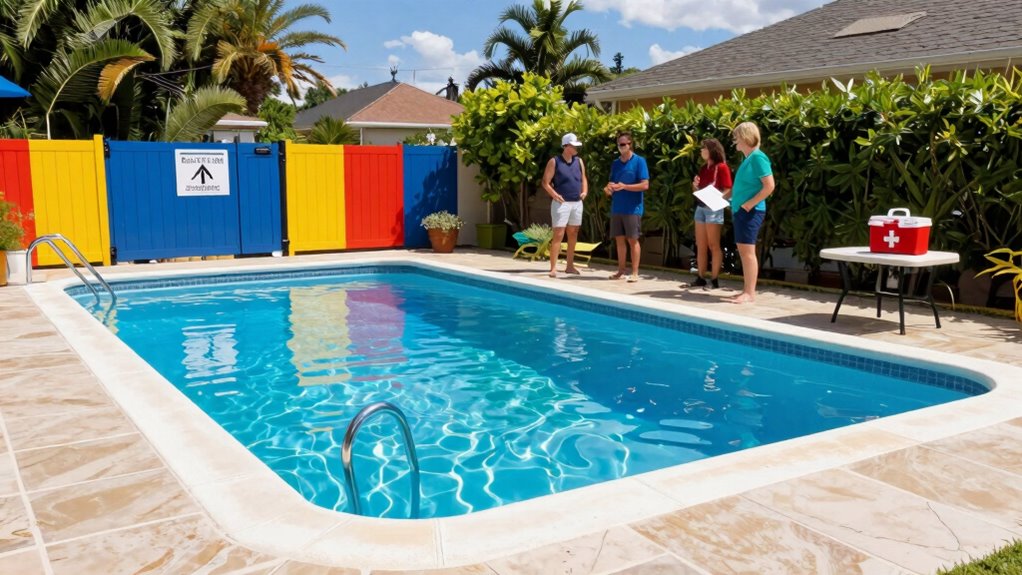

Good pool safety starts before anyone gets in the water because physical barriers like fences and safety covers are essential to prevent unauthorized access and accidents. Make sure fences are at least four feet high, gates are self-closing and out of children’s reach, and covers are secure and well-maintained. Regular checks keep safety features effective, reducing risks. Investing in proper safety measures and planning ahead creates a safer environment, setting the foundation for ongoing protection—discover more ways to keep your loved ones safe.

Get pool and patio gear delivered free with Prime
- Fast, free delivery on millions of items
- Prime Video, Amazon Music and more included
- Member-only deals all year
Key Takeaways
- Installing physical barriers like fencing prevents unsupervised access and reduces accidental drownings.
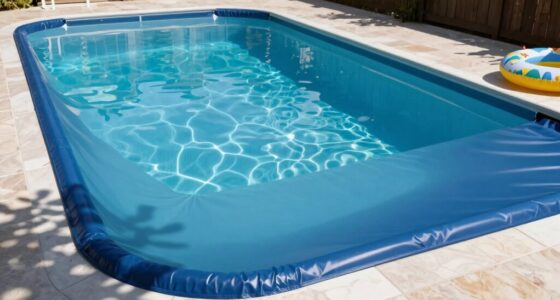
- Safety covers provide an additional layer of protection when the pool is not in use.
- Proper installation and regular maintenance ensure safety measures remain effective over time.
- Clear signage and routine checks reinforce safety protocols before anyone enters the water.
- Educating household members early on safety practices fosters a culture of vigilance and prevention.
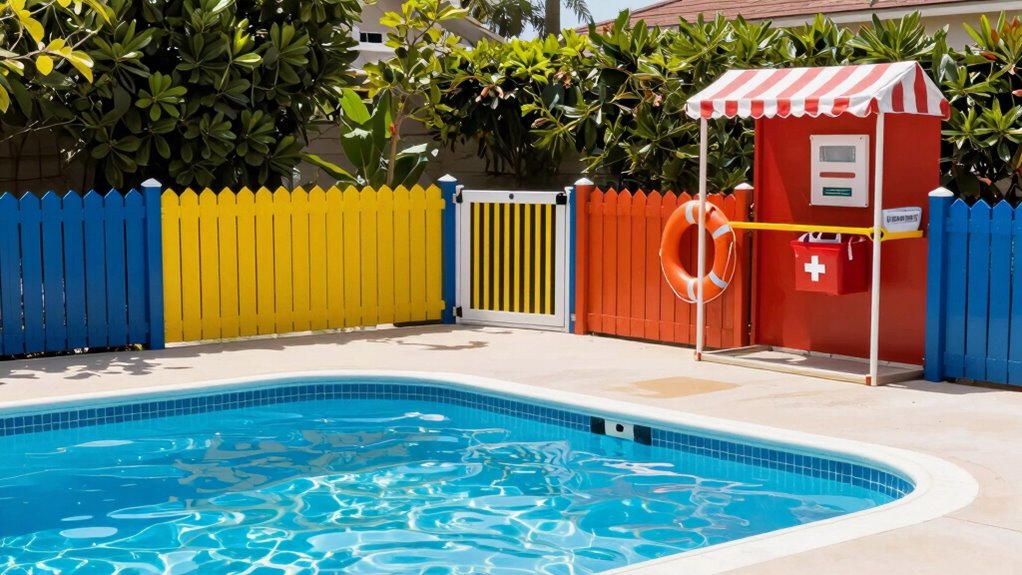
Before you even dip a toe into the pool, safety measures should be your top priority. Creating a secure environment starts well before anyone steps into the water. One of the most effective ways to do this is by installing reliable pool fencing. Pool fencing acts as a physical barrier that prevents children, pets, or curious neighbors from accessing the pool area without supervision. When properly installed and maintained, it significantly reduces the risk of accidental drownings. Make sure your fence is at least four feet high, with a self-closing, self-latching gate that’s out of reach of small children. Regularly check for any damage or gaps in the fencing that could compromise its integrity. A sturdy fence isn’t just about legal compliance—it’s about peace of mind, knowing that unintended access is minimized. Additionally, physical barriers like fencing and safety covers work together to create a comprehensive safety system for your pool area. Alongside fencing, safety covers play a crucial role in preemptively securing your pool. Safety covers are designed to be strong enough to support weight and prevent anyone from falling into the water when the pool isn’t in use. They come in different types, such as mesh or solid covers, but each serves the purpose of creating a barrier between the water and potential intruders. When you’re not swimming, a safety cover should be securely in place, with no gaps or tears that could allow a child or pet to slip underneath. These covers are especially useful during off-season months or when the pool is temporarily unused. They’re an added layer of protection that, when combined with fencing, makes your pool area a virtually inaccessible zone for unsupervised visitors. Proper installation techniques are essential to ensure these safety measures stay effective over time and withstand weather conditions.
A comprehensive safety system also includes regular safety checks and clear signage to alert everyone of pool rules and hazards. But safety isn’t just about physical barriers. It’s also about establishing habits and protocols. Always double-check that gates are latched and covers are secured before leaving the pool area. Educate everyone in your household about the importance of these safety measures, emphasizing that they’re the first line of defense. Proper installation of pool safety equipment is crucial to ensure their effectiveness and durability over time. Investing in quality pool fencing and safety covers isn’t just about compliance; it’s about preventing tragedy before it can happen. When you prioritize these safety steps early on, you create a safer environment that gives everyone peace of mind. Remember, the best safety measures are the ones put in place before water ever becomes part of the picture.
As an affiliate, we earn on qualifying purchases.
Frequently Asked Questions
What Are the Most Common Pool Safety Violations?
The most common pool safety violations include inadequate pool maintenance, such as broken fences or malfunctioning safety equipment, which can lead to accidents. You might also see a lack of proper supervision if lifeguards aren’t certified, increasing risks. Ensuring regular pool checks, maintaining secure barriers, and verifying lifeguard certification are essential steps to prevent violations and keep swimmers safe from potential hazards.
How Often Should Safety Equipment Be Inspected?
You should inspect safety equipment weekly as part of your routine pool maintenance to guarantee everything functions properly. Check safety signage regularly to confirm it’s visible, clear, and up-to-date. Test rescue devices, alarms, and first aid supplies frequently to catch any issues early. Consistent inspections help prevent accidents, maintain compliance, and promote a safe swimming environment for everyone. Staying vigilant with safety equipment is key to responsible pool management.
Are Pool Safety Rules Legally Required?
Pool safety rules aren’t legally required everywhere, but following them can reduce your liability insurance costs considerably. Did you know that over 50% of drowning incidents happen in pools lacking proper safety measures? Pool safety legislation varies by location, often making certain rules mandatory. By implementing and enforcing safety guidelines, you protect swimmers and shield yourself from legal liability, creating a safer environment for everyone.
How Can I Ensure Children Understand Pool Dangers?
You can guarantee children understand pool dangers by practicing active child supervision and teaching water awareness. Constantly watch kids when they’re near or in the pool, avoiding distractions. Use clear, simple language to explain the risks, like drowning or slipping. Incorporate water safety lessons and demonstrate safe behaviors. Reinforce these lessons regularly, and make certain children understand that they should always ask for help if they’re unsure about something in or around the pool.
What Training Is Recommended for Pool Safety Supervision?
You should consider taking pool safety courses and obtaining Lifeguard certification to enhance your supervision skills. These programs teach you essential rescue techniques, CPR, and accident prevention strategies. By completing certified training, you gain confidence and knowledge to monitor swimmers effectively. This preparation guarantees you’re well-equipped to prevent accidents and respond swiftly if emergencies arise, creating a safer environment for everyone before anyone gets in the water.
automatic self-closing pool gate
As an affiliate, we earn on qualifying purchases.
As an affiliate, we earn on qualifying purchases.
Conclusion
Remember, safety doesn’t start when you dip your toes in; it begins long before then. By staying vigilant, setting clear rules, and ensuring proper barriers, you’re planting the seeds for a safe and enjoyable pool experience. Don’t wait until something goes wrong to realize the importance of prevention—think of it as an ounce of prevention being worth a pound of cure. When you prioritize safety first, everyone can relax and make a splash without worries.
pool safety cover for inground pool
As an affiliate, we earn on qualifying purchases.
As an affiliate, we earn on qualifying purchases.
As an affiliate, we earn on qualifying purchases.
Columbus Day / Indigenous Peoples' Day Picks
long weekend sales
As an affiliate, we earn on qualifying purchases.