
Ensuring your pool lift meets ADA compliance means providing safe, accessible water entry for all users while avoiding common installation mistakes. Focus on proper placement, secure anchoring, and correct control placement within reach. Avoid hazards like slippery surfaces or improper water chemistry issues that can cause corrosion or malfunction. Regular maintenance and inspections are essential to stay compliant and safe. Keep these guidelines in mind, and you’ll be prepared to create a fully accessible, compliant pool environment—learn more as you continue.
Key Takeaways
- Ensure pool lifts are properly installed on stable, non-slip surfaces with correct electrical and structural safety measures.
- Verify lift controls are within reach, operable with one hand, and clearly marked per ADA guidelines.
- Maintain unobstructed clear floor space (minimum 30″ x 48″) around the lift for safe access and transfer.
- Conduct regular inspections for corrosion, damage, and proper functioning of safety features and controls.
- Follow ADA standards for seat height, safety restraints, signage, and environmental considerations to ensure ongoing compliance.
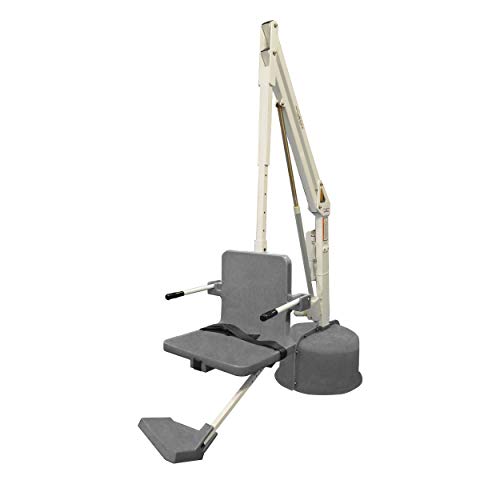
Aqua Creek Revolution Pool Lift, ADA Compliant, Anchor Not Included, 500 lbs. Capacity (Standard, Gray)
Anchor not included.
As an affiliate, we earn on qualifying purchases.
As an affiliate, we earn on qualifying purchases.
Why ADA Compliance Matters for Pool Lifts
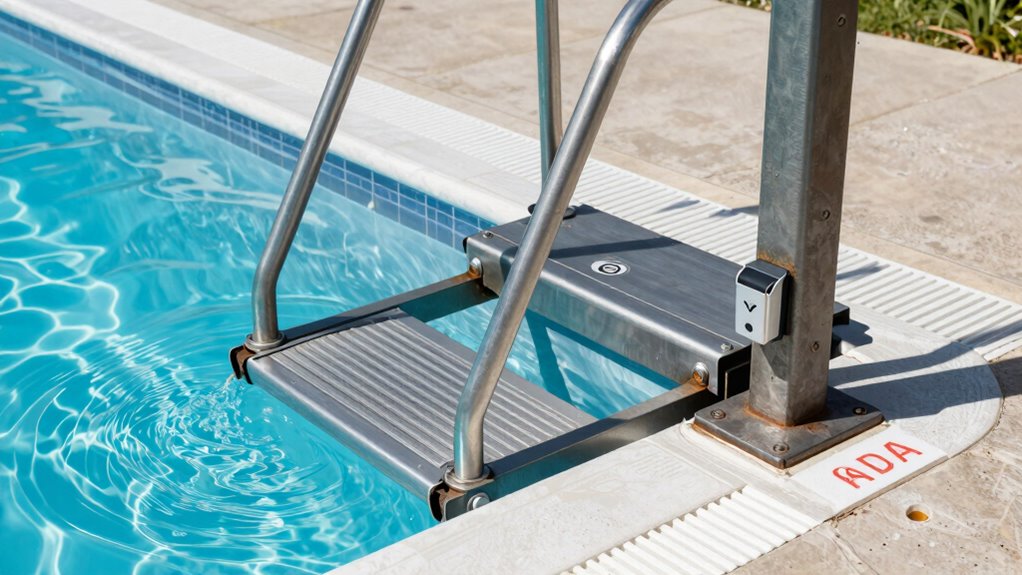
ADA compliance is essential for pool lifts because it guarantees that everyone, including individuals with disabilities, can access and enjoy the pool safely and independently. When pool lifts meet ADA standards, they help maintain overall pool safety by providing secure, reliable access points that reduce the risk of accidents. Properly designed lifts also ensure users can enter and exit the water comfortably, regardless of water temperature or physical ability. If lifts aren’t compliant, you risk creating hazards that could lead to injuries or discourage use, especially for those with mobility challenges. Ensuring ADA compliance helps promote an inclusive environment where all guests feel safe and confident in their ability to enjoy the water, regardless of water temperature or other factors. Accessible design plays a crucial role in achieving effective and safe pool lift installation and usage. Additionally, understanding ADA standards for pool lifts can help avoid costly modifications later on. Incorporating ADA guidelines from the outset can also streamline the installation process and ensure long-term compliance. Moreover, considering projector technology principles can improve the visibility and usability of signage and instructional materials related to pool lift operation and safety. A comprehensive understanding of universal design principles further supports creating accessible aquatic environments that accommodate diverse needs.

Global Pool Lift Home Series – 375 Pound Capacity Without Anchor
300lb. lifting capacity..No anchor included – anchor should be pre-installedEasy-to-use controls Flip-up armrests and safety belt included UV…
As an affiliate, we earn on qualifying purchases.
As an affiliate, we earn on qualifying purchases.
What You Need to Know About ADA Requirements for Pool Lifts
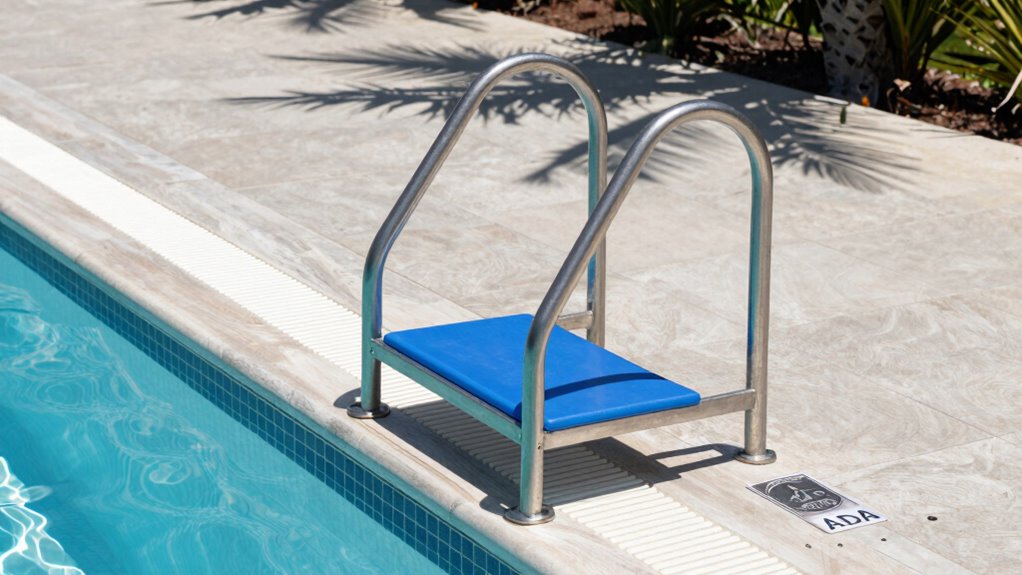
Understanding ADA requirements for pool lifts is essential to guarantee accessibility and legal compliance. You need to know the design standards that make your pool usable for everyone and the proper installation practices to meet regulations. Being informed helps you avoid penalties and creates a welcoming environment for all guests. Incorporating gear care tips can also ensure your pool lift remains in good condition, supporting long-term accessibility. Regular maintenance and inspection are vital to prevent malfunctions and ensure ongoing compliance with safety standards. Additionally, staying updated on ADA guidelines can help address any changes in regulations and maintain your facility’s compliance over time. Moreover, understanding the importance of home automation features can enhance safety and ease of use for accessibility solutions around your pool area. Implementing reliable battery solutions, such as those from Battle Born Batteries, can ensure the consistent operation of electronic lifts and safety features.
Accessible Design Standards
Ensuring your pool lift meets accessible design standards is essential for compliance and safety. ADA guidelines emphasize the importance of clear visibility, which includes proper color contrast between the lift and its surroundings. This helps users easily identify and navigate the lift area. Signage guidelines also play a critical role; signs should be easy to read, with high contrast and simple language, indicating the lift’s purpose and instructions. Additionally, controls must be accessible, with tactile and visual cues for users with varying abilities. Proper user interface design is crucial to accommodate diverse users and enhance safety. By paying attention to these standards, you create an inclusive environment that accommodates all users and reduces the risk of accidents or misunderstandings. Incorporating universal design principles can further improve usability for a wide range of individuals. Considering environmental factors, such as lighting and weather conditions, can also impact the effectiveness of your pool lift’s accessibility features. Conducting regular accessibility audits can help identify and address potential barriers proactively. Meeting these design requirements demonstrates your commitment to accessibility and legal compliance.
Installation Compliance Requirements
Installing a pool lift that complies with ADA requirements involves more than just choosing the right equipment; you must also follow specific installation guidelines to guarantee accessibility and safety. Make certain the pool deck slope is gentle—no more than 1:48—to prevent hazards and facilitate wheelchair access. Proper placement of ADA signage is essential; it should be visible, clear, and near the lift to direct users effectively. Secure the lift on a stable, non-slip surface that supports weight and withstands water exposure. Verify electrical connections meet code standards to avoid safety risks. Also, confirm the lift’s controls are within easy reach and operable by individuals with disabilities. Ensuring the lift’s installation process follows these compliance requirements is crucial for safety and legal adherence. Additionally, consulting ADA guidelines can provide further clarity on specific requirements for installation and accessibility. Being aware of regional variations in regulations can help ensure full compliance across different jurisdictions. Proper inspection and maintenance of the lift are vital to sustain functionality and safety over time. Following these installation compliance requirements ensures your pool remains accessible, safe, and compliant with ADA standards.

S.R.Smith 1001600 4-Button Hand Control for PAL, PAL2, Splash, and aXs Model Pool Lifts
Convenient One-Touch Control
As an affiliate, we earn on qualifying purchases.
As an affiliate, we earn on qualifying purchases.
Key Features of ADA-Compliant Pool Lifts
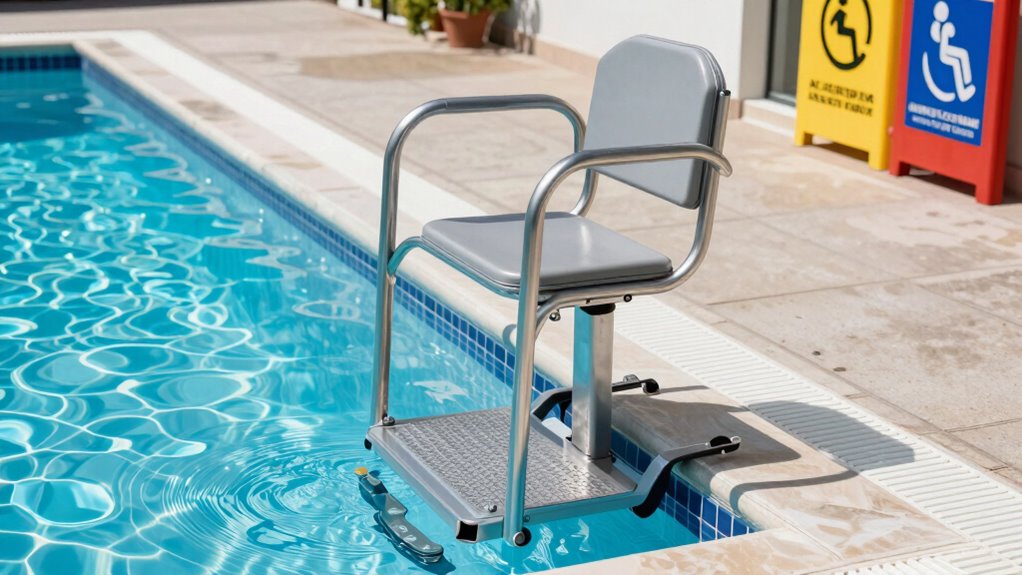
ADA-compliant pool lifts must incorporate specific features to guarantee safety, accessibility, and ease of use. These features ensure users can access the pool comfortably without disrupting pool aesthetics or water chemistry. Key features include a sturdy, non-slip seat, safety belts, and controls within easy reach. The lift should have a stable base to prevent wobbling and smooth, quiet operation for user comfort. Additionally, the controls must be simple and marked clearly for all users. The materials used should resist corrosion to maintain both functionality and appearance over time. Making certain these features helps your facility meet ADA standards while keeping the pool area visually appealing and safe for everyone. Properly designed lifts blend seamlessly into the environment without compromising water quality or aesthetics.

Deck Grip Non-Slip Sealer Clear Barefoot-Friendly Anti-Slip Coating – Create Traction for Outdoor or Indoor Floors and Pool Decks (Gallon)
NON-SLIP COATING: SlipDoctors Deck Grip is a non-yellowing, water-based acrylic sealer & protector, which does not contain silicone,…
As an affiliate, we earn on qualifying purchases.
As an affiliate, we earn on qualifying purchases.
How to Choose the Right ADA Pool Lift for Your Facility
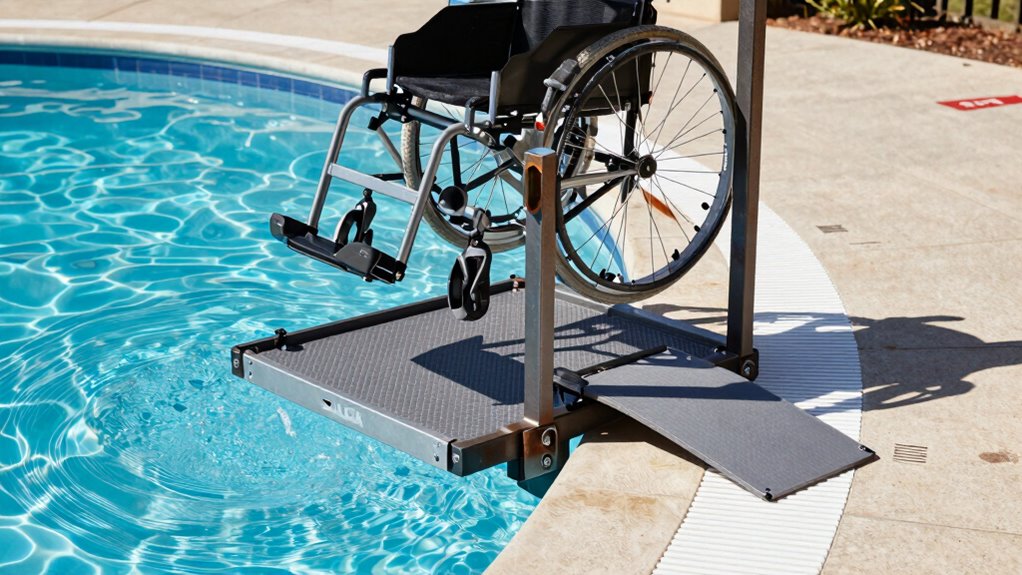
Choosing the right ADA pool lift for your facility involves evaluating your specific needs and the pool environment to guarantee safety, accessibility, and ease of use. Consider the pool lift materials—whether stainless steel, durable plastic, or corrosion-resistant options—to assure longevity and low maintenance. The pool lift branding is also important; reputable brands often meet ADA standards and offer reliable support. Think about user weight capacity, transfer type, and installation space, as these factors influence compatibility. Additionally, confirm that the lift’s design aligns with your facility’s aesthetics and user requirements. By carefully selecting a lift that fits your environment and adheres to ADA guidelines, you’ll provide safe, accessible access for all users while minimizing future pitfalls.
Installing Your Pool Lift: Common Mistakes and How to Avoid Them
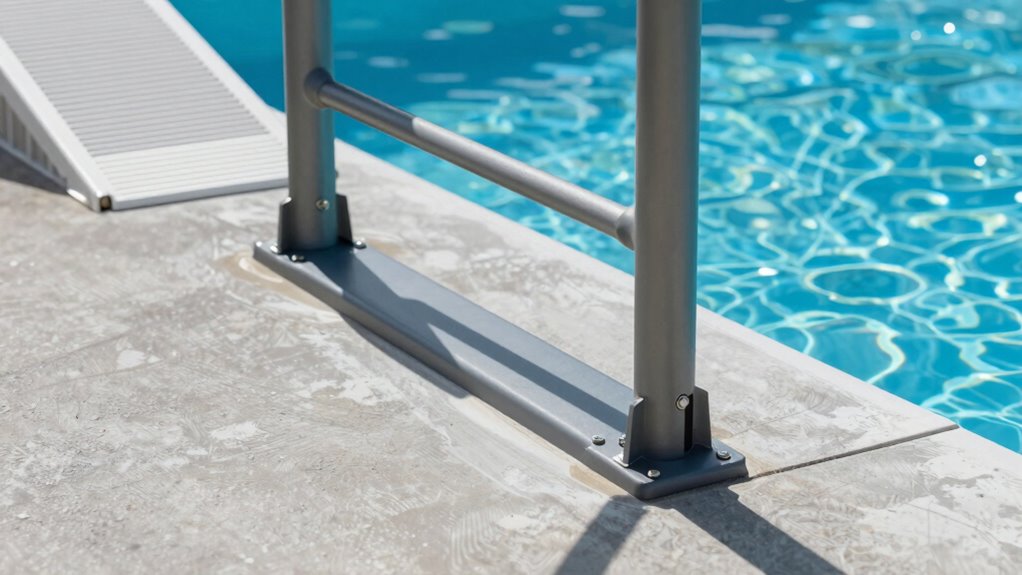
Even when you select the perfect pool lift, improper installation can compromise safety and accessibility. Common mistakes include overlooking pool deck hazards, which can cause instability or tipping. Failing to secure the lift properly may lead to malfunction or injury. Ignoring water chemistry issues might cause corrosion, affecting the lift’s durability. Additionally, improper alignment with the pool edge can hinder user access and violate ADA requirements. To avoid these pitfalls:
Proper installation of your pool lift ensures safety, ADA compliance, and long-lasting accessibility.
- Ensure the lift is level and securely anchored
- Clear the area of pool deck hazards like slippery surfaces or obstacles
- Check water chemistry regularly to prevent corrosion
- Confirm the lift’s position allows easy, safe transfer access
Proper installation and regular checks help maintain safety, ADA compliance, and longevity of your pool lift.
How to Verify Your Pool Lift Meets ADA Standards
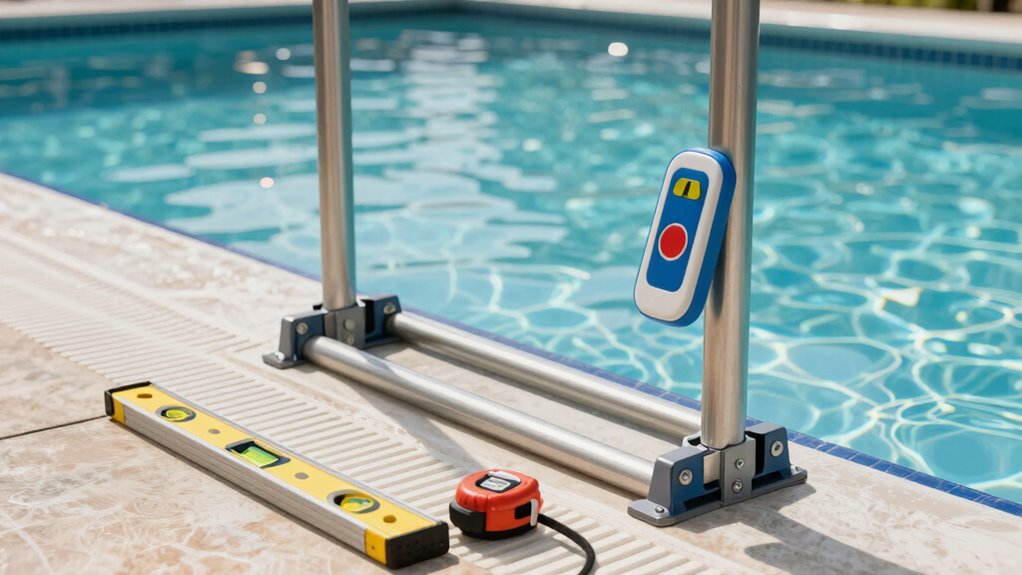
To guarantee your pool lift meets ADA standards, start by reviewing the key design and operational requirements outlined in the ADA Accessibility Guidelines. Check that the lift’s seat height, weight capacity, and controls are accessible and easy to operate. Ensure safety features like secure restraints and proper water chemistry are maintained to promote pool safety. Verify the lift’s compliance by inspecting its placement, stability, and clear access routes. Use the table below to visualize essential ADA features:
| Feature | Requirement | Checkpoint |
|---|---|---|
| Clear Floor Space | Minimum 30″x48″ space in front and around lift | Is there unobstructed access? |
| Controls | Must be operable with one hand, within reach | Are controls easy to use? |
| Seat Height | Not exceeding 18″ from water surface | Is the seat height ADA compliant? |
| Safety Restraints | Secure and easy to fasten | Are restraints functional? |
| Water Chemistry | Maintain proper chemical levels for safety | Is water safe and balanced? |
Keeping Your Pool Lift Safe and Accessible After Installation
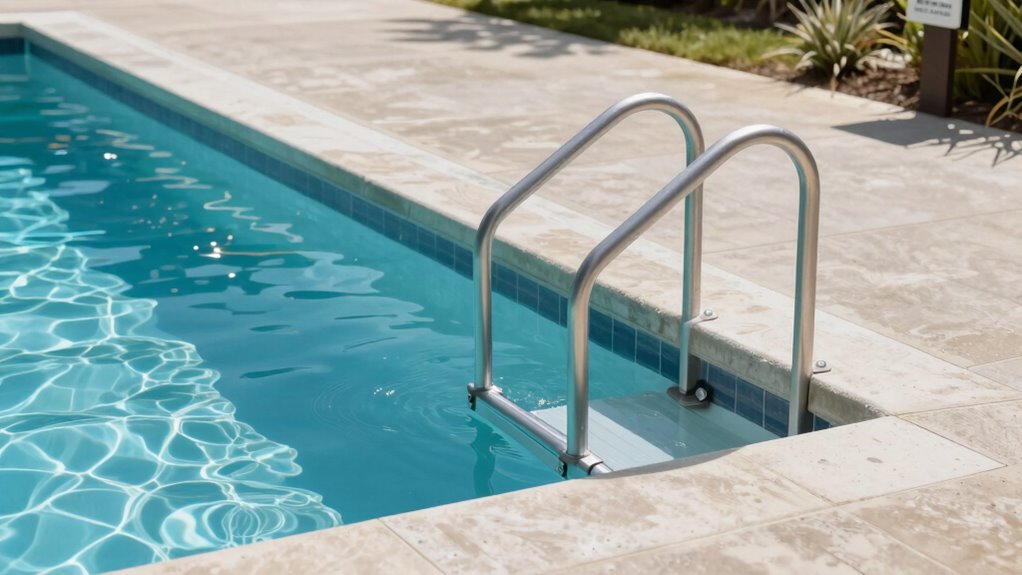
Once your pool lift is installed, maintaining its safety and accessibility requires regular inspections and prompt attention to any issues. Keep an eye on the pool lift aesthetics to ensure it remains clean and free of corrosion, which can compromise safety. Check that all controls are functioning smoothly and that safety features, like seat belts, are intact. Maintain consistent branding visibility to confirm the lift is compliant and properly labeled. Regularly verify that the lift’s electrical components are secure and free of damage. Additionally, ensure that signage remains clear and legible for users. Consider consulting a professional periodically to assess compliance and address any concerns. By staying proactive, you help ensure the lift stays safe, accessible, and compliant with ADA standards.
Maintenance Tips to Keep Your ADA Pool Lift Compliant
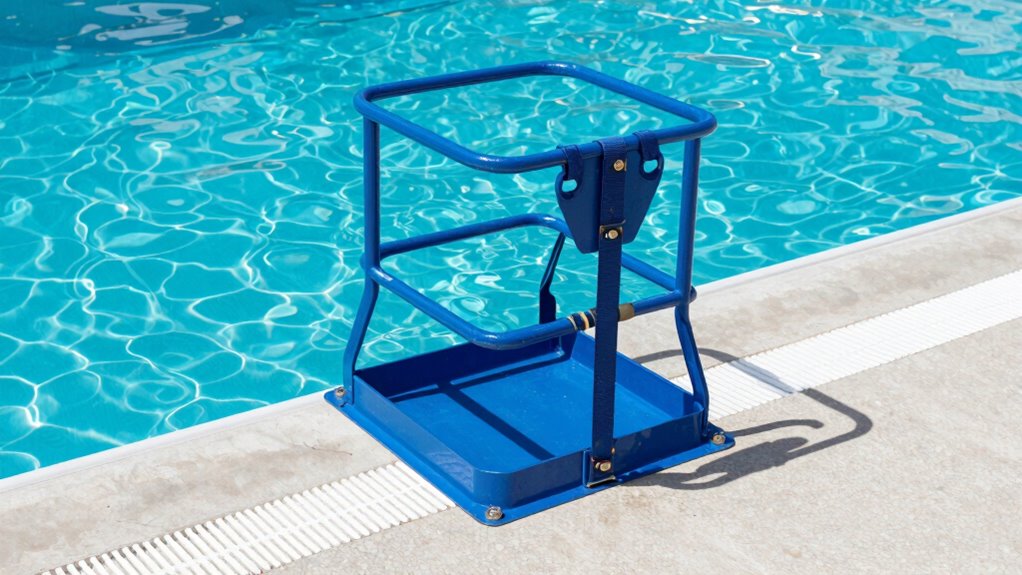
Regular maintenance is essential to keep your ADA pool lift compliant and functioning properly. Regular pool maintenance should include inspecting the lift for any signs of wear or damage, ensuring all safety features are in working order. One key aspect is lift lubrication; proper lubrication of moving parts prevents corrosion and ensures smooth operation, reducing the risk of malfunctions. Check the lift’s wheels, hinges, and joints regularly, applying manufacturer-recommended lubricants as needed. Keep the lift clean and free of debris to prevent obstruction or damage. Document maintenance activities to demonstrate ongoing compliance. By staying proactive with pool maintenance and lift lubrication, you ensure your lift remains safe, functional, and compliant with ADA standards, providing accessible and reliable service for users.
Expert Resources and Tips for ADA Pool Lift Compliance
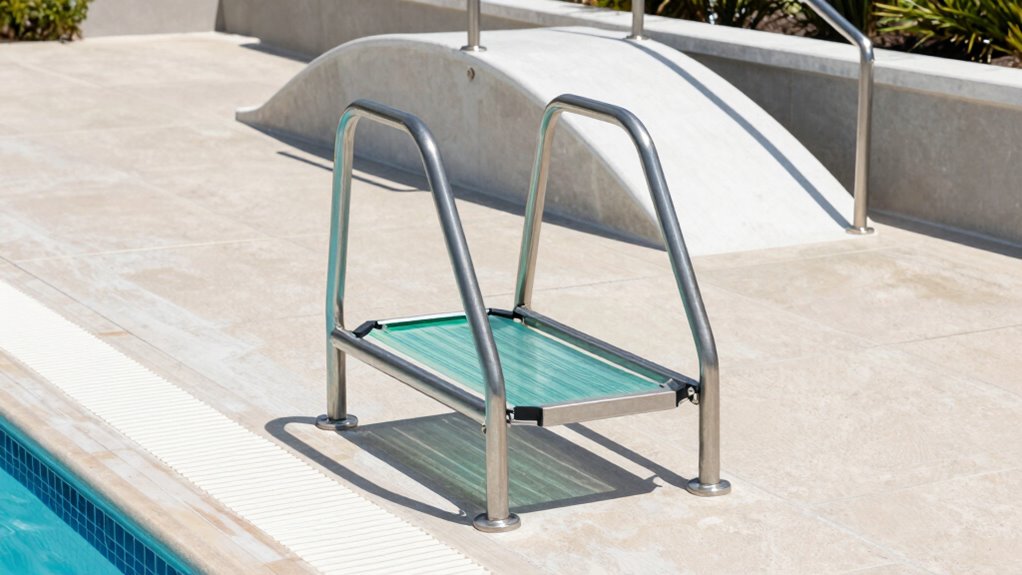
Maintaining compliance with ADA standards for your pool lift requires access to reliable expert guidance and resources. To guarantee you meet all requirements and promote pool safety, turn to trusted sources. These resources can help you navigate complex regulations and improve aquatic accessibility for all users.
- Consult ADA guidelines and updates from the U.S. Access Board
- Work with certified ADA compliance specialists or certified pool contractors
- Attend industry workshops or webinars on pool safety and accessibility
- Join professional associations focused on aquatic access and ADA compliance
Using these resources, you can stay current on best practices, avoid installation pitfalls, and ensure your pool lift is fully compliant. Expert advice helps you create a safer, more accessible environment for everyone.
Frequently Asked Questions
Are There Specific Weight Limits for Ada-Compliant Pool Lifts?
Yes, there are specific weight limits for ADA-compliant pool lifts. You should check the lift’s weight restrictions and capacity before purchasing or installing it. Most lifts are designed to support between 300 to 350 pounds, but some models can handle up to 600 pounds. Always verify the lift capacity to guarantee it meets the user’s needs and complies with ADA guidelines, preventing safety issues and ensuring accessibility.
How Often Should ADA Pool Lifts Be Inspected for Safety?
Like a trusty steed in a medieval tale, your ADA pool lift needs regular care. You should inspect it at least monthly, following proper inspection procedures, to guarantee safety and compliance. Regular maintenance schedules help catch issues early, preventing accidents and costly repairs. Don’t wait for a problem—stay proactive by keeping an eye on your lift’s condition, and document inspections to meet ADA standards and protect your users.
Can Portable Pool Lifts Qualify as ADA Compliant?
Portable lifts can qualify as ADA compliant if they meet regional regulations, weight restrictions, and safety standards. You should regularly inspect these lifts, ideally every three to six months, to guarantee safety and proper operation. Consider the cost comparison between portable and fixed lifts, and verify regional requirements, as some areas may have specific rules. Proper maintenance and adherence to inspection frequency keep your portable lift ADA compliant and safe for users.
What Are the Cost Differences Between Various ADA Pool Lift Models?
You’ll find that the cost differences between ADA pool lift models vary based on installation considerations and maintenance costs. Basic models are generally more affordable upfront but may have higher long-term upkeep. Premium lifts with advanced features cost more initially but often need less maintenance. When choosing, consider how installation complexity and ongoing maintenance will impact your overall expenses, helping you select a model that fits your budget and compliance needs.
Are There Regional or State-Specific ADA Requirements for Pool Lifts?
Think of regional regulations and state compliance as different roads leading to the same destination. You need to check specific ADA requirements for pool lifts in your area because regulations vary widely. Some states may have stricter standards or additional guidelines, so it’s essential to research local laws and guarantee your pool lift installation meets regional requirements. Staying informed helps you avoid legal pitfalls and creates a more accessible environment for everyone.
Conclusion
Ensuring your pool lift meets ADA standards is like tending a delicate garden—you must nurture it with care and attention. By understanding the basics, avoiding pitfalls, and committing to proper maintenance, you’ll create a welcoming oasis where everyone can experience the joy of swimming. With each step, you’re weaving a fabric of accessibility that invites all to immerse themselves—and that’s the true beauty of compliance. Keep nurturing your pool lift, and it’ll always be a beacon of inclusion.