
Electrical safety around pools can still be neglected because many risks are overlooked or poorly managed. People often ignore regular inspections, skip professional installations, or forget to test safety devices like GFCIs. Weather conditions and time can degrade equipment, increasing hazards. Small issues may seem harmless but can lead to serious accidents if ignored. Staying safe requires constant vigilance and knowledge of proper practices—continue to explore how you can better protect yourself and others.

Get pool and patio gear delivered free — and shop member deals
- Fast, free delivery on millions of items
- Access to Prime Big Deal Days deals on October 6–7
- Prime Video, Amazon Music and more included
Key Takeaways
- Many pool owners neglect regular inspection and maintenance of electrical equipment, increasing safety risks.
- Improper installation or failure to use qualified professionals can lead to faulty wiring and hazards.
- Overlooking the importance of testing safety devices like GFCI outlets reduces protection during electrical faults.
- Lack of emergency preparedness and training impairs quick and effective response to electrical incidents.
- External factors like weather and neglect of minor issues can cause major electrical dangers if not addressed promptly.
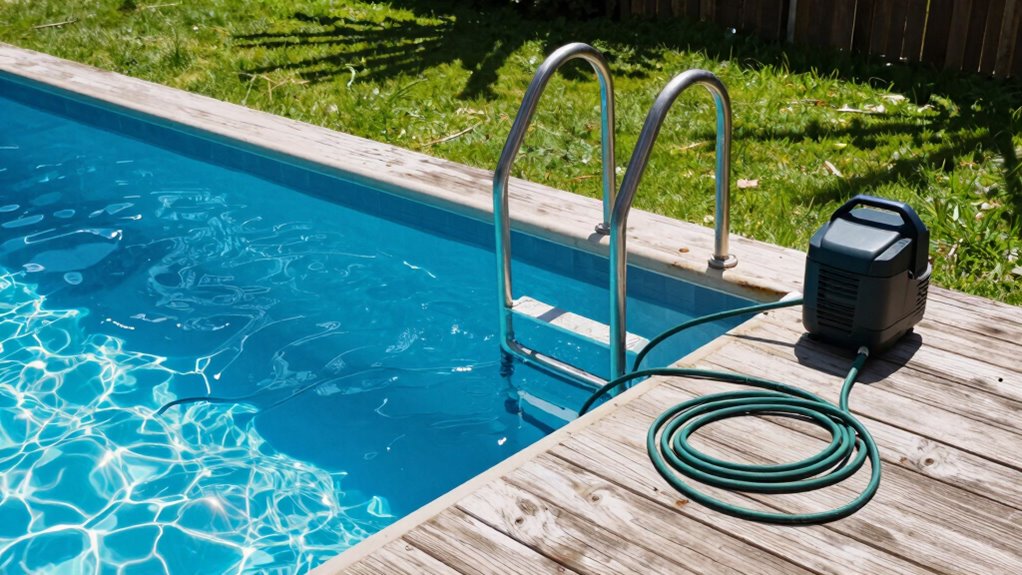
Swimming pools can be a fun way to beat the heat, but you need to stay vigilant about electrical safety to prevent accidents. Many pool owners overlook how vital proper pool maintenance is in guaranteeing electrical safety. Regularly inspecting and maintaining your pool’s electrical equipment, like pumps, heaters, and lighting, helps keep everything functioning correctly and reduces the risk of electrical shocks or fires. Faulty wiring or damaged cords might seem harmless at first, but they can quickly turn dangerous if ignored. Staying on top of pool maintenance means you’re proactively reducing hazards before they become emergencies.
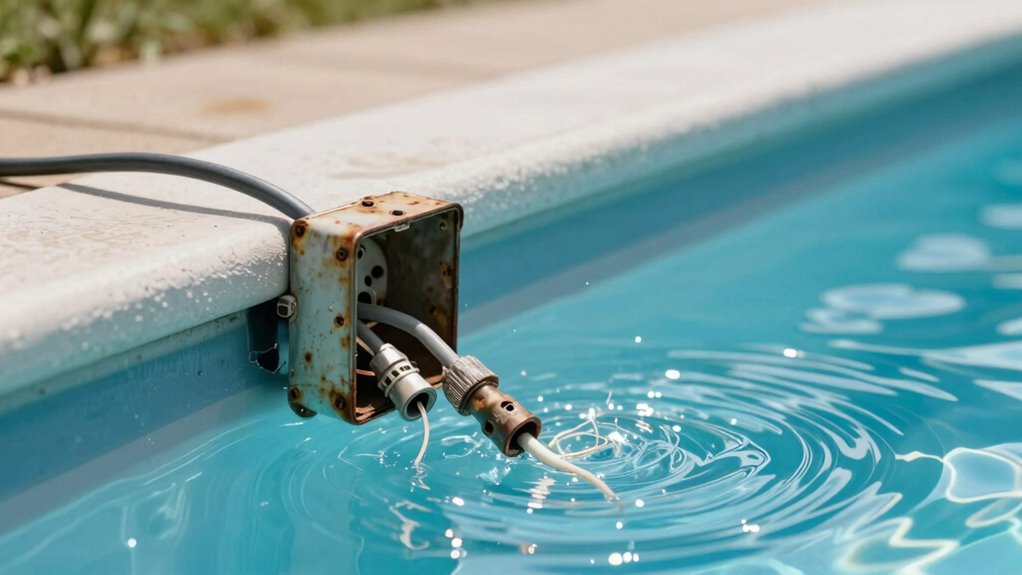
Electric components around pools should always be installed and checked by qualified professionals. Even minor issues like loose connections or exposed wiring can pose serious risks. It’s not enough to just install the equipment; you need to routinely inspect it, especially before and after the swimming season. Proper pool maintenance involves guaranteeing that GFCI outlets are in place and working correctly. These outlets cut power instantly if they detect a ground fault, considerably lowering the chance of electrical shock. It’s also important to understand electrical safety principles to better assess potential hazards and protect everyone around the pool. Recognizing potential electrical hazards and addressing them promptly can prevent accidents and injuries. Neglecting these safety features or delaying repairs can be catastrophic, especially when water and electricity mix.
Additionally, understanding the importance of qualified electrical installations can significantly reduce risks, as improper wiring is a common cause of electrical failures near pools. It’s crucial to follow electrical safety regulations that are designed to keep pool areas safe and compliant with legal standards. Emergency preparedness is another vital aspect often overlooked. Knowing how to respond in case of an electrical emergency can save lives. Keep a clear plan in place, including how to shut off power quickly and how to contact emergency services. Make sure everyone who uses the pool knows what to do if they encounter an electrical issue—like flickering lights, a tingling sensation, or sparks near electrical outlets. Having accessible emergency equipment, such as a fire extinguisher rated for electrical fires and a first aid kit, is vital. Regularly reviewing and practicing safety procedures ensures everyone stays alert and ready to react appropriately. It’s also wise to familiarize yourself with common electrical safety violations to help prevent violations that could lead to dangerous situations.
One of the reasons electrical safety around pools remains tricky is that many people underestimate the risks involved. It’s tempting to assume that if everything was working fine last season, it’ll be fine now. But electrical systems degrade over time, especially if not properly maintained. Also, weather conditions, like thunderstorms or heavy rain, can create unforeseen hazards. Being prepared for these situations involves more than just routine pool maintenance; it requires an understanding of how to react during emergencies.
Ultimately, staying vigilant about electrical safety means combining consistent pool maintenance with solid emergency preparedness. Never ignore small issues, and always prioritize safety when dealing with any electrical element near water. When you take these precautions seriously, you create a safer environment for everyone, allowing you to enjoy your pool without fear.
As an affiliate, we earn on qualifying purchases.
Frequently Asked Questions
Are Outdoor Electrical Outlets Required Near Pools?
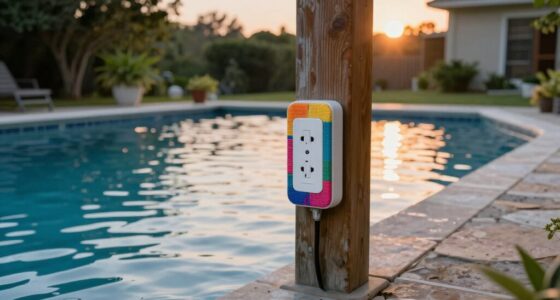
Yes, outdoor electrical outlets are required near pools, but they must follow strict safety rules. You should guarantee outlets are GFCI-protected and positioned away from water sources. Always prioritize pool cover safety by keeping electrical cords and outlets at a safe distance, avoiding extension cords, and maintaining proper electrical cord placement. This helps prevent electrical hazards, keeping your pool area safe for everyone.
How Often Should Pool Electrical Systems Be Inspected?
A stitch in time guarantees nine, so you should inspect your pool’s electrical systems at least once a year. Regular inspections ensure electrical code compliance and maintenance safety, preventing potential hazards. Check all wiring, GFCIs, and outlets for damage or corrosion. If you notice issues, address them promptly to keep your pool area safe. Routine inspections help you catch problems early, safeguarding everyone enjoying your pool.
Can I Install Pool Lighting Myself?
You can install pool lighting yourself if you have the right skills and knowledge about electrical safety and pool maintenance. However, lighting installation involves working with wiring near water, which can be dangerous. To guarantee safety and compliance with electrical codes, it’s best to hire a licensed electrician. They’ll ensure your pool lighting is installed correctly and safely, reducing risks and ensuring your pool remains a safe, enjoyable space.
What Are Common Electrical Hazards Around Pools?
You should watch out for common electrical hazards around pools, like faulty electrical grounding and exposed wiring. These issues can cause electric shocks or fires if not properly managed. Always perform circuit troubleshooting to identify problems before use. Avoid installing or repairing electrical equipment yourself unless you’re qualified, and guarantee all electrical components are up to code. Proper grounding and regular inspections keep your pool area safe and enjoyable.
Is GFCI Protection Mandatory for Pool Equipment?
Think of GFCI protection as your modern-day Minotaur, guarding your pool area. Yes, GFCI protection is mandatory for pool equipment to prevent electrical shock. It guarantees compliance with electrical codes and grounding requirements, acting as a vital safety barrier. By installing GFCIs, you create a safer environment, reducing risks and making certain your pool area is both fun and secure, just like a safe labyrinth for your family.
pool electrical safety inspection kit
As an affiliate, we earn on qualifying purchases.
As an affiliate, we earn on qualifying purchases.
Conclusion
Even with all the rules and precautions, electrical safety around pools remains a tricky dance you must master. Like a tightrope walk over shimmering water, one misstep can turn a peaceful day into a dangerous storm. Stay alert, respect the power of electricity, and don’t let complacency be your safety net. Remember, a little caution keeps the waters calm and your summer memories bright, safe from unexpected currents that lurk beneath the surface.
outdoor electrical wiring safety
As an affiliate, we earn on qualifying purchases.
As an affiliate, we earn on qualifying purchases.
As an affiliate, we earn on qualifying purchases.
Fall Picks
fall essentials
As an affiliate, we earn on qualifying purchases.