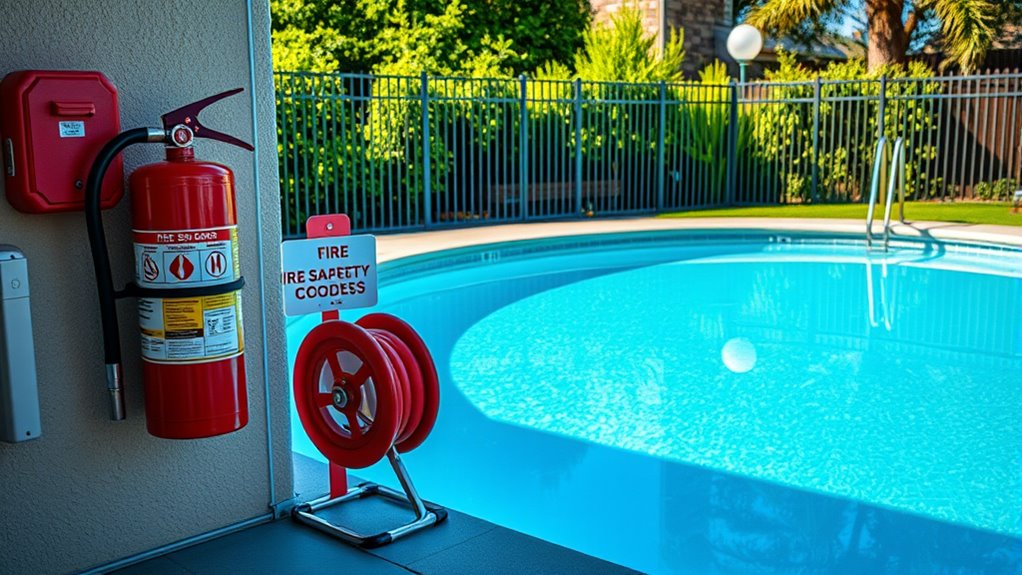

To keep your pool area fire-safe, ensure proper equipment like fire extinguishers rated for electrical and fuel fires is readily accessible, and regularly inspect all electrical systems, heaters, and lighting for faults. Follow local safety codes on wiring, venting, and barrier installations to prevent hazards. Adhering to these standards, along with routine maintenance and emergency preparedness, markedly reduces fire risks. Staying compliant and prepared is key—continue to explore how you can enhance your pool area’s fire safety.

Get pool and patio gear delivered free — and shop member deals
- Fast, free delivery on millions of items
- Access to Prime Big Deal Days deals on October 6–7
- Prime Video, Amazon Music and more included
Key Takeaways
- Install and regularly inspect fire extinguishers rated for electrical and fuel fires near pool areas.
- Ensure all electrical systems comply with local safety codes and are properly maintained.
- Use fire-resistant barriers and proper venting around heat sources and equipment.
- Follow installation guidelines for pool equipment, heaters, and outdoor lighting to prevent fire hazards.
- Develop and practice emergency procedures, including evacuation routes and power shut-off protocols.
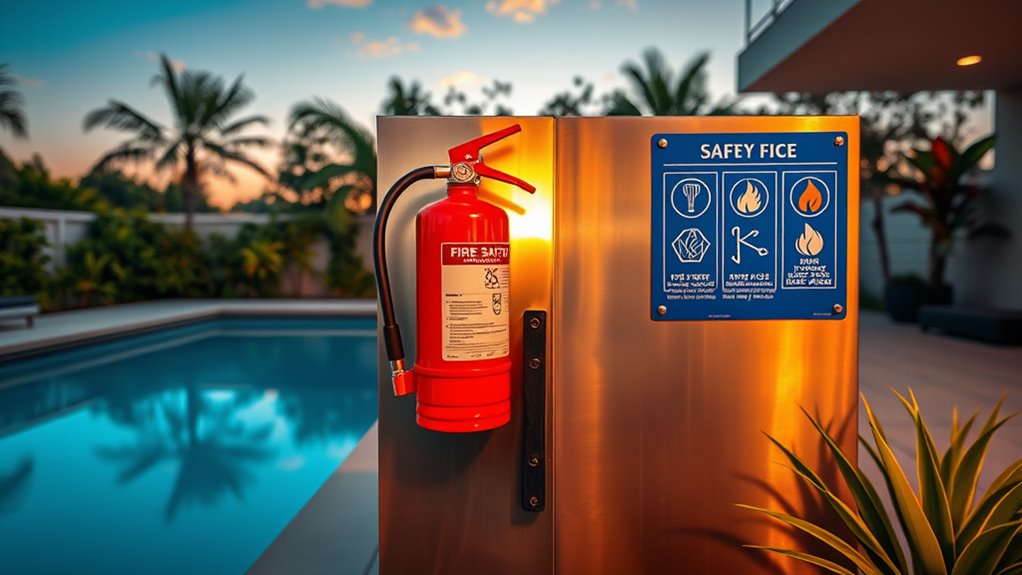
Have you ever considered how fire hazards can pose a serious risk around your pool area? It’s something many overlook, but proper equipment and adherence to safety codes are essential for protecting yourself, your family, and your property. One of the most effective ways to minimize fire risks is through diligent pool maintenance. Regularly inspecting and maintaining electrical systems, pool heaters, and outdoor lighting can prevent sparks and overheating that might ignite nearby combustible materials. For example, faulty wiring or corroded connections could cause shorts, leading to sparks that might ignite leaves, pool covers, or other flammable items. Keeping the area clear of debris and ensuring all equipment is in good working order is *crucial*. Routine checks help you spot potential hazards before they turn into emergencies, giving you peace of mind and a safer environment.
Beyond maintenance, emergency preparedness plays a *vital* role in fire safety around pools. Knowing how to respond quickly if a fire breaks out can make all the difference. Keep fire extinguishers rated for electrical and fuel fires readily accessible near the pool area, and make sure everyone knows how to use them properly. Establish clear evacuation routes and practice emergency procedures so that all family members and guests know what to do in the event of a fire. Having a fire safety plan tailored for your pool area isn’t just smart—it’s *necessary*. This includes knowing when and how to shut off power sources to prevent electrical fires and making sure emergency contacts are easily accessible. Additionally, installing smoke detectors and heat sensors nearby can provide early warning signs, giving you more time to react. Proper venting requirements help prevent the buildup of dangerous fumes and heat, reducing fire risks in your setup.
Local codes and safety regulations are designed to protect you from fire hazards, so it’s *essential* to stay compliant. Many jurisdictions specify requirements for pool equipment placement, electrical safety measures, and fire-resistant barriers around the pool. Familiarize yourself with these codes and ensure your setup meets or exceeds them. Not only does this help you avoid fines or legal issues, but it also *significantly* enhances your safety protocols. Incorporating these standards into your routine—such as using approved wiring methods and maintaining adequate clearance around heat-producing devices—can prevent fires from starting in the first place.
fire extinguisher rated for electrical and fuel fires
As an affiliate, we earn on qualifying purchases.
As an affiliate, we earn on qualifying purchases.
Frequently Asked Questions
Are Pool Fire Extinguishers Required by Law?
Yes, pool fire extinguishers are required by law in many areas, aligning with fire extinguisher regulations and pool safety standards. You need to make certain that your pool area has the appropriate fire safety equipment, including portable extinguishers, especially if there are potential fire hazards nearby. Local codes dictate the type and placement of fire extinguishers, so it’s essential to stay compliant to protect yourself and others around the pool.
How Often Should Fire Safety Equipment Be Inspected?
Think of your pool as a castle, where vigilant guards protect against fire threats. You should inspect your fire safety equipment at least once a month, ensuring it’s ready for action. Regular equipment maintenance keeps your pool safety measures effective, just like well-maintained guards. Prompt inspections help prevent emergencies, so stay proactive—check your fire extinguishers and safety gear regularly, and replace or service them as needed to safeguard your oasis.
What Are the Legal Penalties for Non-Compliance?
If you don’t comply with fire safety laws, you could face hefty fines, legal penalties, or even license suspension. Non-compliance may also increase your liability insurance costs and harm your reputation. To avoid this, make sure your staff undergoes proper safety training and your equipment is regularly inspected. Staying compliant not only protects you legally but also keeps everyone safe around your pool area.
Can DIY Fire Safety Measures Replace Professional Installations?
You shouldn’t rely solely on DIY safety for fire safety around pools. While DIY fire safety measures can supplement professional installations, they can’t substitute certified fire safety devices and expert installation. Professional installations ensure your fire safety devices meet safety codes and are effective. Skipping professional help risks inadequate protection and potential legal issues. Always prioritize professional installation for critical fire safety equipment to keep everyone safe and compliant.
Are There Specific Fire Codes for Public Versus Private Pools?
Think of fire codes for pools like a tailored suit—different for each setting. Public pools follow stricter regulations to guarantee pool safety, including fire equipment and emergency planning, while private pools have more relaxed standards. You should familiarize yourself with local codes to protect everyone. Proper fire safety measures are essential for both, helping you respond quickly and effectively in emergencies, whether at a private backyard or a public facility.
As an affiliate, we earn on qualifying purchases.
Conclusion
Remember, fire safety around pools is essential to protect everyone. Did you know that drowning incidents decrease by nearly 80% when proper safety measures are in place? By following the right equipment guidelines and codes, you create a safer environment for family and friends. Stay vigilant, maintain your fire safety equipment, and always adhere to local regulations. Your proactive approach can make all the difference in preventing accidents and ensuring a fun, worry-free pool experience.
As an affiliate, we earn on qualifying purchases.
pool electrical safety inspection kit
As an affiliate, we earn on qualifying purchases.
As an affiliate, we earn on qualifying purchases.
Fall Picks
fall essentials
As an affiliate, we earn on qualifying purchases.