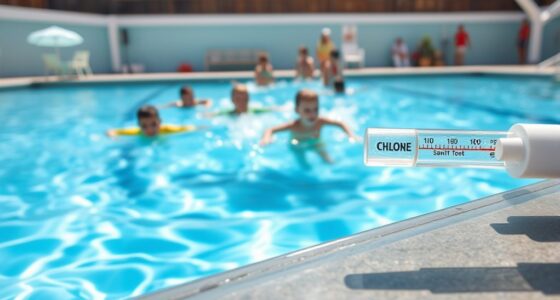

If your eyes hurt after swimming or exposure to water, the cause could be chloramines or pH imbalance. Chloramines form when chlorine reacts with sweat, urine, or skin cells, causing irritation, especially in indoor pools with poor ventilation. pH imbalance happens when the water becomes too acidic or alkaline, leading to redness or dryness. Checking water quality can help identify the culprit, so keep going to discover how to fix and prevent these issues.
Key Takeaways
- Chloramine irritation often occurs after swimming in pools with poor chlorination, causing redness and burning eyes.
- pH imbalance causes eye discomfort from acidity or alkalinity deviations, regardless of chloramine presence.
- Water testing can distinguish whether chloramines or pH issues are causing irritation.
- Recent water exposure history helps identify if chloramines (pool-related) or pH imbalance (tap or contaminated water) is the cause.
- Proper pool maintenance and water testing are essential for preventing and identifying the true cause of eye irritation.
Eye irritation occurs when your eyes become red, itchy, or watery due to exposure to allergens, irritants, or environmental factors. It can be confusing to pinpoint the exact cause because many substances can trigger similar symptoms. Two common culprits you might encounter are chloramines and pH imbalances in water, especially when dealing with pool or tap water. Understanding the difference between these causes is essential to effectively address your eye discomfort.
Chloramines are chemicals formed when chlorine reacts with organic matter like sweat, urine, or skin cells in swimming pools. When you swim or are exposed to chlorinated water, these compounds can irritate your eyes, causing redness, burning, and tearing. Chloramines are known irritants because they are volatile and can stay in the water or become airborne as chloramine vapors, especially in poorly ventilated indoor pools. If you’ve been swimming regularly and notice eye irritation, chloramines might be the primary cause. These compounds tend to linger in pools with inadequate chlorination or poor water circulation, so maintaining proper pool chemistry can help reduce irritation.
On the other hand, pH imbalance in water plays a different role. Your eyes are sensitive to changes in pH levels, which is a measure of acidity or alkalinity. Ideally, water should have a pH close to 7, which is neutral. When the pH drifts away from this range—becoming either too acidic or too alkaline—it can cause irritation. Acidic water might cause stinging and redness, while alkaline water can lead to dryness and discomfort. If you’re exposed to tap water or other sources with unbalanced pH, your eyes may react negatively. It’s important to note that pH imbalance isn’t caused by a chemical reaction like chloramine formation but rather by water treatment issues or contamination.
To determine the real cause of your eye irritation, consider your recent activities and water exposure. If you’ve been swimming in a chlorinated pool, chloramines are likely responsible. If you’ve been using tap water or other water sources with questionable quality, pH imbalance could be the culprit. Testing the water for chloramine levels or pH can provide clarity. Proper eye care involves rinsing your eyes with clean, fresh water, avoiding rubbing, and consulting a healthcare professional if symptoms persist. Addressing the root cause—whether adjusting pool chemistry or improving water treatment—can help prevent future irritation and keep your eyes comfortable. Knowing the difference between chloramines and pH issues empowers you to take targeted action and protect your eye health effectively. Additionally, proper water testing can help identify the specific cause of irritation more accurately.
water testing kit for pool chloramines
As an affiliate, we earn on qualifying purchases.
As an affiliate, we earn on qualifying purchases.
Frequently Asked Questions
Can Eye Irritation Be Caused by Other Chemicals in Water?
Yes, eye irritation can be caused by other chemicals in water. Substances like chlorine, chloramine, or even residual disinfectants can irritate your eyes upon contact. Heavy metals, such as copper or lead, might also cause irritation if they leach into your water. Always test your water quality, especially if you’re experiencing persistent eye discomfort, to identify and address the specific chemicals that may be causing the irritation.
How Can I Differentiate Between Chloramine and Ph Issues?
To differentiate between chloramine and pH issues, test your water with specific kits. Chloramine test strips will show if chloramines are present, while pH test strips reveal acidity or alkalinity. If your eyes sting after using water, check both tests; irritation from chloramine often correlates with chloramine levels, while pH imbalance affects water’s acidity. Address each issue accordingly to find relief.
Are Certain Eye Conditions More Affected by Water Quality?
Absolutely, certain eye conditions are more sensitive to water quality. Think of your eyes as delicate plants; they react quickly to irritants like chloramines or pH imbalances. If you have dry eyes, conjunctivitis, or allergies, poor water quality can exacerbate symptoms. You might notice redness, burning, or itchiness intensify after exposure. Staying vigilant about water conditions helps protect your eyes, much like shielding a fragile bloom from harsh weather.
What Home Tests Are Available for Water Chloramine Levels?
You can test for chloramine levels at home using test strips specifically designed for this purpose. These strips are affordable, easy to use, and provide quick results by dipping them into a water sample and comparing the color change to a chart. Some digital testing kits are also available, offering more precise readings. Regular testing helps you monitor water quality and address any issues affecting your eye health.
Does Eye Irritation From Chloramines Resolve Quickly?
Think of your eyes as delicate flowers that react swiftly to harsh elements. When exposed to chloramines, the irritation often clears up within a few hours to a couple of days once you’re out of the contaminated water. If symptoms persist or worsen, it’s a sign you should see a healthcare professional. Using water filters and avoiding chloramine-treated water can help prevent future irritation and protect your eyes.
pH test strips for water quality
As an affiliate, we earn on qualifying purchases.
As an affiliate, we earn on qualifying purchases.
Conclusion
Think of your eyes as delicate gardens, easily harmed by unseen weeds. Chloramines are like stubborn weeds choking the blooms, causing irritation and distress. Meanwhile, pH levels are the soil’s foundation—too acidic or alkaline, and the garden struggles to thrive. By understanding which weed or soil imbalance is at play, you can nurture your garden back to health. Keep an eye on water quality, and your eyes will stay clear and vibrant, like a well-tended paradise.
eye rinse solution for irritation
As an affiliate, we earn on qualifying purchases.
As an affiliate, we earn on qualifying purchases.
chloramine removal filter for pools
As an affiliate, we earn on qualifying purchases.
As an affiliate, we earn on qualifying purchases.