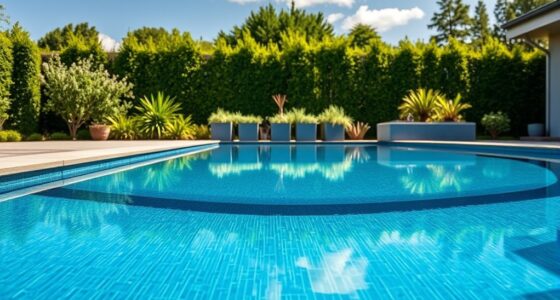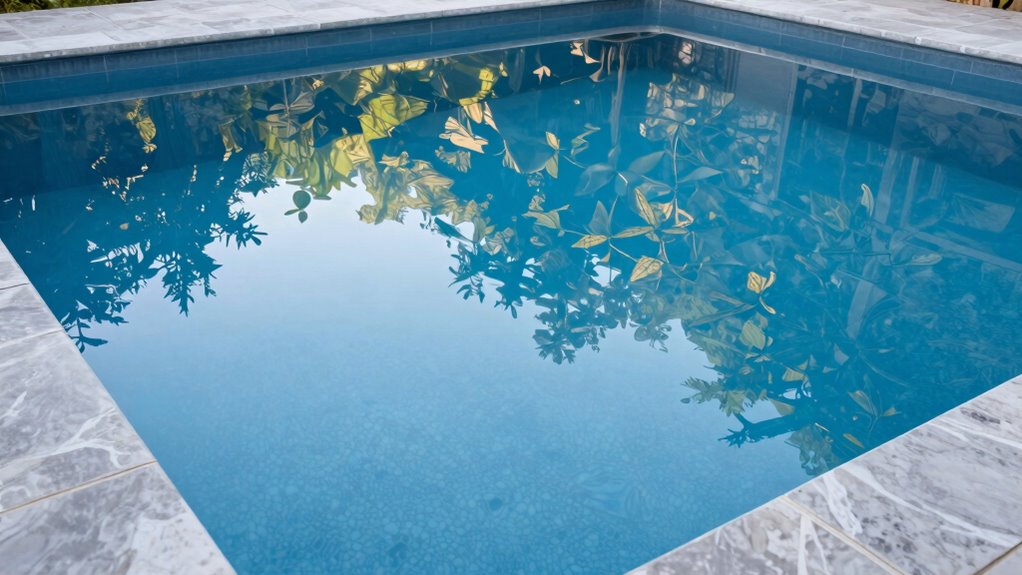
Choosing the right pool finish is key to reducing maintenance and ensuring long-lasting beauty. Durable finishes like quartz or pebble last longer and resist staining, scaling, and algae buildup better than plaster. Smooth, high-quality surfaces make cleaning easier, while textured ones may hide imperfections but are harder to maintain. Your climate and budget also play a role in your choice. To discover how the right finish can save you time and money over the years, keep exploring.

Get pool and patio gear delivered free with Prime
- Fast, free delivery on millions of items
- Prime Video, Amazon Music and more included
- Member-only deals all year
Key Takeaways
- Durable finishes like quartz or pebble resist wear, reducing resurfacing and repair needs over time.
- Smooth, high-quality surfaces ease debris removal and algae prevention, simplifying maintenance routines.
- Finish porosity affects dirt and algae buildup; low-porosity materials require less cleaning.
- Proper sealing and stain-resistant options extend the lifespan and reduce long-term upkeep costs.
- Aesthetic and climate considerations influence heat reflection and cleaning, impacting ongoing maintenance efforts.
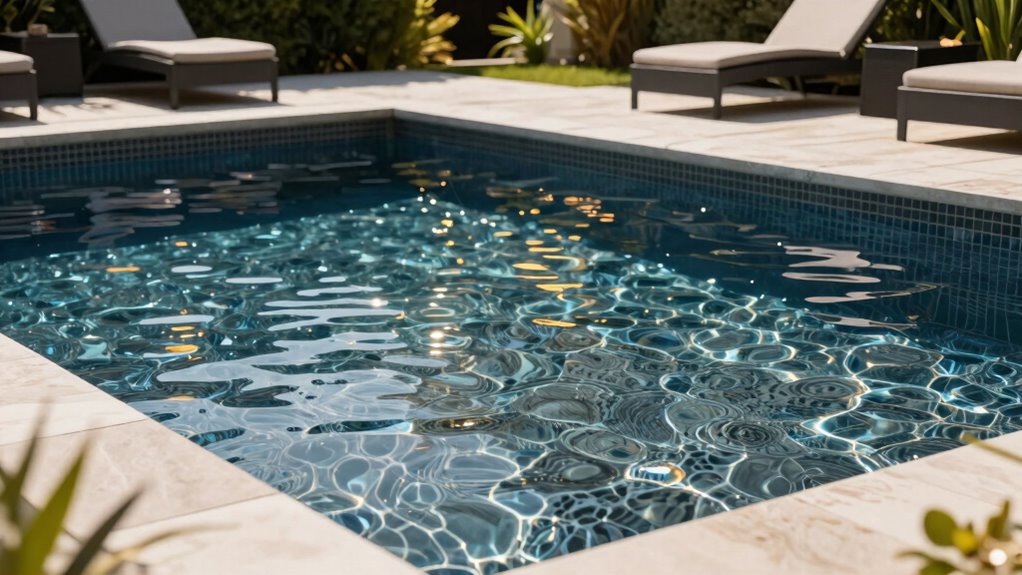
Are you unsure which pool finish best suits your backyard oasis? Choosing the right pool finish is a vital decision that impacts not only the look of your pool but also how much effort you’ll spend on maintenance over the years. One of the primary factors to consider is the pool surface, as it directly affects both aesthetics and longevity. The pool surface is what you see and touch, so selecting a finish that complements your style while standing the test of time is essential. You’ll want a finish that resists staining, scaling, and algae buildup, ensuring a smooth, attractive surface for years to come.
Choosing the right pool finish enhances your backyard’s beauty and reduces maintenance over time.
When evaluating finishes, you should pay close attention to finish durability. The durability of your pool finish determines how well it withstands constant exposure to water, chemicals, and varying weather conditions. A more durable finish can markedly reduce the need for repairs and resurfacing, saving you money and effort in the long run. For example, plaster finishes, while popular and budget-friendly, tend to wear faster and may require resurfacing every 7 to 10 years. On the other hand, more resilient options like quartz or pebble finishes offer enhanced durability, often lasting 15 years or more with minimal maintenance.
The choice of finish also influences the ease of cleaning and the overall maintenance routine. A smooth, high-quality finish minimizes surface roughness, making it easier to brush debris away and prevent algae growth. Conversely, textured finishes might hide imperfections but can be more challenging to clean and maintain. Consider your willingness to perform regular upkeep — some finishes demand more frequent brushing or chemical balancing to keep their appearance pristine. Additionally, understanding the pool surface material can help you select a finish that balances beauty with ease of upkeep. Selecting a finish with low porosity can also help reduce the accumulation of dirt and algae, simplifying cleaning routines. Moreover, a well-chosen finish with proper sealing can further enhance its resistance to staining and damage over time. Regular maintenance routines can be simplified by choosing finishes with stain resistance, which can significantly extend the pool’s visual appeal.
Aesthetics are another key consideration. The finish you select will determine the pool’s look, from classic white plaster to shimmering quartz or colorful aggregates. Think about your backyard style and personal preferences, but also remember that some finishes reflect more heat, which could impact your comfort during hot summer days.
Ultimately, your choice of pool finish shapes the overall maintenance experience and the lifespan of your pool. Investing in a high-quality, durable finish might cost more upfront but can pay off in fewer repairs and less frequent resurfacing. Taking the time to evaluate your priorities, climate, and budget ensures your pool remains a beautiful, enjoyable feature of your outdoor space for many years.
As an affiliate, we earn on qualifying purchases.
Frequently Asked Questions
How Does Pool Finish Affect Water Chemistry Balance?
Your pool finish directly impacts water chemistry balance because different finishes have varying durability and chemical absorption properties. For instance, plaster absorbs chemicals more quickly, requiring frequent adjustments to pH and alkalinity. A durable finish like quartz resists chemical absorption, helping maintain stable water chemistry. Choosing the right finish minimizes chemical imbalances, reduces maintenance efforts, and guarantees your pool stays clean and safe for swimming.
Are Certain Finishes More Eco-Friendly Than Others?
Yes, some pool finishes are more eco-friendly than others. Look for options made with sustainable materials and eco-friendly options that minimize environmental impact. For instance, finishes like polished plaster or natural stone often use fewer chemicals during installation and maintenance, reducing your pool’s carbon footprint. Choosing these sustainable materials helps you enjoy your pool while supporting environmental conservation efforts. Always research specific finishes for their eco credentials before making a decision.
Can Pool Finishes Be Customized With Colors or Textures?
Imagine a serene blue pool transforming into a vibrant mosaic of custom color options or textured surface designs. Yes, pool finishes can be personalized, allowing you to choose from a variety of hues and tactile patterns. You can create a unique oasis that reflects your style, blending aesthetic appeal with functionality. This customization makes your pool truly one-of-a-kind, offering endless possibilities to enhance your outdoor sanctuary’s beauty and personality.
How Resistant Are Different Finishes to Algae Growth?
Different pool finishes vary in algae resistance and surface durability. Pebble finishes and quartz surfaces typically resist algae better because their textured surfaces discourage growth and are easier to clean. On the other hand, plaster finishes may be more prone to algae buildup over time, especially if not maintained properly. Choosing a durable, algae-resistant finish guarantees your pool stays cleaner longer, reducing maintenance and enhancing longevity.
What’s the Average Lifespan of Various Pool Finishes?
Think of pool finishes like a marathon runner, lasting through years of wear. The average lifespan varies: plaster typically endures 7-10 years, pebble finishes about 15-20 years, and quartz surfaces can last up to 25 years. Your choice of pool surface options considerably impacts finish durability, so consider durability alongside aesthetics and maintenance needs. Investing in high-quality finishes means fewer repairs and longer-lasting beauty.
As an affiliate, we earn on qualifying purchases.
Conclusion
Choosing the right pool finish might seem like a small detail, but it genuinely shapes your pool’s maintenance for years to come. Don’t worry if it feels overwhelming—doing a bit of research now can save you time and money later. Remember, investing in a durable, low-maintenance finish means more relaxing days by your pool and less time on repairs. Trust your instincts, and you’ll enjoy a beautiful, hassle-free backyard oasis for years ahead.
pool finish stain resistant coating
As an affiliate, we earn on qualifying purchases.
As an affiliate, we earn on qualifying purchases.
As an affiliate, we earn on qualifying purchases.
Halloween Picks
halloween
As an affiliate, we earn on qualifying purchases.