
As an owner, you often overlook key questions about material compatibility that can cause costly issues later. You might forget to ask if materials will interact chemically over time or how they respond to environmental factors like moisture or chemicals. Consider whether thermal expansion differences could lead to structural problems. Addressing these questions early helps prevent corrosion, warping, or joint failure. Keep exploring to discover the essential considerations that protect your project’s safety and longevity.

Get pool and patio gear delivered free with Prime
- Fast, free delivery on millions of items
- Prime Video, Amazon Music and more included
- Member-only deals all year
Key Takeaways
- Have I evaluated potential chemical interactions between materials over the project’s lifespan?
- Are thermal expansion properties of different materials adequately considered to prevent structural issues?
- Have I identified environmental factors that could accelerate corrosion or deterioration?
- Are protective coatings or insulation measures planned to mitigate material incompatibility risks?
- Have I incorporated compatibility assessments into the initial design to avoid costly modifications later?
When choosing materials for a project or product, owners often focus on cost, appearance, or durability but forget to ask critical questions about compatibility. Overlooking how different materials interact can lead to costly problems down the line, especially when it comes to issues like corrosion prevention and thermal expansion. These are often overlooked but play vital roles in ensuring the longevity and safety of your project.
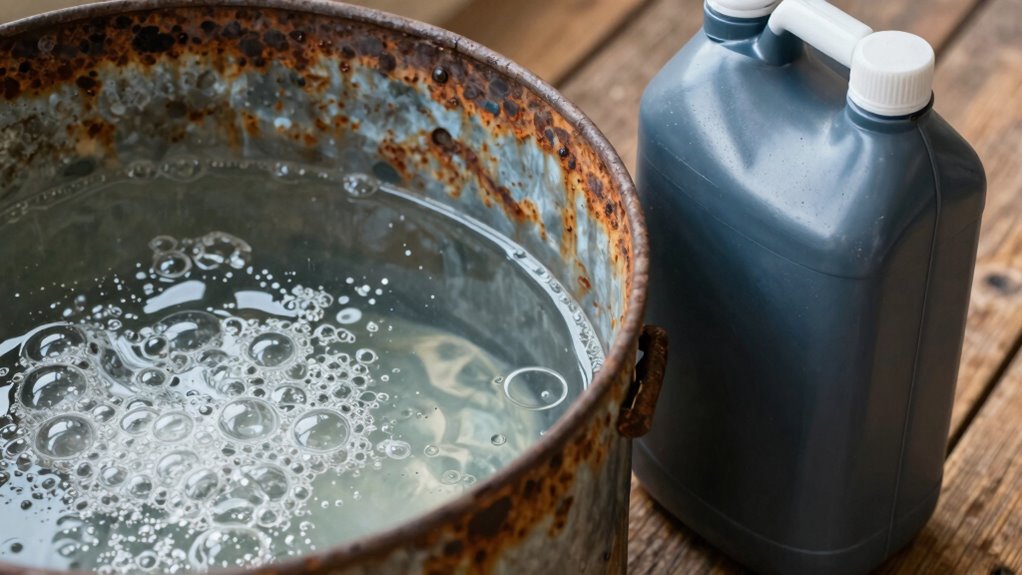
Corrosion prevention is essential, yet many owners fail to consider whether the materials they select are compatible in environments prone to moisture or chemicals. For example, pairing metals that are prone to galvanic corrosion without proper insulation or protective coatings can cause rapid deterioration. It’s crucial to understand how different substances react when in contact—what might seem like a minor detail can cause significant damage over time. Ask yourself if the materials will withstand environmental factors and whether additional protective measures are necessary. Ignoring this can lead to frequent repairs or even complete failure of the structure, costing time and money. Additionally, understanding the material interactions can help you select appropriate protective measures from the start. Recognizing how different materials interact chemically is fundamental to avoiding degradation.
Ignoring material compatibility in corrosive environments can lead to costly failures over time.
Thermal expansion is another critical factor that owners often overlook. Different materials expand and contract at varying rates when exposed to temperature changes. If you combine materials with vastly different thermal expansion properties without accounting for this, you risk warping, cracking, or joint failure. For instance, attaching a metal component to a plastic one without considering their thermal behaviors could cause the joint to fail as temperatures fluctuate. To prevent this, ask whether the materials have compatible thermal expansion rates and if the design incorporates allowances for movement. Doing so helps maintain structural integrity and prevents costly repairs or replacements later. It’s also beneficial to consider material testing to predict how materials will perform over time under various conditions. Such tests can reveal potential issues before they become a problem in the field. Being aware of potential thermal mismatches can save you from unexpected failures down the line.
Beyond just selecting the right materials, understanding their compatibility involves asking the right questions early. Will the materials interact chemically? Do they require specific finishing treatments to enhance corrosion resistance? How will temperature variations affect their joint stability? Addressing these questions upfront helps you avoid surprises that could compromise safety or performance. It also ensures that your project is built on a foundation of sound engineering principles, rather than reactive fixes later on. Incorporating these considerations early in the planning process can significantly improve the durability of your project.
Considering material compatibility during the selection process is also important because it directly impacts the overall durability of the project. Asking these critical questions upfront ensures durability and safety, saving you time and money in the long run. Never assume that materials are compatible just because they look good or are inexpensive; always dig deeper to understand how they will perform under real-world conditions. This proactive approach saves you time, money, and potential headaches in the future.
corrosion resistant metal coatings
As an affiliate, we earn on qualifying purchases.
As an affiliate, we earn on qualifying purchases.
Frequently Asked Questions
How Do Different Environmental Conditions Affect Material Compatibility?
Different environmental conditions can considerably impact material compatibility. You need to account for corrosion resistance, as moisture or chemicals may cause deterioration over time. Thermal expansion also matters—temperature fluctuations can lead to stress and material failure if mismatched with the environment. By evaluating these factors, you guarantee your materials withstand environmental changes, maintaining integrity and performance without unexpected failures. Always test materials under real conditions for the best results.
Are There Long-Term Impacts of Chemical Exposure on Materials?
Constant chemical interactions can cause cumulative damage, leading to material aging over time. You might not see the immediate effects, but prolonged exposure weakens the structure, resulting in long-term impacts. As chemicals continue to interact, they accelerate deterioration, compromising safety and performance. Recognizing these risks helps you plan maintenance and select durable materials, ultimately preventing costly failures and ensuring longevity in your equipment or infrastructure.
What Maintenance Is Required for Incompatible Materials?
You need to regularly inspect incompatible materials for signs of corrosion resistance breakdown and thermal expansion issues. Maintenance involves cleaning, applying protective coatings, and replacing parts showing corrosion or deformation. Make sure you monitor for leaks or cracks caused by thermal expansion, especially in environments with temperature fluctuations. Proper maintenance prevents further damage, maintains safety, and extends the lifespan of your equipment by addressing issues caused by material incompatibility early on.
Can Material Compatibility Issues Cause Safety Hazards?
Yes, material compatibility issues can cause safety hazards. When incompatible materials like metals and plastics are used together, corrosion risks increase, potentially weakening structures or equipment. Thermal expansion can also lead to leaks or mechanical failures if materials don’t expand uniformly. These issues compromise safety by increasing the chances of leaks, failures, or accidents, so it’s essential to select materials that are compatible to prevent such hazards.
How Do Manufacturing Processes Influence Material Durability?
Think of manufacturing processes as the blacksmith shaping a sword—you influence its strength and resilience. Your choice of material selection and manufacturing techniques directly impact the sword’s durability. High-quality materials paired with precise techniques create a robust product, while shortcuts or improper methods weaken it. So, by carefully selecting materials and mastering manufacturing techniques, you guarantee your product withstands wear and tear, standing strong through time.
As an affiliate, we earn on qualifying purchases.
Conclusion
Just like a chef carefully selects ingredients to prevent a culinary disaster, you must ask the right questions about material compatibility. Overlooking these details could turn your home into a ticking time bomb, much like a ship neglecting its hull’s integrity. Stay vigilant, ask questions, and guarantee every material works harmoniously. When you do, you’re not just avoiding problems—you’re building a fortress of trust and safety, ready to weather any storm that comes your way.
As an affiliate, we earn on qualifying purchases.
material compatibility testing kits
As an affiliate, we earn on qualifying purchases.
As an affiliate, we earn on qualifying purchases.
Halloween Picks
halloween
As an affiliate, we earn on qualifying purchases.