
Wet deck safety depends on more than texture alone because water can make even rough surfaces slick and dangerous. Relying solely on surface texture can give you a false sense of security, as water may still cause slips. Adding hydrophobic coatings helps repel water, and wearing slip-resistant footwear provides extra protection. To truly minimize risks, you need a combination of surface treatments, proper footwear, and regular maintenance. Want to discover more about creating a safer deck environment?

Get pool and patio gear delivered free with Prime
- Fast, free delivery on millions of items
- Prime Video, Amazon Music and more included
- Member-only deals all year
Key Takeaways
- Texture alone cannot prevent slipping if water accumulates on the surface.
- Hydrophobic coatings actively repel water, reducing slickness beyond surface texture.
- Slip-resistant footwear provides essential grip regardless of surface conditions.
- A multi-layered safety approach combines surface treatments, footwear, and maintenance for maximum protection.
- Proper surface design and regular upkeep are crucial for maintaining slip resistance on wet decks.

A wet deck can be be a slippery hazard if you’re not careful. While many assume that the surface’s texture alone determines safety, the reality is more complex. You might think that a rough or textured deck automatically prevents slips, but that’s only part of the equation. Other factors, such as hydrophobic coatings, play an essential role in keeping you safe. These coatings repel water, reducing the amount of moisture that can accumulate on the surface. When water beads up and rolls off, it prevents the deck from becoming slick, even if the surface is textured. This means that relying solely on texture can give a false sense of security. Hydrophobic coatings complement the physical design, creating a more effective barrier against slips and falls.
Hydrophobic coatings and textured surfaces work together to prevent slips on wet decks effectively.
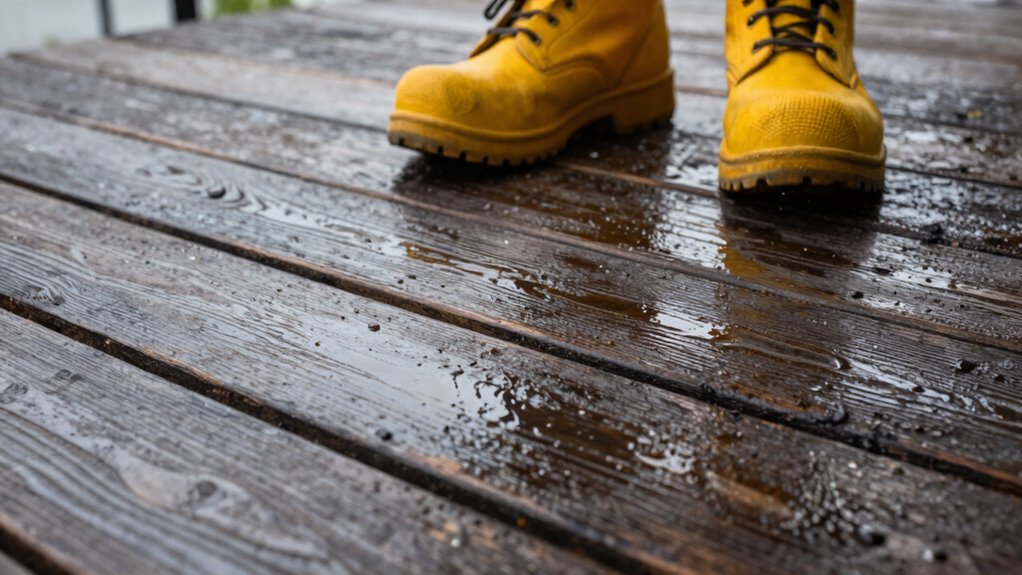
In addition to surface treatments, your choice of footwear is imperative. Slip resistant footwear is engineered specifically to enhance grip on wet surfaces. No matter how well a deck is designed or treated, if you’re wearing shoes with poor traction, you’re still at risk. Slip resistant soles often feature specialized tread patterns and rubber compounds that improve grip, especially in moist environments. When walking on a wet deck, your footwear becomes your first line of defense. Even with hydrophobic coatings and textured surfaces, wearing slip resistant shoes can considerably reduce your chances of slipping. It’s a simple but essential step that often gets overlooked in safety protocols.
Furthermore, understanding that safety depends on multiple layers of protection is key. Relying solely on deck texture or coatings can lead to accidents. Hydrophobic coatings help manage water accumulation, but they don’t make a surface completely dry or slip-proof. Similarly, wearing slip resistant footwear is critical, but it won’t compensate for a slick, untreated surface. Combining these measures creates a thorough approach to safety, where each element supports the others. When you’re aware of these factors—using decks with hydrophobic coatings, choosing slip resistant footwear, and paying attention to surface texture—you’re better equipped to prevent accidents. Additionally, proper maintenance of the deck, such as regular cleaning and inspections, further enhances safety by identifying potential hazards early.
Recognizing the importance of surface design in conjunction with other safety measures is essential for comprehensive protection. Ultimately, wet deck safety isn’t just about one feature. It’s about understanding how different elements work together to protect you. Don’t assume that a textured surface alone will keep you safe or that footwear alone will prevent slips. Instead, embrace a layered approach that includes surface treatments like hydrophobic coatings and appropriate footwear. By doing so, you’re proactively reducing risks and ensuring safer experiences on wet decks.
As an affiliate, we earn on qualifying purchases.
Frequently Asked Questions
How Does Chemical Exposure Affect Wet Deck Safety?
Chemical exposure can seriously threaten wet deck safety by causing slips, burns, or skin irritation. Chemical hazards on the deck, such as cleaning agents or pool chemicals, increase risks if not handled properly. To prevent exposure, you should wear appropriate protective gear, follow safety protocols, and make sure proper storage. Exposure prevention is essential, as it helps maintain a safe environment and reduces accidents caused by hazardous chemical contact.
Are There Specific Footwear Requirements for Wet Decks?
Yes, there are specific footwear requirements for wet decks. You should wear footwear that meets footwear standards for slip resistance, ensuring it provides essential grip on wet surfaces. Slip resistant shoes are vital to prevent accidents and maintain safety. Make sure your shoes have non-slip soles and good traction, especially in areas prone to water. Proper footwear plays a fundamental role in reducing slips and falls on wet decks.
What Role Does Signage Play in Wet Deck Safety?
You might think signage is just for decoration, but it’s actually your silent safety hero. Clear signage visibility guarantees you see safety instructions at a glance, guiding you safely across wet decks. These signs alert you to hazards, remind you to walk carefully, and reinforce safety rules. Without effective signage, even the best footwear and textured surfaces can’t fully prevent slips. It’s all about making safety instructions impossible to miss.
How Often Should Wet Deck Surfaces Be Inspected?
You should inspect wet deck surfaces at least daily, especially during peak use or adverse weather, to guarantee surface durability and safety. Regular inspections allow you to identify issues like cracks, algae, or slippery spots that require prompt maintenance. Incorporate these checks into your maintenance schedules, and address problems promptly to prevent accidents. Consistent inspections help maintain safety and prolong the lifespan of your wet deck.
Can Weather Conditions Impact Wet Deck Safety Measures?
Yes, weather conditions can substantially impact wet deck safety measures. Environmental hazards like rain, snow, or ice can reduce slip resistance, making surfaces more hazardous. You should regularly assess these conditions, especially after storms or temperature changes, to guarantee slip resistance remains adequate. Implementing additional safety measures, such as anti-slip mats or warning signs during adverse weather, helps protect everyone and minimizes the risk of slips and falls.
As an affiliate, we earn on qualifying purchases.
Conclusion
While textured surfaces are essential, they aren’t enough on their own to guarantee wet deck safety. Imagine slipping on a slick, textured surface—without proper signage or drainage, accidents still happen. By combining good texture with clear warnings, proper drainage, and regular maintenance, you create a safer environment. Think of it like a well-coordinated team: each part works together to prevent slips and falls. Don’t rely on texture alone—safety is a thorough effort.
slip resistant footwear for wet surfaces
As an affiliate, we earn on qualifying purchases.
As an affiliate, we earn on qualifying purchases.
As an affiliate, we earn on qualifying purchases.
Halloween Picks
halloween
As an affiliate, we earn on qualifying purchases.