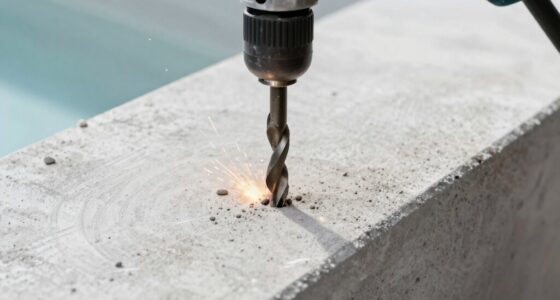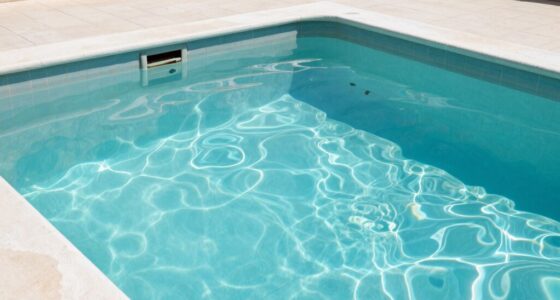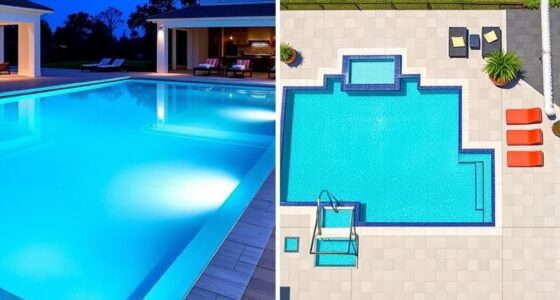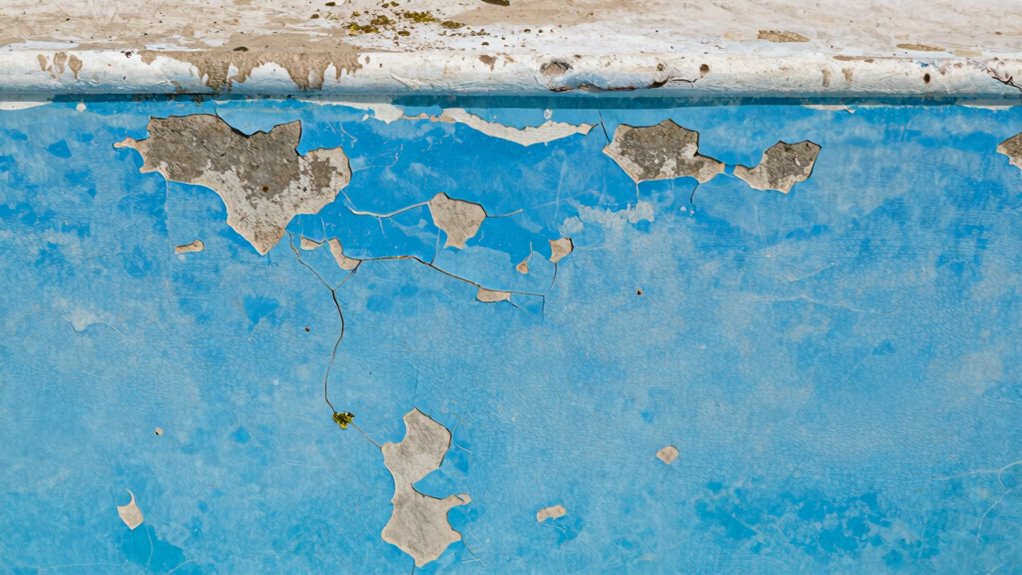

Before refinishing your aging pool surface, assess its current condition for cracks, discoloration, or rough patches. Decide if minor repairs or full resurfacing is needed, and choose a suitable surface material like plaster, epoxy, or pebble. Plan the project during warm weather and guarantee proper surface prep for better results. Safety first—use protective gear and secure the area. To get the best outcome, consider these factors carefully; more helpful tips follow.
Key Takeaways
- Assess the current surface condition to determine if repairs or complete resurfacing are needed.
- Consider proper timing and weather conditions for optimal curing and long-term durability.
- Evaluate safety measures to protect workers, residents, children, and pets during refinishing.
- Choose appropriate surface materials based on durability, cost, and maintenance requirements.
- Budget for potential unexpected repairs and ensure professional assessment for accurate damage evaluation.
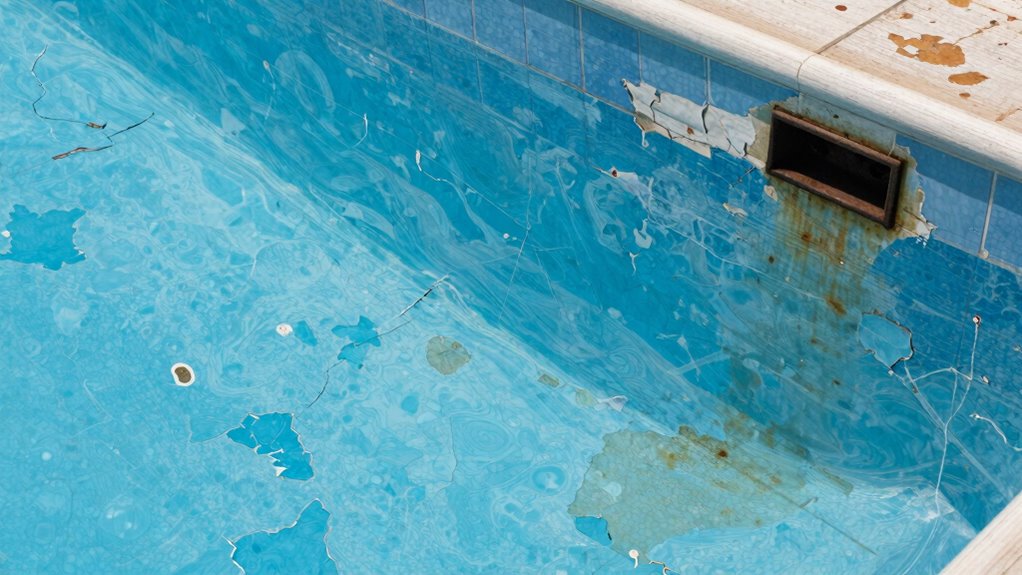
Is your pool surface showing signs of wear and tear? If so, you’re likely considering refinishing to restore its appearance and functionality. Before diving into this project, it’s essential to understand what factors influence the process. Pool maintenance plays a critical role here, as a well-maintained pool not only looks better but also extends the lifespan of the surface. Regular cleaning, balancing chemicals, and addressing minor issues early can make a significant difference. When planning to refinish, you need to evaluate the current condition of your pool’s surface—cracks, discoloration, or rough patches indicate the need for intervention.
Safety precautions are paramount throughout this process. Refinishing involves working with chemicals, power tools, and possibly heavy equipment, so proper safety gear is non-negotiable. Wear goggles, gloves, and masks to protect yourself from dust and fumes. Additionally, ensure the area around the pool is secure, especially if children or pets are nearby, to prevent accidents. Not only do these precautions protect your health, but they also ensure a smoother project with fewer setbacks. It’s also advisable to consult a professional early if you’re unsure about the extent of damage or the best approach.
Deciding whether to resurface or repair depends on the extent of damage. Small cracks or surface imperfections might be fixable with patching, but more significant issues—such as widespread deterioration or deep cracks—may require a full resurfacing. It’s worth consulting a professional to assess the damage accurately because choosing the wrong approach can lead to more costly repairs later. The type of surface material you opt for—plaster, epoxy, or pebble—also impacts durability, cost, and maintenance needs. Consider your long-term goals for the pool, including aesthetic preferences and how much upkeep you’re willing to perform.
Additionally, timing matters. Refinishing during warm weather ensures better curing and adhesion, reducing the risk of future problems. Keep in mind that a finished surface will need time to cure properly before you can refill the pool and use it again, so plan your project accordingly. Budgeting for unexpected issues is wise, especially if the existing surface reveals hidden problems during removal. Proper surface preparation** is vital to ensure the new finish adheres correctly and lasts longer. Adequate preparation also helps to prevent surface failures** and extends the lifespan of the new coating.
Ultimately, a successful refinishing project hinges on thorough preparation, understanding the condition of your pool, and adhering to safety precautions. Taking these steps ensures you’ll enjoy a refreshed, safe, and beautiful pool for years to come.

T-REX Waterproof and Pool Repair Tape – Patch Pool Liner No Kit Needed, Permanent, Works Underwater, Sticks to Wet Surfaces – Clear, 1.88" x 30 ft. (Pack of 1)
- Versatile Repair Tape: Clear, suitable for various surfaces
- Flex-to-Fit Technology: Provides maximum stretch and conformability
- Waterproof and Underwater Use: Seals leaks instantly underwater
As an affiliate, we earn on qualifying purchases.
As an affiliate, we earn on qualifying purchases.
Frequently Asked Questions
How Long Does Pool Refinishing Typically Take?
Refinishing your pool surface usually takes about 2 to 4 days, depending on the pool’s size and surface condition. During the refinishing process, the old surface is cleaned, chipped, and prepped before applying new coatings. You’ll want to plan for a brief period of limited use, as the process involves drying and curing times. Overall, it’s a relatively quick project that restores your pool’s appearance and functionality.
What Are Signs My Pool Needs Refinishing?
Did you know that over 60% of pool owners notice signs indicating the need for refinishing? Your pool surface might need attention if you see cracks, discoloration, or rough patches. Fading paint, peeling, or persistent algae are also key refinishing signs. These issues suggest your pool isn’t just aging but potentially developing structural problems. Addressing these early can save money and extend your pool’s lifespan.
Is Refinishing More Cost-Effective Than Replacing the Pool?
Refinishing is generally more cost-effective than replacing your pool, especially if the pool material is still in good condition. Refinishing involves resurfacing the existing structure, saving you money on demolition and new installation costs. When comparing refinishing vs replacing, consider the pool’s age and overall integrity. Refinishing can extend your pool’s life at a lower price, while replacement might be necessary if the structure is severely compromised.
Can I Refinish My Pool Myself?
You can try refinishing your pool yourself, but keep in mind that DIY challenges are significant—over 60% of homeowners face unexpected issues. You’ll need to follow safety precautions carefully, like wearing protective gear and making certain proper ventilation, to avoid hazards. Refinishing a pool involves complex steps, so if you’re inexperienced, hiring a professional might save you time and money, and ensure the job’s done right and safely.
How Often Should a Pool Be Refinished?
You should consider refinishing your pool every 7 to 15 years, depending on usage and water chemistry. Regular pool maintenance, like balancing water chemistry and cleaning, helps extend the surface’s lifespan. When cracks, chips, or surface deterioration appear, it’s time to plan for refinishing. Staying on top of maintenance prevents premature wear, ensuring your pool remains safe, attractive, and functional for years to come.
![Epoxybond Atlas Pool Putty Epoxy Leak Sealer Kit + Valuable Instructional Videos by Swimming Pool Leak Detector [ Solves #1 DIYer Complaint [ So You Get it Right The 1Time ]](https://m.media-amazon.com/images/I/41S7P1MyM-L._SL500_.jpg)
Epoxybond Atlas Pool Putty Epoxy Leak Sealer Kit + Valuable Instructional Videos by Swimming Pool Leak Detector [ Solves #1 DIYer Complaint [ So You Get it Right The 1Time ]
- Professional-Grade White Pool Leak Sealer: Underwater epoxy for leak repair
- Step-by-Step Instructional Videos: Guides for proper application
- Versatile Use Cases: Pools, spas, homes, autos, boats
As an affiliate, we earn on qualifying purchases.
As an affiliate, we earn on qualifying purchases.
Conclusion
Refinishing your aging pool can breathe new life into your backyard oasis, but it’s essential to weigh the costs and timing. If you imagine diving into crystal-clear water that feels fresh and inviting, don’t let hesitation hold you back. With proper planning and expert help, your pool will look stunning and last for years. So, picture those warm summer days ahead—your revitalized pool ready for endless fun and relaxation.

U.S. Pool Supply Hand-Held & Pool Pole Attachment Scrub Brushes, Scrubbing
- Includes Hand-Held and Pool Pole Attachments: Two scrubbing sponge pads for versatile cleaning
- Compatible with Standard Pool Poles: Connects to 1-1/4 inch telescopic poles
- Multi-Surface Cleaning: Ideal for tiles, grout, walls, liners, and spas
As an affiliate, we earn on qualifying purchases.
As an affiliate, we earn on qualifying purchases.

Swimming Pool and Lifeguard First Aid Kit – Portable Water Resistant Case
- Complete Poolside First Aid Kit: Includes essentials for poolside emergencies
- CPR Mask and Insect Bite Protection: Provides CPR mask and treatment for bites and minor injuries
- Comprehensive 52-Page First Aid Guide: Detailed instructions on CPR, AED, drowning, and more
As an affiliate, we earn on qualifying purchases.
As an affiliate, we earn on qualifying purchases.