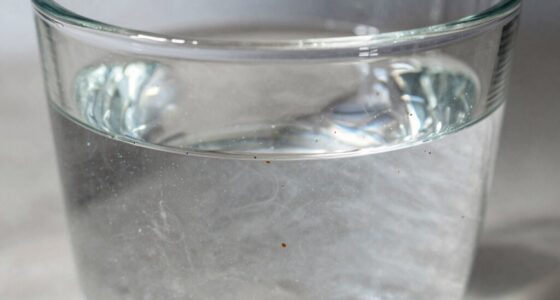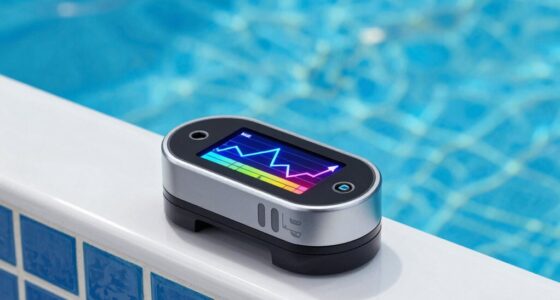

Water clarity and turbidity are critical for safety because high turbidity levels, caused by sediment and organic matter, can hide hazards, hinder disinfection, and carry pollutants. Regulatory standards aim to maintain turbidity below specific limits (often under 1 NTU for drinking water) to ensure safety and health. Understanding how turbidity affects water quality and how to diminish it can help protect public health and the environment; if you explore further, you’ll discover practical ways to keep water clean and safe.

Get pool and patio gear delivered free — and shop member deals
- Fast, free delivery on millions of items
- Access to Prime Big Deal Days deals on October 6–7
- Prime Video, Amazon Music and more included
Key Takeaways
- Water clarity standards typically require turbidity levels below 1 NTU for safe drinking water.
- High turbidity reduces light penetration, impairing aquatic ecosystems and water treatment effectiveness.
- Monitoring turbidity ensures water remains clear enough to prevent pathogen protection and support disinfection.
- Effective filtration and sedimentation processes are essential to meet visibility standards and safeguard public health.
- Consistent turbidity measurement helps maintain water safety by preventing contamination and ensuring regulatory compliance.
As an affiliate, we earn on qualifying purchases.
What Is Water Turbidity and Why Does Clarity Matter?

Have you ever wondered why clear water matters? Turbidity affects water quality because it involves sediment suspension, making water murky and harder to see through. This cloudiness can hinder water filtration processes, allowing harmful particles to pass through if not properly treated. High turbidity levels indicate the presence of suspended solids like dirt, silt, and organic matter, which can carry bacteria and other contaminants. When water isn’t clear, it becomes more challenging to remove impurities effectively. Clear water isn’t just about appearance; it’s essential for safe drinking water, proper sanitation, and environmental health. Monitoring turbidity helps ensure that water remains safe, clean, and suitable for everyday use by reducing sediment suspension and supporting effective water filtration. Additionally, maintaining water clarity standards is crucial for protecting aquatic ecosystems and ensuring recreational safety in swimming areas. Proper water turbidity management is vital for maintaining overall water quality and public health. For example, implementing turbidity control techniques can significantly improve water treatment efficiency and safeguard public health. Regular testing of water clarity can help detect issues early, preventing potential health risks. Understanding the factors that influence water transparency can aid in developing better strategies for water quality management.
water filtration system for turbidity
As an affiliate, we earn on qualifying purchases.
As an affiliate, we earn on qualifying purchases.
How Does Turbidity Impact Water Safety and Public Health?

Turbidity can block sunlight from reaching deeper water, affecting aquatic life and the effectiveness of disinfection processes. It also protects harmful pathogens from treatment, increasing the risk of waterborne illnesses. Understanding how turbidity influences water safety helps you recognize the importance of proper treatment methods to protect public health. Additionally, high turbidity levels can interfere with water quality testing, making it more difficult to accurately assess contamination levels and ensure safe drinking water. Recognizing how Victorian steampunk technology approaches water filtration can inspire innovative solutions for modern water safety challenges, emphasizing the role of innovative filtration methods in maintaining water clarity and safety.
Obstructs Light Penetration
When water becomes turbid, particles suspended in it scatter and absorb sunlight, considerably reducing light penetration. This light obstruction affects how clearly you can see underwater. The reduced clarity leads to several consequences:
- Decreased visibility: It becomes harder to detect hazards or submerged objects, increasing accident risk.
- Limited photosynthesis: Plants and aquatic life rely on light; reduced penetration hampers their growth and health.
- Impaired water quality assessment: Turbidity masks signs of pollution or contamination, making it difficult to evaluate safety.
This visibility reduction not only hampers recreational activities but also impacts water safety and public health, as it obscures potential dangers beneath the surface and complicates monitoring efforts.
Protects Against Pathogens
While increased turbidity can hinder visibility and aquatic health, it also plays a complex role in water safety by influencing pathogen presence. Higher turbidity levels can sometimes shield harmful microorganisms from disinfection processes, making filtration techniques essential for effective removal. Turbidity sensors help monitor water clarity, ensuring contamination levels stay within safe limits. In some cases, increased turbidity acts as a natural barrier, reducing pathogen viability or limiting their spread by trapping particles. However, this protective effect isn’t foolproof. Elevated turbidity can also harbor pathogens, complicating treatment efforts. As a result, understanding and managing turbidity levels are critical for maintaining water safety and public health. Proper filtration and vigilant monitoring with turbidity sensors help strike a balance between natural protection and the need for thorough disinfection. Measurement tools are vital for accurately assessing turbidity and ensuring water safety standards are met.
Influences Treatment Methods
Elevated turbidity levels directly influence the effectiveness of water treatment methods, often complicating efforts to guarantee safety. High turbidity can hinder filtration techniques, making it harder to remove contaminants. When water is cloudy, you face these challenges:
- Decreased filtration efficiency, requiring more advanced or multiple filtration stages.
- Increased risk of pathogen survival, since suspended particles shield microbes.
- Greater chemical use during water treatment to achieve desired clarity.
These factors demand more complex treatment processes, which can be costly and time-consuming. Clear water allows filtration techniques to work efficiently, ensuring contaminants, including microbes and pollutants, are effectively removed. Understanding how turbidity impacts water treatment helps you appreciate the importance of maintaining low levels for public health and safety. turbidity levels can also influence the choice of treatment methods and the overall safety of the water supply.
As an affiliate, we earn on qualifying purchases.
How Do We Measure Water Turbidity and What Standards Are Used?

To assess water turbidity accurately, scientists often use a turbidimeter, which measures how much light is scattered or absorbed as it passes through a water sample. Proper sensor calibration is vital to guarantee reliable readings, so regular calibration against standard solutions is necessary. Sampling techniques also play a key role; collecting representative samples from different locations and depths helps provide an accurate picture of water clarity. Standards set by organizations like the EPA specify acceptable turbidity levels, typically measured in Nephelometric Turbidity Units (NTU). These standards guide water treatment processes and safety assessments. By combining precise sensor calibration with effective sampling methods, you can accurately determine turbidity and guarantee water quality meets safety standards.
sediment filter for water purification
As an affiliate, we earn on qualifying purchases.
As an affiliate, we earn on qualifying purchases.
What Are Safe Turbidity Levels for Drinking and Recreational Water?

Understanding safe turbidity levels is essential for protecting your health when drinking or enjoying recreational water. Water quality standards set limits to keep turbidity within safe thresholds, but these vary depending on regulations. Regular monitoring and regulation guarantee water remains clear enough to prevent health risks and maintain safety. Additionally, early detection of contamination can help address potential issues before they become serious health concerns.
Safe Turbidity Thresholds
Regulatory agencies set specific turbidity thresholds to guarantee water safety for drinking and recreational use. These limits ensure effective water filtration and sedimentation processes, reducing contaminants. Typically, the safe turbidity level for drinking water is below 1 Nephelometric Turbidity Units (NTU). For recreational water, the threshold is often set at 25 NTU to prevent health risks. Key points include:
- Maintaining turbidity below 1 NTU for safe drinking water.
- Keeping recreational water turbidity under 25 NTU for swimmer safety.
- Using sedimentation processes to naturally reduce turbidity levels before water reaches consumers.
- The power output of electric dirt bikes, which can influence their performance in off-road conditions, is comparable to traditional gas-powered bikes and can range from 10 to 20 horsepower.
Water Quality Standards
Water quality standards specify the maximum turbidity levels permitted to guarantee safe and healthy water for both drinking and recreational purposes. To meet these standards, you need effective filtration techniques that remove particles causing turbidity. These techniques, such as rapid sand filters or membrane filtration, help ensure water clarity and safety. Regulatory compliance is essential; authorities set turbidity limits—often below 1 NTU for drinking water—to protect public health. For recreational water, standards may be slightly more lenient but still prioritize visibility and safety. By adhering to these standards and employing proper filtration methods, you help prevent waterborne illnesses and maintain high-quality water that’s safe for all users. Consistent monitoring and compliance are key to achieving these safety benchmarks.
Monitoring and Regulation
Have you ever wondered what turbidity levels are considered safe for drinking and recreational water? Regulatory agencies set standards to protect your health. Generally, safe turbidity levels for drinking water should be below 1 NTU (Nephelometric Turbidity Units). For recreational water, the limit is often 5 NTU to ensure visibility and safety. To maintain these standards, water filtration systems are essential, removing sediment that causes turbidity. Effective sediment control techniques help prevent excessive turbidity, especially after storms or heavy rainfall. Additionally, ultrasound for breast diagnostics can be employed in other fields to detect abnormalities early, highlighting the importance of early detection and monitoring systems.
Key points include:
- Regular turbidity monitoring to identify water quality changes
- Implementing filtration methods to reduce sediment
- Enforcing sediment control practices to prevent contamination
These measures help guarantee safe, clear water for everyone.
How Can You Reduce Turbidity and Make Water Clearer?

To make water clearer and reduce turbidity, you need to remove the particles that cause cloudiness. Filtration methods are effective; they trap suspended particles, making water visibly clearer. Natural settling is another approach where heavier particles settle at the bottom over time, simplifying removal. Combining these techniques improves water clarity efficiently. Additionally, understanding comedogenic ratings can help in selecting safe water treatment products that won’t introduce new impurities. Properly maintained filtration systems extend their effectiveness and ensure consistent water quality. Regular system maintenance ensures ongoing performance and prevents buildup that could compromise clarity. Incorporating secure storage practices can further prevent contamination and maintain clarity over time.
Why Maintaining Clear Water Is Critical for Healthy Aquatic Environments
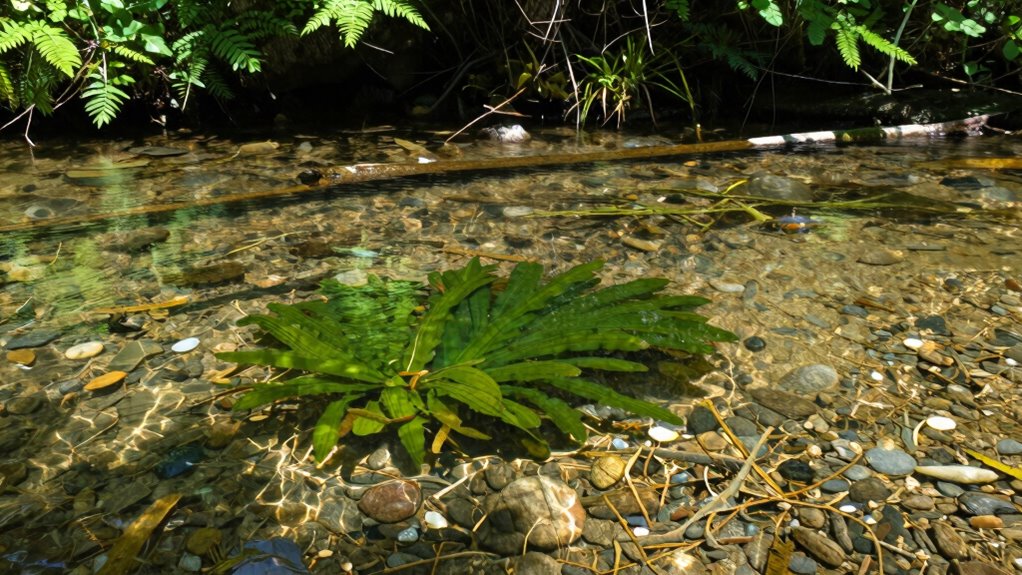
Maintaining clear water is essential for supporting healthy aquatic ecosystems because it guarantees that sunlight can penetrate, enabling aquatic plants to photosynthesize and provide oxygen for marine life. When water clarity declines, water filtration becomes less effective, and harmful algae can overgrow, leading to algal blooms that can produce toxins harmful to aquatic organisms. This can lead to increased waterborne pollutants, which further degrade water quality and threaten aquatic organisms. To keep water healthy, focus on these key points:
- Promote natural water filtration processes to remove pollutants effectively.
- Limit runoff and sedimentation that increase turbidity.
- Monitor and control nutrient levels to prevent algal blooms.
Frequently Asked Questions
How Does Weather Influence Water Turbidity Levels Over Time?
Weather influences water turbidity levels over time primarily through rain runoff and seasonal variations. When it rains, runoff carries sediments, pollutants, and debris into water sources, increasing turbidity. During certain seasons, like storms or rainy periods, turbidity spikes, while dry seasons often see clearer water. You’ll notice these fluctuations as weather patterns change, affecting water safety and clarity, especially in natural bodies of water or poorly protected water supplies.
What Are the Long-Term Effects of High Turbidity on Aquatic Ecosystems?
High turbidity causes long-term ecosystem disruption by blocking sunlight, which hinders photosynthesis in aquatic plants. This reduces oxygen levels, impacting fish and other organisms. Sediment accumulation can smother habitats, destroy breeding grounds, and alter water flow. Over time, these effects weaken the ecosystem’s stability, decrease biodiversity, and disrupt food chains, making it harder for aquatic life to thrive. You might notice less vibrant aquatic environments as a result.
Can Turbidity Levels Predict Potential Waterborne Disease Outbreaks?
Yes, high turbidity levels can help predict waterborne disease outbreaks because they often correlate with increased pathogen presence. When water appears murky, it suggests that harmful microorganisms may be thriving, making outbreak prediction more feasible. By monitoring turbidity, you can identify potential health risks early, allowing you to take preventive actions before disease spread occurs. This correlation enhances your ability to safeguard public health effectively.
Are There Innovative Technologies for Real-Time Turbidity Monitoring?
Yes, there are innovative technologies for real-time turbidity monitoring. You can now utilize satellite imaging combined with sensor integration to track water clarity dynamically. These systems allow you to detect turbidity changes swiftly, enabling prompt responses to potential safety issues. By leveraging satellite data alongside sensor networks, you gain an extensive view of water quality, improving your ability to guarantee safety and maintain water standards effectively.
How Do Industrial Activities Contribute to Increased Water Turbidity?
Industrial activities contribute to increased water turbidity mainly through industrial pollution and sediment runoff. When factories discharge waste without proper treatment, they introduce pollutants that cloud the water. Additionally, excavation, construction, and other land disturbances caused by industry lead to sediment runoff, which further raises turbidity levels. These processes make water less clear, impacting aquatic life and water quality, and highlight the importance of regulation and sustainable practices.
Conclusion
Clear water isn’t just about looks; it’s essential for your health and safety. By understanding turbidity, you can take steps to keep water safe and clean. Don’t you want to enjoy water that’s free from harmful particles and safe for swimming or drinking? Staying informed and vigilant helps protect you and your environment. So, next time you see murky water, ask yourself: is this safe to trust? Keep water clarity a priority for a healthier future.
Fall Picks
fall essentials
As an affiliate, we earn on qualifying purchases.