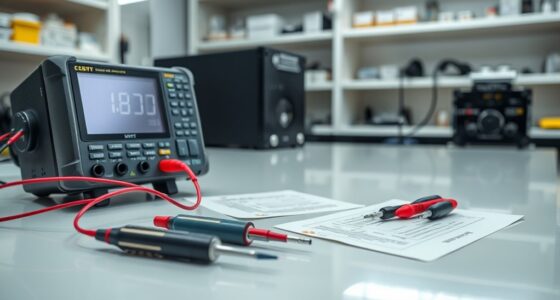
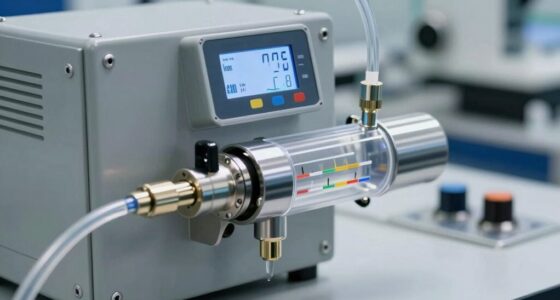
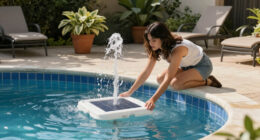
To test salinity in your saltwater pool, use digital testers or test strips designed for saltwater systems. Regular testing helps you maintain ideal salt levels between 2700 and 3400 ppm, ensuring proper chlorine production and preventing damage to equipment. Be sure to dissolve salt completely before retesting, and adjust levels if needed. Staying on top of these checks keeps your pool safe and functional—discover the best ways to keep your pool balanced.

Get pool and patio gear delivered free with Prime
- Fast, free delivery on millions of items
- Prime Video, Amazon Music and more included
- Member-only deals all year
Key Takeaways
- Use digital salt testers or test strips to accurately measure salt levels in your pool water.
- Maintain salt concentration between 2700-3400 ppm for optimal chlorine production and system efficiency.
- Regularly test salinity weekly, especially during hot weather when evaporation can alter levels.
- Calibrate your testing tools periodically to ensure consistent and precise readings.
- Adjust salt levels by adding high-purity salt or diluting with fresh water as needed based on test results.

Have you ever wondered if your saltwater pool has the right salinity level? Maintaining the correct salt level is crucial because it directly impacts how well your pool’s chlorine generation system works. If the salt concentration is too low, your system won’t produce enough chlorine to keep the water sanitized, leading to cloudy water and potential algae growth. Conversely, if the salt level is too high, it can cause corrosion and damage to pool equipment, making repairs costly. That’s why regular salinity testing is necessary for keeping your pool safe and functioning efficiently.
Maintaining proper salt levels ensures your saltwater pool stays safe, efficient, and free of damage.
When you test your pool’s salinity, you’re essentially checking the amount of salt dissolved in the water. Most saltwater pools require a salt concentration between 2700 and 3400 parts per million (ppm). To get an accurate reading, you can use a digital salt tester or test strips designed specifically for saltwater pools. These tools help you monitor the salt level precisely, so you know when to adjust it. If your test shows the salt level is off, you’ll need to perform salt level calibration to bring it back into the suitable range.
Salt level calibration involves adding or removing salt from your pool water, depending on whether the salinity is too low or too high. If the salt level is below the recommended range, you add high-purity salt, ensuring it dissolves completely before retesting. If the salt level is too high, you may need to dilute the water with fresh water, carefully balancing the mixture to restore proper salinity. Regular testing and calibration not only ensure proper chlorine generation but also extend the lifespan of your pool equipment by preventing corrosion caused by excessive salt. Additionally, understanding personal development principles can help pool owners develop consistent routines for maintenance, reducing stress and ensuring optimal pool conditions.
It’s a good idea to test your pool’s salinity weekly, especially during hot weather when evaporation can alter salt levels more rapidly. Remember, consistent testing helps you catch problems early, avoiding costly repairs and ensuring your pool remains crystal clear. Proper salt level calibration also guarantees your saltwater system functions at peak efficiency, producing just the right amount of chlorine to keep your water sanitized and comfortable. By staying on top of saltwater salinity testing, you ensure your pool remains a revitalizing oasis, easy to maintain, and safe for everyone who swims in it.
As an affiliate, we earn on qualifying purchases.
Frequently Asked Questions
How Often Should I Test My Saltwater Pool’s Salinity Levels?
You should test your saltwater pool’s salinity levels at least once a month to maintain proper salt levels. Regular testing guarantees the salt level stays within the recommended range, usually around 2700-3400 ppm. If you notice changes in water chemistry or after heavy use, increase testing frequency. Proper testing helps prevent equipment issues and keeps your pool comfortable, safe, and clean.
Can Low Salinity Damage My Saltwater Pool System?
Imagine your pool’s heart struggling, its salt imbalance causing silent damage. Low salinity can lead to pool corrosion, weakening crucial components and risking expensive repairs. When salt levels drop, your system works harder, but the water remains unbalanced, accelerating damage. Keep a close eye on your salt gauge; maintaining proper salinity prevents corrosion, protects your equipment, and keeps your pool inviting and safe for everyone.
What Are the Signs of High Salinity in My Pool?
If your pool shows signs of high salinity, you might notice increased pool corrosion, which can damage your equipment and pool surfaces. You may also see cloudy water, scaling on the tiles, or a salty taste when swimming. These salt level issues can hinder proper chlorine generation and cause equipment failure. Regularly test your salinity to catch high levels early, preventing costly repairs and ensuring a safe, enjoyable swim.
Are There Specific Tools Recommended for Accurate Salinity Testing?
You should use digital testers or salt test strips for accurate salinity testing in your pool. Digital testers provide precise readings and are easy to use, making them ideal for regular checks. Salt test strips are affordable and convenient, giving quick results by simply immersing them in the water. Both tools help you maintain ideal salinity levels, ensuring your saltwater pool stays balanced and safe for swimming.
How Does Temperature Affect Salinity Readings?
Temperature fluctuations can considerably impact your salinity readings. When water temperature changes, it affects the sensor’s accuracy, making your readings less reliable. To guarantee precise results, you should regularly calibrate your salinity sensor, especially after notable temperature shifts. Proper calibration accounts for temperature effects and helps maintain measurement accuracy, so you get an exact salinity level regardless of temperature variations.
As an affiliate, we earn on qualifying purchases.
Conclusion
Now that you know how vital salinity testing is, imagine your saltwater pool transforming into a sparkling, crystal-clear paradise so pristine, it rivals the ocean itself. Keeping your salt levels perfect isn’t just a small task—it’s the secret to an endless summer of shimmering, inviting waters. Don’t let imbalances turn your backyard escape into a cloudy, disappointing mess. Stay vigilant with your tests, and watch your pool become the envy of every swimmer and sunbather around!
As an affiliate, we earn on qualifying purchases.
saltwater pool salt level monitor
As an affiliate, we earn on qualifying purchases.
As an affiliate, we earn on qualifying purchases.
Halloween Picks
halloween
As an affiliate, we earn on qualifying purchases.