
Total alkalinity measures how well water can neutralize acids and resist pH changes, which helps keep your water stable and prevents problems like cloudiness, scaling, or corrosion. To measure it, you’ll use test kits or electronic testers that change color when reagents are added, making it easy to read levels—usually between 80-120 ppm for pools. Managing alkalinity properly guarantees a healthy, clear water environment, and if you keep at it, you’ll discover ways to maintain the perfect balance.
Key Takeaways
- Total alkalinity measures water’s capacity to neutralize acids, mainly from bicarbonates, carbonates, and hydroxides.
- It acts as a buffer, stabilizing pH and preventing sudden fluctuations in water chemistry.
- Proper measurement involves test kits or electronic testers that observe color changes after reagent addition.
- The ideal alkalinity range for pools is 80–120 ppm; adjustments are made using alkalinity increasers or acids.
- Regular testing ensures water stability, prevents issues like cloudiness or scaling, and maintains a healthy aquatic environment.
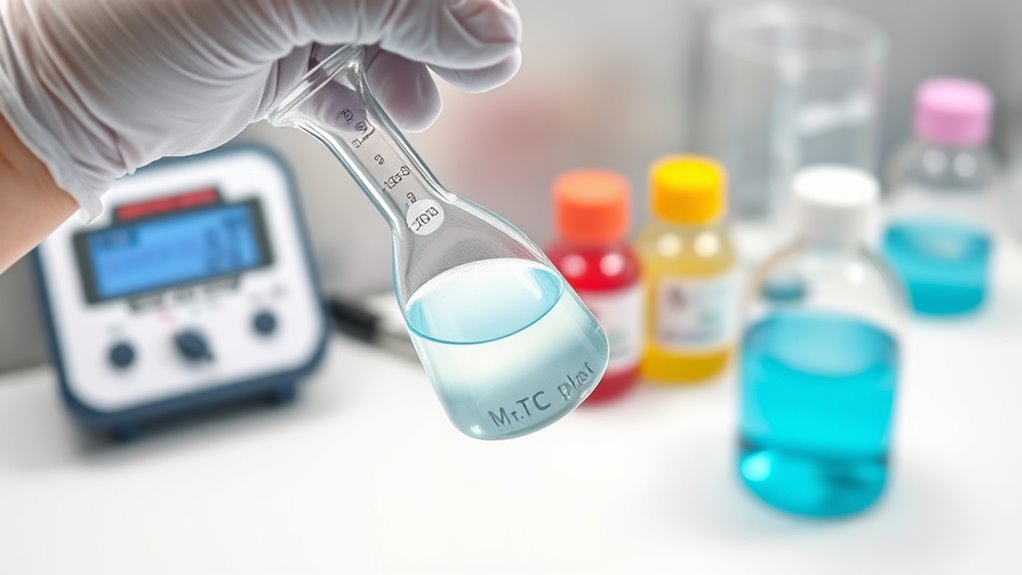
Have you ever wondered how the stability of your pool or aquarium’s water is maintained? The answer lies in understanding total alkalinity, which plays an essential role in keeping your water balanced. Total alkalinity refers to the water’s ability to neutralize acids and is primarily made up of bicarbonates, carbonates, and hydroxides. It acts as the buffer capacity of your water, meaning it helps prevent sudden pH changes that could harm aquatic life or cause cloudy water. When alkalinity is at the right level, your pool or aquarium can better resist the effects of adding chemicals, evaporation, or other disturbances, maintaining a steady pH.
Understanding total alkalinity helps maintain stable, healthy water in pools and aquariums.
You might think of total alkalinity as the water’s shock absorber. If alkalinity is too low, the water’s pH can fluctuate wildly, making it difficult to keep the water stable. On the other hand, if alkalinity is too high, it can lead to issues like cloudy water, scaling, or difficulty adjusting pH levels. That’s why measuring and adjusting total alkalinity is vital for a healthy aquatic environment. Proper alkalinity levels contribute directly to pH stability, guaranteeing your water stays within the ideal range. When pH remains stable, your pool or aquarium is less prone to corrosion of equipment or damage to fish and plants.
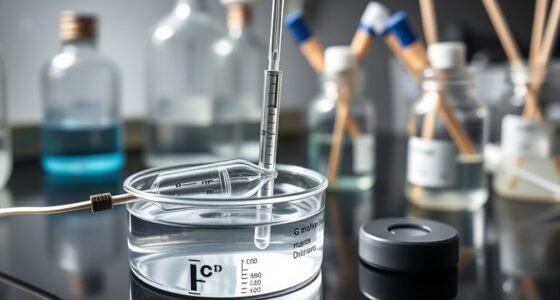
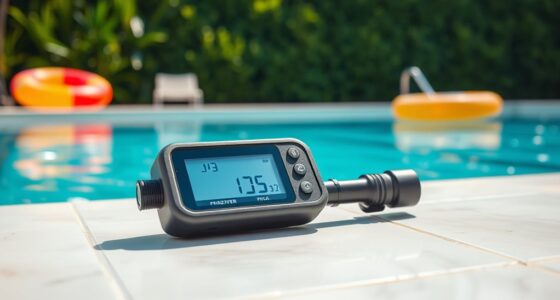
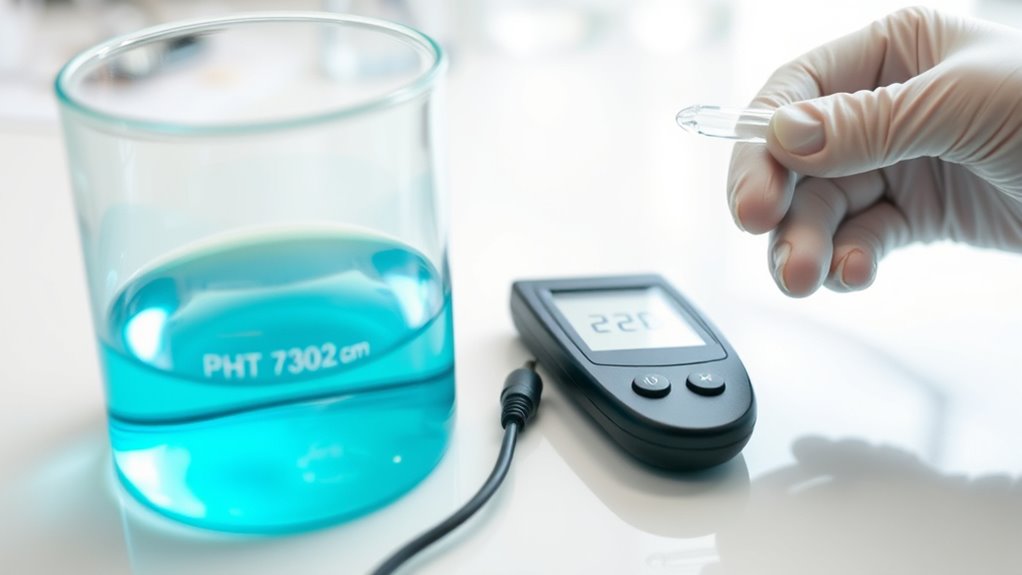
To measure total alkalinity accurately, you’ll typically use test kits or electronic testers designed for this purpose. These tests involve adding a reagent to your water sample and observing a color change or reading the result on a meter. Regular testing allows you to monitor fluctuations and make necessary adjustments before problems arise. If alkalinity is outside the recommended range—usually between 80 and 120 parts per million (ppm) for pools—you can add alkalinity increasers like sodium bicarbonate or use acids to lower it if it’s too high. Balancing alkalinity isn’t just about getting a number on a test strip; it’s about creating a stable environment where pH stays consistent, so your water remains clear and safe.
In essence, understanding total alkalinity and how to measure it empowers you to maintain ideal water conditions. By managing the buffer capacity of your water, you ensure pH stability and protect your pool or aquarium from sudden chemical swings. This proactive approach keeps your aquatic environment healthy, clear, and enjoyable for everyone involved.
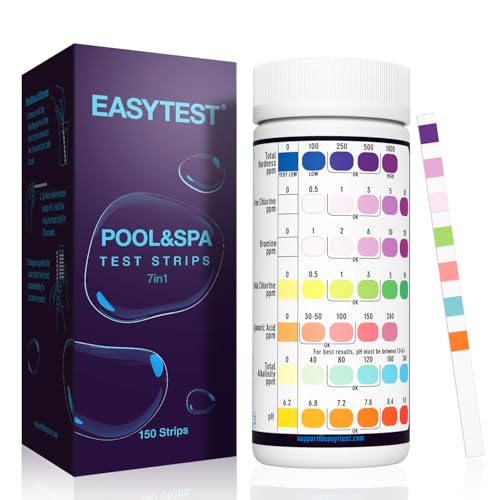
EASYTEST 7-Way Pool Test Strips, 150 Strips Water Chemical Testing for Hot tub and Spa, Accurate Test Bromine, Total Alkalinity, pH, Free Chlorine, Total Hardness, Cyanuric Acid, and Total Chlorine
AFFORDABLE 150 STRIPS: This water chemical testing kit contains 150 test strips. Enough balanced for your swimming pool,…
As an affiliate, we earn on qualifying purchases.
As an affiliate, we earn on qualifying purchases.
Frequently Asked Questions
How Does Temperature Affect Total Alkalinity Readings?
Temperature effects can impact total alkalinity measurements, causing readings to be higher or lower than actual values. As temperature increases, alkalinity often appears to rise because of increased chemical activity, which can reduce measurement accuracy. To guarantee reliable results, you should always measure alkalinity at a consistent temperature or adjust your readings accordingly. This helps prevent temperature-related errors and maintains measurement accuracy across different conditions.
Can Total Alkalinity Fluctuate Daily?
Yes, total alkalinity can fluctuate daily. Changes in pH balance and water hardness influence alkalinity levels, especially with ongoing chemical reactions or water additions. You might notice variations due to evaporation, rain, or water treatment processes. Regular testing helps you track these shifts, ensuring your water maintains proper alkalinity for health, stability, and overall water quality. Stay attentive to daily changes to keep your water balanced.
What Is the Ideal Total Alkalinity Level for Pools?
The ideal total alkalinity level for pools is between 80 and 120 ppm. Maintaining proper alkalinity balance is essential for stable water chemistry and preventing pH fluctuations. You should regularly test your pool’s alkalinity and adjust it as needed to keep it within this range. Proper alkalinity helps protect your pool equipment, keeps water comfortable, and ensures your sanitizer works effectively.
How Does Total Alkalinity Impact Water Ph Stability?
Think of your pool’s water as a tightrope walker balancing on a thin line. Total alkalinity acts as a buffer, maintaining pH stability by balancing carbonate levels. When alkalinity is just right, it prevents pH swings, keeping water steady. If it’s too low, pH drops easily; if too high, pH becomes stubborn. Proper alkalinity guarantees your pool’s water stays balanced, safe, and crystal clear.
Are There Natural Methods to Adjust Alkalinity Levels?
You can use natural remedies and organic adjustments to increase alkalinity levels in water. Adding substances like crushed coral or limestone releases calcium carbonate, which naturally raises alkalinity. Baking soda is another organic option, but use it sparingly to avoid over-adjusting. These methods are safe, environmentally friendly, and effective for maintaining proper alkalinity, helping to keep your water’s pH stable without relying on chemical treatments.

GIDIGI pH Meter for Water, Stable Accuracy Digital pH Tester Pen for Hydroponics/Pool/Aquarium/Hot Tub – UL Certified Water Quality Tester with Backlit LCD and pH Strips
Digital pH meter with pH test strips function: Say goodbye to the confusion of traditional pH litmus paper!…
As an affiliate, we earn on qualifying purchases.
As an affiliate, we earn on qualifying purchases.
Conclusion
Understanding total alkalinity is like having a sturdy shield that protects your water from pH swings, keeping it stable and healthy. When you measure it accurately, you gain a clear picture of your water’s buffering capacity, much like a captain reading the ship’s compass before setting sail. By mastering this essential parameter, you ensure your aquatic environment stays balanced and safe, guiding your water quality as surely as a lighthouse guides ships through foggy waters.

AAwipes 8-in-1 Aquarium Test Kit for Fish Tanks – Quick & Accurate Water Testing Strips for Aquariums & Ponds. Tests pH, Ammonia, Alkalinity, Hardness, Chlorine, etc. (K02-50)
Professional Quality Testing Kit: The AAwipes Aquarium test kit (50 strips) is developed by experts for fish enthusiasts….
As an affiliate, we earn on qualifying purchases.
As an affiliate, we earn on qualifying purchases.
water chemistry testing kit
As an affiliate, we earn on qualifying purchases.
As an affiliate, we earn on qualifying purchases.