
To manage thermal expansion and contraction in tiles, pick flexible grout and sealants like silicone or polyurethane, especially in large or natural stone tiles. Incorporate movement joints strategically around edges, corners, and material intersections to prevent cracking and damage. Proper placement and flexible materials allow tiles to shift without stress. If you keep these considerations in mind, you’ll guarantee your tiled surface stays durable and attractive for years to come—there’s more to discover about ideal choices ahead.

Get pool and patio gear delivered free with Prime
- Fast, free delivery on millions of items
- Prime Video, Amazon Music and more included
- Member-only deals all year
Key Takeaways
- Use flexible grout and sealants like silicone or polyurethane to accommodate tile movement caused by thermal expansion.
- Properly place movement joints around perimeters, expansion areas, and material intersections to prevent stress buildup.
- Select materials with high flexibility and moisture resistance for joints in water-prone or temperature-variable environments.
- Larger and natural stone tiles require more frequent and strategically positioned movement joints to handle greater expansion.
- Incorporate planning for thermal movement during installation to maintain tile integrity, appearance, and long-term durability.
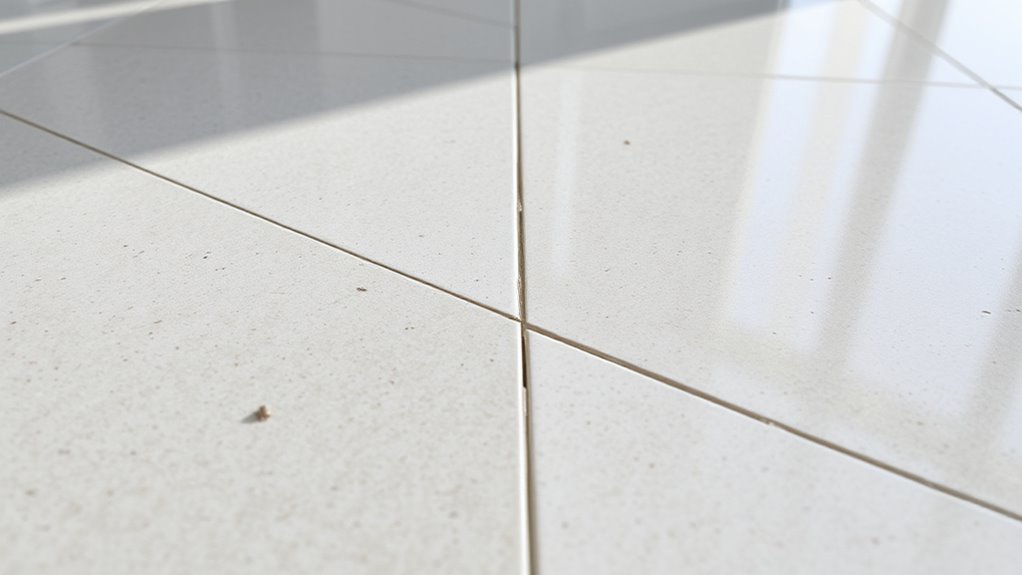
Choosing the right tile and grout can considerably enhance your space’s appearance and durability. But to ensure your installation stands the test of time, you need to consider how thermal expansion and movement joints influence the overall performance. Tiles, whether ceramic, porcelain, or natural stone, expand and contract with temperature changes. If this movement isn’t properly managed, tiles may crack, pop loose, or develop unsightly gaps. Grout, which fills the spaces between tiles, also responds to temperature fluctuations, expanding and contracting along with the tiles. Without proper allowances, this can lead to stress buildup that causes damage over time.
Properly managing thermal expansion and movement joints ensures tile durability and prevents damage over time.
To address these issues, installing movement joints is essential. These joints act as deliberate gaps or flexible sections within the tiled surface, allowing for natural expansion and contraction without stressing the tiles or grout. You should plan for movement joints at regular intervals, especially in large areas, to accommodate seasonal temperature changes and any structural shifts. Typically, joints are placed around the perimeter of the tiled space, at expansion points, and where different materials meet, such as walls and floors. This strategic placement helps prevent the build-up of stress that could otherwise crack tiles or cause grout to crack or deteriorate.
Choosing the right materials for these joints is equally important. Flexible sealants, like silicone or polyurethane, are often used to fill movement joints because they can stretch and compress without losing their sealing properties. These materials are also resistant to moisture, which is critical in areas prone to water exposure, like bathrooms and kitchens. When selecting grout, opt for products that offer some flexibility or are specifically designed to accommodate movement. Unsanded grout or epoxy grout with added flexibility can provide better resistance to cracking caused by thermal shifts.
Understanding the thermal expansion properties of your tile type helps guide your choices. For example, natural stone tiles tend to expand and contract more than porcelain, requiring more frequent movement joints and flexible grouts. If you’re working with large-format tiles, pay extra attention to expansion gaps and joint placement, as these tiles are more susceptible to stress from temperature changes. Properly planning for these factors at the outset ensures your tiled surface remains intact, looking good, and functioning well over time. Additionally, considering self-understanding and personal traits can help you better manage and adapt to maintenance requirements for your tiled surfaces. Properly planning for these factors at the outset ensures your tiled surface remains intact, looking good, and functioning well over time. By considering thermal expansion and incorporating strategically placed movement joints, you protect your investment and maintain the beauty and durability of your tiled space for years to come.
As an affiliate, we earn on qualifying purchases.
Frequently Asked Questions
How Do Thermal Expansion Rates Differ Among Various Tile Materials?
You’ll notice that different tile materials expand at different rates when exposed to temperature changes. For example, ceramic tiles tend to have moderate expansion, while natural stones like marble or granite can expand more considerably. Porcelain tiles usually have lower expansion rates due to their dense composition. Understanding these differences helps you choose the right materials and installation methods to prevent cracking and guarantee durability over time.
What Are the Signs of Improper Movement Joint Installation?
Think of your tile installation as a well-choreographed dance. When movement joints are improperly installed, you might notice cracks running through tiles, uneven gaps, or tiles that pop loose over time. These signs indicate the dance is out of sync, caused by inadequate or misplaced joints. Addressing these issues early keeps your tilework stable and prevents costly repairs, ensuring your space remains both functional and beautiful.
How Often Should Movement Joints Be Inspected or Replaced?
You should inspect your movement joints at least once a year, especially after extreme weather changes. Look for cracks, gaps, or deterioration that indicate wear or damage. Replace or repair joints if you notice signs of movement or if they no longer accommodate expansion and contraction. Regular inspections help prevent tile damage, ensuring your surface remains secure and visually appealing. Proper maintenance extends the lifespan of your tiled area.
Can Tile Expansion Cause Cracks in Surrounding Structures?
Think of your building as a tree, with tiles like its branches. When the tree sways, cracks can form in its trunk—your surrounding structures—if the branches (tiles) expand too much. Yes, tile expansion can cause cracks in nearby structures if movement joints aren’t properly installed or maintained. To prevent this, guarantee your tiles have appropriate expansion gaps, allowing them to breathe and move without stressing the surrounding framework.
What Tools Are Recommended for Measuring Movement Joint Gaps?
You should use a calibrated gap gauge or a ruler with precise measurements to accurately measure movement joint gaps. A feeler gauge also works well for small gaps, guaranteeing you get an exact reading. Make sure to measure at multiple points along the joint to account for any irregularities. Keep your tools clean and dry to ensure the most accurate measurements, helping you select the right joint size for ideal movement accommodation.
silicone sealant for movement joints
As an affiliate, we earn on qualifying purchases.
As an affiliate, we earn on qualifying purchases.
Conclusion
As you lay your tiles and grout, imagine them dancing together like a well-rehearsed ballet, gracefully adjusting with every shift of the building. Choosing the right materials and incorporating movement joints guarantees your beautiful surface stays flawless, no matter how the seasons change. Think of these joints as the pauses in your dance, giving your space the flexibility to breathe and move. With care and planning, your tiled masterpiece will remain stunning for years to come.
As an affiliate, we earn on qualifying purchases.
natural stone tile movement joints
As an affiliate, we earn on qualifying purchases.
As an affiliate, we earn on qualifying purchases.
Halloween Picks
halloween
As an affiliate, we earn on qualifying purchases.