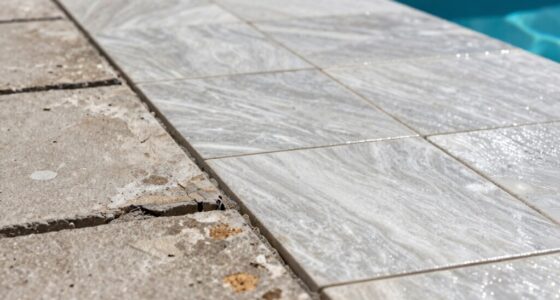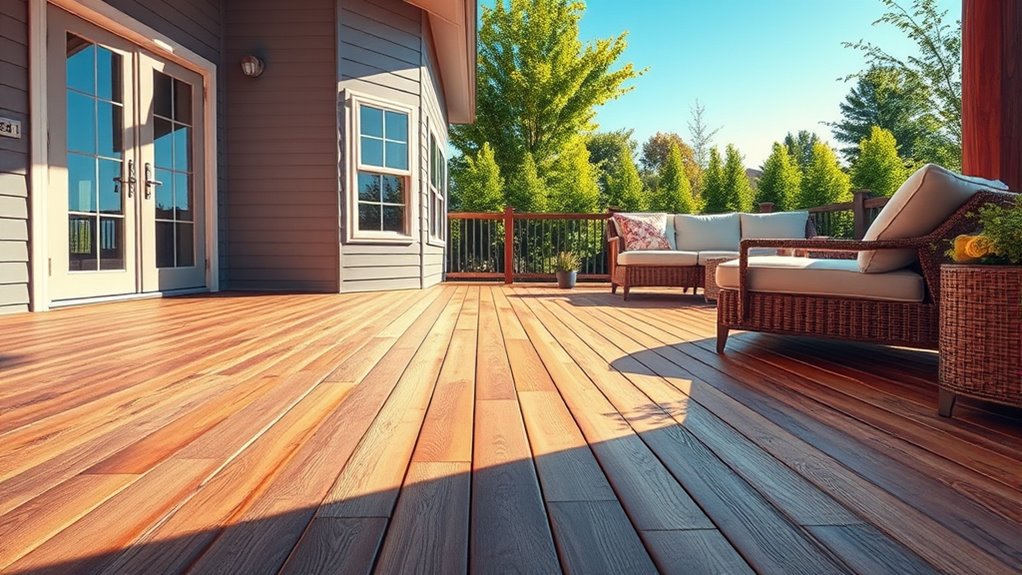

When evaluating deck materials for heat and comfort, consider options like lighter-colored composites or vinyl, which reflect sunlight and stay cooler underfoot. Natural wood and darker surfaces tend to absorb more heat, making outdoor spaces uncomfortable during hot days. textured finishes and slip-resistant coatings also boost safety, especially during wet conditions. To find the perfect balance of comfort, safety, and durability, explore the full range of options—you’ll discover how to create a more enjoyable outdoor area.

Get pool and patio gear delivered free — and shop member deals
- Fast, free delivery on millions of items
- Access to Prime Big Deal Days deals on October 6–7
- Prime Video, Amazon Music and more included
Key Takeaways
- Light-colored or reflective materials reduce heat absorption, keeping decks cooler in hot weather.
- Engineered composites and plastics generally stay cooler than dark wood or stone surfaces.
- Textured or slip-resistant finishes enhance safety without increasing surface heat.
- Choosing weather-resistant materials prevents cracking or warping that can impact comfort over time.
- Incorporating shade, such as umbrellas or pergolas, further improves heat comfort on outdoor decks.
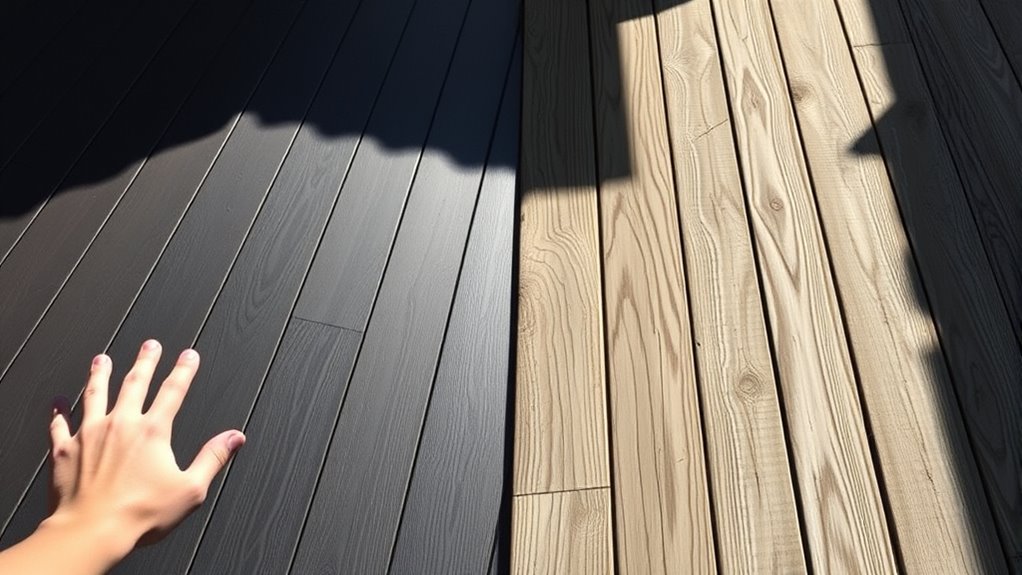
When choosing deck materials, understanding the strengths and weaknesses of each option is vital to making an informed decision. One of the most important considerations is how well the material handles weather resistance. Your deck is exposed to the elements year-round, so you need a material that can withstand rain, snow, sun, and humidity without deteriorating quickly. For example, composite decking often offers excellent weather resistance because it’s made from a mix of wood fibers and plastic, which won’t rot or warp like natural wood. Similarly, treated wood can resist moisture and insects if properly maintained, but it may still suffer from cracking or splitting over time. On the other hand, natural hardwoods like ipe or teak are highly durable and weather-resistant, but they tend to be more expensive and require regular sealing to maintain their integrity. Additionally, some materials like vinyl or certain plastics are designed to resist UV damage and fading, extending their lifespan even further.
Slip resistance is another vital factor, especially if you live in an area prone to rain or snow. You want a deck surface that minimizes the risk of slips and falls, which can lead to injuries. Many composite and vinyl options come with textured surfaces designed specifically for slip resistance, making them safer for family gatherings or outdoor parties. When evaluating natural wood, you can add slip-resistant coatings or mats, but these may wear over time and need reapplication. Some materials, like concrete or stone, can be slip-resistant if textured properly, but they may also become slick when wet unless treated with a nonslip finish. It’s wise to consider both weather resistance and slip resistance together, as a deck that’s resistant to weather but slick when wet can be just as problematic as one that’s unsafe in snowy conditions.
In addition to weather and slip resistance, consider how the material influences heat and comfort. Darker surfaces tend to absorb more heat, making the deck uncomfortable to walk on during hot days. Lighter-colored materials reflect more sunlight, staying cooler underfoot. Some composites and plastics are engineered to stay cooler, which enhances comfort even during peak summer heat. If you spend a lot of time barefoot or entertaining children, choosing a deck material that remains cool and safe in all weather conditions will greatly improve your outdoor experience. It’s also helpful to look for anti-slip features incorporated into the material or surface treatments to further enhance safety. Ultimately, balancing these factors—weather resistance, slip resistance, heat absorption—will help you select a deck material that’s safe, comfortable, and durable for years to come.
light-colored composite deck boards
As an affiliate, we earn on qualifying purchases.
As an affiliate, we earn on qualifying purchases.
Frequently Asked Questions
How Do Different Deck Materials Perform in Extreme Weather Conditions?
In extreme weather, your deck’s performance depends on its material’s thermal conductivity and moisture resistance. Materials like composite or vinyl decks resist moisture and stay cooler in heat, thanks to low thermal conductivity. Wood, while traditional, might warp or rot under moisture or temperature fluctuations. To keep your deck durable and comfortable, choose materials with high moisture resistance and low thermal conductivity, ensuring safety and longevity in harsh conditions.
What Are the Environmental Impacts of Various Deck Materials?
Think of your deck as a garden’s heart—its environmental footprint matters. Choosing materials with sustainable sourcing minimizes harm to ecosystems, like planting seeds that grow healthily. Recyclability of materials ensures your deck can be reborn from old to new, reducing waste. By selecting eco-friendly options, you support a greener planet while enjoying your outdoor space, turning your deck into a symbol of harmony with nature.
How Long Do Different Deck Materials Typically Last?
The lifespan of your deck depends on the material you choose. Wood decks typically last 10-15 years, but with proper care, they can extend to 20 years. Composite decks usually last 25-30 years due to their durability, while vinyl decks can reach up to 30 years or more. Consider the longevity of deck types when selecting materials to guarantee your outdoor space remains beautiful and functional for years to come.
Are There Low-Maintenance Options for Heat-Resistant Decking?
Yes, you can find low-maintenance decking with heat-resistant options. Materials like composite decking and PVC are excellent choices because they require less upkeep and resist heat buildup. These options won’t warp or crack easily, keeping your deck comfortable during hot days. You’ll appreciate how simple they are to clean and maintain, making them ideal for a stress-free outdoor space that stays cool and inviting even in the summer heat.
How Do Cost and Durability Compare Among Popular Deck Materials?
You’ll find that composite decking often offers a favorable cost comparison with natural wood, though it can be pricier upfront. Its durability assessment shows it resists rot, insects, and warping, making it low-maintenance and long-lasting. Natural wood is usually cheaper initially but requires more upkeep and may not last as long. Aluminum decks tend to be more durable but come with a higher price tag. Choose based on your budget and longevity needs.
slip-resistant outdoor deck coating
As an affiliate, we earn on qualifying purchases.
As an affiliate, we earn on qualifying purchases.
Conclusion
When choosing deck materials, you might find yourself surprised by how much heat and comfort can vary. Sometimes, a simple switch from wood to composite can make a big difference, turning your outdoor space into a cozy retreat. It’s funny how small details, like color or texture, can influence your comfort unexpectedly. So, take your time, consider your options, and trust that the right material will naturally enhance your deck’s warmth and relaxation.
As an affiliate, we earn on qualifying purchases.
weatherproof treated wood for decks
As an affiliate, we earn on qualifying purchases.
As an affiliate, we earn on qualifying purchases.
Fall Picks
fall essentials
As an affiliate, we earn on qualifying purchases.