TL;DR

Get pool and patio gear delivered free with Prime
- Fast, free delivery on millions of items
- Prime Video, Amazon Music and more included
- Member-only deals all year
A Gardener’s Path guide describes planting and caring for datura, an ornamental known for fragrant, trumpet-shaped flowers that open at night. It recommends full sun and well-drained soil, but warns that all parts of the plant are highly poisonous and that Datura stramonium can self-seed aggressively and is restricted in some places.
Gardener’s Path has published a guide to planting and growing datura, an ornamental with fragrant, trumpet-shaped flowers that open around dusk, while warning that every part of the plant is highly toxic to people, pets and livestock. The guidance matters for gardeners weighing its summer-to-frost floral display against risks to children and animals and, for some species, vigorous self-seeding.
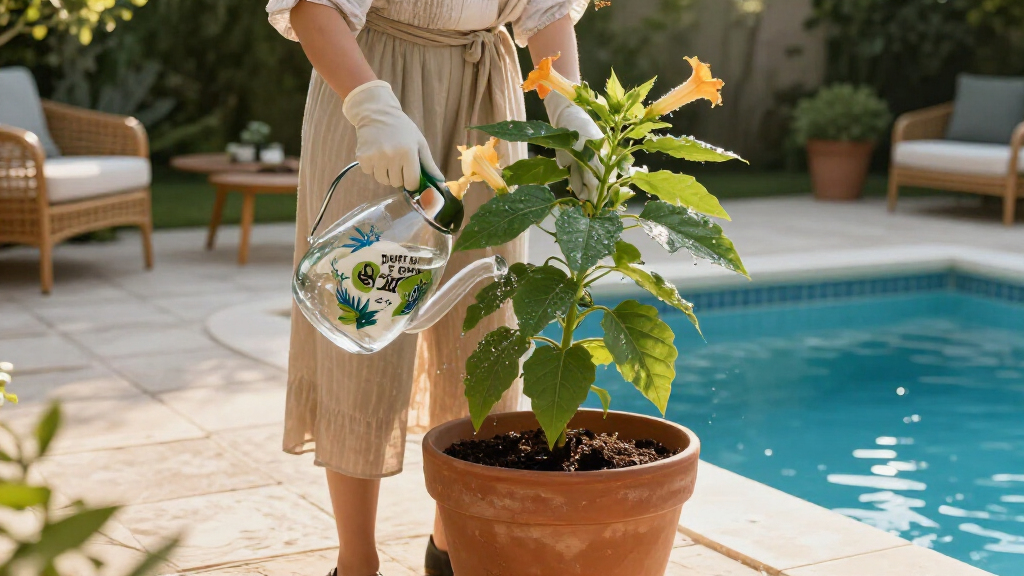
The guide says the datura species and hybrids commonly grown in gardens can reach 4 to 6 feet tall and wide, with large foliage and flowers in colors including white, yellow, cream, burgundy and pink. Individual blooms are short-lived, but the plants can flower from early summer until frost. Their flowers open at night and attract moths, according to the source.
For planting, the article recommends a full-sun location and loamy or sandy soil that drains well. It gives a preferred soil pH of 6.0 to 7.0 and says gardeners can add organic matter to improve growing conditions. Datura tolerates some drought once established, but the guide recommends watering when the top inch of soil is dry, providing about one inch of water per week and more for mature plants or those that droop between watering.
The guide describes datura as frost-tender and says garden varieties are suited to USDA Zones 9 to 10. It also warns that Datura stramonium can self-seed vigorously and that its cultivation is prohibited in some municipalities and states. The source does not identify those jurisdictions, so local rules should be checked before planting.
Beauty Comes With Toxicity Risks
The main practical concern is exposure: the guide states that all parts of datura are extremely poisonous to people, pets and livestock, and identifies children and small animals as being at highest risk. Its dramatic flowers and fast growth may make it appealing as a specimen plant, but its placement requires care. Gardeners should consider whether the plant can be kept away from children and animals before deciding to grow it.
There is also a difference between ornamental datura and a low-maintenance planting choice. The guide says some plants can self-seed vigorously, which may lead to unwanted spread, and notes restrictions on D. stramonium in some areas. The potential for spread and the local legal status are relevant alongside light, soil and watering needs.
Products Worth Considering

Ring Alarm Pro 8-Piece Kit with Built-In eero Wi-Fi 6 Router

Philips Hue Essential Starter Kit with Bridge and 4 E26 Smart Bulbs

Bose SoundLink Plus Portable Bluetooth Speaker, Wireless Outdoor Speaker, Up to 20 Hours Battery Life, Waterproof and Dustproof, Black
As an affiliate, we earn on qualifying purchases.
Datura’s Garden Growth Requirements
The article describes datura as a short-lived herbaceous perennial often treated as a half-hardy annual. It says the genus has a complex taxonomy, with up to 12 named species and some disputed classifications. Among species and hybrids commonly available to gardeners, it names Datura inoxia and Datura metel; the source says the former is native to Central America, Mexico and the southwestern United States, and the latter to Southeast Asia.
Datura is related to Brugmansia, but the guide distinguishes the plants by flower position: datura’s flowers and buds are held upright, while Brugmansia flowers hang downward. That distinction can help gardeners identify which plant they are considering. For containers, the guide recommends large, heavy-based pots to support plants’ size. It also advises against soggy soil and high-humidity sites, which it associates with fungal problems such as powdery mildew.
Local Rules and Plant Risks
The supplied guide does not list which municipalities or states restrict Datura stramonium, nor does it provide a publication date. Gardeners therefore cannot determine from this source alone whether planting is permitted where they live. The article also does not specify detailed handling or disposal procedures for toxic plant material, or quantify the likelihood of poisoning from garden exposure; its warning is that all parts are poisonous if ingested.
Species classification in the genus is described as unsettled, and the guide says the number of named species varies by source. The exact plant’s identity and behavior may matter, particularly where self-seeding or local restrictions are concerns.
Check Conditions Before Planting
Before planting, gardeners should confirm the species and check local rules, especially if considering D. stramonium. They should also assess whether the site can provide full sun, well-drained soil and enough room for a plant that may grow several feet in both height and width. Where children, pets or livestock have access, the source’s toxicity warning should weigh heavily in the planting decision.
For plants already in the garden, the guide’s care schedule points to monitoring soil moisture, watering when the surface layer dries, and watching for drooping or signs of fungal trouble in humid conditions. The source provides no further regulatory updates or follow-up reporting; its practical next steps are local verification and careful site selection.
Key Questions
Is datura safe to grow around children or pets?
The guide says all parts of datura are extremely poisonous to people, pets and livestock, with children and small animals at particular risk. Consider that warning when deciding whether the plant belongs in a garden they can access.
How much sun does datura need?
Gardener’s Path recommends full sun for vigorous growth and more flowers. Plants can grow in partial shade, but the guide says they may become leggy and flower less.
How often should datura be watered?
The guide recommends watering when the top inch of soil is dry, with about one inch of water weekly as a starting point. Mature plants or plants that droop between watering may need two to three inches per week, according to the source.
Can datura survive winter outdoors?
The source describes garden varieties as frost-tender and suited to USDA Zones 9 to 10. It says plants survive winter only in Zone 9 and above.
Is jimsonweed restricted everywhere?
No such claim is made in the supplied guide. It says cultivation of Datura stramonium is banned in some municipalities and states, but does not name them. Check local rules before planting.
Source: gardenerspath.com