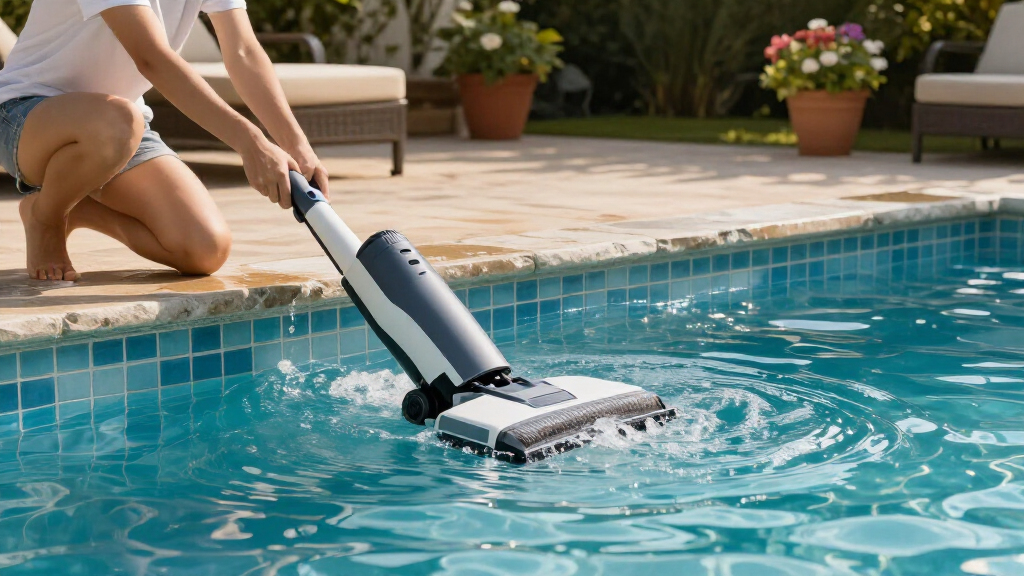
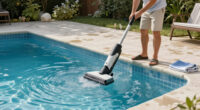
Choosing an automatic pool vacuum is mainly a choice between spending less and doing more yourself, or paying more to reduce the work. Cordless vacuums run on a rechargeable battery and are commonly guided by the owner; robotic pool vacuums operate independently after placement and can follow programmed cleaning patterns. Both can collect debris without relying on the pool’s main circulation system, but they suit different cleaning routines.

Get pool and patio gear delivered free with Prime
- Fast, free delivery on millions of items
- Prime Video, Amazon Music and more included
- Member-only deals all year

Dolphin Nautilus CC Robotic Pool Cleaner for Pools up to 33 ft
- ✔ Cleaner type: Corded robotic pool cleaner
- ✔ Pool compatibility: Above-ground and in-ground pools up to 33 ft long
- ✔ Cleaning: Floor and wall cleaning with active brush

Zodiac MX6 Suction-Side In-Ground Pool Cleaner
- ✔ Cleaner type: Suction-side in-ground pool cleaner
- ✔ Connection: Dedicated suction line or pool skimmer
- ✔ Power source: Pool pump suction
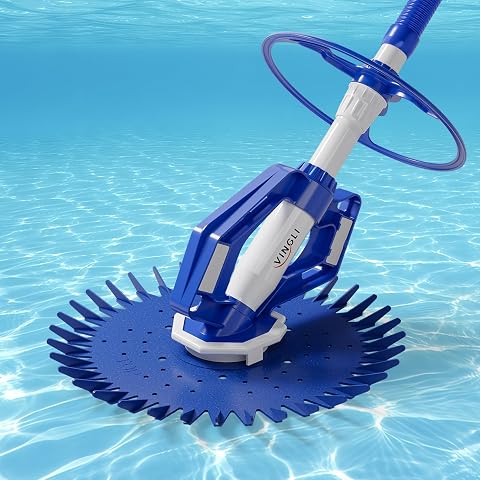
VINGLI Automatic Wall-Climbing Pool Vacuum with 33ft Hose
- ✔ Cleaner type: Automatic suction-side pool cleaner
- ✔ Pool compatibility: In-ground pools
- ✔ Minimum pump requirement: 3/4 HP or 1600 GPH
For a small pool, occasional debris, or a buyer who wants a simpler upfront purchase, a cordless model may be enough. For frequent cleaning, larger pools, or owners who want the vacuum to cover the floor with less supervision, a robotic model is usually the stronger choice. Pool shape, surface, steps, wall-climbing ability, battery life, and maintenance needs vary by model, so check the specifications against your pool before buying.
At a Glance
| Criteria | Cordless automatic pool vacuums | Robotic pool vacuums | Winner |
|---|---|---|---|
| Upfront cost | Usually the lower-cost category | Usually costs more | A |
| Cleaning autonomy | Often guided or moved by the owner | Runs a programmed cycle with limited supervision | B |
| Pool coverage | Depends on the user’s route and model’s reach | Often offers broader floor coverage; walls and waterline depend on model | B |
| Debris and filtration | Varies; many suit routine leaves and small debris | Often offers a filter basket or cartridge suited to regular cleaning | Depends |
| Setup and storage | Cord-free handling, but the battery needs charging | Place in the pool, start the cycle, then remove and store | Depends |
| Ongoing upkeep | Battery care and manual debris removal | Clean filters and maintain the unit; corded models need cord care | A |
| Best value | Strong for smaller pools and occasional cleaning | Strong for frequent cleaning and reduced hands-on work | Depends |
Dolphin Nautilus CC Robotic Pool Cleaner for Pools up to 33 ft
The Dolphin Nautilus CC makes the strongest all-around case for buyers who want an automatic cleaner with its own debris collection. Its active brush scrubs as it moves across pool surfaces, and the top-load basket gives us a direct way to remove collected debris without routing it through the pool filter. Compared with the VINGLI and Zodiac, both of which depend on suction from the pool system, the Dolphin works as a separate corded robot with its own cleaning cycle.That separation comes with practical limits. This model is specified for above-ground and in-ground pools up to 33 feet long, and its cord means we need a suitable power connection and must manage the cable around the pool. The roughly two-hour cycle is a defined routine, but it does not mean every pool shape or debris load will be handled identically. Its plastic construction also calls for sensible care around harsh chemicals and extreme temperatures.For a buyer choosing among these three, the Dolphin is the most versatile because it combines floor and wall cleaning with a separate basket and broad pool-type compatibility. We would choose the Zodiac instead when an in-ground pool already has a convenient suction connection and pump-based cleaning is preferred. The Dolphin is less appealing if we want to avoid cords or if our pool exceeds its stated length limit.
Pros:
- Active brush scrubs while the cleaner covers floors and climbs walls.
- Top-load filter basket is easy to reach and empty.
- Works with above-ground and in-ground pools up to 33 feet.
- Plug-and-play operation with a stated cycle of about two hours.
Cons:
- Corded operation requires access to power and cable management.
- Pool compatibility is limited to pools up to 33 feet long.
- Plastic components need care around harsh chemicals and extreme temperatures.
Best for: Pool owners with an above-ground or in-ground pool up to 33 feet who want active brushing and a dedicated, easy-access debris basket.
Not ideal for: Owners of longer pools, anyone without a suitable power connection, or buyers who prefer a hose-connected cleaner powered by the pool pump.
Bottom line: The Dolphin Nautilus CC is our leading pick when we want a self-contained robotic cleaner with brushing and a dedicated debris basket for a pool within its size limit.
“The Dolphin Nautilus CC is our leading pick when we want a self-contained robotic cleaner with brushing and a dedicated debris basket for a pool within its size limit.”
Zodiac MX6 Suction-Side In-Ground Pool Cleaner
The Zodiac MX6 is the more targeted of the two suction-side choices. It connects to a dedicated suction line or pool skimmer and uses the pool pump to move across the pool, sending debris to the existing filtration system. Its listed ability to work with variable-speed pumps and lower flow rates gives it a useful distinction from the VINGLI, which specifies a minimum 3/4 HP or 1600 GPH pump.Its X-Trax and hydraulic X-Drive navigation are intended to help it maneuver and climb walls, but the result depends on proper flow settings. That makes setup important: a suction cleaner that cannot get the required water flow may not cover surfaces as intended. The Zodiac includes 32 feet of hose and connection accessories for DIY installation, yet it still requires a compatible connection. Unlike the Dolphin, it has no separate debris basket, so the pool filter handles what the cleaner collects.We place it ahead of the VINGLI for buyers who need a suction-side model suited to lower-flow or variable-speed pump arrangements. It is a stronger fit than the Dolphin when the owner wants to use existing pool equipment and has the right line available. Buyers seeking a cleaner that plugs in and collects debris separately should look to the Dolphin instead; those without a compatible suction connection should skip the MX6.
Pros:
- Runs on pool pump suction without batteries.
- Designed to work with variable-speed pumps and lower flow rates.
- X-Trax and X-Drive support maneuvering and wall climbing when flow is set correctly.
- Includes 32 feet of hose and connection accessories for DIY setup.
Cons:
- Requires a compatible skimmer or dedicated suction line.
- Wall climbing depends on setting the proper flow.
- Debris goes to the pool filtration system rather than a separate cleaner basket.
Best for: Owners of in-ground pools with a compatible skimmer or dedicated suction line, especially those using a variable-speed pump or lower flow rate.
Not ideal for: Above-ground pool owners, people without a suitable suction connection, or anyone who wants a separate debris basket and less dependence on pump settings.
Bottom line: The Zodiac MX6 is a practical suction-side pick for an in-ground pool with the right connection and a pump setup that benefits from lower-flow compatibility.
“The Zodiac MX6 is a practical suction-side pick for an in-ground pool with the right connection and a pump setup that benefits from lower-flow compatibility.”
VINGLI Automatic Wall-Climbing Pool Vacuum with 33ft Hose
The VINGLI Automatic Wall-Climbing Pool Vacuum offers a straightforward way to automate cleaning in an in-ground pool using the filtration equipment already in place. Its 33-foot hose is the longest listed among these three, which may help with reach when a pool needs more hose than the Zodiac’s included 32 feet. The product is also described as operating quietly, a useful consideration for owners who would rather avoid the noticeable noise associated with some suction cleaners.VINGLI’s main constraint is equipment fit. It requires a pump of at least 3/4 HP or 1600 GPH, is designed only for in-ground pools, and sends debris through the pool’s existing filtration system instead of storing it in a separate basket. The Dolphin avoids the pump requirement and has its own basket, while the Zodiac is the more specifically positioned choice for lower-flow and variable-speed setups. So, the VINGLI makes sense only when our pump and pool type match its requirements.The included scuff-resistant hoses and wheel deflector support practical movement and installation, which the product says takes about three minutes. Those details make it appealing for owners who want a simple suction-side arrangement. However, hose length alone does not guarantee coverage in every pool: shape, connection location, and setup still matter. We would pass on this model for an above-ground pool or a system that does not meet its minimum pump requirement.
Pros:
- Includes 33 feet of scuff-resistant hose.
- Designed to clean pool floors and climb walls and tight corners.
- Quiet operation is a stated design benefit.
- Simple assembly and installation, listed at about three minutes.
Cons:
- Requires at least a 3/4 HP or 1600 GPH pump.
- Designed for in-ground pools only.
- Relies on the existing filtration system rather than an onboard debris bag.
Best for: In-ground pool owners with a pump rated at least 3/4 HP or 1600 GPH who want a quiet suction-side cleaner and included hose.
Not ideal for: Owners of above-ground pools, pools with weaker or incompatible pumps, or buyers who want debris collected in a separate basket.
Bottom line: The VINGLI suits in-ground pool owners who meet its pump requirement and value quiet suction cleaning with a long included hose.
“The VINGLI suits in-ground pool owners who meet its pump requirement and value quiet suction cleaning with a long included hose.”
As an Amazon Associate we earn from qualifying purchases.
Key Differences
The main practical difference is how much attention cleaning takes. A cordless vacuum offers freedom from a power cord and often a lower purchase price, but its cleaning path may rely on the owner’s guidance. That can work well when debris collects in a few predictable places or when the pool is compact. It is less appealing when you want the entire floor cleaned regularly without spending time moving the unit.
A robotic vacuum shifts more of the routine to the machine. Many models run a set cycle and collect debris in an onboard filter, which makes them a better match for frequent maintenance. The added autonomy comes with a higher price and does not guarantee complete coverage: walls, steps, waterlines, fine particles, and irregular shapes are model-specific. A robot is a better investment when its cleaning pattern matches the pool and it replaces enough manual effort to justify the cost.
Value depends on cleaning frequency, pool size, and the work you are trying to avoid. Occasional spot cleaning rarely justifies paying a premium for a feature-rich robot. Regular cleaning of a larger pool can make the higher initial price worthwhile, particularly if the chosen model handles the surfaces and debris that cause the most trouble.
Detailed Comparison
Upfront cost (Cordless automatic pool vacuums wins — moderate)
Cordless models generally win on purchase price, making them easier to justify for a modest pool or occasional use. Robotic vacuums usually cost more because they automate more of the cleaning cycle and may include larger filters, navigation features, or wall-climbing functions. This is a moderate difference: choose the cheaper category if the pool needs only occasional spot cleaning, but compare specific models because features and prices vary widely.
Cleaning autonomy (Robotic pool vacuums wins — major)
Robotic vacuums win clearly on hands-off operation. After setup, many can run a timed or programmed cycle, while cordless units often require the owner to guide them or retrieve and reposition them. The gap is major for anyone who cleans several times a week or has limited time. If you do not mind staying by the pool and directing the vacuum, the robot’s extra autonomy may not be worth its price.
Pool coverage (Robotic pool vacuums wins — moderate)
Robotic models usually have the advantage for systematic floor coverage, particularly in larger pools, though their navigation and ability to climb walls differ. A cordless unit can handle a small pool or targeted dirty areas, but coverage depends more on how the user moves it and how long the battery lasts. This is a moderate-to-major difference for large or complex pools. Check the rated pool size, floor and wall capability, and cycle time rather than assuming every robot reaches every surface.
Debris and filtration (moderate difference)
There is no universal winner. Some robotic vacuums have larger or finer filters that suit frequent debris collection, while some cordless units are designed for larger leaves and quick cleanup. Filter capacity, mesh size, and debris inlet matter more than the category label. This difference is moderate when the pool collects fine dust, seed pods, or heavy leaf fall. Match the filter to your debris and expect to empty or rinse it after cleaning.
Setup and storage (minor difference)
Cordless vacuums avoid a trailing power cord, which can make handling and storage simple, but charging is part of the routine. Robotic vacuums typically need to be placed in the water and started, then removed after the cycle; models with power cables also require some cord management. The difference is minor to moderate and depends on the exact design. Choose cordless if a cable is inconvenient, and check the robot’s weight and storage needs if lifting it out will be difficult.
Ongoing upkeep (Cordless automatic pool vacuums wins — minor)
Cordless vacuums can be simpler to maintain, though battery capacity may decline with age and charging habits matter. Robotic models need regular filter cleaning and may have more components to inspect or replace. Cordless takes a slight edge for a buyer seeking a basic machine, but long-term cost depends on battery and parts availability. The gap is minor for many owners; check the warranty, replacement filter and battery costs, and recommended storage conditions.
Value for frequent cleaning (major difference)
For frequent whole-pool cleaning, a robotic vacuum often offers better value because it can reduce repeated hands-on work. For occasional cleanup, a cordless unit is usually the more sensible purchase: paying more for automation that rarely runs adds little practical benefit. The winner depends on routine rather than a single feature. Pay more for a robot only when its coverage and cycle match your pool and you expect to use it regularly.
Cordless automatic pool vacuums: Pros and Cons
Pros:
- Usually lower upfront cost
- No power cord trailing through the pool
- Good for spot cleaning and smaller pools
- Often straightforward to lift, store, and use
Cons:
- May require the owner to guide or reposition it
- Coverage can depend on battery runtime and user effort
- Battery performance can decline over time
- May be less suited to frequent whole-pool cleaning
Robotic pool vacuums: Pros and Cons
Pros:
- Runs a cleaning cycle with less supervision
- Often better suited to frequent and broader coverage
- Onboard filtration collects debris without depending on the pool filter
- Some models climb walls or clean the waterline
Cons:
- Higher upfront cost
- Filter cleaning and unit handling remain part of ownership
- Coverage and debris performance vary considerably by model
- Corded versions require cable handling; batteries in cordless robots still need care
Who Should Choose What
Choose Cordless automatic pool vacuums if:
- You have a small pool or mainly need to remove debris from a few areas.
- You clean occasionally and prefer a lower purchase price over automated cycles.
- You want to avoid managing a pool robot’s power cable and do not mind guiding the cleaner.
Choose Robotic pool vacuums if:
- You clean frequently and want the vacuum to handle most of each cycle on its own.
- Your pool is large enough that manual guidance takes too much time.
- You have confirmed the model covers your pool’s surface, walls, and typical debris.
Skip both if: Skip both if you need reliable cleaning of steps, benches, very fine particles, or unusual surfaces and neither model is rated for those tasks; compare suction cleaners, pressure-side systems, or manual tools suited to the pool.
Value for Money
Paying more for a robotic vacuum is worthwhile when it replaces frequent hands-on cleaning and its navigation, filter, and surface coverage fit the pool. A higher price alone does not guarantee better results, so compare the rated pool size, cycle options, wall or waterline cleaning, debris capacity, warranty, and replacement-part costs. If cleaning is occasional or mostly limited to a small area, a cordless vacuum is often the better value. Choose the robot for saved effort; choose cordless for a lower-cost, simpler routine.
Final Verdict
For most owners who clean a medium or large pool regularly, a robotic vacuum is the better choice because it can cover more ground with less supervision. Choose a cordless vacuum if the pool is small, debris is localized, or you only clean now and then; its lower upfront cost is hard to beat for those jobs. The deciding factor is how often you need full-pool cleaning: pay more for a robot when it will run regularly and is rated for your pool, and save with cordless when occasional guided cleanup is enough.
Frequently Asked Questions
Are robotic pool vacuums worth the extra cost?
They can be, if you clean often and the model covers the pool surfaces you need. The higher price buys reduced hands-on work and, in many models, more systematic coverage. For a small pool cleaned occasionally, a cordless unit is usually better value.
Can a cordless pool vacuum clean an entire pool?
Some can cover a full pool, but runtime, capacity, design, and whether the owner must guide the unit affect the result. Check the manufacturer’s pool-size rating and cycle details before buying; cordless does not automatically mean full-coverage automation.
Which type handles leaves better?
That depends on the debris inlet and filter capacity. Large leaves can clog some narrow inlets, while fine filters may fill quickly during heavy leaf fall. Compare the model’s debris specifications and filter design to what lands in your pool.
Do robotic pool vacuums clean walls and steps?
Some climb walls, and a smaller number target the waterline, but wall and step performance is model-specific. Check the product’s rated surfaces and pool shape compatibility; do not assume a floor-cleaning robot reaches steps or benches.