
To select low-impact construction methods, start by prioritizing site disturbance minimization through careful planning, prefabrication, and equipment choices that reduce vibration and land clearing. Opt for eco-friendly materials like reclaimed wood and recycled steel, sourcing locally to cut emissions. Implement site protection measures such as erosion control and waste recycling, and choose techniques that preserve vegetation and natural features. Embracing these sustainable practices will help you build responsibly—discover more ways to minimize your environmental footprint as you explore further.

Get pool and patio gear delivered free — and shop member deals
- Fast, free delivery on millions of items
- Access to Prime Big Deal Days deals on October 6–7
- Prime Video, Amazon Music and more included
Key Takeaways
- Prioritize site disturbance minimization techniques like modular construction and equipment that reduce ground vibration.
- Choose eco-friendly materials such as reclaimed, recycled, and locally sourced resources to lower environmental impact.
- Implement site protection measures, including erosion control and preservation of existing vegetation.
- Recycle and reuse construction waste to conserve resources and reduce landfill contribution.
- Incorporate sustainable planning practices that promote harmony with the natural environment.
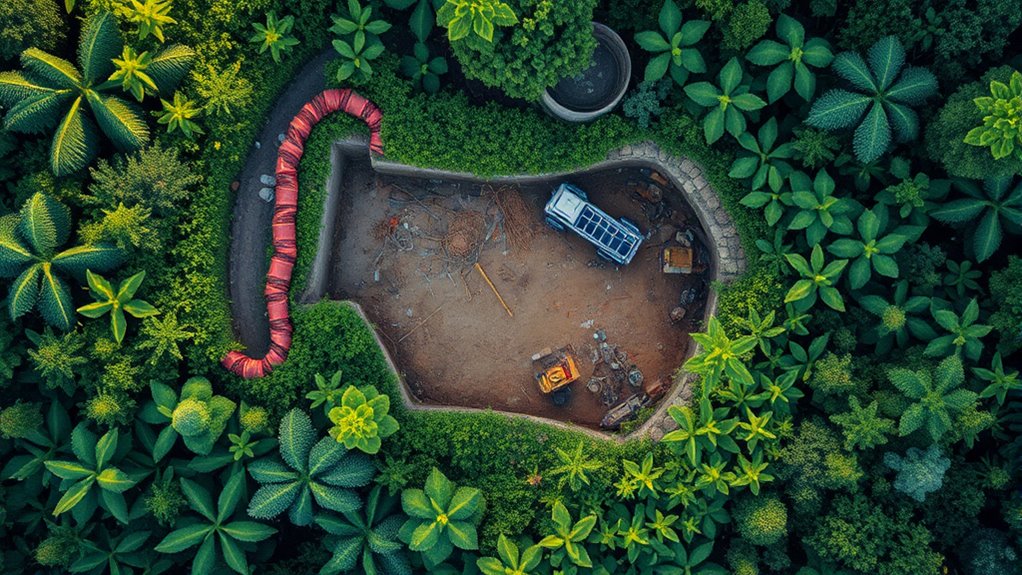
Choosing low-impact construction methods is essential for minimizing environmental damage and promoting sustainable development. When you opt for these approaches, you actively reduce the disruption to the surrounding ecosystem, which benefits both the environment and future project viability. One of the key strategies involves minimizing site disturbance. By carefully planning your construction activities, you can avoid unnecessary excavation, land clearing, and soil erosion. Techniques like modular construction or prefabricated components allow you to assemble structures quickly and efficiently, limiting the amount of time the site remains exposed and vulnerable. You can also use equipment that’s specially designed to cause less ground vibration and compaction, further protecting the natural landscape. These steps help maintain existing soil stability, prevent runoff issues, and preserve local flora and fauna.
Minimize site disturbance with careful planning, modular construction, and eco-friendly equipment to protect natural landscapes and ecosystems.
In addition to minimizing site disturbance, choosing eco-friendly materials plays a notably role in lowering the project’s environmental footprint. You should prioritize sustainable resources such as reclaimed wood, recycled steel, and low-impact concrete mixes. These materials often require less energy to produce and generate fewer emissions compared to traditional options. Additionally, sourcing locally available materials reduces transportation emissions and supports regional economies. When you incorporate eco-friendly materials, you’re not only reducing the depletion of natural resources but also promoting a healthier environment for workers and nearby communities. Using non-toxic, biodegradable, or low-VOC paints, adhesives, and finishes further minimizes indoor and outdoor pollution, aligning your project with green building standards.
Implementing low-impact construction methods also involves thoughtful site management. This includes protecting existing trees and vegetation, setting up erosion control measures, and managing waste responsibly. For instance, you can create buffer zones around sensitive areas and use temporary barriers to prevent debris from spreading into natural habitats. Recycling construction waste and reusing materials whenever possible reduces landfill contribution and conserves raw resources. You might also consider alternative construction techniques such as straw bale or rammed earth, which are naturally insulating and require fewer synthetic materials. These methods not only cut down on environmental harm but also often improve energy efficiency and long-term sustainability. Recognizing the importance of environmental impact assessments can further guide your planning process to ensure minimal ecological disturbance.
Ultimately, your goal is to create a built environment that coexists harmoniously with nature. By focusing on minimizing site disturbance and using eco-friendly materials, you demonstrate a commitment to responsible development. Small choices made during planning and execution can considerably lessen environmental impacts, fostering a more sustainable future. Embracing these low-impact construction methods helps you build resilient, eco-conscious projects that respect the earth’s resources while fulfilling your objectives efficiently.
reclaimed wood building materials
As an affiliate, we earn on qualifying purchases.
As an affiliate, we earn on qualifying purchases.
Frequently Asked Questions
How Do Low-Impact Methods Compare in Cost to Traditional Construction?
Low-impact construction methods often cost more upfront compared to traditional methods, but your budget considerations should include long-term savings. The cost comparison shows that eco-friendly materials and techniques can reduce energy and waste disposal expenses over time. While initial costs might be higher, you benefit from sustainable practices that can lower operational costs and improve project efficiency, making low-impact methods a smart investment for environmentally conscious projects.
Are There Specific Certifications for Environmentally Friendly Construction Practices?
Yes, there are specific certifications for environmentally friendly construction practices. You can pursue green building standards like LEED, WELL, or BREEAM, which recognize eco-friendly design, sustainable materials, and energy efficiency. These eco certifications help you demonstrate your commitment to environmental responsibility, potentially increase property value, and attract eco-conscious clients. Achieving such certifications requires meeting strict criteria, but it shows your dedication to sustainable and low-impact construction practices.
What Are the Biggest Challenges in Implementing Low-Impact Techniques?
You face unexpected hurdles when implementing low-impact techniques. Site assessment reveals hidden environmental sensitivities, making adjustments tricky. Material sourcing becomes a challenge as eco-friendly options are limited or costly, forcing you to choose between sustainability and budget. These obstacles demand careful planning and flexibility, but overcoming them leads to more sustainable construction. Stay vigilant, adapt quickly, and remember that every challenge is an opportunity to improve your environmentally conscious project.
How Do Local Regulations Influence Low-Impact Construction Choices?
Local regulations, like zoning restrictions and permitting processes, heavily influence your low-impact construction choices. You’ll need to navigate zoning restrictions that may limit building size or materials, and permitting processes can delay your project or require specific low-impact techniques. These rules ensure environmental protection but might complicate your plans. Staying informed about local regulations helps you adapt your approach, ensuring compliance while maximizing the benefits of low-impact construction.
Can Low-Impact Methods Be Scaled for Large Commercial Projects?
You can scale low-impact methods for large commercial projects, but it’s not without challenges. Studies show that 60% of projects face scaling difficulties due to resource constraints and logistical hurdles. To succeed, focus on project adaptability—adjusting techniques to fit the project’s size and scope. By planning carefully and integrating sustainable practices early, you can effectively expand low-impact methods, making large projects more environmentally friendly without compromising efficiency.
prefabricated modular construction kits
As an affiliate, we earn on qualifying purchases.
As an affiliate, we earn on qualifying purchases.
Conclusion
So, you’ve chosen low-impact methods, thinking you’re saving the environment. Ironically, by avoiding heavy machinery and disruptive materials, you might just be digging your own grave—literally and figuratively. While your project stays gentle on nature, it could end up costing more in time and effort. Sometimes, the least invasive approach leaves the most lasting mark, proving that even gentle steps can echo loudly in the world’s delicate balance.
eco-friendly construction equipment
As an affiliate, we earn on qualifying purchases.
As an affiliate, we earn on qualifying purchases.
As an affiliate, we earn on qualifying purchases.
Fall Picks
fall essentials
As an affiliate, we earn on qualifying purchases.