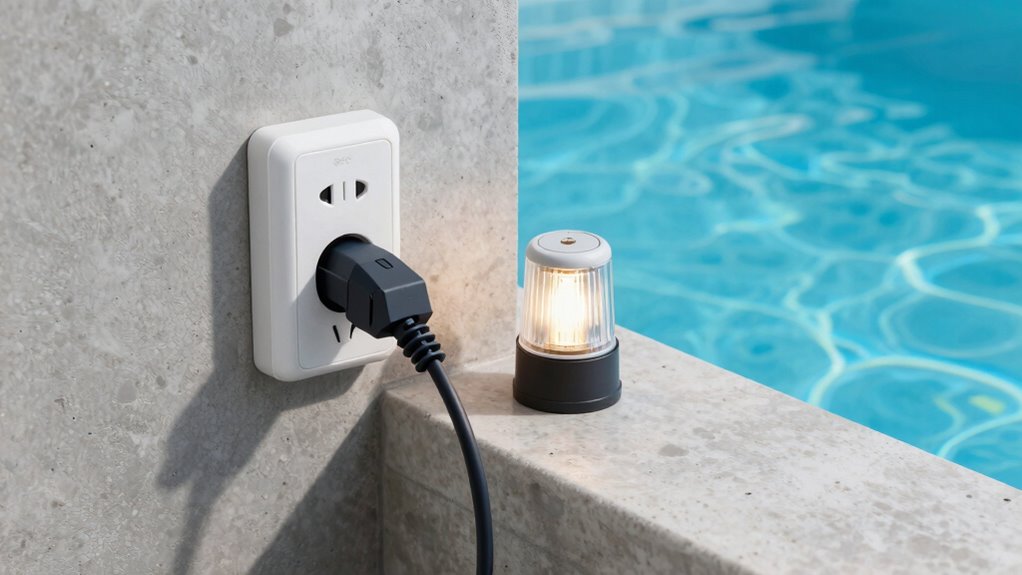

To keep your pool area safe, you need to install GFCIs on outdoor outlets, pool lights, and motor equipment like pumps and filters, following local electrical codes. GFCIs detect ground faults and trip instantly, preventing shocks or electrocution. Proper placement, regular testing, and maintenance are essential. If you follow these rules, you’ll minimize hazards. Keep going to discover more detailed guidelines for installing, testing, and maintaining GFCIs around your pool.
Key Takeaways
- GFCIs must be installed on outdoor outlets, pool lights, and equipment within specified distances for safety.
- Regular testing and maintenance of GFCIs ensure proper function and quick trip during ground faults.
- All pool components such as pumps, filters, and spa wiring require GFCI protection per electrical codes.
- Proper placement, wiring, and grounding of GFCIs are essential to prevent electrical hazards around pools.
- Local regulations and standards must be followed, including inspections and documentation for compliance.

Leviton GFCI Weather-Resistant Outlet, 15 Amp, Self Test, Tamper-Resistant with LED Indicator Light, Outdoor Locations, GFWT1-W, White
- Enhanced HF immunity: Reduces nuisance tripping from high frequency noise
- Weather-resistant construction: Stainless steel strap, UV plastics, cold impact face
- Continuous safety protection: Interrupts power during ground faults to prevent shocks
As an affiliate, we earn on qualifying purchases.
As an affiliate, we earn on qualifying purchases.
Why GFCI Protection Is Essential for Pool Safety
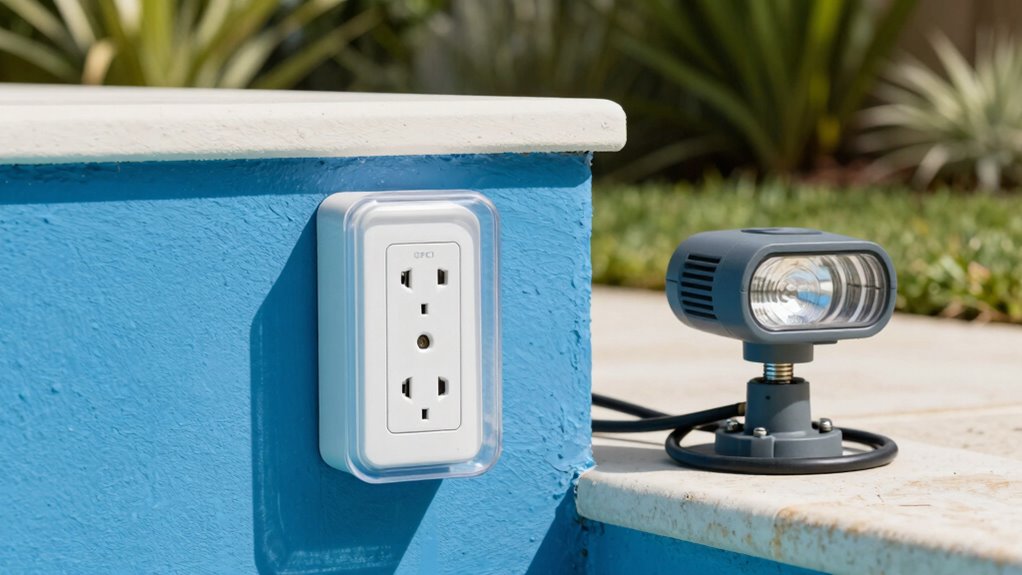
Because pools are wet environments with high risk of electrical shock, GFCI protection is essential for safety. Water resistance alone isn’t enough to prevent dangerous electrical hazards. GFCIs detect even small grounding faults that could cause shock, providing a critical safety measure. When electrical devices and outlets are protected by GFCIs, you reduce the risk of injury or electrocution considerably. This device constantly monitors the electrical current and trips instantly if it detects imbalance, preventing shocks caused by water or faulty wiring. You can’t rely solely on water resistance to keep you safe; proper electrical safety measures like GFCIs are crucial. Installing GFCIs around pools creates a safer environment, giving you peace of mind while enjoying your pool. Additionally, understanding electrical safety standards can help ensure your pool area remains as secure as possible. Implementing ground-fault protection is a vital step in safeguarding both swimmers and property, especially considering the importance of proper installation procedures to ensure GFCIs function correctly. Recognizing the importance of regular testing and maintenance is also key to maintaining effective protection over time.
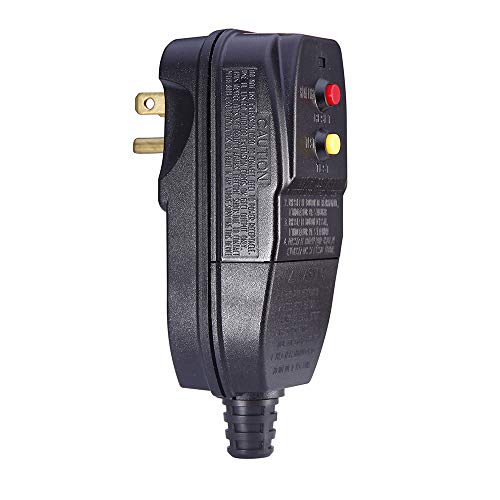
WELLONG Replacement GFCI Plug 15Amp 3 Prong 120V
- Shock Protection: Automatically cuts power in 0.03s
- Auto-Reset Function: Resets after leakage is cleared
- Universal Compatibility: Suitable for home appliances and tools
As an affiliate, we earn on qualifying purchases.
As an affiliate, we earn on qualifying purchases.
Which Pool Components Need GFCIs and How to Protect Them
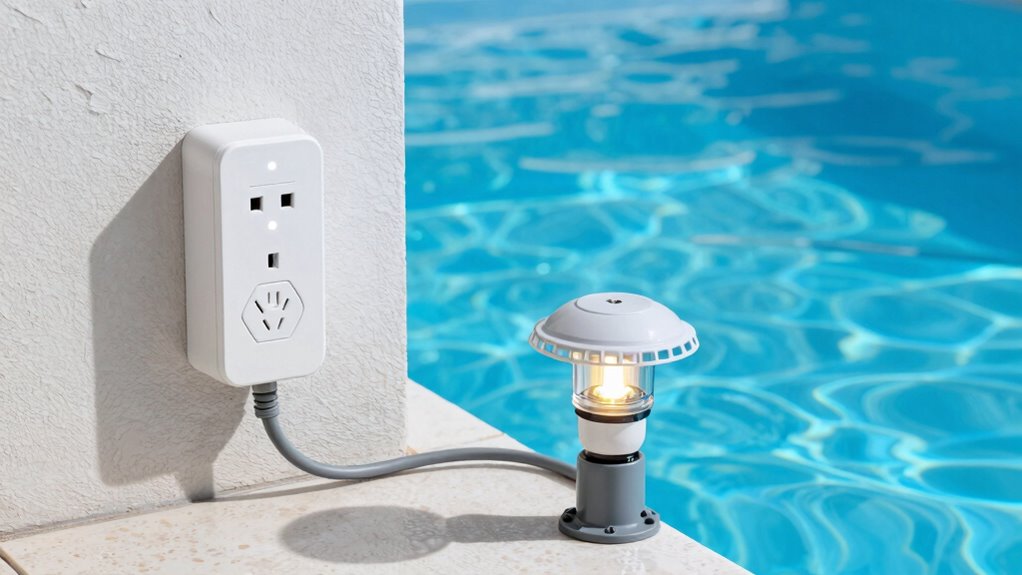
Ensuring all pool components that use electricity are protected by GFCIs is essential for safety. You need GFCIs on outlets around the pool deck to prevent electrocution if water contacts electrical devices. Spa wiring also requires GFCI protection, especially for any electrical connections supplying spas or hot tubs. These devices are vulnerable to moisture and must be safeguarded to avoid hazards. GFCIs should be installed on any power source that supplies pumps, filters, or automatic pool cleaners. This includes outdoor outlets and any wiring connected to pool equipment. Proper GFCI protection minimizes the risk of electric shock, especially in areas where water and electricity come into close contact. Always make certain these components are properly wired and tested for safe operation. Additionally, understanding the Rhythm Failure standards can help ensure your electrical system complies with safety regulations and reduces potential hazards. It’s also important to stay informed about electrical safety codes to ensure compliance and optimal protection. Incorporating proper grounding techniques can further enhance overall electrical safety around your pool area.

120V 10-Inch Waterproof Pool Light for Inground Pools – IP68 Rated, Includes 2 x 500W Incandescent Bulbs, 50ft Cord, Direct Replacement for Pentair Amerlite & Hayward AstroLite, Fits 10'' Pool Niche
- Durable Stainless Steel Design: Seamless casing with stainless steel face ring
- IP68 Waterproof & Corrosion Resistant: Ensures long-lasting performance in harsh conditions
- Powerful 500W, 120V Operation: Balances performance with energy efficiency
As an affiliate, we earn on qualifying purchases.
As an affiliate, we earn on qualifying purchases.
GFCI Installation Rules for Pool Lights and Outdoor Outlets
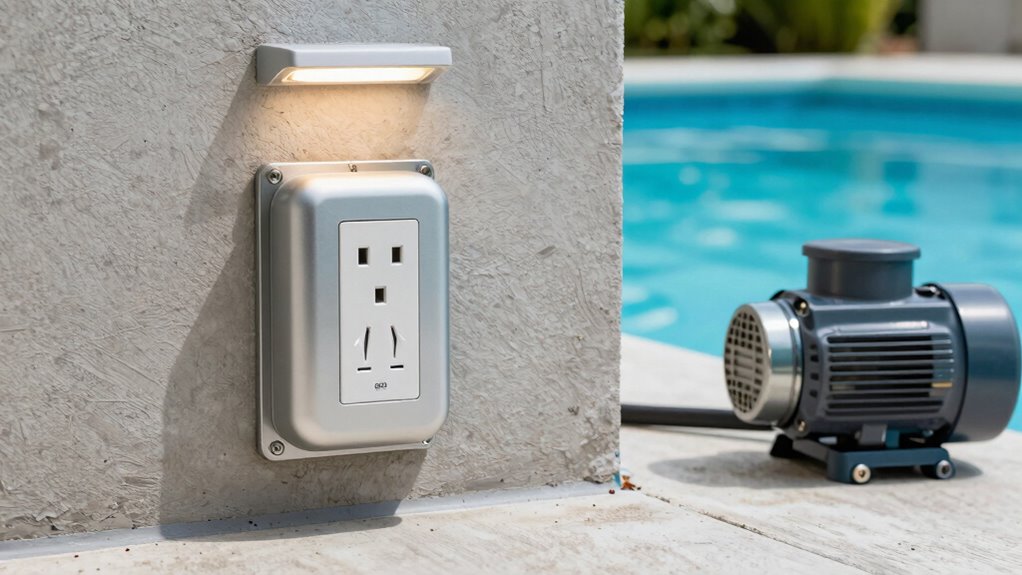
Proper placement of GFCIs is crucial for safety around pool lights and outdoor outlets. You need to follow code standards to make sure these devices are installed correctly and reliably. Understanding these rules helps you maintain compliance and protect everyone using your pool area. Additionally, choosing the right cabling solutions ensures long-term durability and safety in your outdoor setup. Correct installation practices also involve adhering to local electrical codes, which are designed to ensure safety and compliance. Being aware of security measures in payment processing can also be analogous to safeguarding electrical installations, emphasizing the importance of protection in both contexts. Proper grounding and device testing are essential steps to verify that GFCIs function correctly and provide the intended protection. Following inspection procedures helps identify potential issues early and ensures ongoing safety.
Proper GFCI Placement
When installing GFCIs around pools, placing them in locations where they can effectively protect users and equipment is vital. Proper placement ensures quick response to ground faults, preventing shocks and damage from power surges. Install GFCIs outdoors near pool equipment and outlets, keeping them accessible yet shielded from weather. Avoid placing GFCIs where grounding issues may occur or where moisture can cause corrosion. Proper placement reduces the risk of electrical hazards and guarantees reliable operation. Additionally, understanding grounding and bonding requirements is essential for safe and compliant GFCI installation around pools. Ensuring GFCIs are properly tested before use further enhances safety and compliance. Adhering to manufacturer guidelines ensures optimal performance and longevity of the GFCIs in outdoor pool environments. Regular inspection and maintenance of GFCIs also help maintain their effectiveness over time. To maximize safety, it is also important to consider proper wiring techniques when installing GFCIs around pools to prevent potential malfunctions.
Code Compliance Standards
To meet safety and legal requirements, GFCI installation around pools must comply with specific code standards set by the National Electrical Code (NEC). These standards address electrical hazards by ensuring outlets, lights, and motors are properly protected. The NEC regularly updates these codes to incorporate the latest safety practices and technology improvements. For outdoor outlets and pool lights, GFCIs are typically mandated within certain distances from the water’s edge, and wiring must meet strict insulation and grounding requirements. Staying current with code updates is essential to confirm your installation remains compliant and safe. Electrical safety practices are also emphasized within these standards to further prevent accidents. By following these standards, you reduce the risk of electrical hazards, protect swimmers and pool users, and avoid potential violations or penalties. Ensuring all electrical components are correctly installed according to the latest regulations helps maintain a safe swimming environment.

Klein Tools RT250 GFCI Outlet Tester with LCD Display, Electric Voltage Tester for Standard 3-Wire 120V Electrical Receptacles
- LCD Display: Large backlit LCD for easy readings
- Trip Time Monitoring: Displays GFCI trip time for troubleshooting
- Wiring Fault Detection: Identifies common wiring issues
As an affiliate, we earn on qualifying purchases.
As an affiliate, we earn on qualifying purchases.
GFCI Requirements for Pool Pumps and Motors
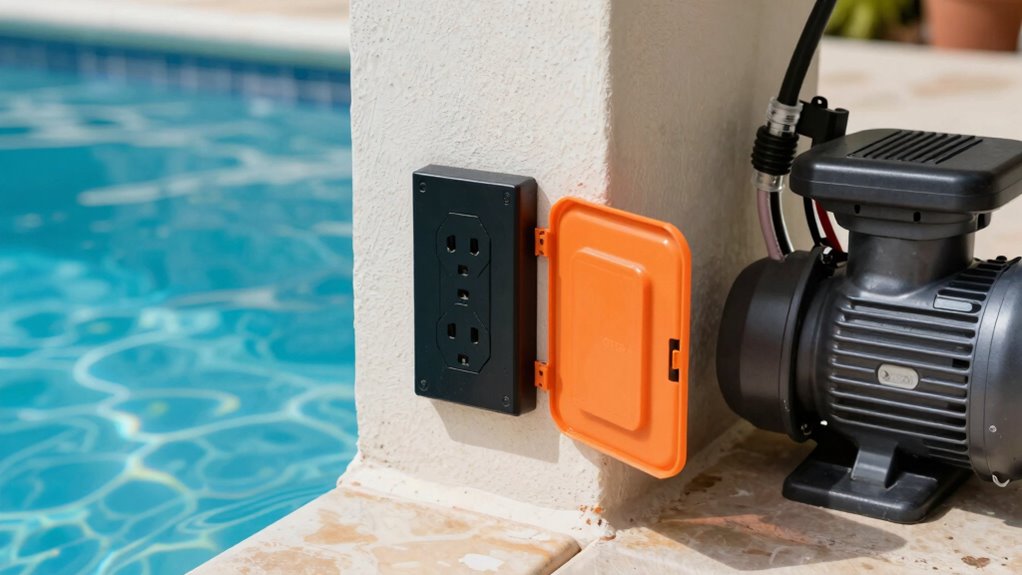
GFCI requirements for pool pumps and motors are essential safety measures designed to protect you from electrical shocks. You must install GFCIs on all outlets that power pool equipment, including pool filters and pumps, to prevent electrocution hazards. These GFCIs should be located close to the equipment and properly grounded. Additionally, deck lighting near your pool needs GFCI protection to avoid shocks from water or moisture exposure. When installing or maintaining your pool’s electrical system, verify GFCIs are tested regularly for proper operation. This safeguard minimizes risk if a ground fault occurs, keeping you and your loved ones safe during pool use. Following these requirements aligns with safety standards and reduces potential electrical hazards around your pool area.
Common Mistakes When Installing GFCIs by Your Pool
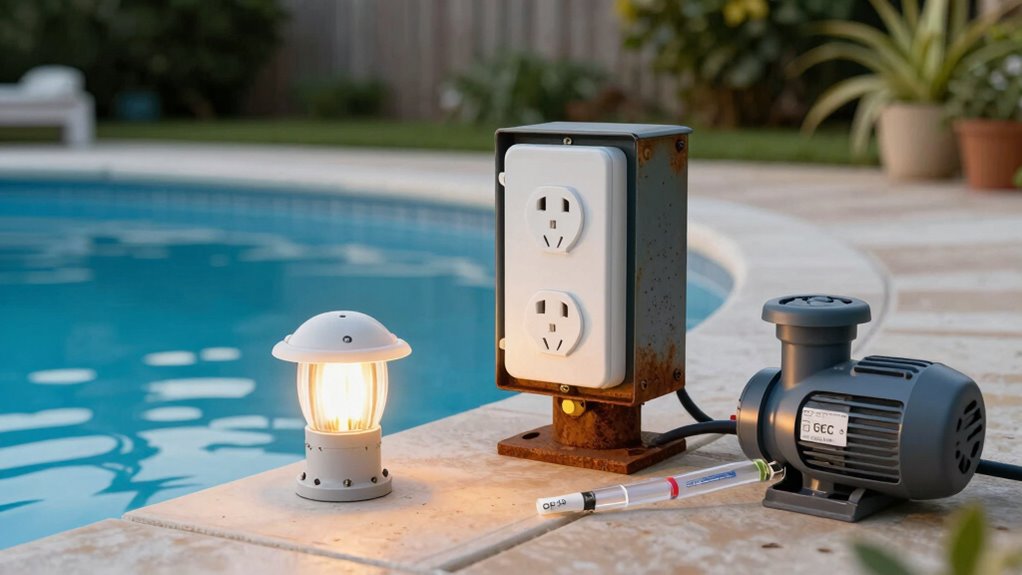
Installing GFCIs near your pool might seem straightforward, but common mistakes can compromise safety and effectiveness. One major error is neglecting proper grounding, which can lead to grounding issues that reduce the device’s ability to trip during faults. Another mistake is installing GFCIs in areas prone to power surges without proper surge protection, risking damage and false trips. Additionally, improper wiring, such as incorrect connections or bypassing the GFCI, diminishes safety. Overlooking manufacturer instructions or code requirements can also cause installation problems. Always verify GFCIs are installed at the correct height and location, and use surge protectors when necessary. Avoid these pitfalls to guarantee your GFCIs provide reliable protection around your pool, preventing electrical hazards and ensuring ongoing safety.
How to Test and Maintain GFCIs for Continuous Safety
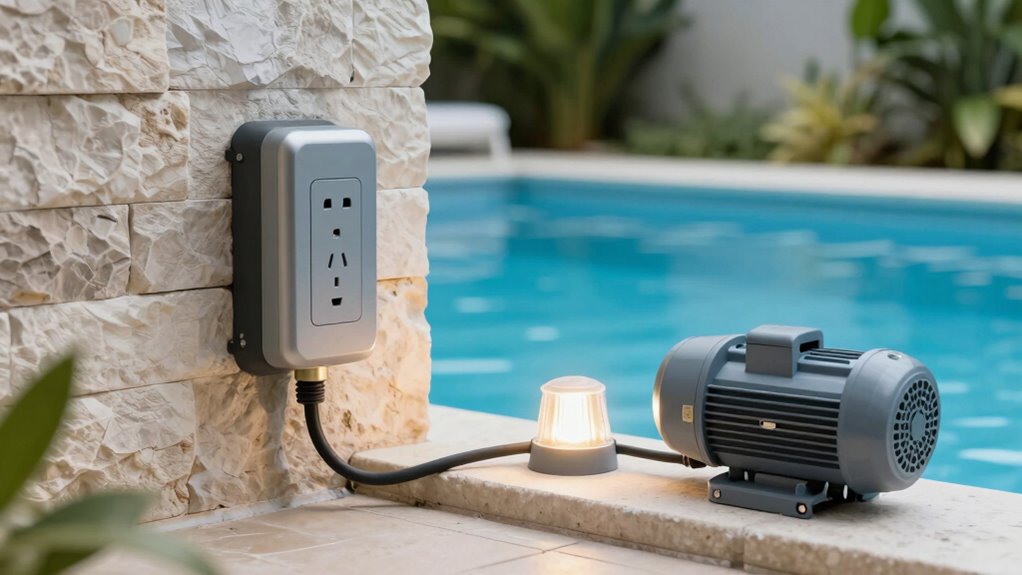
To keep your GFCIs working reliably, you need to test them regularly. Follow simple procedures to verify they trip properly and protect you from shocks. Maintaining these outlets keeps your pool area safe and prevents unexpected failures.
Regular Testing Procedures
Regular testing is essential to guarantee your GFCI continues to provide peak protection around your pool. To do this effectively, follow proper grounding procedures during testing to assure accurate results. Always read your device’s warranty considerations before performing tests, as improper handling might affect coverage. Use the test and reset buttons regularly to verify the GFCI’s responsiveness. Confirm the device trips when tested and resets properly afterward. Check that the outlet’s grounding is secure and intact, as grounding issues can compromise safety. Keep a record of test dates to monitor performance over time. If your GFCI fails to trip or reset, consult a professional immediately. Regular testing helps maintain continuous safety and extends the device’s lifespan.
- Test buttons operation
- Confirm grounding integrity
- Document test results
- Check for warranty details
- Ensure proper reset function
Maintenance Best Practices
Maintaining your GFCIs is essential for ongoing safety around your pool, and proper testing plays a critical role in this process. Regularly inspecting and testing your GFCIs ensures they function correctly, preventing electrical hazards. To keep your poolside aesthetics intact, schedule routine checks without disrupting outdoor lighting design or other features. Clean GFCI outlets and test the reset and test buttons monthly to confirm proper operation. If you notice any signs of damage or if the GFCI trips frequently, replace it immediately. Use a GFCI tester to verify correct wiring and functionality. Proper maintenance not only safeguards swimmers but also preserves the visual appeal of your pool area, maintaining both safety and aesthetics effortlessly.
Navigating Local Codes and Regulations for GFCI Compliance
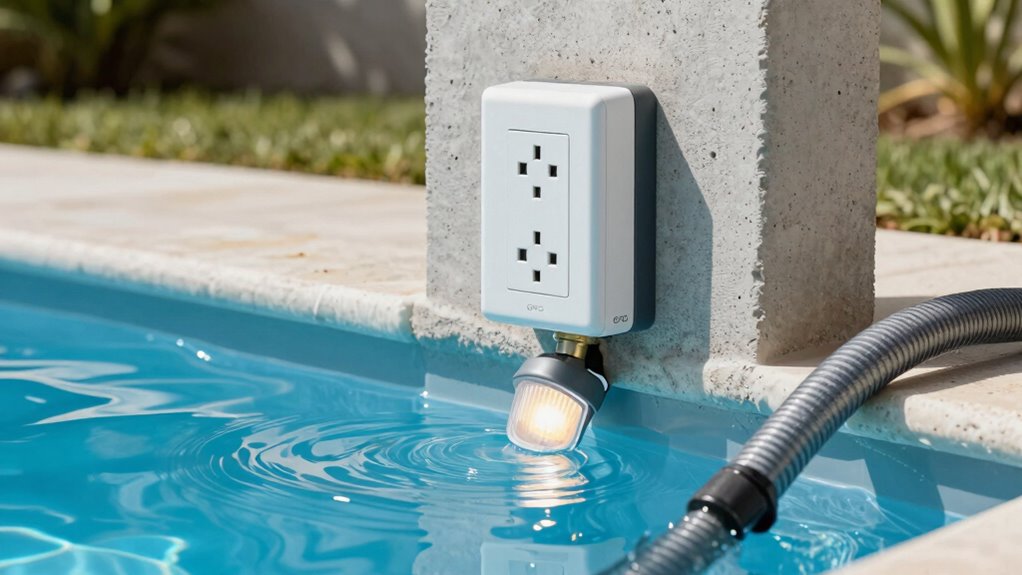
Handling local codes and regulations for GFCI compliance can seem complex, but understanding these rules is essential for ensuring safety around pools. Your first step is to familiarize yourself with your local code requirements, which vary by region. During the inspection process, authorities will check that GFCIs are correctly installed and functional, adhering to specific standards. Staying compliant helps prevent violations and ensures safety.
Understanding local codes ensures GFCI safety compliance around pools.
Key points include:
- Reviewing local electrical codes before installation
- Confirming GFCI outlet placement requirements
- Understanding specific rules for pool lighting and motors
- Scheduling inspections at appropriate stages
- Keeping documentation of compliance and approvals
Frequently Asked Questions
Can GFCIS Be Used With All Pool Types and Sizes?
Yes, GFCIs can be used with all pool types and sizes during pool installation, as they’re designed to enhance safety by preventing electrical shocks. GFCI compatibility is essential for outlets, lights, and motors around your pool area. You should verify proper installation and adherence to local codes to maximize safety. No matter the pool size or type, using GFCIs is a smart choice to protect yourself and your equipment.
How Often Should GFCIS Be Tested for Optimal Safety?
You should test your GFCIs at least once a month to guarantee maximum safety. Incorporate a maintenance schedule that includes regular testing, which is essential for proper functioning. To test, press the “test” button and verify that the GFCI trips, then press “reset” to restore power. Regular testing helps catch any issues early, reducing the risk of electrical shock around your pool.
Are There Battery-Powered GFCIS for Pool Areas?
Think of a battery-powered GFCI as your portable safety lifeboat in a storm. Yes, they exist and offer flexibility around pool areas. These units often include battery backups, ensuring protection even during power outages. They’re ideal as portable solutions for temporary setups or areas lacking wired GFCIs. Just remember to check their batteries regularly to keep your safety net strong and reliable, no matter where you are.
What Are the Signs of a Failing GFCI in Pool Systems?
You’ll notice a failing GFCI in your pool system if it trips more often than usual or shows signs of sensor failure. Frequent trips indicate it’s detecting minor leaks or faults, while sensor failure might cause it not to trip when needed, risking safety. Keep an eye on irregular tripping patterns and any error indicators. Regular testing guarantees your GFCI functions properly, keeping your pool area safe.
How Do Weather Conditions Affect GFCI Performance Near Pools?
Weather conditions can critically impact GFCI performance around pools. Excessive rain, humidity, or snow can cause moisture intrusion, leading to corrosion or electrical shorts that compromise safety. You should regularly inspect GFCIs as part of pool maintenance, especially after storms, to make certain they function correctly. Properly maintained GFCIs are vital for electrical safety, helping prevent shocks and ensuring your pool area remains safe during adverse weather.
Conclusion
Ensuring your pool’s safety with proper GFCI protection isn’t just a good idea—it’s essential. By following the right installation rules and staying compliant with local codes, you protect yourself and loved ones from electrical hazards. Are you confident your pool’s GFCI setup is up to date? Regular testing and maintenance keep everything functioning safely. Don’t wait for an accident—take action now to enjoy your pool with peace of mind.