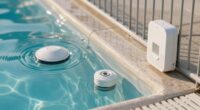
To guarantee your pool fence is effective, focus on reaching at least 4 to 5 feet in height to deter climbing. Keep gaps between panels to no more than 1.75 inches to prevent kids from slipping through. Install a childproof gate that self-closes and latches securely at a height out of children’s reach. Following safety regulations and inspecting your fence regularly can make a huge difference. If you want to learn more about perfecting your pool safety setup, keep exploring these key details.
Key Takeaways
- Ensure fence height is at least 4-5 feet to prevent climbing, following local safety regulations.
- Keep gaps between panels no wider than 1.75 inches to prevent children from slipping through.
- Install gates that swing outward, with self-closing, self-latching hardware placed at least 54 inches high and out of children’s reach.
- Use durable, non-climbable materials like vinyl or metal with smooth finishes to discourage scaling and enhance longevity.
- Regularly inspect for gaps, loose posts, rust, or damage to maintain fence integrity and safety over time.

VINGLI Pool Fence Gate 4Ft x2.5Ft,Self-Latching Safety Fencing Gates
- Automatic Self-Latching & Closing: Ensures continuous safety without manual locking
- Weatherproof & Durable Construction: Made from corrosion-resistant aluminum and UV fabric
- Easy One-Person Installation: Setup in under an hour with included hardware
As an affiliate, we earn on qualifying purchases.
As an affiliate, we earn on qualifying purchases.
What Are the Pool Fence Height Requirements for Safety?
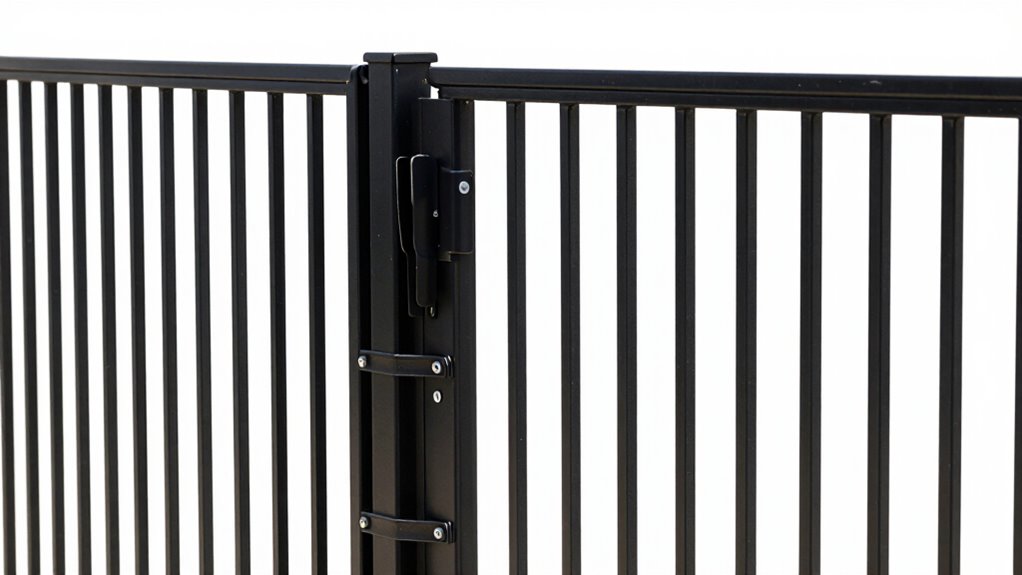
To guarantee safety around your pool, it’s important to know the required fence height. Most safety standards recommend a fence height of at least 4 feet (48 inches). This height helps prevent children from climbing over the barrier. Remember, child supervision remains essential, even with a properly installed fence. A well-placed fence acts as a physical deterrent, but active supervision is your best defense. Additionally, consider pool cover options as an extra safety measure when the pool isn’t in use. Solid covers or automatic pool covers can prevent accidental falls and keep kids safe. Ensuring your fence meets height requirements, combined with vigilant supervision and reliable pool covers, creates a safer swimming environment for everyone. For added security, safety guidelines offer detailed recommendations on best practices and equipment to protect your family. Maintaining proper fence installation techniques is equally important to ensure the fence remains effective and durable over time.

National Hardware MagnaLatch Pool Gate Latch, Vertical Pull, 13", Black
- Magnetic Self-Closing Latch: Automatically secures pool gate with magnetic technology
- Child-Resistant Vertical Pull: Prevents children from operating latch, easy for adults
- Adjustable Magnetic Catch: Accommodates gate misalignment on various materials
As an affiliate, we earn on qualifying purchases.
As an affiliate, we earn on qualifying purchases.
Why Do Gaps Between Fence Panels Matter? Risks and Solutions
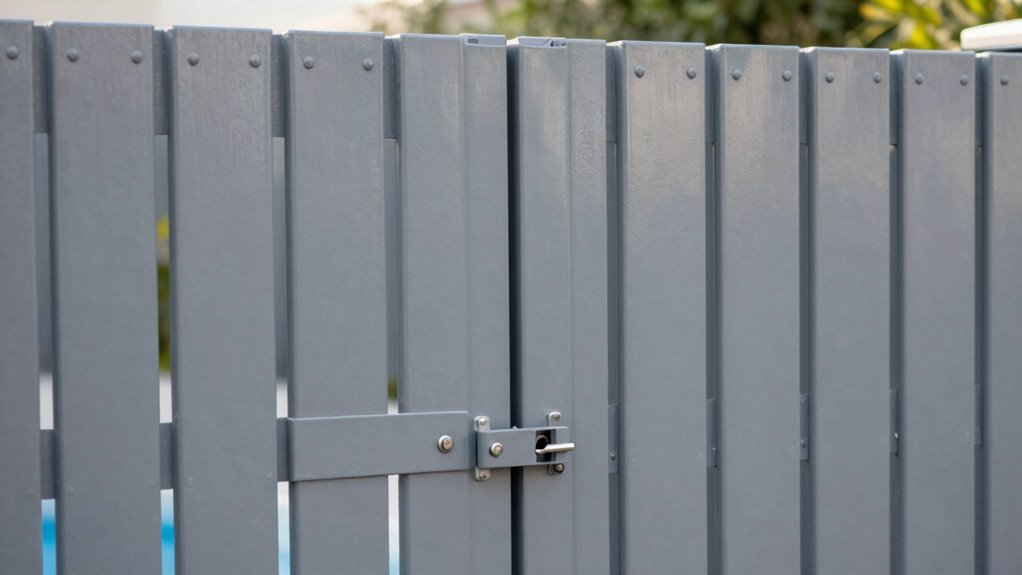
Even if your fence meets the proper height requirements, gaps between panels can undermine safety. These gaps create opportunities for children to slip through or climb over, making child supervision alone insufficient. Small children are quick and curious, and gaps can easily become escape routes. Plus, gaps can impact fence aesthetics, giving a less uniform appearance that can make the fence look incomplete or poorly maintained. To minimize risks, guarantee gaps are no wider than 1.75 inches to prevent children from squeezing through. Regularly inspect the fence for gaps or damage, and consider adding secure panels or self-closing gates. Addressing gaps not only enhances safety but also maintains the fence’s visual appeal, giving you peace of mind while keeping your pool area secure. Ensuring proper fence panel spacing is crucial for long-term safety and compliance with local regulations. Additionally, understanding free floating techniques can help in designing fences that are both functional and aesthetically pleasing. Proper gap measurement is essential to prevent potential hazards and ensure your fence remains compliant with safety standards, especially when considering smart home safety enhancements that alert you to any fence damages or gaps. Incorporating attention to detail during installation and inspection can further reduce the risk of overlooked gaps or issues that compromise safety.

Petorldog Metal Swimming Pool Fence 110ft (L) × 40in (H) with 42 Panels & 6 Gates, Pool Safety Fence, Protective Barrier with Reinforced Stakes, Compatible with Patios & Gardens, Black-Silver
- Durable Heavy-Duty Metal Construction: Rust-resistant black-silver finish for outdoor use
- Reinforced Metal Stakes for Stability: Ensures secure installation around pools and gardens
- Easy DIY Setup and Storage: Pre-drilled panels and stakes for quick assembly
As an affiliate, we earn on qualifying purchases.
As an affiliate, we earn on qualifying purchases.
How High Should Your Fence Be to Prevent Climbing?
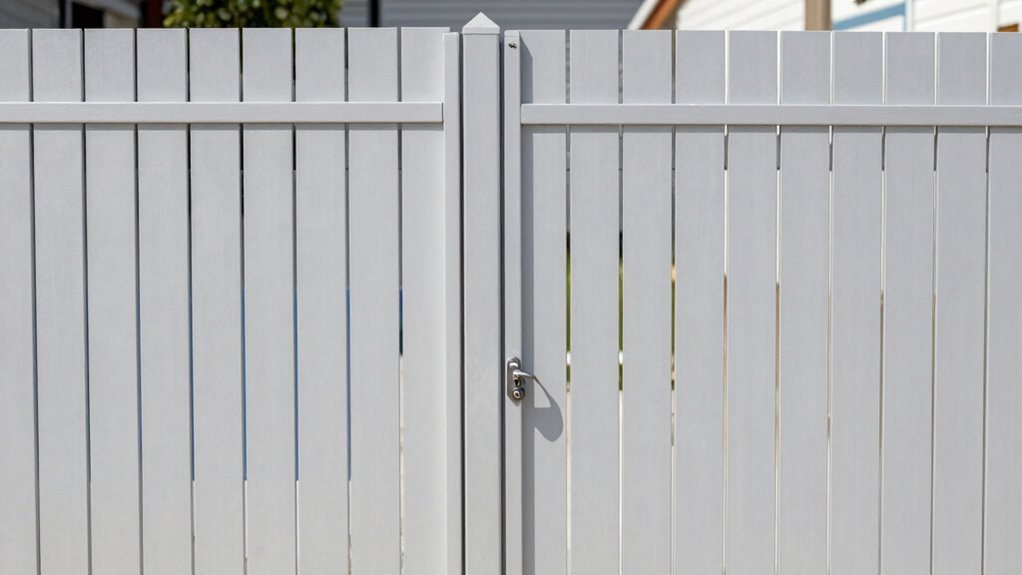
Have you ever wondered how tall your pool fence should be to effectively prevent climbers? Generally, the recommended height is at least 4 feet, but many experts suggest 5 feet for added security. This height helps deter children and unwanted visitors from scaling the fence. If you’re aiming for pool privacy or decorative fencing, choose designs that don’t compromise safety. Tall, solid panels can provide privacy while making it harder to climb, especially if topped with smooth caps or angled extensions. Remember, the goal is to create a barrier that’s challenging to scale without sacrificing style. Keep in mind, local safety regulations may specify minimum fence heights, so always verify requirements in your area to ensure your fence is both attractive and secure. When installing your fence, consider power protection for any electrical components to ensure safety and durability. Additionally, selecting climb-resistant fencing features can further enhance safety by making it more difficult for climbers to get over the barrier. Incorporating proper maintenance can also prevent wear and tear that might otherwise compromise the fence’s integrity over time. Regular inspections and timely repairs are essential components of fence safety to maintain its effectiveness. Proper design and material choices, such as using sloped tops or anti-climb features, can also significantly reduce the risk of climbing.

WamBam Sturbridge Yard or Pool Fence, White Vinyl No Dig DIY Kit
- Easy to Order: All necessary components included in the box
- Child and Pet Safe: Creates a secure outdoor play area
- Permanent and Sturdy: No-dig installation with steel anchor
As an affiliate, we earn on qualifying purchases.
As an affiliate, we earn on qualifying purchases.
Avoid Wide Gaps That Let Kids Through
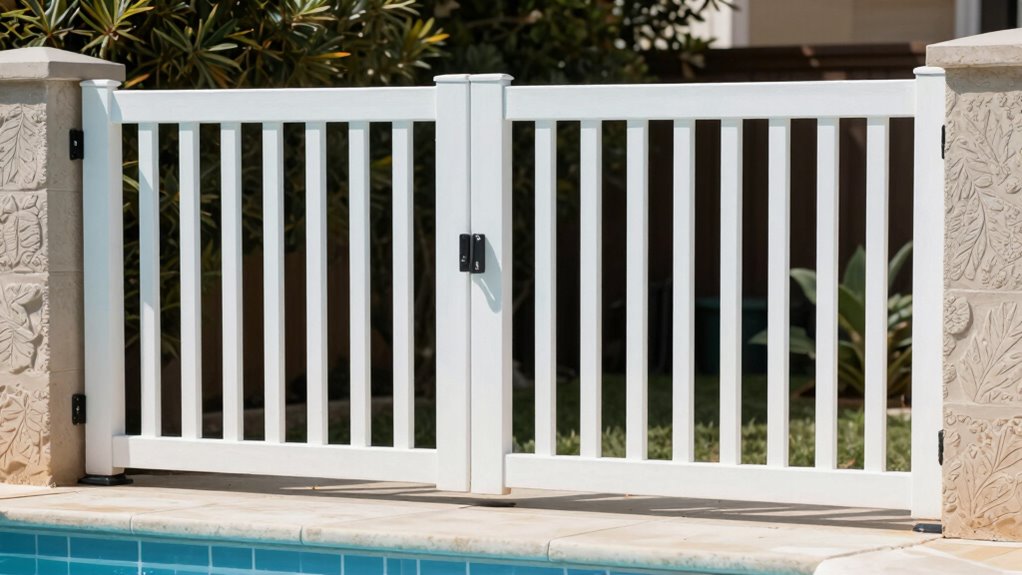
Make certain the gaps between your fence pickets are narrow enough to keep kids from slipping through. Regularly inspect your fence for any widening or damage that could create dangerous openings. Staying vigilant helps ensure your pool area stays secure and childproof. Also, consider monitoring systems that can alert you to any fence breaches or damage in real-time. Incorporating fence height standards can further enhance safety by reducing the chance of climbing or accidental entry. Ensuring your fence meets safety code requirements is essential for comprehensive protection, and understanding environmental impact of fencing materials can help you choose more sustainable options. Additionally, choosing eco-friendly fencing options can minimize environmental harm while maintaining safety.
Proper Gap Spacing
To keep children safe around pools, it’s essential to pay close attention to the gaps in your fence. Proper gap spacing prevents kids from slipping through or squeezing into dangerous areas while maintaining your pool’s aesthetics and landscaping integration. The gaps should be no wider than 1.75 inches to ensure small children can’t fit through. Avoid large openings that compromise safety, even if they blend well with the yard’s design. Use a fencing style that complements your landscaping without creating visual clutter or weak points. Consistent, well-measured gaps keep the fence both functional and attractive, reinforcing safety without sacrificing curb appeal. Regularly double-check gap sizes after installation or landscaping changes to maintain a secure barrier. Ensuring proper fence height is also vital for safety, preventing children from climbing over the barrier.
Regular Fence Inspections
How often do you check your pool fence? Regular inspections are key to preventing wide gaps that kids can slip through. Over time, fencing can shift or degrade, creating openings that compromise safety. Use landscaping barriers or privacy screens to reinforce weak spots and close gaps. During inspections, look for loose posts, damaged hardware, or leaning sections. Keep the fence secure and intact to deter curious little ones.
| Issue | Solution |
|---|---|
| Wide gaps or leaning fence | Tighten hardware or replace damaged parts |
| Shifting fence posts | Re-set or reinforce with concrete |
| Damaged privacy screens | Repair or replace quickly |
| Overgrown landscaping | Trim back to prevent climbing |
What Makes a Pool Gate Childproof and Secure?
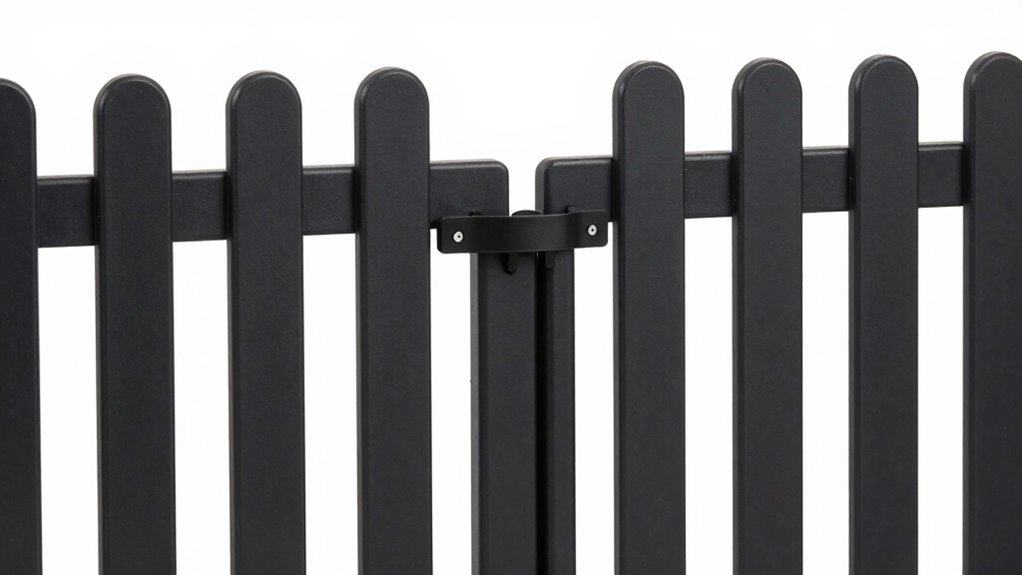
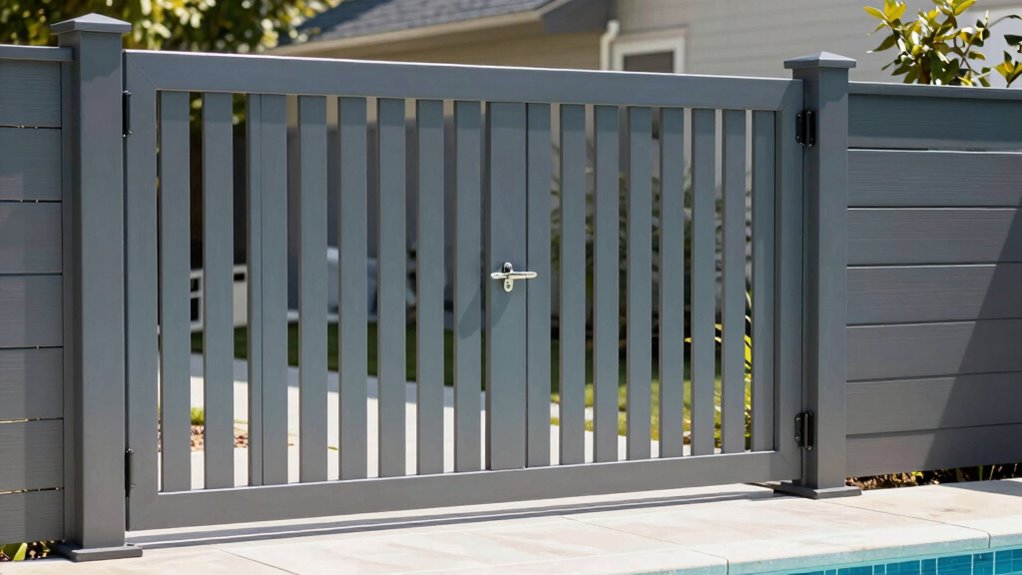
A pool gate’s primary goal is to prevent young children from accessing the pool area unsupervised. To achieve this, verify your gate features childproof locks that are out of reach and difficult for little hands to open. These locks should be self-latching and require deliberate action to disengage, adding an extra layer of safety. Additionally, consider how the gate fits with your fence’s aesthetics; a secure gate should blend seamlessly without creating gaps or weaknesses. Properly installed, childproof locks and a sturdy, well-aligned gate help prevent accidental escapes. Remember, the gate should swing outward, away from the pool, and lock automatically to reduce risks. Combining these features creates a safer environment and peace of mind for you and your family.
Proper Latch and Lock Placement for Safety
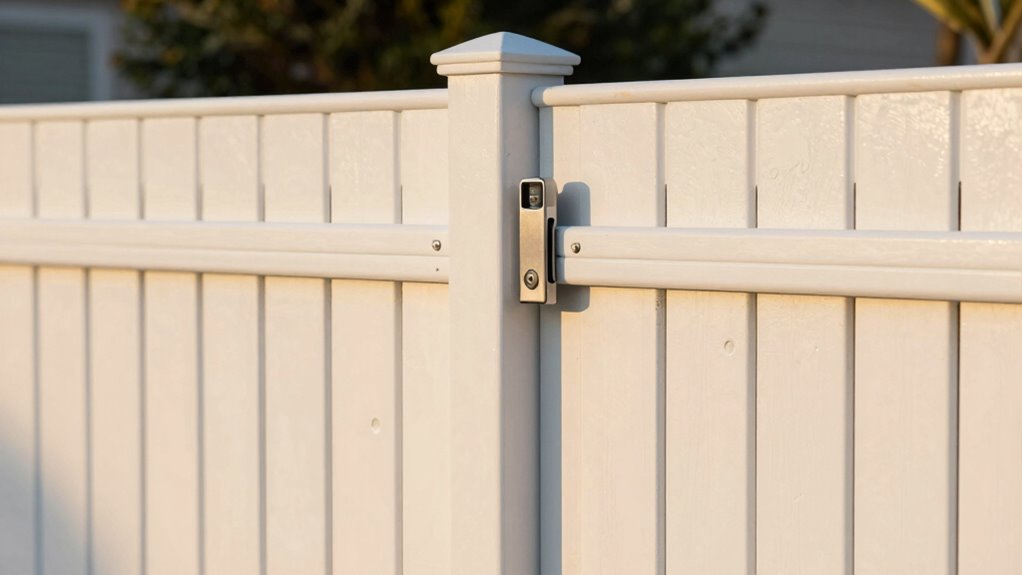
Proper placement of the latch and lock is vital to maintaining the safety features of your pool gate. You want to guarantee that the latch placement is high enough to be out of a child’s reach, typically at least 54 inches from the ground. The lock positioning should be on the inside of the gate, making it difficult for children to open. Consider these tips:
Ensure latch is at least 54 inches high and lock is on the inside for child safety.
- Mount the latch at the recommended height for child safety
- Place the lock in an unreachable area for kids
- Use self-closing and self-latching hardware
- Avoid latches that can be easily tampered with
- Regularly check the latch and lock for secure operation
Proper latch placement and lock positioning prevent accidental gate openings, keeping your pool area safe.
Materials and Design Features That Improve Fence Security
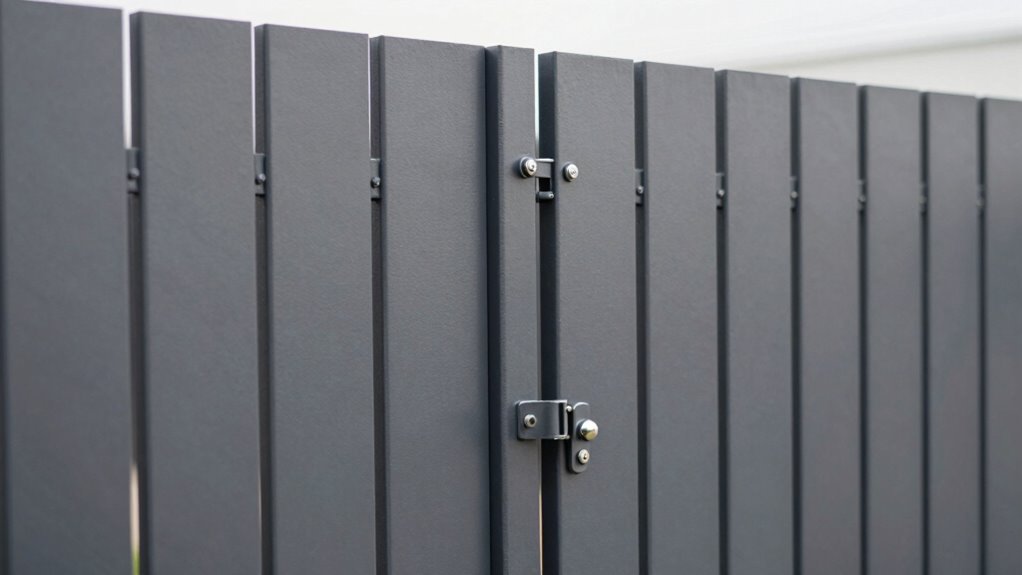
Choosing durable materials like aluminum or vinyl can make your fence more resistant to damage and tampering. Installing secure locking mechanisms guarantees unauthorized access is kept out, especially at entry points. Incorporating discreet design elements helps maintain the fence’s aesthetic while preventing curious children from finding weak spots.
Durable Material Choices
When selecting materials for a pool fence, durability is essential to guarantee long-lasting security. Strong, weather-resistant materials ensure your fence withstands the elements and daily wear, maintaining safety standards over time. Opt for materials like vinyl, powder-coated aluminum, or pressure-treated wood, which resist rust, rot, and warping. These choices reduce maintenance and enhance security.
Consider these durable options:
- Vinyl panels for low maintenance and strength
- Powder-coated aluminum for rust resistance
- Pressure-treated wood for natural appeal and durability
- Galvanized steel for maximum strength
- Composite materials combining resilience and longevity
Choosing the right materials not only boosts your pool fencing’s lifespan but also keeps your family safe, meeting safety standards now and in the future.
Secure Locking Mechanisms
Selecting the right locking mechanisms is essential for guaranteeing your pool fence remains secure and tamper-proof. Look for lock mechanisms that are sturdy, weather-resistant, and difficult for children to operate. Safety latches are crucial; they should be self-closing and require a deliberate action to open, preventing accidental escapes. Choose locks with keyed or keypad options for added security. Confirm the latch is positioned high enough to be out of reach of young children. Regularly check and maintain your lock mechanisms to prevent wear and failure. A sturdy, reliable lock adds an extra layer of protection, giving you peace of mind that your pool area stays secure when not in use. Proper locking mechanisms are a vital part of an effective safety fence.
Discreet Design Elements
Discreet design elements play a crucial role in enhancing your pool fence’s security without compromising its appearance. By using thoughtful materials and subtle features, you achieve both safety and aesthetic integration. Consider these options:
- Camouflaged hardware that blends with the fence material
- Hidden latches that are out of reach for children
- Neutral colors that match your surroundings
- Slim, unobtrusive posts for a cleaner look
- Integrated lock systems that remain discreet
These features ensure your fence remains secure while maintaining a seamless, attractive appearance. Discreet design reduces visual clutter, making your pool area safer without sacrificing style. When you focus on aesthetic integration, your fence becomes an unobtrusive yet effective safety barrier, giving you peace of mind and a beautiful backyard.
Troubleshooting Weak Spots Before Installing Your Fence
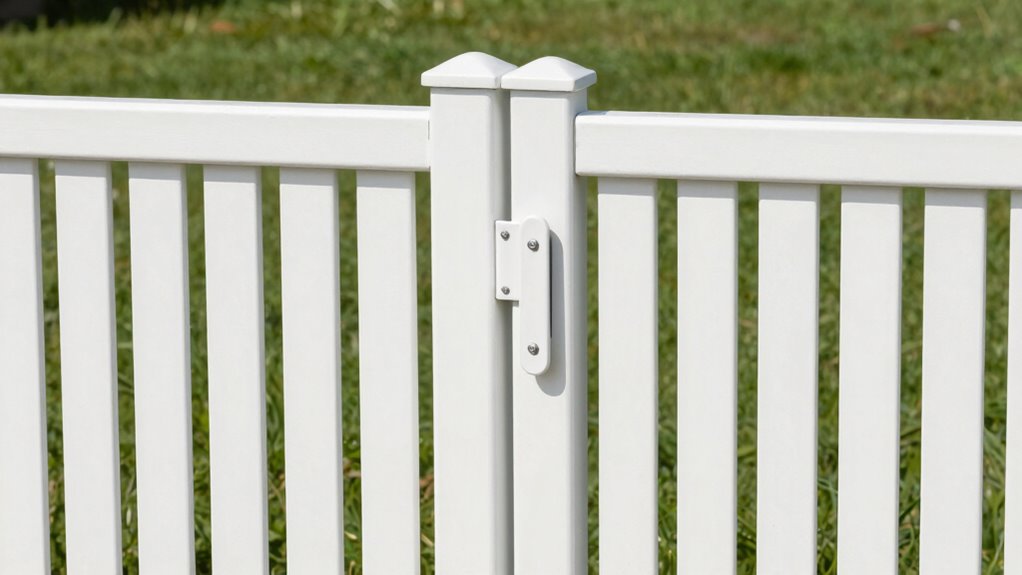
Before installing your pool fence, it’s essential to identify and address any weak spots that could compromise safety or durability. Inspect your yard for areas where the fence might be vulnerable, such as uneven ground, gaps, or loose posts. These weak points can undermine pool safety and make fence maintenance more challenging later. Use the table below to check common issues:
| Weak Spot | How to Fix | Why It Matters |
|---|---|---|
| Gaps at bottom | Add extensions or fill gaps | Prevents children from slipping underneath |
| Loose posts | Tighten or reinforce | Ensures stability and durability |
| Uneven terrain | Level the ground | Keeps fence upright and secure |
| Rust or corrosion | Treat or replace affected areas | Maintains fence integrity |
| Damaged panels | Repair or replace panels | Protects overall fence safety |
Follow These Local Regulations for Pool Fences
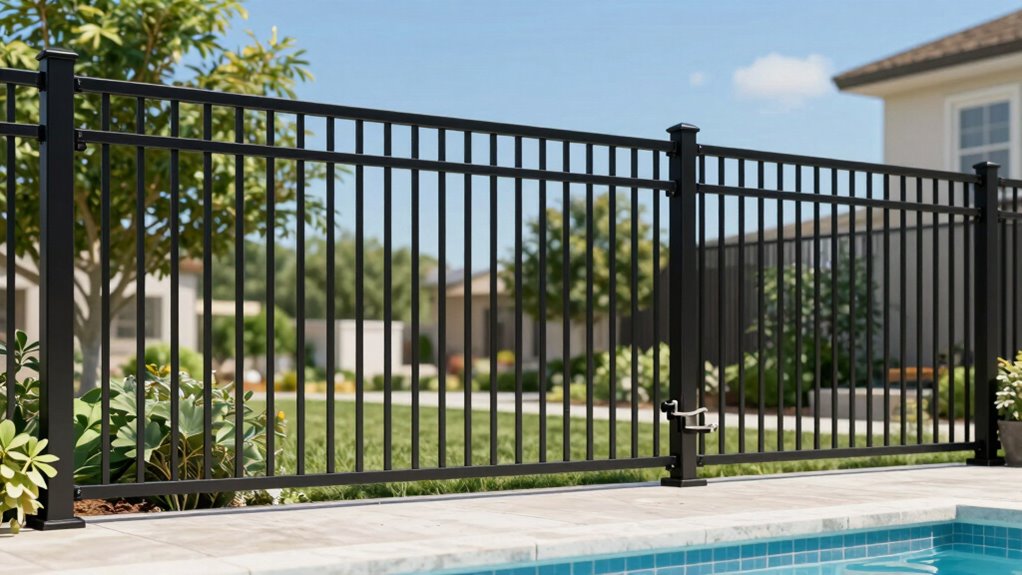
You need to follow your local regulations to guarantee your pool fence is compliant and safe. Make sure you meet the required height, use proper gate latching, and select fence materials that meet standards. Staying within these rules helps protect everyone and avoids potential fines.
Local Height Requirements
Understanding and adhering to your local height requirements for pool fences is essential to ensure safety and compliance. Most regulations specify a minimum height, often around 4 feet, but it varies by area. Your fence height impacts safety standards and may influence your choice of pool cover or fence color, as some communities have aesthetic guidelines. Make sure to verify local codes before installing. Keep in mind:
- Height minimums and maximums mandated locally
- Exceptions for certain pool types or locations
- The importance of secure, lockable gates
- How fence height affects overall safety
- Compatibility with pool cover installation
Following these rules helps prevent accidents and ensures your pool area remains compliant with local safety laws. Staying informed about height requirements saves you time and potential penalties.
Proper Gate Latching
Proper gate latching is a key aspect of maintaining a safe pool area, especially since many local regulations specify strict requirements for gate hardware. You should verify your gate has a self-closing and self-latching mechanism that’s functioning correctly at all times. This prevents accidental openings and keeps children safe. Installing a pool alarm system adds an extra layer of protection, alerting you if the gate is left open or tampered with. When choosing a fence, consider color options that enhance visibility and contrast, making it easier to monitor access points. Regularly check and maintain the latch to ensure it operates smoothly. Adhering to these guidelines helps you meet local regulations and creates a safer environment around your pool.
Fence Material Standards
Following local regulations for pool fences is essential to guarantee safety and compliance. Fence material standards ensure your pool barrier is durable, secure, and resistant to tampering. When choosing materials, consider their strength, weather resistance, and non-toxicity. Many regulations specify that fence materials must prevent climbing and be smooth to avoid injuries. To achieve pool barrier compliance, avoid materials that rust, rot, or degrade quickly. Opt for sturdy options like metal, vinyl, or composite materials that meet safety standards.
- Metal or aluminum fencing for durability
- Vinyl or PVC for low maintenance
- Wood treated for weather resistance
- Non-climbable surface designs
- Smooth, splinter-free finishes
Maintaining and Inspecting Your Fence for Long-Term Safety
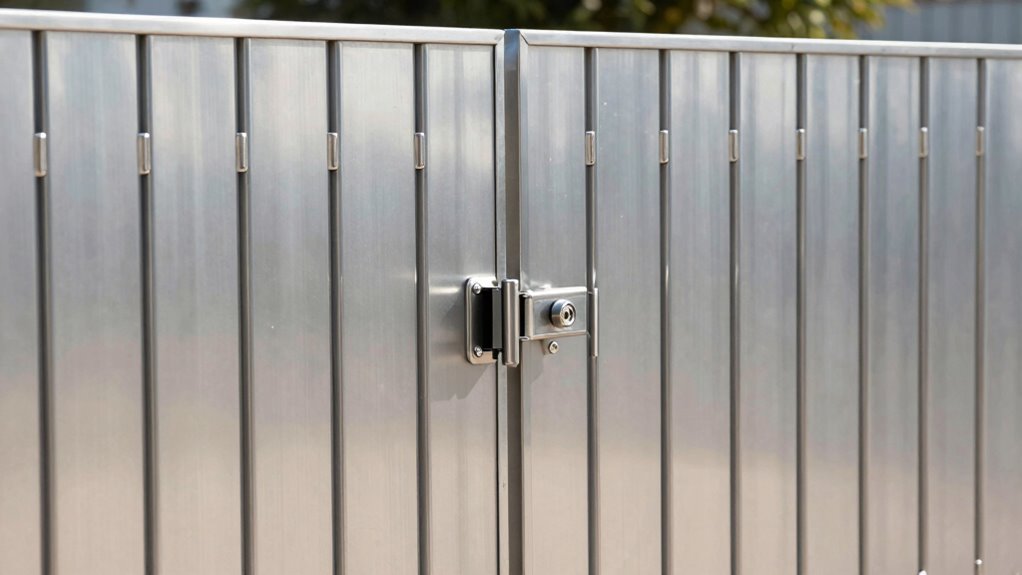
Regularly inspecting your pool fence is essential to guarantee it remains safe and effective over time. Check for loose or damaged panels, rust, or corrosion that could compromise its integrity. Ensure gates latch securely and self-close properly to prevent accidental openings. While inspecting, consider your garden aesthetics—trim back landscaping that might weaken or hide fence parts, and use landscaping tips to keep the area neat and unobstructed. Maintaining a clean, well-kept fence not only improves safety but also enhances your yard’s visual appeal. Address any issues promptly to avoid costly repairs later. Consistent inspections and maintenance keep your fence reliable, protecting loved ones and preserving the overall look of your outdoor space.
Frequently Asked Questions
Are There Specific Materials Recommended for Durable Pool Fences?
You should choose materials like aluminum, vinyl, or chain link for durable pool fences, as they offer excellent fence material durability. These materials resist rust, corrosion, and weather damage, making them ideal for outdoor use. Plus, they require minimal pool fence maintenance, helping you keep your fence in top shape with less effort. Always check the manufacturer’s guidelines to guarantee your chosen material withstands your local climate conditions.
How Often Should I Inspect My Pool Fence for Safety Issues?
You should inspect your pool fence at least once a month, imagining it as a fragile fortress guarding your tiny aquatic kingdom. Life’s weather impact and wear demand lifetime maintenance, so keep an eagle eye for rust, loose latches, or gaps. Regular checks guarantee safety and longevity, preventing tiny cracks from turning into underwater escapes. Stay vigilant, and your fence will stand tall against nature’s chaos, keeping everyone safe and secure.
Can Decorative Fences Meet Safety Standards?
Decorative fences can meet safety standards if they’re designed with decorative safety in mind, making certain they’re tall enough, have minimal gaps, and include secure gates. You should check that your aesthetic compliance doesn’t compromise safety features like proper height and gate latches. Always verify with local regulations and consider consulting a professional to ensure your decorative fence provides effective safety while enhancing your pool area’s look.
What Are Common Mistakes to Avoid During Installation?
You should avoid installation pitfalls like neglecting proper height, gaps, and gate latches, which often lead to safety oversights. Rushing the setup or ignoring manufacturer instructions can compromise your fence’s effectiveness. Double-check measurements and make certain the gate self-closes and latches securely. Remember, a well-installed fence isn’t just about aesthetics; it’s your first line of defense. Stay vigilant during installation to keep loved ones safe and prevent costly mistakes.
Do Different Pool Fence Regulations Apply to Residential vs. Commercial Pools?
Yes, different pool fence regulations apply to residential and commercial pools. You should compare regulations because legal differences often mean stricter standards for commercial pools, like increased height, fewer gaps, and self-closing gates. These rules aim to enhance safety in public settings. Always verify local codes to ensure compliance, as failure to follow regulations can lead to fines or legal issues. Proper adherence keeps everyone safe and avoids penalties.
Conclusion
Think of your pool fence as a fortress guarding your loved ones. When you pay attention to height, gaps, and gate security, you’re building more than just a barrier—you’re creating peace of mind. I once watched a neighbor double-check her fence, ensuring every gap was sealed. That simple step prevented a potential accident. Remember, a well-designed fence is your family’s shield, standing strong and secure, so you can relax and enjoy your backyard safely.