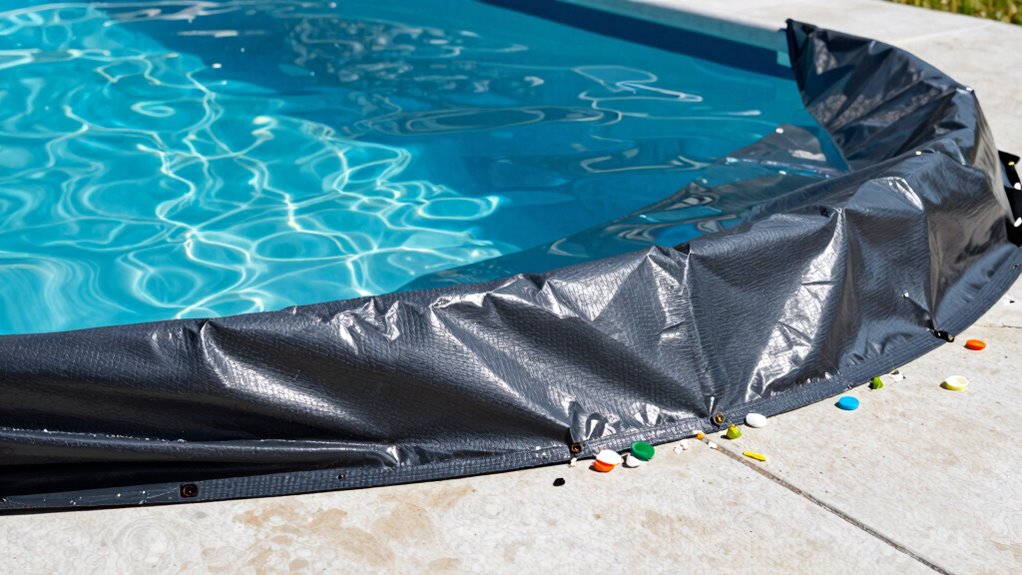

Pool covers made from synthetic materials can shed microplastics over time, especially if they’re old, damaged, or low-quality. This shedding contributes to environmental pollution and harms aquatic ecosystems. Different types, like vinyl or mesh covers, vary in how much they shed, and factors such as UV exposure and wear increase this. Choosing durable, eco-friendly covers helps reduce microplastic pollution. Keep exploring to discover ways to make better choices for your pool and the environment.

Get pool and patio gear delivered free — and shop member deals
- Fast, free delivery on millions of items
- Access to Prime Big Deal Days deals on October 6–7
- Prime Video, Amazon Music and more included
Key Takeaways
- Synthetic pool covers, especially older or low-quality ones, shed microplastics as their materials degrade over time.
- UV exposure, age, and physical abrasion increase microplastic shedding from pool covers.
- Eco-friendly, durable, and biodegradable covers shed fewer microplastics, reducing environmental impact.
- Different cover types, like solar or safety covers, vary in shedding potential based on material and design.
- Regular maintenance and choosing high-quality, sustainable materials help minimize microplastic release.
As an affiliate, we earn on qualifying purchases.
Do Pool Covers Shed Microplastics?
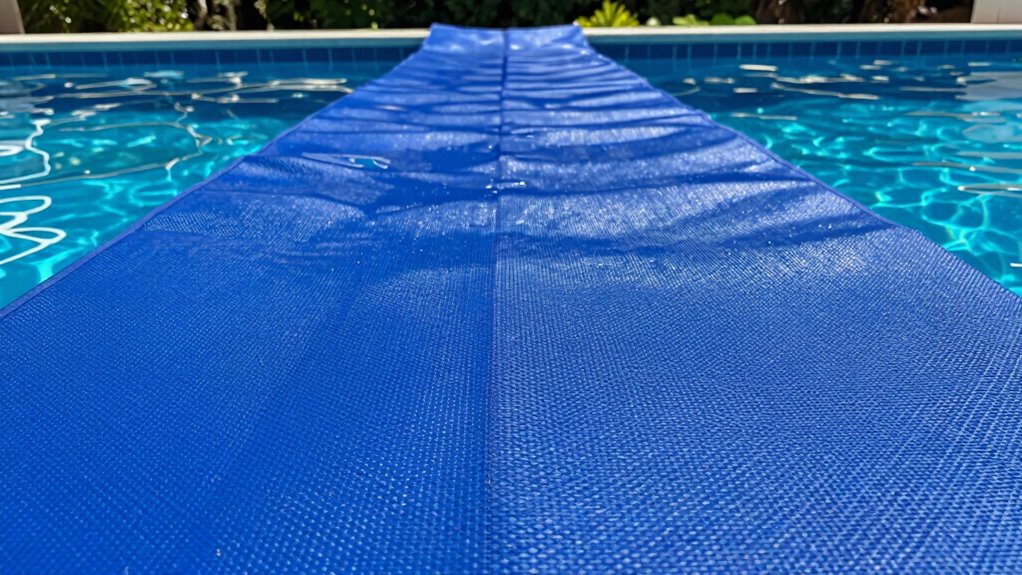
Do pool covers shed microplastics? It’s a common concern because of their potential environmental impact. Many pool covers, especially those made from synthetic materials, can release tiny plastic particles over time. These microplastics contribute to microplastic pollution, which harms aquatic life and ecosystems. When covers degrade or are damaged, small fragments can break off and wash into nearby water sources. This shedding process is often unnoticed but adds to the growing problem of microplastic contamination in our environment. Understanding whether your pool cover sheds microplastics helps you make eco-friendly choices. While some materials are more stable, others may pose a higher risk of releasing microplastics, impacting wildlife and water quality alike. Additionally, material degradation can accelerate microplastic release, especially when exposed to UV rays and physical wear. Regular maintenance and choosing eco-friendly materials can help reduce the shedding of microplastics from pool covers. Being aware of synthetic polymer breakdown can further inform your choices and encourage the use of sustainable alternatives. Moreover, environmental impact assessments of different pool cover materials can guide consumers toward more sustainable options.
microplastic shedding pool cover
As an affiliate, we earn on qualifying purchases.
As an affiliate, we earn on qualifying purchases.
What Are the Different Types of Pool Covers?
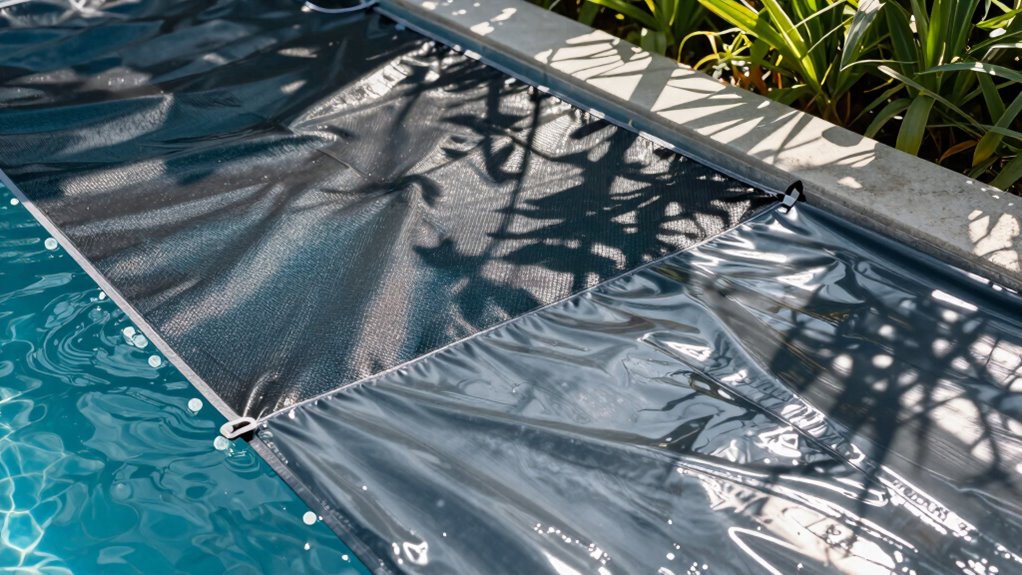
Understanding the different types of pool covers can help you choose the most eco-friendly and effective option for your needs. Here are four common types:
- Solar covers – thin, bubble-like sheets that harness solar energy to warm your pool while reducing evaporation.
- Safety covers – solid or mesh designs that prevent accidental falls and include safety features like secure anchors.
- Automatic covers – retractable covers with motors, offering convenience and insulation benefits.
- Thermal blankets – heavy-duty covers that retain heat and reduce energy costs, often used with solar heating systems. Additionally, the material composition of each cover influences its potential for microplastic shedding and environmental impact. Selecting covers made from sustainable materials can further reduce environmental harm and support eco-conscious pool maintenance. Each type impacts microplastic shedding differently and influences your pool’s energy efficiency and safety. Choosing the right cover aligns with your eco goals and safety priorities. Understanding the microplastic shedding potential of each cover type can help you make environmentally conscious choices. Additionally, some covers are made from materials that shed fewer microplastics, contributing to microplastic reduction efforts and protecting aquatic environments.
As an affiliate, we earn on qualifying purchases.
How Much Microplastic Do Pool Covers Shed?
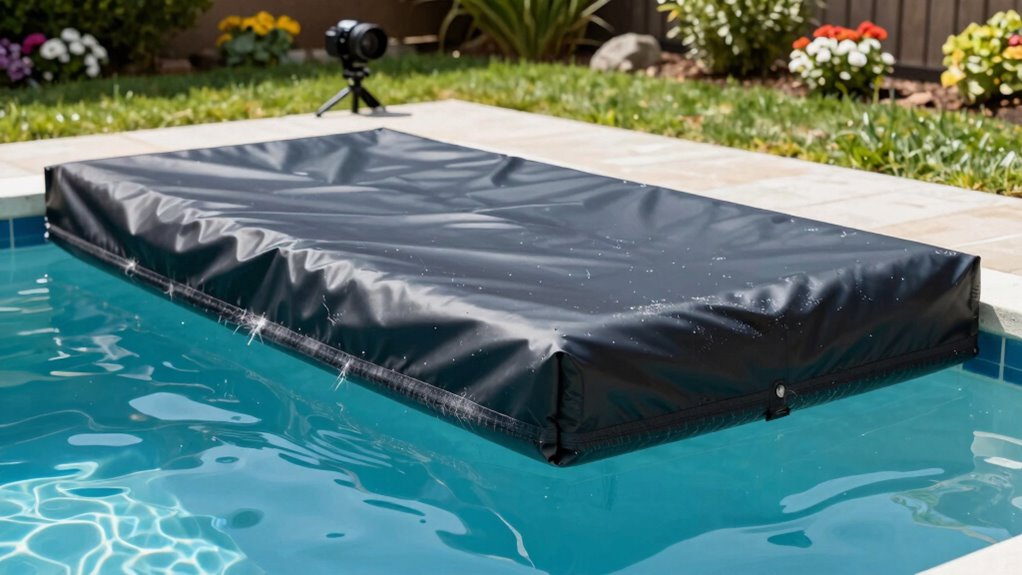
Ever wondered how much microplastic your pool cover might shed over time? The answer depends on the type of cover and your pool maintenance routine. Different microplastic sources, such as older vinyl or plastic covers, can shed varying amounts during regular use or cleaning. Typically, lightweight covers or those made from low-quality materials tend to shed more microplastics, especially when exposed to UV rays or friction. While some shedding is inevitable, proper pool maintenance—like regular cleaning and choosing durable, high-quality covers—can reduce microplastic release. Being aware of microplastic pollution and its sources can help you make more environmentally conscious decisions about your pool accessories. Additionally, understanding plastic degradation can help you select covers that are less prone to shedding. It’s also helpful to consider the material composition of your cover, as certain formulations are more resistant to shedding and degradation. Monitoring the shedding frequency of your cover can provide insights into its longevity and environmental impact. It’s important to monitor how often your cover sheds particles to understand its impact. Although exact quantities are hard to measure, minimizing shedding helps protect the environment from microplastic pollution linked to routine pool care.
As an affiliate, we earn on qualifying purchases.
What Factors Increase Microplastic Shedding?
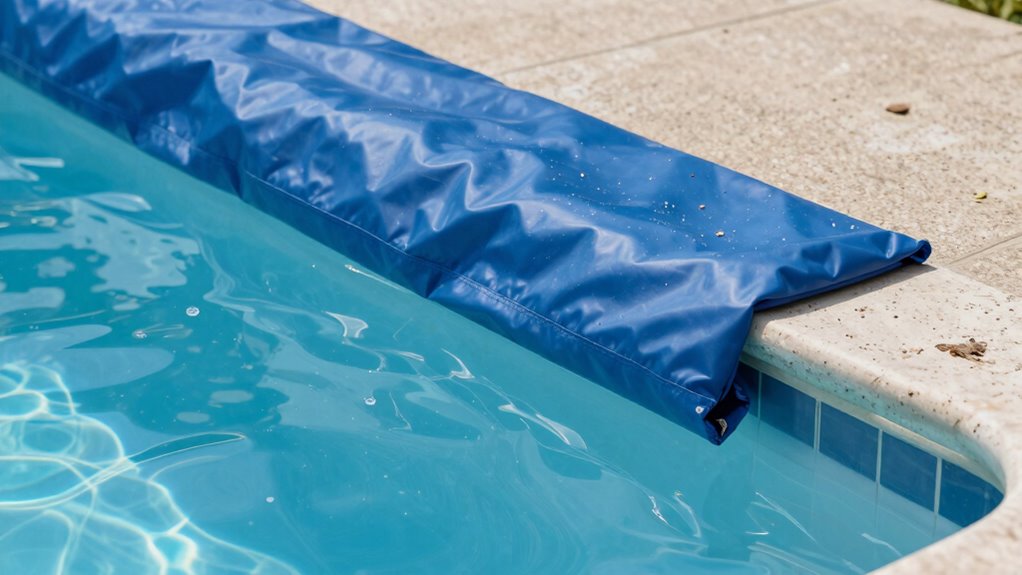
Several factors can accelerate the release of microplastics from your pool cover. First, exposure to sunlight causes UV degradation, breaking down synthetic fibers and increasing shedding. Second, frequent pool use or debris scrapes can abrade the cover’s surface, releasing tiny particles. Third, aging and wear weaken the material’s structure, making it more fragile. Fourth, high temperatures can speed up chemical processes that degrade plastics, releasing microplastics faster. UV degradation is especially impactful, causing surface cracks and fiber loss over time. Synthetic fibers in pool covers are vulnerable; as they weaken, microplastic shedding rises. material durability plays a significant role in how long a cover remains resilient against shedding. Additionally, understanding the environmental impact of microplastic pollution highlights the importance of maintaining your cover and reducing exposure to harsh conditions, which can slow this process and help prevent unnecessary pollution.
How Can You Choose Eco-Friendly Pool Covers to Reduce Pollution?
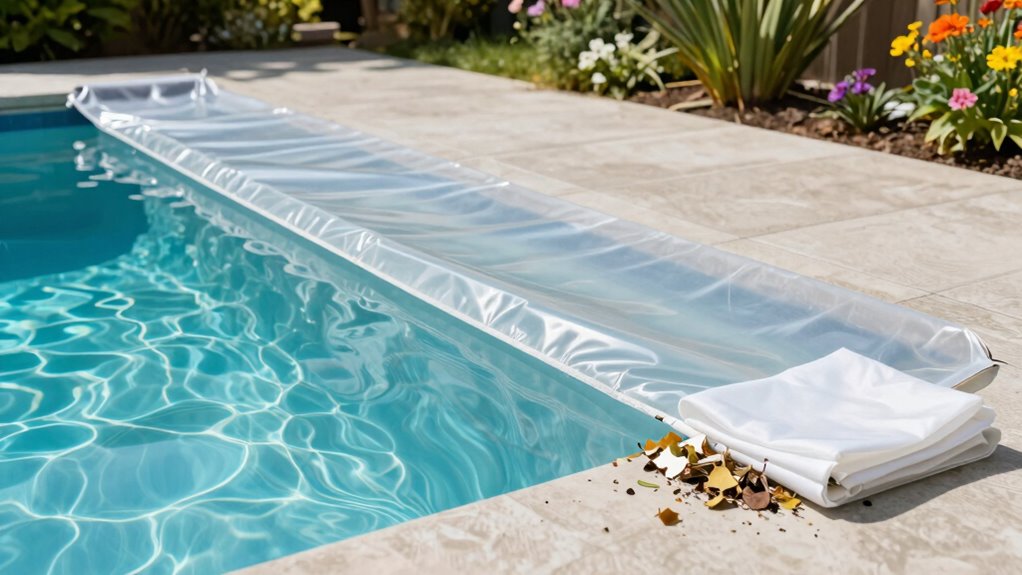
Choosing eco-friendly pool covers begins with selecting materials that are durable and biodegradable, which can considerably reduce microplastic pollution. Look for covers made from eco friendly materials designed through sustainable manufacturing processes. These materials break down more easily in the environment, minimizing plastic shed. When choosing, consider these options:
| Material Type | Eco Friendly Features | Manufacturing Impact |
|---|---|---|
| Recycled PVC | Reduces waste, durable | Uses recycled content, sustainable |
| Bioplastics | Biodegradable, renewable sources | Lower environmental footprint |
| Natural Fibers | Biodegradable, renewable, minimal processing | Minimal chemical use |
Prioritize brands committed to sustainable manufacturing to ensure your pool cover supports pollution reduction effectively.
Frequently Asked Questions
Are There Specific Brands Known for Eco-Friendly Pool Covers?
Yes, some brands stand out for eco-friendly pool covers. Look for companies with eco-friendly certifications like Green Seal or OEKO-TEX, which guarantee sustainable practices. These brands often use sustainable materials like recycled or biodegradable fabrics, reducing environmental impact. By choosing these options, you support eco-conscious manufacturing and help minimize microplastic shedding, making your pool maintenance more sustainable and environmentally responsible.
How Often Should Pool Covers Be Cleaned to Minimize Microplastic Shedding?
Think of your pool cover like a garden needing regular tending. To minimize microplastic shedding, you should perform cover maintenance and cleaning at least once every two to four weeks, especially after storms or heavy use. Regular cleaning prevents debris buildup and reduces wear and tear, ensuring your cover stays intact longer. Staying consistent with cleaning frequency helps protect the environment from microplastics shed during daily use.
Can Pool Covers Be Recycled or Repurposed After Use?
You can often recycle or repurpose pool covers after use. Check local recycling options for plastics like polyethylene or vinyl, which some facilities accept. As for repurposing, consider cutting the cover into smaller pieces for DIY projects like outdoor mats or protective padding. Reusing your cover helps reduce waste and environmental impact, making it a smart choice to extend its life through recycling or creative repurposing methods.
Do Seasonal Changes Affect the Rate of Microplastic Shedding?
Seasonal fluctuations and temperature variations definitely influence how much microplastic your pool cover sheds. Warmer months often cause materials to expand and degrade faster, increasing shedding, while colder seasons slow this process. Think of your cover as a mirror reflecting nature’s rhythm—when temperatures shift, so does its shedding rate. You’ll notice more microplastics during seasonal changes when temperature swings are greatest, highlighting the importance of monitoring and maintaining your cover year-round.
What Are the Health Impacts of Microplastics From Pool Covers?
Microplastics from pool covers can pose health risks through ingestion and chemical leaching. When you accidentally ingest microplastics, they may carry harmful chemicals into your body, potentially disrupting hormones or causing inflammation. Chemical leaching can also introduce toxins into your environment, which may be absorbed through skin or inhaled. To protect your health, consider using eco-friendly covers that shed fewer microplastics and avoid prolonged exposure to plastic materials.
Conclusion
Think of your pool cover as a guardian of your backyard oasis. Just like a shield protecting a castle, it keeps debris out but can also shed tiny microplastic fragments into the environment. By choosing eco-friendly covers, you’re guiding your castle’s defenses to be stronger and kinder to nature. When you make mindful choices, you’re not just safeguarding your pool—you’re helping protect the entire kingdom from invisible invaders. Your conscious decision can turn you into a true environmental hero.
Fall Picks
fall essentials
As an affiliate, we earn on qualifying purchases.