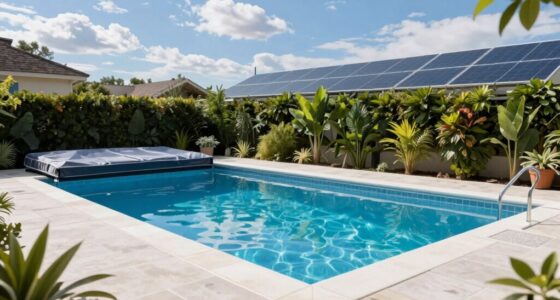
To reduce evaporation in hot and windy climates, start by planting taller plants or trees nearby to act as natural barriers against wind and sunlight. Mulch your soil with organic materials like wood chips or straw to keep moisture in and lower soil temperature. Use windbreaks and fences strategically to slow airflow around your plants. Water deeply and less often, preferably early morning or late afternoon, to minimize loss. For more effective tips, keep exploring ways to create a resilient garden environment.
Key Takeaways
- Plant taller vegetation or trees as natural windbreaks and shade providers.
- Apply mulch evenly over soil to minimize evaporation and maintain moisture.
- Use windbreaks and physical barriers like fences on the windward side to reduce wind speed.
- Water deeply during early morning or late afternoon to optimize moisture retention.
- Incorporate diverse plantings and understand soil properties for tailored, ecosystem-based moisture conservation.
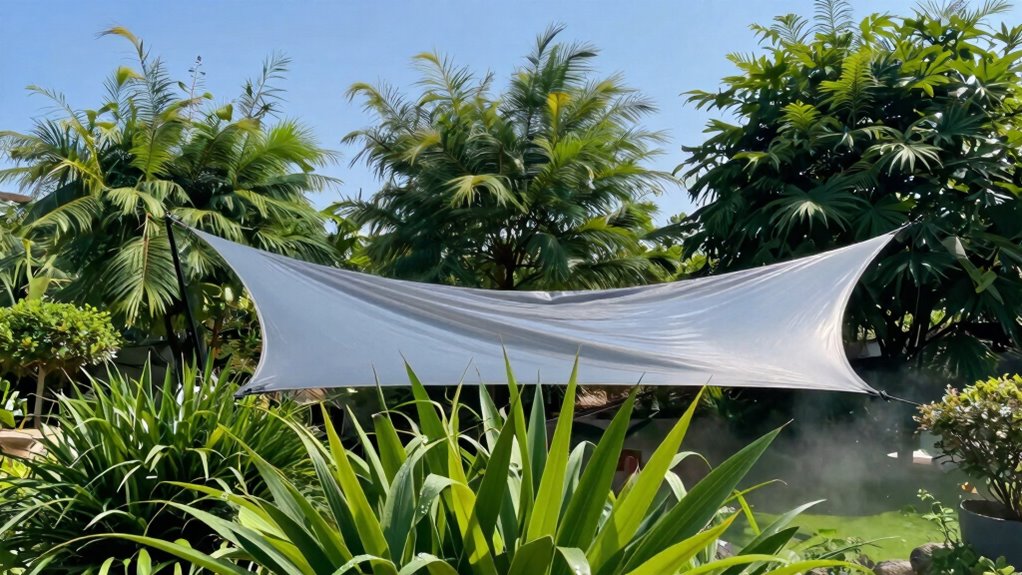
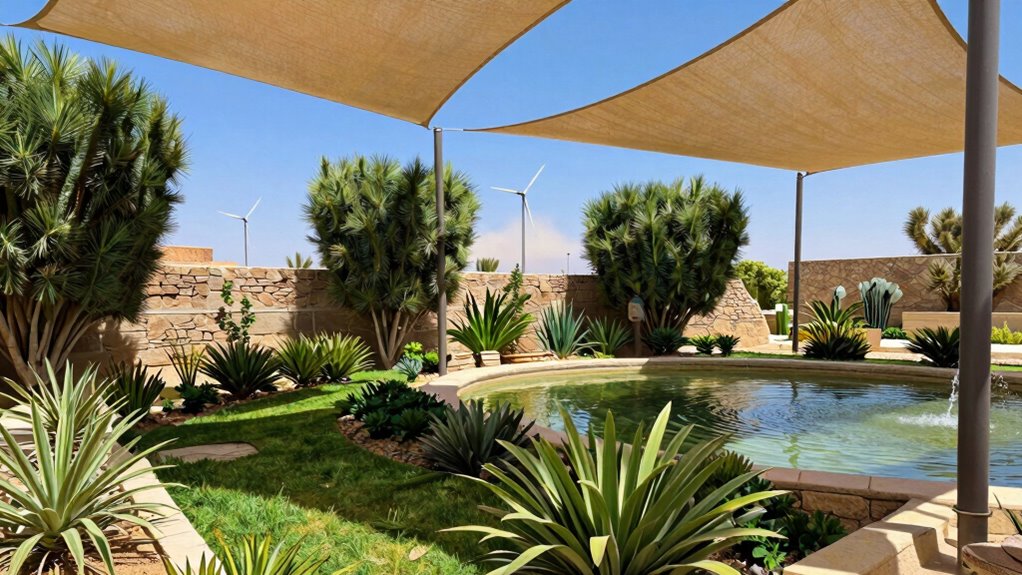
When you’re dealing with hot and windy climates, evaporation becomes a major concern, especially for water conservation and maintaining moisture levels. Wind speeds up the rate at which water escapes from the soil, leading to drier soil conditions and stressing your plants. To combat this, you need strategies that help keep soil moisture intact and reduce the impact of wind. One effective approach is to utilize plant shading, which provides a natural barrier against direct sunlight and wind exposure. By planting taller plants or trees nearby, you create a shaded environment that lowers soil temperature and slows down evaporation. This not only conserves water but also keeps the roots cooler, promoting healthier plant growth.
Plant taller plants or trees nearby to shade soil and reduce evaporation in hot, windy climates.
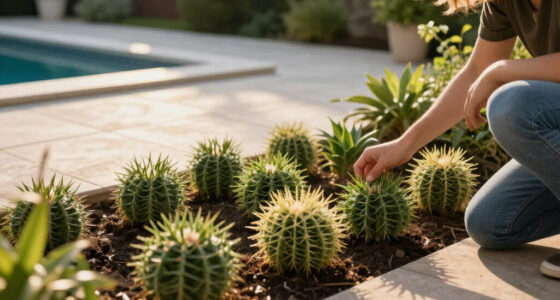
Another way to preserve soil moisture is to apply mulch around your plants. Mulch acts as a protective layer, reducing wind impact and preventing water from evaporating quickly from the soil surface. Organic mulches like wood chips, straw, or shredded leaves are particularly effective because they also improve soil health over time. When applying mulch, ensure it’s spread evenly and thick enough—around 2 to 3 inches—to create a robust barrier against wind and sun. Additionally, watering deeply and less frequently encourages plants to develop stronger root systems that can access moisture deeper in the soil, making them more resilient in windy conditions.
Installing windbreaks, such as fences or screens, can be highly beneficial in reducing wind velocity around your garden or landscape. These barriers slow down the airflow, decreasing the rate at which soil moisture evaporates. You should position windbreaks strategically, ideally on the windward side of your plants, to maximize their effectiveness. Along with physical barriers, adjusting your watering schedule based on weather conditions can help maintain consistent soil moisture levels. Watering early in the morning or late in the afternoon minimizes water loss due to heat and wind, ensuring that your plants get the hydration they need during the hottest parts of the day. Incorporating biodiversity in your planting strategy can also help create a more resilient ecosystem that naturally supports moisture retention and wind protection. Understanding soil properties can further aid in selecting the best moisture retention methods for your specific environment.
Ultimately, combining these methods—plant shading, mulching, windbreaks, and smart watering—creates a comprehensive defense against evaporation. It helps you conserve water, keeps your soil moist, and safeguards your plants from the harsh effects of hot, windy weather. By paying attention to how your environment influences moisture levels, you can develop a resilient garden that thrives despite challenging conditions.

Temporary Fence with Posts,4'x50' Safety Barrier for Dog Snow Plastic Mesh Fencing with Fiberglass Stake Windbreak Rope,Movable Fencing Roll for Garden Backyard Outdoor Animal Protect
- Size and Length: 4ft high, 50ft long mesh fencing
- Complete Safety Kit: Includes fiberglass stakes and windbreak robes
- Durable Material: UV-resistant nylon with reinforced ribs
As an affiliate, we earn on qualifying purchases.
As an affiliate, we earn on qualifying purchases.
Frequently Asked Questions
How Does Soil Type Affect Evaporation Rates?
Soil type directly impacts evaporation rates because it influences soil moisture retention. Sandy soils drain quickly, increasing evaporation, while clay soils hold moisture longer, reducing evaporation. Organic matter improves soil structure, helping retain moisture and slow evaporation. By choosing soil with higher organic content and better moisture retention, you can minimize water loss, especially in hot, windy conditions. Knowing your soil type helps you implement effective strategies for conserving soil moisture.
Can Plant Selection Influence Water Retention?
Yes, your plant selection can influence water retention. Opt for plants with deep root systems and adaptive traits suited for hot, windy climates. These plants access water from deeper soil layers, reducing evaporation loss. By choosing species with natural plant adaptations that promote efficient water use, you enhance your landscape’s resilience and minimize water needs, making your garden more sustainable and better equipped to handle harsh environmental conditions.
Are There Specific Materials Better for Irrigation Systems?
You should opt for durable, UV-resistant materials like polyethylene for your irrigation system. For example, a community garden in Arizona used high-quality drip irrigation hoses with tight fittings, reducing leaks and evaporation. Combining this with mulch covers around plants further minimizes water loss. These materials withstand harsh weather, guarantee efficient water delivery, and work synergistically to conserve water in hot, windy climates.
How Does Humidity Impact Evaporation in These Climates?
Higher humidity levels reduce evaporation, making it easier for you to control water loss in hot, windy climates. When humidity is low, evaporation speeds up, requiring you to implement more effective evaporation control strategies. By monitoring humidity levels, you can adjust your irrigation schedule or use mulching and shading techniques to minimize water loss. Maintaining ideal humidity helps conserve water and keeps your plants healthy despite challenging weather conditions.
What Are Cost-Effective Methods for Large-Scale Application?
Did you know that efficient mulching can reduce water loss by up to 70%? For large-scale application, focus on cost-effective watering systems like drip irrigation, which minimizes waste. Combine this with efficient mulching using materials like straw or wood chips to protect soil and retain moisture. These methods are affordable, scalable, and highly effective in hot, windy climates, helping you conserve water while maintaining healthy plants.

Brut Organic Aspen Mulch 10 QT – Natural Moisture Retainer & Root Protector – Odor-Free, Nutrient-Rich Bark Mulch for Landscaping, Garden Beds & Potted Plants
- Natural Garden Cover: Minimizes weeds and supports healthy soil
- High Carbon Organic Mulch: Contains 30% natural carbon for soil vitality
- Moisture-Retaining & Water-Efficient: Helps retain soil moisture and reduce watering
As an affiliate, we earn on qualifying purchases.
As an affiliate, we earn on qualifying purchases.
Conclusion
By implementing these strategies, you can turn your hot, windy climate into a fortress against evaporation. Covering soil, mulching, and creating windbreaks form an unstoppable defense, preserving moisture like a miracle worker. Imagine your garden as an oasis amid a desert—lush, vibrant, and resilient. Don’t let the scorching winds drain your water resources; instead, fight back with these simple, effective methods and watch your plants thrive against all odds!

Cool Area Sun Shade Cloth Shade Net for Garden, 55% 6.5x10ft, Black
- Long-lasting Material: Tear resistant and high temperature resistant
- Easy Installation: Special woven hole design for convenience
- Optimal Sun and UV Block: Blocks 55% of sunlight and UV rays
As an affiliate, we earn on qualifying purchases.
As an affiliate, we earn on qualifying purchases.

Outdoor Garden Hose Faucet Timers, Programmable Water Sprinkler Timer with Rain Delay/Manual/Automatic Drip Irrigation and Lawn Watering System for Yard, 1 Outlet
- Easy to Program: Set schedule with dial and buttons
- Flexible Watering Settings: Adjust frequency and duration easily
- Multiple Watering Modes: Auto, Manual, Rain Delay options
As an affiliate, we earn on qualifying purchases.
As an affiliate, we earn on qualifying purchases.