When planning your pool plumbing layout, positioning the pump near the pool in a ventilated, stable spot helps reduce noise and enhances efficiency. Keep pipes as direct as possible to minimize pressure drops and energy costs, and insulate exposed pipes to maintain temperature and cut noise transmission. Design for easy access to valves and filters for simple maintenance, and include shut-off valves for quick repairs. If you want to find out how smart layout choices can make your system perform better, keep exploring.

Get pool and patio gear delivered free with Prime
- Fast, free delivery on millions of items
- Prime Video, Amazon Music and more included
- Member-only deals all year
Key Takeaways
- Position the pump close to the pool in a ventilated, stable area to minimize noise and pressure drops.
- Design piping with shortest, direct routes for reduced material use, pressure loss, and easier maintenance.
- Insulate all exposed pipes to maintain temperature, reduce noise transmission, and prevent freezing.
- Incorporate accessible valves and quick-disconnect points for simplified troubleshooting and repairs.
- Use vibration-absorbing surfaces and strategic layout to decrease operational noise and improve overall system efficiency.
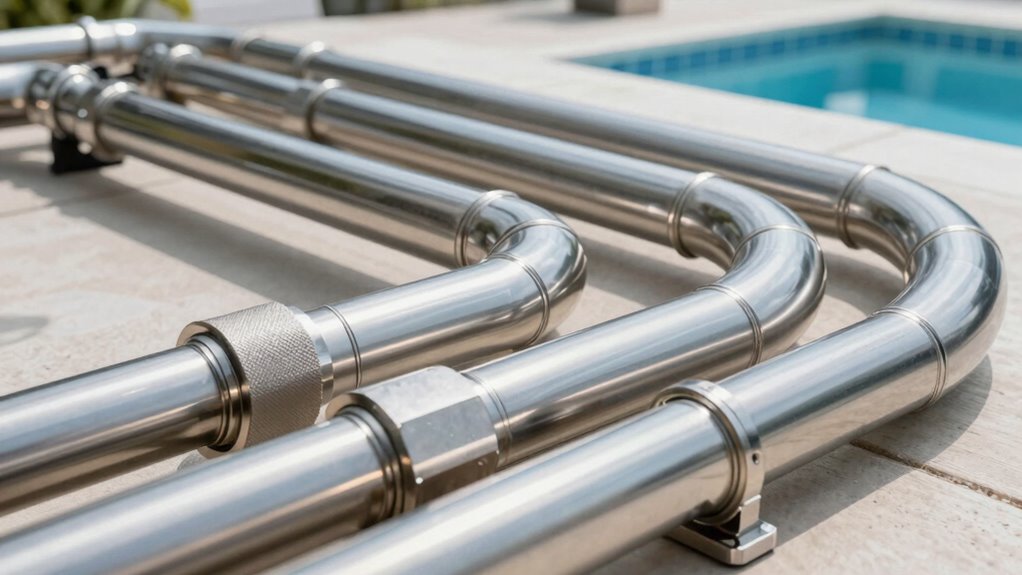
Are you unsure how to plan your pool’s plumbing layout? Getting it right is crucial for noise reduction, energy efficiency, and easy maintenance. The placement of your pump plays a critical role here. You should position the pump as close to the pool as possible, ideally in a dedicated equipment area that’s ventilated and protected from the elements. Proper pump placement minimizes the length of pipe runs, reducing the chances of air leaks or pressure drops, which can lower efficiency and increase noise. Additionally, placing the pump on a stable, vibration-absorbing surface helps dampen sound, so you won’t be disturbed by loud operational noises.
Position your pool pump close to the pool in a ventilated, stable area to reduce noise and improve efficiency.
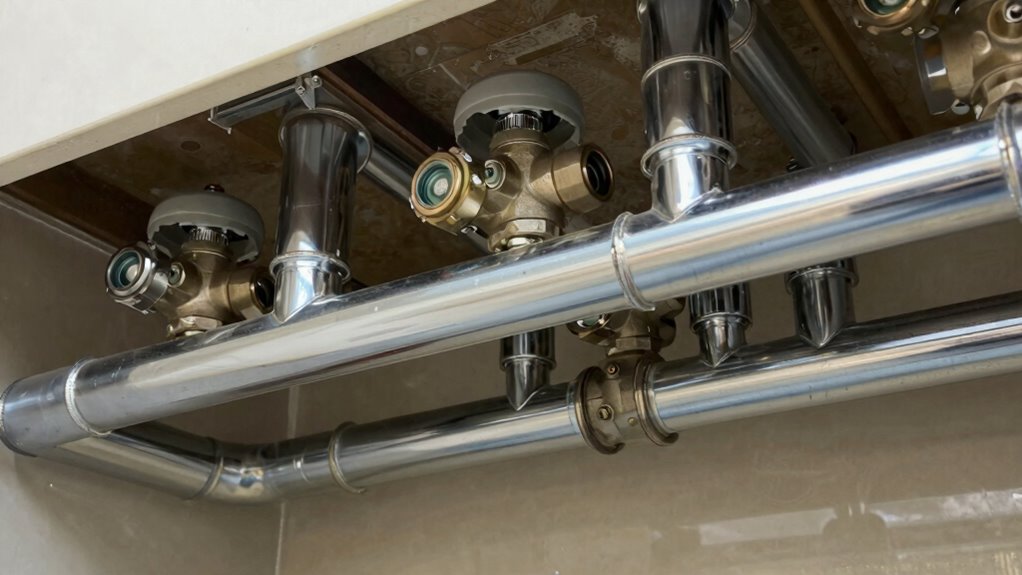
Pipe insulation is another essential factor that influences the overall performance of your pool plumbing. Insulating your pipes helps maintain water temperature, reducing heat loss, which can greatly cut energy costs. It also prevents condensation on cold water lines, avoiding water damage and mold growth around your equipment area. When planning your plumbing layout, make sure to insulate all exposed pipes, especially in cooler climates or areas with high humidity. Proper insulation not only boosts efficiency but also diminishes the noise transmitted through pipes when water flows at high speeds. This means less rattling and banging, contributing to a quieter pool environment. Proper pipe insulation can also help prevent pipe freezing in colder weather, safeguarding your system from potential damage. Incorporating effective insulation techniques during installation can further enhance these benefits. Moreover, selecting the right insulation materials can improve the longevity of your plumbing components by protecting them from temperature fluctuations.
The configuration of your piping system impacts serviceability as well. Opt for a design that allows easy access to all valves, filters, and the pump itself. Avoid overly complex layouts that require extensive disassembly for routine maintenance or repairs. Incorporate strategic shut-off valves so you can isolate sections of the system without draining the entire pool. This not only saves time but also minimizes service interruptions. When planning pipe routes, consider the shortest, most direct paths possible. This reduces the amount of pipe needed, minimizes potential leak points, and simplifies troubleshooting if issues arise. Additionally, planning for easy access points can significantly reduce the effort required for future maintenance tasks.
In every aspect of your pool’s plumbing layout, think about how each element interacts with the others. Proper pump placement and pipe insulation might seem like small details, but they greatly influence noise levels, energy efficiency, and how easily you can service your system. Incorporating smart layout design ensures you maximize performance and ease of maintenance. Taking the time to plan with these factors in mind ensures a smoother operation, lower costs, and a more enjoyable swimming experience. Remember, a well-thought-out plumbing layout is the backbone of a reliable, efficient, and quiet pool system.
As an affiliate, we earn on qualifying purchases.
Frequently Asked Questions
How Long Does Pool Plumbing Installation Typically Take?
Pool plumbing installation usually takes about 1 to 3 days, depending on the project size. You’ll want to carefully consider pump placement to guarantee ideal flow and easy access for maintenance. Using high-quality pipe materials like PVC can speed up installation and improve durability. Proper planning helps avoid delays, so working with experienced professionals guarantees your plumbing is installed efficiently, minimizing noise, and ensuring long-term serviceability.
What Is the Cost Difference Between Various Plumbing Layouts?
You’ll find that plumbing costs vary wildly, making your wallet cry or cheer. A simple, straight layout is budget-friendly, while elaborate setups with extra fittings or pumps drive up layout expenses. If you’re feeling fancy, expect to pay a premium for noise-reducing features or easy access. In short, your choice of plumbing layout directly impacts your total costs, so plan wisely to avoid budget shock later.
Can Existing Pools Be Retrofitted With New Plumbing Layouts?
Yes, you can retrofit existing pools with new plumbing layouts, but you’ll face some challenges. Retrofitting challenges include maneuvering around existing structures and guaranteeing plumbing compatibility with current systems. You’ll need to assess the pool’s current plumbing setup carefully and plan the retrofit to minimize damage and maximize efficiency. Hiring an experienced professional can help you address compatibility issues and guarantee the new layout improves noise reduction, serviceability, and overall performance.
How Often Should Pool Plumbing Be Inspected or Maintained?
You should check your pool plumbing regularly, ideally once a year, to keep everything running smoothly. During inspections, focus on leak detection and pipe corrosion, which can quietly cause issues if neglected. Keeping an eye on these areas helps prevent costly repairs and maintains water efficiency. Regular maintenance ensures your pool stays enjoyable, safe, and in top shape, letting you relax without worries.
What Are Common Signs of Plumbing Issues in Pools?
You’ll notice signs like frequent leaks, low water pressure, or uneven skimming, which point to plumbing issues. Leak detection becomes essential when you see unexplained water loss or damp spots around the pool area. Also, watch for pipe corrosion, which can cause cracks or blockages. If you spot these signs, it’s best to inspect your plumbing system promptly, preventing costly repairs and ensuring your pool functions smoothly.
As an affiliate, we earn on qualifying purchases.
Conclusion
Choosing the right pool plumbing layout can greatly impact noise levels, efficiency, and ease of maintenance. For example, a homeowner who installed a dedicated return line and minimized long pipe runs noticed quieter operation and quicker repairs when needed. By carefully planning your layout, you guarantee a more enjoyable swimming experience and easier upkeep. Don’t overlook these choices — a smart plumbing design pays off in the long run, saving you time, money, and frustration.
As an affiliate, we earn on qualifying purchases.
pool pipe quick disconnect fittings
As an affiliate, we earn on qualifying purchases.
As an affiliate, we earn on qualifying purchases.
Halloween Picks
halloween
As an affiliate, we earn on qualifying purchases.